 In a year with an approaching presidential election and a decade that began with an uncertain political climate, contractors are navigating the government contracting waters like never before. But politics can’t slow down these select leaders who continue to innovate, transform and meet bipartisan mission-critical requirements — all in the name of making the federal government more efficient, effective and secure.
For the fifth year in a row, WashingtonExec has assembled its list of executives changing the status quo in uncertain times. Who are the trendsetters finding opportunities and maintaining their relevance in a crowded marketplace?
Check out our slideshow to learn why these 25 leaders are those to watch in 2020.

John Mengucci, President and CEO, CACI International
In 2019, John Mengucci was elected CACI’s new president and CEO, marking his ascension to the national security company’s top leadership post. Since then, he has overseen a strategic realignment of CACI to best provide its enterprise and mission customers with unique expertise and distinctive technology. In its fiscal year 2019, CACI also delivered record financial performance and won a record number of contract awards.
With Mengucci as the helm, CACI continues to win new business, drive operational excellence and make strategic acquisitions.
In the past year, the company completed the acquisitions of LGS Innovations and Mastodon Design, expanding its offerings in product-based, software-defined technologies. In partnership with BlackBerry, CACI also launched the first certified and secure mobile communications application, which enables government officials to make calls and send text messages securely. CACI plans to expand its suite of secure mobility products, as it has with other technologies, such as SkyTracker, its line of counterunmanned aircraft systems.
Additionally, CACI made several strategic hires in important areas of growth, including for its offerings to the military services. CACI’s workforce, including engineers, technologists, scientists and other experts continually secure new patents, such as in the areas of photonics and communications. Those hires arrive as CACI continues to receive industry recognition as a top workplace across the country.
Before he was elected CEO, Mengucci served at CACI for more than six years, most recently as its chief operating officer. Prior to joining CACI, he held leadership roles at Lockheed Martin.
Why Watch:
In his first full year at the helm of CACI, Mengucci plans to continue to pursue larger, more enduring contracts with a focus on technology. These awards will sustain organic revenue growth and deliver strong financial performance to company shareholders. CACI is already executing that strategy, recently winning a $1.9 billion contract to provide IT support to the U.S. Customs and Border Protection, the largest award ever for the company.
Key areas of focus include expanding CACI’s expertise and technology offerings for 5G communications, cyber, electronic warfare and signals intelligence. CACI will also continue to focus on bringing in new capabilities, customers and talent through its robust and strategic M&A program to serve its customers and support U.S. national security.
“CACI is well-positioned to provide our customers with the advanced technology and specialized expertise they need,” Mengucci said. “We expect to realize important innovations in 2020.”

Shawn Purvis, Corporate Vice President and President, Northrop Grumman Enterprise Services
Shawn Purvis is corporate vice president and president of Enterprise Services at Northrop Grumman. With approximately 85,000 employees in all 50 states and in more than 25 countries, the global security company has an inclusive work environment where employees are inspired every day to develop and maintain some of the most technically sophisticated products, programs and services in the world.
As the leader of Enterprise Services, Purvis and her team provide the productivity tools and technologies employees need every day to perform their work. The organization focuses on digital transformation, advanced collaboration systems and business applications across Northrop Grumman. It provides all network, cybersecurity and enterprise application support for domestic and international employees and locations. From enabling the company’s massive technology infrastructure to protecting the network from cyber threats to transactional services such as accounts payable, timekeeping and travel and expense reporting, the organization provides numerous services to support the company.
Why Watch
“With our customers facing an increasingly challenging threat environment, they need us to be agile in our support in every sense,” Purvis said. “We ensure that every Northrop Grumman employee has the tools and technologies they need to be able to execute on their programs in support of our customers.”
Along with helping to drive company performance through innovative, value-add transactional services and technology solutions, Purvis’ team manages a robust portfolio of projects each year that support major programs and initiatives across the company.
Purvis’ message for her internal team of technologists is to focus on the end user experience, innovation, operational efficiency and the digital transformation. As the team works on digital transformation, advanced collaboration systems and business applications across Northrop Grumman, it’s also clear teamwork serves as the bedrock of success.
“We are extremely flexible and we strive for excellence every day, but we don’t do it alone,” Purvis said. “We have incredibly talented and skilled individuals in our company; it’s the power of our collective team that helps to ensure success.”

George Wilson, President, ECS
George Wilson approaches leadership with enthusiasm and purpose. He became ECS CEO in 2014, guiding the company through a period of rapid growth and transformation. In 2018, ECS was acquired by ASGN Inc., a multibillion-dollar provider of IT and professional services. A provider of advanced technology, science and engineering solutions, ECS serves defense, homeland security, intelligence and commercial organizations.
During Wilson’s tenure, ECS has executed, integrated and managed successful acquisitions and partnerships while investing in the expansion of the company’s capabilities, expertise and capacity. In 2014, the company’s revenue was just over $100 million. Today, the company is on track to meet Wilson’s goal: $1 billion by 2022.
Why Watch:
“We’ve created an environment where the industry’s best come to solve problems for projects that matter — projects that protect the safety and security of our nation,” Wilson said.
The company’s focus on digital modernization, cloud solutions and cybersecurity has caught the attention of a growing number of federal agencies and military customers. Expertise in artificial intelligence and machine learning help large-scale agencies make the most of critical data, streamline operations and optimize expenditures. ECS has now developed two centers of excellence, one in cloud and one in cybersecurity. The company also serves a growing number of commercial agencies, including global clients in retail and hospitality.
“Our people help us grow and we help our people grow,” Wilson said. “Forward-thinking developers, architects and engineers are excited about our projects, the problems they solve and the value they add to customer organizations. Technology is always changing, and we’re motivated not only about keeping pace but leading the charge in new areas of development.
“In 2020, look for us to continue to work with organization in the public and commercial sectors — including our nation’s defense and intelligence agencies — on cloud, digital modernization and cybersecurity projects preparing them to tackle next-generation technology challenges.”

Mark Testoni, CEO, SAP National Security Services
When asked about his toughest competitor, SAP National Security Services CEO Mark Testoni doesn’t name names. Instead, he says he competes against the status quo.
“Overcoming inertia is the way to get ahead in this business,” he said. “The government contractor arena that’s been built over the last 50 years has to evolve, and it needs to have new players.”
Testoni has signed on a legion of new players in recent years —the result of three M&A deals since 2016, when NS2 acquired Volume Integration, a data analytics company in the national security market. In 2018, NS2 acquired Technology Management Associates and Apex Expert Solutions, reinforcing its commitment to delivering innovative solutions to the federal government, expanding its position across the intelligence community and bringing additional depth to NS2’s Mission Solutions offerings.
A philanthropist at heart, Testoni is the driving force behind the creation of NS2 Serves, a nonprofit that offers training and employment assistance to recent veterans.
“Our responsibility as business leaders is to make a difference in society — it’s the foundation of our mission,” Testoni said.
Why Watch:
With his future-focused, nimble workforce in place, Testoni has big plans for 2020. He sees opportunities in cloud, product development and NS2 Labs — the organization’s latest investment, expected to be unveiled in early 2020.
“NS2 Labs will be a high-functioning open forum where we will collaborate with customers, partners, and other stakeholders to implement leading-edge innovation,” Testoni said. “Labs will be the incubator for rapid change in areas like biometrics, facial recognition and applications for artificial intelligence and machine learning.”
Prior to assuming his position at NS2, Testoni served as president of SAP Public Services. Before SAP, he spent more than nine years at Oracle, where he was an architect of some of the company’s most significant business systems wins, including the largest ERP project in the company’s history.
Testoni has more than 23 years of IT industry expertise and 30 years of public sector experience. He served for 20 years in the U.S. Air Force, where he specialized in financial management, IT and logistics.

Jennifer Richmond, Senior Vice President and General Manager, Advancing National Security, Jacobs
Jacobs Senior Vice President Jennifer Richmond leads the Advancing National Security business unit, a $1.5 billion portfolio providing intelligence community, Defense Department and special operations organizations with innovative and high-end technical solutions.
Her portfolio organically grew by 20% in fiscal year 2019, with such wins as a $38 million classified intelligence contract discovering, exploiting, mitigating and managing vulnerabilities in electronics and implementing new technologies and prototypes to enhance reliability, and the Army’s $785 million Huachuca Training and Support Contract providing critical military intelligence training.
2019 was a remarkable year of transformation for Jacobs and Richmond’s Advancing National Security business unit. The year featured key milestones that unquestionably shifted the company’s market focus, industry position and corporate culture.
“With the acquisition of KeyW — combined with our current portfolio — we have expanded on our fully integrated solutions helping our clients achieve cost-savings, improved performance, resiliency and redundancy,” Richmond said. “We understand the criticality of our clients’ missions today, while helping prepare for tomorrow.”
The expanded offerings of Advancing National Security is one of the reasons Jacobs grew exponentially in 2019, according to Richmond.
Jacobs also made a bold commitment to inclusion and innovation by launching its new branding and new tagline: “Challenging today. Reinventing tomorrow.” The culture of inclusion across Jacobs is highlighted with initiatives such as TogetherBeyond. This unity found in inclusive and innovative environments has led to dramatic changes in its leadership and diversity portfolio. Richmond emphasized this as another key contributing factor to her organization’s growth.
“Our company is about people,” she said. “It is about the solutions our employees provide and how their solutions change critical outcomes.”
Richmond acts as co-chair of the Jacobs Women’s Network, one of seven global Jacobs employee networks, and she believes inclusion and equality drive profitable growth and serve as a critical differentiator for Jacobs.
“Our solutions — coupled with our values — help articulate what we stand for with our people, clients, shareholders and communities,” she said.
At the end of Jacobs’ historical 2019 year, Richmond believes inspiration, innovation and inclusion are key to its success in 2020.
Why Watch:
Richmond’s portfolio is at the center of Jacobs’ strategy to become a leading provider of differentiated technical solutions to intelligence community, DOD and special operations organizations with a focus on cutting-edge capabilities in highly secure environments that support critical missions.
Richmond’s team was also recently awarded a role to provide intelligence analysis services for the Defense Intelligence Agency under a multibillion-dollar, 5-year indefinite delivery/indefinite quantity contract — one of many growth opportunities ahead.
In addition to her focus on growth, Richmond is committed to creating a work environment where employees can bring their whole selves to work with a shared goal of being a company like no other.
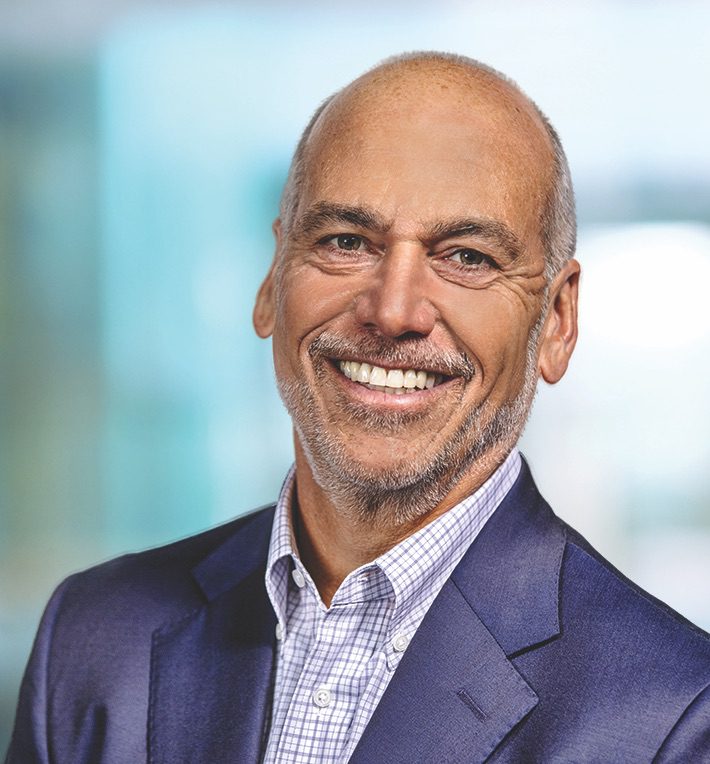
Dave Zolet, President and CEO, LMI
Dave Zolet brought an ambitious growth strategy to LMI, envisioning an organization that would be formidable against larger companies for prime bids. After two corporate acquisitions and new prime opportunities in its defense, national security and health and civilian markets, LMI realized Zolet’s vision in 2019. With contract awards 40% larger on average, LMI’s year-end revenue has increased by 34% since 2017.
But Zolet most appreciated what didn’t change.
“During a time of transformation and growth, our workforce maintained focus on serving our customers and their missions,” said Zolet, in his third year as president and CEO. “LMI provides outstanding support for which I’m very proud. Now, we have the expanded capacity and capabilities to help customers with even more sophisticated problems.”
Zolet has championed scalable growth — complementing and bolstering LMI’s core offerings in advanced analytics, logistics, digital services and management advisory services — to meet a broader spectrum of customer challenges. The company is committed to its tradition of objective advisory support, driven by independent research and data, while evolving to deliver new insights that enrich government decision-making.
Acquisitions have been integral to the effort. Last February, LMI added The Tauri Group for its expertise in life sciences and chemical, biological, radiological and nuclear defense preparedness, followed by Clockwork Solutions, an Austin, Texas-based predictive analytics company, in November.
Analytical prowess is at the forefront of LMI’s innovation push, which now includes its venture capital initiative, LMI Ventures. Data governance company Immuta and climate analytics consultancy The Climate Service were its first announced partnerships, with more planned in 2020.
“We have been deliberate to ensure each step we take creates meaningful opportunities for our employees to support the customers and missions they are passionate about,” Zolet said. “The competition for talent is steep; we have to provide attractive opportunities to grow, learn and lead. We are doing that like never before in our history. We’re excited about the future.”
Why Watch:
LMI’s shift toward prime opportunities has elevated its presence at several longtime customers, including the Air Force Materiel Command, the Department of Homeland Security’s Science and Technology Directorate Office of National Labs, the U.S. Postal Service and the Centers for Medicare and Medicaid Services.
“The trusted relationships we have built with our customers over years, sometimes decades, have made our growth possible,” Zolet said. “Our customers have shown confidence in us as a trusted strategic adviser, and that has enabled us to take some big leaps. Now, we have to deliver. We have the customer understanding, technical tools and talent to raise our customer commitment to another level.”

Beth Cappello, Acting Chief Information Officer, Department of Homeland Security
Beth Cappello began 2019 as the acting chief information officer for U.S. Immigration and Customs Enforcement during the 35-day government shutdown, and then for a five-month period while the CIO was on a detail assignment. One of the most dramatic changes was the migration of ICE systems from the DHS Data Centers 1 and 2, which was completed in November.
The DC1 migration was a short-fused effort, complicated by other DHS components’ dependencies on ICE systems. For example, because of a significant latency issue, Cappello led the various ICE Office of the CIO teams to substantially rework the cloud environment and network architecture for the very last system. The result was a successful transition and improved performance for the dependent application.
Cappello’s additional accomplishments include the migration from an on-premise email to Microsoft Office 365, initiating a network redesign to a software-defined wide area network, and sponsoring what is now the DHS Cybersecurity Service Provider assessment program.
And it’s Cappello’s Marine and previous government experiences that provide her with a unique perspective as she leads and directs DHS from the OCIO. She served active duty from 1984–1988 and was in the Reserve Instructor Computer Sciences School from 1988–1991.
“I am excited to bring a component perspective to the DHS Headquarters Office of the Chief Information Officer,” she said. “I have had the privilege of supporting the mission out in the field and at the component HQ level, so I see this as a natural progression. DHS is such a diverse and complex environment, and it is critically important that the IT community collaborate.”
Why Watch:
Cappello said she will expect transparency and accountability across DHS it creates the IT budget to serve its mission, and the department will expand the use of technology and a structured methodology for tracking against strategic and operational plans.
“I also believe that cultivating the next generation of diverse senior leaders is a critical responsibility,” Cappello added. “I am proud of my work in leadership development to support retention and succession planning, in modeling service delivery best practices for the enterprise and in leading our huge leap forward in modernization.”
And going forward, it’s SD-WAN and cloud adoption that will help her advance DHS federal missions.
But ultimately in 2020, Cappello will focus on a few key initiatives: advancing DHS’ mission through network modernization and a plan to transition from the Networx contract; strengthening cybersecurity through cloud security, Trusted Internet Connection 3.0 implementation plans and zero trust use cases; and enhancing service delivery and optimizing organization.

Tim Conway, President of Public Sector, NTT DATA Services
For NTT DATA Services, significant achievements are first and foremost those the company accomplishes for its clients, according to President of Public Sector Tim Conway. The company’s consistent successes on behalf of its clients helped secure and expand its relationships with several long-term clients this year, including the Centers for Disease Control and Prevention, the FBI, U.S. Navy, the National Institute of Allergy and Infectious Diseases and the Justice Department.
NTT DATA’s growing reputation in the federal government also helped it secure new contracts with the World Bank, the U.S. Agency for International Development and the Department of Homeland Security.
NTT DATA also made an important acquisition with NETE, a fast-growing IT company with a portfolio of business within the Department of Health and Human Services.
“We are very excited about this acquisition as it nicely complements our commercial health care business and provides an opportunity to further develop our presence within federal health care,” Conway added.
And according to Conway, there are several aspects that set the company apart from its competitors, starting with its commitment to its customers.
“We have a core value of ‘client first,'” he said. “Through consistent delivery and solid performance, we do what it takes to ensure our clients’ mission success.”
NTT DATA also focuses on foresight, as it invests more than $3.6 billion a year in research and development to drive innovation and future technologies. The result, Conway said, is tangible innovation for its government clients.
“We firmly believe better IT means better government,” he said. “We know this means improved citizen experience and better digital government.”
And as the needs of citizens change to expecting a private sector experience from government — faster, mobile, immediate, secure and convenient — NTT DATA is increasingly helping its federal clients modernize legacy infrastructure, provide mobile access and complete digital transformation.
“And in this area, NTT DATA surpasses our competition,” Conway said. “We are not a pure play government contractor; we can draw from significant commercial experience to help our government clients.”
As technology changes rapidly, NTT DATA makes sure to view emerging technology advancement through the lens of its clients to deliver leading-edge solutions.
“It is this client perspective that helps us to focus our research and development efforts on what matters most — certainly, we are looking at things like cybersecurity, mobility, internet of things, artificial intelligence, advanced data analytics and everything ‘smart,’” Conway said. “But implementing technology should be about outcomes.”
Outcomes, for example, that help reduce client costs, save time and modernize and achieve efficiencies, Conway explained.
Specifically, NTT DATA helps clients protect, store and use data to make informed decisions. The company is investing deeply in data and prescriptive analytics, applied AI data-driven decision-making, intelligent automation, data storage and data protection.
In 2019, NTT DATA had several successes accelerating smart technology implementations, including its accelerating smart platform in Las Vegas designed to put sensors and edge computing to use.
Why Watch:
NTT DATA has two focus areas for 2020: mission success and growth.
“We intend to focus on continuing to deliver for our clients the level of excellence they have come to expect from NTT DATA,” Conway said. “For the past several years, NTT DATA has been on an upward trajectory, we expect that to continue in 2020.”
The company will continue to build on its client relationships to grow organically and preserve its reputation for delivering as promised that has been instrumental in winning new business. It also hopes to grow through additional acquisition in 2020 and add differentiating capabilities and new customer relationships to its business.

John Heller, CEO, PAE
In 2019, PAE focused on reinvesting and transforming into a growth-oriented industry leader, resulting in its November merger announcement with Gores Holdings III, Inc.
But that wasn’t the company’s only achievement — its National Security Solutions division secured over $1.1 billion in contract wins, including $500 million in new mission-critical awards supporting the intelligence community.
In addition, its Global Missions Services division closed out the year positioned for continued growth and building new markets on the heels of $380 million in contract awards in December 2019, according to CEO John Heller. PAE finished the year with more than $1.35 billion in contracts wins and approximately $4.3 billion in proposals submitted and awaiting award.
Heller has been CEO since December 2013, leading PAE’s growth from $1.6 billion in revenue when he joined to more than $2.5 billion in revenue today. He’s also seen PAE through several successful acquisitions and the sale of the company from Lindsay Goldberg, LLC to Platinum Equity in 2016.
So, what exactly makes PAE so special?
“Our differentiation comes from being a trusted services provider to the U.S. government for more than 60 years — our unique domain knowledge, our global scale, our access to world-class, qualified, vetted personnel and our distinguished management team,” Heller said.
Plus, the company is investing in PAE’s Smart Services, which uses predictive analysis in areas of smart logistics, smart basing and smart maintenance through PAE’s visual management tools, safety management system and continuous improvement services.
Why Watch:
Heller said PAE’s focus in 2020 remains on being the sought-after provider of innovative solutions in maintaining and security the country’s critical data, assets, infrastructure, training and IT-enabled business process solutions.
“In 2020, we’ll do so while also expanding into new markets and new services,” he added.

Jonathan Scholl, Health Group President, Leidos
Leidos is focused on enhancing patient care and transforming service delivery models from bench to bedside through digital transformation to revolutionize the future of health care. And under Jonathan Scholl’s leadership, the Leidos Partnership for Defense Health had quite the year.
Throughout the course of 2019, the partnership delivered the MHS GENESIS electronic health record system to the first of 23 deployment waves. Once complete, nearly 18 million service members, veterans and their families will have one common record for seamless care.
Leidos Partnership for Defense Health also bolstered its digital health solutions team through a contract with the nation’s fourth largest health system, Trinity Health, by adding 450 IT professionals to support health systems.
The company also launched QTC Mobile Clinics that logged more than 100,000 miles to provide independent medical exams for veterans in rural locations, and completed the acquisition of IMX Medical Management Services to expand coverage areas for high-quality medical disability exams and reviews.
The Leidos Biomedical Research team also conducted Ebola clinical trials in the Democratic Republic of Congo. As a result, many of the company’s scientists involved in the development of the vaccine were named as nominees for Journal of Science’s 2019 Breakthrough of the Year Award given to the most significant scientific development this year.
And along with the Health Group’s success, it’s Leidos’ 50-year legacy of deep engineering, novel complex systems integration, employment of bright health IT experts and high work ethic and integrity that sets the company apart, according to Scholl.
“Leidos also believes in taking care of the communities where we work and live,” he said.
Through the company’s opioid education and awareness campaign, it has distributed more than 100,000 drug deactivation kits and initiated a CEO pledge that calls on business leaders to address the opioid epidemic where their employees live and work.
“Daily, we get the opportunity to be a caregiver to all of those in need of support,” Scholl added. “It’s what motivates us each and every day.”
Why Watch:
As a health IT solutions integrator, Leidos’ culture of innovation inspires its employees to harness emerging technologies that enable mission success.
“We leverage our Leidos Innovations Center, which is outfitted with sensors and technologies that deliver intelligent automation and artificial intelligence solutions and services, to revolutionize business processes and automate commoditized low-value tasks for all federal health agencies,” Scholl said.
And the company is conducting research and development into the natural language processing of medical records that’s showing promise in the classification of veterans’ benefits claims.
But the company’s mission won’t differ in 2020: to change the way health care is delivered in the U.S.
“We’ll do this by staying in lock step with our customers’ missions, operations and platforms,” Scholl said. “We’ll also stay committed to figuring out how to put meaningful information inside the clinical workflow, leveraging AI and machine learning solutions and then applying change management to ensure everyone is working smarter.”
Leidos Health Group will look for opportunities to expand its core federal health digital transformation business into adjacent markets and leverage its technical competencies to penetrate new markets.
“Finally, we’ll continue to execute what we do best — creating and delivering solutions and services that drive improvements in patient care and efficiencies in health care delivery,” Scholl added.

John Avalos, Chief Operating Officer, SOS International
John Avalos joined SOS International in 2017 to lead day-to-day operations. In 2019 alone, he led SOSi’s identification, operational due diligence and integration of its most recent acquisition of Vykin Corp. in July.
“The addition significantly strengthens our company’s IT and intelligence capabilities, particularly in cloud development and supporting command and control and intelligence systems,” Avalos said. “It marked the fourth significant SOSi acquisition in four years.”
The firm is directed toward the defense and aerospace services industry, and works with all the major departments that impact defense and intelligence to provide analysis, technology, language services, logistics and training.
Under Avalos’ COO leadership, SOSi completed an overall corporate restructuring in 2019 that will strengthen its customer relationships and better position it to leverage its capabilities across markets.
“We expanded our global footprint into the Pacific, Southwest Asia and Europe — and established a new line of business in the Middle East,” Avalos said. “About a third of our employees now work overseas.”
And the company competed alongside the biggest contractors in the business to earn a position on SIA 3, the primary contract vehicle for providing intelligence analysis support to Defense Department warfighters, planners and policy professionals worldwide.
“It was a massive win for our business,” Avalos said. “Not only did we enter a new tier of competition but the award also firmly establishes SOSi as a trusted provider of intelligence services.”
And among other awards, SOSi was named GovCon 2019 Contractor of the Year in the $300 million and above category by the Northern Virginia Chamber of Commerce and Professional Services Council.
“Perhaps no honor reflected our maturity as an organization better,” Avalos said.
Why Watch:
SOSi is integrating several disparate capabilities developed internally with those gained through corporate acquisitions. For example, it merged several of its artificial intelligence, software development and cloud capabilities into a single technology development and innovation group to deliver new solutions for federal customers.
The firm is also working closely with its federal customers to integrate leading-edge open-source intelligence and deep and dark web exploitation capabilities.
“We have incredible system integration and software development capabilities that have helped to field the most sophisticated implementation of PeopleSoft Global Pay currently in production worldwide,” Avalos said.
And SOSi is leveraging its language and technology expertise to pioneer new AI-enabled machine translation and automatic speech recognition solutions for the government market.
“We are building discriminators in areas where both our expertise and customer needs align,” Avalos added.
In 2020, SOSi will continue to have an aggressive acquisition and investment mindset, while prioritizing integrating new technologies and discriminators into its portfolio.
“I would also like to explore potential strategic partnerships with tech companies that are currently operating both in and outside the federal market,” Avalos said.

Mac Curtis, President and CEO, Perspecta
Mac Curtis leads a company of more than 14,000 people who help customers in the defense, intelligence, civilian, health care and state and local markets transform to digital environments, and secure, modernize and optimize their enterprises. And as Curtis reflects on 2019, there are several achievements of which he is most proud.
“The first would have to be the speed in which our company has come together,” he said. “Since day one, we’ve been focused on a rapid — yet effective and successful — integration. We’ve worked hard to establish an outcome-based culture built around mission and shared values.”
Early on, Perspecta’s unified workforce recognized the synergies of its integration, and over the last year, have come together to deliver the very best for its customers, Curtis explained.
Perspecta also met and exceeded all its financial obligations in its inaugural year, which ended March 31 — something Curtis is very proud of.
“These tangible results confirmed our staying power as a leader in combining enterprise IT and mission services to successfully serve the needs of the U.S. government and its citizens, and validated our team’s tireless hard work and unwavering commitment to our customers’ missions,” Curtis said.
And on July 31, Perspecta completed its first acquisition of Knight Point Systems. This deal further enhanced Perspecta’s offerings in cloud, cyber, digital transformation and enterprise IT, and integration is nearly complete.
Along with Perspecta’s mission-based culture, capabilities, innovation engine and ability to scale, its innovation and applied research hub, Perspecta Labs, helps the company stand out among its competitors.
“Through Perspecta Labs, we are able to provide transformative applied research to fuel solutions for our customers’ unique and complex challenges,” Curtis said. “But the real difference here is not the fact that we have an applied research lab — it’s that we invent real solutions, leveraging emerging technologies, to solve real problems and advance our customers’ missions.”
The company advocates for emerging technologies like artificial intelligence, machine learning and robotic process automation to continue advancing its customers’ missions. In fact, Perspecta was awarded the UiPath Impact Partner of the Year award in the public sector category for its work applying RPA as a central element of its digital delivery capability.
Why Watch:
Perspecta is preparing to complete its second fiscal year in March, and in 2020, has turned its focus from integrate to modulate.
“What that means is by being laser focused in our first year to get the big things right, we are now in a position to really hone in on the details required to continue building a company we can all be proud of,” Curtis said.
The company is in the middle of executing a long-term strategic plan that reaffirms the rationale behind the creation of its company and delivers successful outcomes for customers, employees and shareholders. Its strategic priorities center on cloud and IT transformation, cybersecurity, intelligent tools and analytics, trusted workforce and emerging markets.
Curtis is also dedicated to building a leadership team that listens to further develop and reinforce its unified culture, and become a top talent destination.
“We are well along the path of implementing initiatives and programs to meet the needs of our employees to support and ensure their success every day,” he said.

Nazzic Keene, CEO, Science Applications International Corp.
Nazzic Keene took over as Science Applications International Corp. CEO in mid-2019, both a humbling and fulfilling appointment during a big year of transformation.
SAIC closed the acquisition and integration of Engility, refreshed its organic growth strategy that leverages its strong solutions in engineering and IT to help the government modernize, and developed a modern talent strategy that puts its employees first.
“Our most prominent achievement this year was closing the acquisition of Engility in January, and as we near the 1-year anniversary,” Keene said. “I am very proud of the success of our integration efforts thanks to our employees’ hard work.”
The team has fully and successfully integrated functional organizations, all operating units and programs, back office systems, and business development in record time. As a result, SAIC has expanded its business in critical areas of national security, particularly in the space and intelligence domains.
Plus, the expanded portfolio and customer relationships have brought more opportunities to SAIC, which are reflected in its updated strategy particularly focused on digital engineering, digital transformation and modernization.
Under Keene’s leadership, SAIC has held onto large, single-award contracts with NASA and the Defense Department, and has grown its business with the Defense Intelligence Agency and other space and intelligence community customers following the Engility acquisition, winning more than $3 billion in contract awards.
Keene is also focused on winning the war for talent, and is proud of SAIC’s renewed benefits program emphasizing flexibility.
“We are investing in programs that provide significantly more options in how our employees manage their work schedules and leave time to improve the well-being of our employees and their families while providing world-class talent in support of our customers,” she said.
And to deliver more mission-focused innovation to the government, SAIC expanded its network of technology partners in 2019 to include the top technology accelerator programs in the country.
“We act as a bridge between emerging technology communities and government customers to innovate more rapidly and with mission purpose,” Keene said.
Working with those programs enable SAIC to bring innovative projects from startups and entrepreneurs to customers while leveraging its employees’ domain expertise.
Why Watch:
SAIC recently launched its own virtual Innovation Factory focused on rapid delivery of capabilities using agile methods and human centered design approaches. It allows SAIC to convert raw materials of tech and mission challenges into real solution in days.
Working with technology accelerator programs has allowed SAIC to successfully build tailored, cost-effective solutions that immediately address mission needs, according to Keene.
“I believe that we will see more use of artificial intelligence, machine learning, digital engineering and blockchain to advance the mission in the coming years,” she added.
Currently, SAIC is helping government agencies use these technologies to solve difficult mission challenges, including in flight operations, cybersecurity, new drug approvals, using clinical data for research, and secure logistics and supply chain.
And in the new decade, Keene’s primary focus will be accelerating profitable revenue growth and winning the war for talent.
“I believe that corporate leadership requires a balanced approach to delivering on shareholder returns, serving our customers, giving back to the community and building an effective workforce,” she said. “Leadership in today’s dynamic, complex and high-stakes market has evolved tremendously in the last two years alone. In 2020, we will take a dynamic approach that is hyperfocused on talent, innovation, purpose and mission.”

Stephanie Mango, Senior Vice President, Security, Administrative, Judicial and Enforcement Programs, CGI Federal
When discussing success and milestones in 2019, Stephanie Mango points to CGI Federal’s merger and integration of Sunflower Systems, a provider of asset management software solutions and services.
By adding Sunflower’s product line to CGI’s expertise and intellectual property, CGI increased its value to its customers across federal and local governments, law enforcement, higher education and other commercial entities, Mango said.
“In the federal government market, our Momentum Enterprise solution now features an asset management component powered by Sunflower’s software,” she said. “For agencies, this fully integrated solution reduces cost of ownership, streamline operations and provide comprehensive business analytics across the enterprise.”
Mango led the successful integration of the two companies, which are now delivering new value to the customers they serve.
And as a single entity, CGI is pushing the needle in other areas, too.
“We have a proximity model, where we live and work with our customers, contribute to our communities and reduce our carbon footprint,” Mango explained. “We take advantage of centralized expertise in our on-shore delivery centers in rural centers specializing in agile development, cybersecurity, federal financial management and many other government focus areas.”
CGI makes a point to frequently interact with partners across industries and geographies to share best practices and case studies.
“We all operate from the same management foundation,” Mango added.
Plus, the company’s 35 years of working closely with the federal government gives it a unique blend of subject-matter expertise, technological proficiency and a deep understanding of the federal needs.
“I believe CGI is among the best at coming in to an engagement, grasping its complexities quickly and developing an innovative solution,” Mango said.
And as emerging technologies become even more key in modernizing government IT, CGI is taking a pragmatic approach to implementing cutting-edge tech to deliver the results its clients need.
“Our focus is always on meeting business needs, with whatever technology or other solution is the most effective choice to do that,” Mango said. “Managing technology change is as important, if not more important, than the technology itself when it comes to advancing the federal mission, and that is the focus we have.”
Why Watch:
Going forward, Mango and her CGI Federal team will continue to help government address its biggest challenges.
“Our mission goals align with many tenets of the current President’s Management Agenda: transforming the workforce, leveraging shared services for greater efficiency and mission effectiveness and securing the enterprise,” she said.
CGI is also entering 2020 with a renewed focus on an end-to-end approach. Its agility and broad range of expertise equips the company to be ready for almost anything.
“We can help you figure out where you want to go and help you get there, drawing on our strengths in strategic IT, business consulting, systems integration and managed IT and business processes,” Mango added.
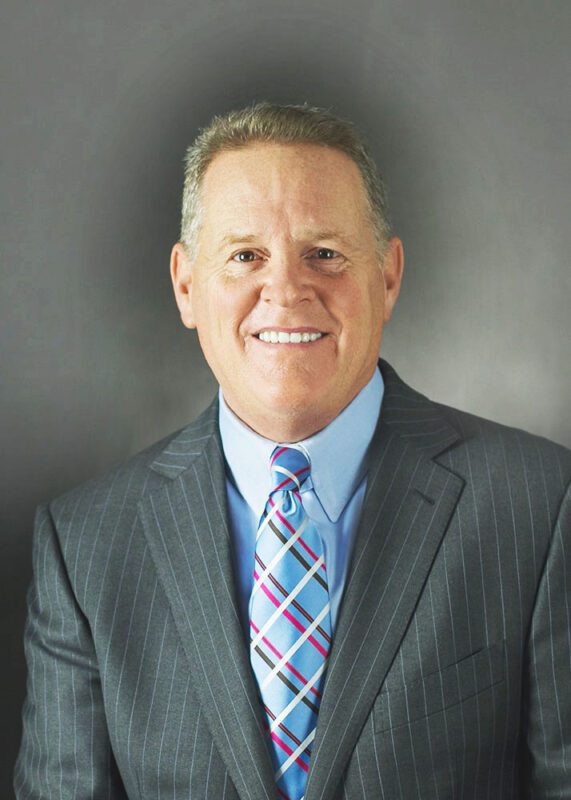
Cass Panciocco, President and CEO, Trowbridge
As president and CEO, Cass Panciocco remains focused on operations and business development with an emphasis on delivering industry leading solutions to federal agencies in the defense and civil markets. In 2019, the company’s most significant accomplishment was its April acquisition by Enlightenment Capital, Panciocco said.
“Our partnership with Enlightenment will allow us to make the necessary investments to grow our business both organically and through acquisition over the next few years,” he said.
Trowbridge also expanded its management team to support its future growth strategy as it strives to become a premier government IT service provider. And through and through, it stays true to its culture, values and commitment to taking care of its employees and customers to continue growing its business.
“It amazes me at times how many companies forget to do this because they focus solely on short-term profitability and not long-term growth,” Panciocco said.
Another way Panciocco and Trowbridge are serving customers’ missions is by implemented cost reductions through cloud solutions and data center consolidations.
“Our cloud and network engineering, as well as software-defined networking solutions, provide clients with unparalleled return on investment and unprecedented control of their technology,” Panciocco said.
The company’s DevSecOps solutions improve collaboration and reduce time and resources lost to cyberattacks, while Trowbridge is also helping customers use artificial intelligence and machine learning to leverage cloud and defend networks.
Why Watch:
While Trowbridge will continue to deliver high-value solutions to customers and differentiate itself as an employer of choice to attract and retain top talent, Panciocco said the company is looking for growth opportunities in 2020.
“We will closely examine the growth opportunities available through aggressive M&A activities, facilitating strategic development into new customers and markets with an eye toward expanding our core capabilities, service offerings and value proposition,” he said.

Steve Schorer, Chairman and CEO, Alion Science and Technology Corp.
Appointed Alion Science and Technology Corp. chairman and CEO in May 2017, Steve Schorer proceeds to lead the company through its 3-year transformation that continued at pace in 2019.
That year’s focus was positioning for long-term growth and development of products and franchises in intelligence, surveillance and reconnaissance, big data platforms, cyber analytics, synthetics, C5 software and spectrum dominance, he said.
And the company’s business continued to mature through key contract wins and the continuation of acquisitions. In 2019, Alion divested its Naval Systems Business Unit to Serco and completed the integration of MacAulay-Brown, Inc.
“The divestiture of the Naval Systems Business Unit was a major deleveraging event that positions Alion to invest in high-growth technologies and companies moving forward,” Schorer said.
Also in 2019, Alion won its second transformational ISR program in less than 12 months: a $969 million General Services Administration Oasis Task Order to provide ISR solutions to the United States Africa Command and Combatant Commands with a focus on using Alion’s sensor processing, fusion and intelligence analytics.
“Alion recognizes the need for agility and speed in developing rapid engineering solutions for the defense and intelligence communities,” Schorer said. “Our focus is on how we can develop and optimize our enterprise — our people, our technology, our operations and our culture to ensure that we are providing the best technological solutions to achieve our customers’ mission objectives.”
And as Alion looks to the future under Schorer’s leadership, it continues to invest in its employees and the next generation of engineers and technologists to prepare them for the adoption and deployment of artificial intelligence technology.
“The focus is readiness for AI advancements in Alion’s business and providing solutions that give a tactical edge for its customers,” Schorer added.
Why Watch:
Alion plans to continue to grow through acquisition activities into 2020, with a focus on advanced data analytics and cyber threat awareness, ISR, trusted electronics and AI solutions.
“2020 will be about continued growth of key programs and the winning of additional franchise programs to grow Alion,” Schorer said. “We have several on the horizon across all of business operations.”
Alion will also continue the development of a growing family of products in electronic warfare, weapon and launch electronics, and deployable ISR sensors. And it will continue to invest in its people and culture.
“There is a reason you see images of lions when you come to our offices,” Schorer said. “The people who work here are filled with pride — pride for our customers’ mission and pride in what they do to advance global security solutions.”

Jennifer Felix, Executive Vice President and Chief Operating Officer, ASRC Federal
Joining ASRC Federal in November as the chief operating officer was a major 2019 highlight for Jennifer Felix. The company has a “tremendous depth and breadth” of capabilities and a long history of success helping federal customers achieve their missions, she said. But it’s the people who differentiates it from the rest.
Specifically, “the knowledge, experience, expertise and commitment of our employees who are working to solve the government’s most complex challenges,” Felix said.
Hiring and retaining top talent is critical, and the company’s ownership structure offers a unique supportive culture that provides greater stability to its customers and employees in a market where consolidation continues to be prevalent, she said.
Plus, ASRC Federal stays at the forefront of technological development, especially in artificial intelligence and machine learning. For instance, it supports a customer with a 7,000-sensor satellite-based system for which it would typically take five engineers three days to identify sensor performance anomalies.
“We were able to deploy our AI/ML tool kit to detect the same anomalies in just 2 minutes,” Felix said. “In addition, by applying DevSecOps agile development practices to weapons system software development, we have significantly reduced secure application updates deployment times.”
Why Watch:
In 2020, Felix will zero in on ensuring ASRC Federal has the right operational alignment and tools across the organization, so its program teams can focus their time and energy on the missions of customers.
“I will also be focused on achieving the growth objectives we have set as a team in order to continue providing support to our unique group of shareholders and offering new opportunities to employees,” she added.
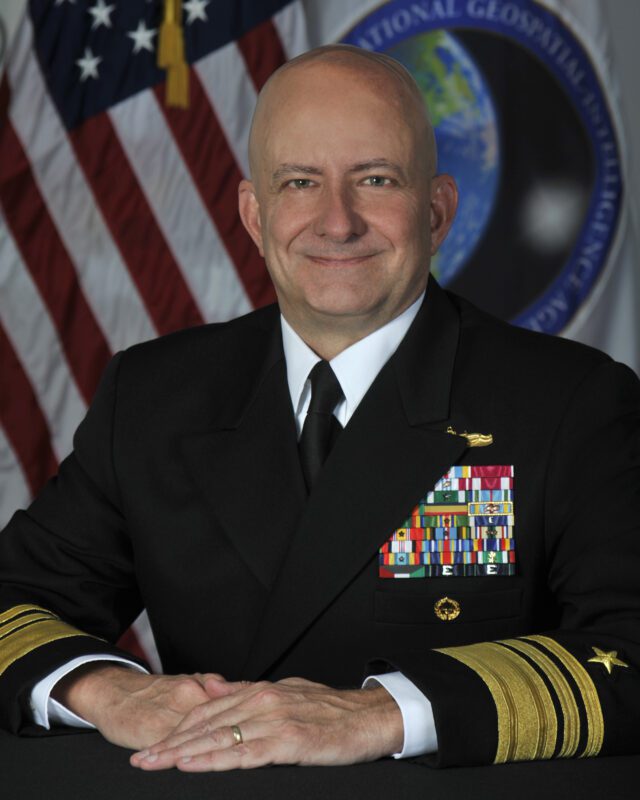
Vice Adm. Robert Sharp, Director, National Geospatial-Intelligence Agency
Vice Adm. Robert Sharp became the National Geospatial-Intelligence Agency’s seventh director in February 2019, and leads the agency under the authorities of the secretary of defense and director of national intelligence.
And as a life-time sailor with more than 30 years in the Navy, he’s learned the path to success is through people and partnerships.
“As someone who’s relied on [geospatial intelligence]every day of my career, it’s a tremendous honor and privilege for me to be serving as NGA’s seventh director,” Sharp said.
On the day he became NGA director, Sharp promised the employees three things: to work hard each day to earn and maintain their trust; to fight for the resources they need to do the things the nation needs them to do; and to remove barriers preventing them from being successful.
And since, he’s focused his leadership on “people first.”
“Our mission is to provide timely and relevant geospatial intelligence to a wide range of customers, from policy makers to warfighters to first responders — a job we continue to improve upon every day through the strength of our people and our partnerships,” Sharp said.
NGA exists to combine a detailed knowledge of the physical Earth with an understanding of the world to observe what’s happening where. And to do so under Sharp’s lead, the agency’s No. 1 priority is investing in its people.
“They are the basis of our strength,” Sharp said.
Since he stepped into director role, Sharp has focused on creating an environment where people want to stay on the team, where they are properly resourced, their families are taken care of and there are conditions for people to contribute, grow and succeed.
“Coming to the close of my first year, I have a strong sense that team NGA has cultivated that environment and that the workforce has embraced our strategic goals and core values,” Sharp said.
And while he can’t discuss all of his team’s accomplishes in 2019 because of the nature of the work, Sharp says he’s proud of the workforce.
One significant achievement he can talk about is the World Magnetic Model update. Recently, NGA in partnership with the National Oceanic and Atmospheric Administration and the British Geological Survey released the World Magnetic Model 2020 update, providing essential navigational data for all military and civilian planes, ships, submarines and GPS units that operate around the clock and around the globe.
And on Nov. 26, NGA broke ground on its future west headquarters in St. Louis, Missouri, beginning a new chapter for the agency.
Why Watch:
Many of the advances of NGA’s federal missions have come through its artificial intelligence, automation and augmentation efforts, or what the agency calls AAA.
For example, NGA coordinated with the intelligence community and the United States Geological Survey — the lead federal agency for wild land fire management — to develop a new automated capability for the wildfire-fighting community.
Because of this coordination and cooperation, as of April 1, the beginning of the California wildfire season, the wildfire fighting community can now conduct anticipatory analysis of destructive and fast-moving wildfires.
And going into 2020, AAA continues to be a focus area.
“Our goal is to partner with machines so that we can make best use of the exponential growth in volume and source of data, letting machines do what machines do well and analysts do what analysts do even better — think critically and solve problems,” Sharp said. “This will allow us to provide critical intelligence faster, more accurately and with precision — all necessary to be better than our competitors.”
NGA will also continue investing in its people and strengthening and expanding its partnerships across the full spectrum of GEOINT missions.

David Wajsgras, Raytheon Co. Vice President and Intelligence, Information and Services President
David Wajsgras has held his senior leadership position at Raytheon since March 2015, and 2019 proved to be another outstanding year for the Intelligence, Information and Services business unit.
“The business continued its transformation and accelerated new technologies and capabilities for customer missions,” Wajsgras said.
Raytheon IIS has a revenue of more than $7 billion and 16,000 employees around the globe, including 4,000 in the D.C. area. In 2019, the business unit delivered strong financial results as it prioritized bringing the future faster to its customers.
Some of those 2019 highlights include:
- Winning a $110 million cyber contract to secure military and infrastructure in the Middle East
- Securing a $300 million contract to develop new space systems and flight software, and provide engineering, training and operations support for NASA’s Jet Propulsion Laboratory
- Winning a $663 million contract to deliver a secure, wireless communications system enabling soldiers to communicate anywhere, anytime around the globe
- Signing a memorandum of understanding to enhance the U.K.’s sovereign space capability
- Performing cyber resiliency work for U.S. Air Force F-15 avionics systems
- Deploying artificial intelligence for predictive maintenance on V-22 Ospreys and launching a virtual reality maintenance trainer for the aircraft
- Executing partnerships with defense technology firm Black Sage to co-develop and market counter-UAS solutions, and with software company Red Hat to expand on a security-focused software development process for enterprise environments
- Guiding the second modernized GPS satellite from initial to final orbit and completing next-gen GPS ground control system development
Wajsgras is intensely focused on digital transformation, and the way IIS delivers commercial innovation at speed and scale to generate growth. Under his leadership, IIS has accelerated its strategic initiatives with a focus on the customers’ increasing “need for speed” by embracing the quickening pace of acquisition and offering new capabilities through a more rapid, iterative process.
Plus, the organizational and cultural transformation around software development was a cornerstone in meeting the ever-increasing demand for rapid deployment of commercial innovation. Raytheon’s successful launch of a virtual software factory model allowed the business to quickly train teams in software development commercial best practices, including DevSecOps and cloud computing, and deploying them across a broad set of customer programs.
Why Watch:
Wajsgras sees real opportunities to “step function” IIS’ position in the intelligence, defense and federal/civil sectors in the coming year. The business has evolved to a point where the team can focus more on new business creation and expanding in target markets.
Growth in the space domain, modernization of the national airspace system, demand for technology-enabled training and the increasing need for cybersecurity and data resiliency are just a few examples of areas in which IIS is well positioned with mature solutions.
And in 2020, IIS will continue to accelerate its ability to deliver advanced capabilities featuring AI, automation, cyber and advanced analytics. Strategic partnerships with commercial companies will remain a key component of its strategy as will the continued deployment of agile and DevSecOps as IIS transforms with the emerging environment facing its customers.

Charles Beard, Chief Operating Officer, Guidehouse
Charles Beard oversees the day-to-day performance of Guidehouse’s business operations, and points to the acquisition of Navigant Consulting as one of the company’s most significant 2019 achievements.
The deal provided Guidehouse with commercial advisory capabilities and thought leadership in financial services, energy and sustainment and health care transformation — complementary mission areas to its government clients at the state and national levels.
And whether Guidehouseis seeking clinical transformations in health care that drive wellness and affordability, working on the transition from fossil fuels to renewable sources for the reduction of greenhouse gas emissions, or building a 21st-century design on economic and national security alliances, it understands the most transformative solutions will likely transcend conventional boundaries and require multidisciplinary approaches.
“We are building a business operating and staffing model that aligns with our shared commitment to these future outcomes,” Beard said.
And with the cyclic rate of technology innovation being measured in months, weeks or days, Beard said Guidehouse is in step with that pace for its clients.
That includes the digitization of health records accelerating the application of data analytics to determine the efficacy of protocol designs; artificial intelligence and machine learning being applied to everything from electric grid resiliency to fraud detection and the antecedents of criminal activity; and the opportunities associated with the deployment of 5G.
“These are just a few of the opportunities we are supporting through our dedicated innovation centers, where we seek to co-create the future with our clients,” Beard said.
Why Watch:
Beard and his team have three exciting focus areas for 2020.
The first is to apply the principles of user-centered design to understand how to meet the needs of Guidehouse’s diverse and geographically distributed constituencies: clients, employees and partners.
“We are challenging ourselves to reimagine health and wellness benefits that are outcomes-based and align to our unique needs while also providing a backstop to the unanticipated catastrophic events,” Beard said.
Second, Guidehouse will reimagine its employee experience. From benefits to continuing education, diversity to office services, Guidehouse believes there is a new model of employee engagement that allows it to create a workforce for the future by engaging with its professional colleagues in a way that is intellectually challenging, financially rewarding, while also beneficial to clients and their missions.
And third, Guidehouse is going to complete operational integration of its acquisition and continue to deliver the strategic agility required by its clients as they address the most pressing issues facing their businesses, constituents and alliances.

Damon Griggs, CEO, Dovel Technologies
Damon Griggs joined Dovel in 2016 as the chief operating officer before becoming president in 2018 and CEO in October, now leading overall corporate direction and strategy.
2019 was a strong year for Dovel in meeting or exceeding several strategic priorities, including profitable growth objectives and establishing a solid foundation for the path forward.
Under Griggs’ leadership as president, the company announced a capital investment partnership with Macquarie Capital in May. The capital infusion will be deployed to further broaden Dovel’s reach within the federal market through internal research and development, organic and new market growth as well as strategic acquisitions, Griggs said.
In September, Dovel acquired Ace Info Solutions, a move that diversified its client base and expanded its market capabilities. And in October, the company announced that Griggs would take over as CEO while former CEO Paul Leslie moved to the executive chairman role of the board — a long-planned succession with additional C-suite hires to prepare the executive team for Dovel’s evolutionary growth into the next decade.
And delivering on organic growth goals, Dovel secured in excess of $600 million of total award value. As part of its commitment to exceptional client experiences, the Dovel team also grew work on existing contracts while expanding its government client relationships with new contract wins.
But what makes Dovel stand out, according to Griggs, is its commitment to leading projects that bring impactful and lasting change to improve, protect and save lives.
“This purpose-driven organization and workforce takes great pride in the fact that their work has an impact not just on their customers but on the citizens their customers serve,” Griggs said.
Plus, employees thrive in Dovel’s environment where innovation and agility of a small company is maintained, but processes and infrastructure that are of a scale to support large enterprise programs are built.
Why Watch:
In 2020, Dovel will maintain its momentum in organic growth with a keen focus on fostering the innovative culture that exists today, and is focusing on three pillars: innovation, customer success and employee growth.
In fact, new venues for communication and collaboration across project teams are already being developed to address these pillars. Employees have the opportunity to participate in numerous professional development opportunities, such as frequent lunch-and-learns with talks from academics, government practitioners, and technologists on the latest trends and technologies.
Corporate communities of practice also bring together people from across the company to share challenges and best practices on topics such as software development, program management and more.

Carey Smith, President and Chief Operating Officer, Parsons Corp.
In addition to her duties as chief operating officer, Carey Smith was named Parsons Corp. president in November, one of her many significant 2019 milestones.
But prior to her appointment, Parsons completed its initial public offering, which resulted in the company’s stock price increasing by 55%.
“Our financial performance for the first three quarters as a public company has exceeded expectations, with highlights being strong book-to-bill, margin expansion and cash flow, coupled with solid organic growth,” Smith said.
Parsons continued its successful track record of acquiring and integrating companies with the purchase of GSystems in January and QRC Technologies in July. Parsons also completed the integration of Polaris Alpha, which it acquired in May 2018, and its space team celebrated a successful multi-manifest launch of a small space vehicle payload. Parsons performed the launch integration that enabled the small satellite delivery to orbit.
In addition, Parsons won its largest ever cyber contract, a $590 million Combatant Commands Cyber Mission Support contract with the General Services Administration.
And what sets Parsons apart is its core markets of cyber, space, missile defense, C5ISR and connected infrastructure based upon people, processes and technology.
“For our people, the primary differentiator is the Parsons culture focused on being the most agile, innovative and disruptive in our industry,” Smith said. “We are a company of innovators who collectively align around how we solve our customers most complex challenges and our processes are an enabler.”
In terms of innovation, Parsons is heavily engaged in the development, integration and deployment of emerging technologies across all warfighter domains. With thousands of technical subject matter experts in the areas of cyber, artificial intelligence, data analytics, space and cloud computing, the company develops technology solutions in direct support of its federal customers’ most critical missions.
Why Watch:
“Our most critical priority is to remain tightly aligned with our customers and understand their emerging mission needs and challenges,” Smith said.
Parsons will focus on staying on the leading edge of technologies in 2020 as it continues research and development investment in core markets including cyber, space and smart cities.
“On-time, on-cost and high-quality performance execution is also important across our full portfolio of programs,” Smith added.
Parsons will also provide guidance for the first time as a public company, and it’s important to Smith that Parsons achieves it.
And outside of Parsons, Smith looks forward to serving on the board of directors at Edison International and the Professional Services Council, where she serves as vice chair.

Jonathan Moneymaker, CEO, AEgis Technologies Group
Appointed as CEO in October 2019, Jonathan Moneymaker has taken the lead of Arlington Capital’s newest national security-focused platform’s foundational company AEgis Technologies Group. It operates at the heart of the nation’s most critical mission areas of space superiority, electronic warfare and cyber operations, directed energy, missile defense and intelligence operations.
“My vision for the AEgis Platform is focused on us ‘Leading the Transformation of Modern Warfare,’” Moneymaker said.
As the U.S. national security posture flexes to a more near-peer threat from its counterterrorism focus of late, the investments of Arlington Capital Partners with Moneymaker’s vision are targeted to be squarely positioned to lead the way.
“We pride ourselves in earning a seat at the table with our customers and working to solve their most challenging problems,” Moneymaker said. “We differentiate ourselves by serving as our customers’ most trusted partners and being known for delivering mission success.”
Why Watch:
2019 was a transformational year for Moneymaker leading Altamira Technologies through its transaction to ClearSky Capital, then joining forces with the Arlington Capital powerhouse as it seeks to build its largest national security platform out of its latest $1.7 billion fund.
To achieve his vision, Moneymaker draws on his career anchored at the intersection of delivering on critical mission needs, advancing technological advantage and driving business results alongside building out and aligning market leading teams designed for transformational change. Moneymaker has held executive roles from Fortune 50 to entrepreneurial startups and has directly served the national security and defense communities.
“2019 was an incredible year from being able to lead one amazing organization across its finish line, then partner with ACP to architect and build what we expect to be the No. 1 platform in our market,” Moneymaker said.
He added the AEgis team is “truly special,” working to deliver on missions that impact the course of the nation every day.
“And we are just getting started building,” he said. “With franchise positions through our community’s highest-priority and fastest-growing mission areas and the some of the brightest minds, we’re well positioned to lead the much-needed transformation of our customers and deliver future solutions never yet conceived.”
Moneymaker and his team have big plans for the platform and the resources to move at the speed for AEgis mission partners.

Juliane Gallina, Chief Information Officer, CIA
Juliane Gallina became the CIA chief information officer in April after an executive leadership position at IBM and having served in the U.S. Navy for 21 years, retiring in 2013 as a commander.
And as it goes in the CIA, sometimes the most notable achievements are classified.
“I’m happy to say our most significant accomplishments were too sensitive to share here,” Gallina said, reflecting on 2019. “We hope they stay that way.”
In fact, Gallina said the CIA’s best accomplishments demonstrated human intelligence operations use great technology, and the best technological operations rely on great humans.
She’s also able to pull from her professional and service-based experiences as she leads the agency from the CIO office, especially as it pertains to her leadership approach.
“The Navy taught me so many lessons about leadership, mission-focus and caring for others,” Gallina said. “My experience in the service was so formative that it is hard to do it concisely.”
But there is one example she referred to that relates to her current position.
All midshipmen at the U.S. Naval Academy memorize certain historical facts and important quotes. John Paul Jones is a Revolutionary War hero who led forces in several notable battles at sea, where the colonials were just the underdog, as Gallina explained.
“He is quoted as saying, ‘men mean more than guns in the rating of a ship,’” she said. “In the days of wooden ships and sailors, the number of guns on a ship would rate its quality and ability to fight. I adapt this quote for our times by saying, ‘people are more important than technology in the assessment of your agency.’”
And though she pulls this quote from her earliest days in the Navy, she uses it to remind herself that no matter how great the technology strategy is, the CIA can only accomplish the mission through its people.
“I care deeply about caring for our officers and making sure we are equipping them well, and enabling them to operate technology in their mission seamlessly,” Gallina said.
Her time as a CIA officer in the Directorate of Science and Technology was also formative, and it’s where she found her calling as a leader in technology and strategy.
In that position, Gallina learned about complex system design, development, deployment and operations from her colleagues. She learned how to partner with industry and use acquisition strategy to gain national security advantage.
“I learned from amazing CIA and military leaders about how appropriate investment and delivery of technology solutions can create strategic advantage over adversaries,” Gallina added.
Why Watch:
Heading into 2020, Gallina has two primary focus areas.
First, the enterprise IT team will continue to maintain operational readiness to ensure the agency is agile and responsive to mission users.
“Operational readiness is a non-negotiable reflection of the importance of our 24/7, global operation,” Gallina said.
Second, the CIA will focus on the field, as its emphasis on the field reflects the director’s experience and values, and the strategic direction of the agency overall.
“Our investment portfolio and work activities are aligned to these priorities,” Gallina said. “Consequently, we will continue to accelerate our cloud journey. We are developing a plan to make artificial intelligence and machine learning ubiquitous in all functions and all places the agency operates.”

Zachary Parker, President and CEO, DLH Corp.
Zachary Parker has served as DLH Corp. president, CEO and board director since 2010, and as the company enters a new decade, one of its most significant achievements is having closed 2019 with 10 consecutive years of profitable growth.
Parker attributes this growth to outstanding strategic acquisition during the third quarter of fiscal year 2019, which injects new and differentiating capabilities to the company.
“These will enhance our workforce performance excellence delivery to existing customers, advance and reshape our value propositions to new customers and raise our long-term shareholder value,” Parker said.
And under Parker’s leadership of the mid-tier company, DLH continues to embrace its values in integrity and trust, performance excellence, agility and inclusion and diversity.
“It is our agility in providing true best practices and evidence-based decisions that sets us apart from many of the tier-1 and much larger companies,” Parker said.
Over the recent years, Parker also prides on DLH’s ability to deliver on cloud migration, leverage agile development methodologies and stand up a secure data analytics platform — all of which have been critical to keeping DLH in the forefront of delivering innovating and tech-enabled health care solutions to programs within the departments of Health and Human Services and Veterans Affairs as well as the Defense Health Agency.
And with the expanding cyber threats industry faces and increase demand for big data solutions from government agencies, DLH’s new Federal Risk and Authorization Management Program-approved platform will be a key enabler to continue its performance excellence and organic growth.
Why Watch:
“Our No. 1 asset remains having a top-tier workforce across our entire enterprise and creating individual and team career growth opportunities for our truly talented team,” Parker said.
To do so, DLH will require its team to accelerate even further its strategically aligned organic growth via new business development activities, tools, resources and partnerships.
So, profitable growth will be a key focus area for Parker and his executive team as they launch into 2020.
“We believe we are well on our way for an exciting and rewarding new decade leveraging a solid strategy, latest technology tools and some of the top talent in the business,” he said.