
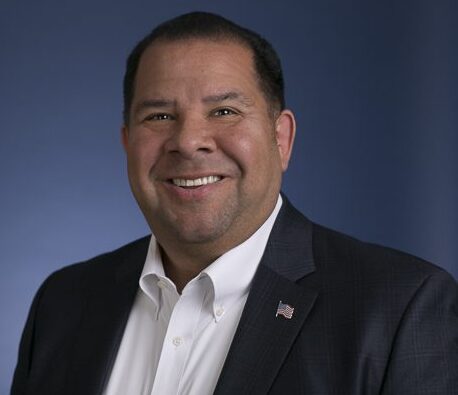
Before “cyber” was a buzzword and long before AI entered the chat, Phil Fuster, vice president of government at SpyCloud, was pioneering hardware and dabbling with NeXT computers alongside the early visionaries of modern computing.
Fast-forward nearly 40 years, and his mission hasn’t changed: Using technology to make government stronger, smarter and more secure.
In this Q&A, Fuster reflects on how curiosity, calculated risks, a connection to the public sector mission and a little entrepreneurial grit shaped his career at the intersection of innovation and public service.
Can you provide a brief overview of your professional background and career progression?
I grew up in the federal technology space — my career began early on when I became one of the early employees at NeXT Computer as one of the first five campus consultants in 1985, immersing myself in an environment of pioneering hardware, software and vision for the future of computing. From there, I gravitated deeper into the public sector — federal, state and local — combining my passion for mission-driven work with emerging technology. Over nearly four decades, I’ve held leadership roles in companies focused on IT infrastructure, services, cybersecurity, data, analytics, and AI, always with a thread of serving government clients.
My path included entrepreneurial ventures (such as founding FedBid and International Data Products), and senior roles in major technology and cybersecurity firms including Dell, CSC, Rackspace, and ProofPoint. Most recently, as chief growth officer at Hitachi Vantara Federal, I oversaw revenue, partnerships, go-to-market strategy and growth across all public sector channels.
What ultimately landed me in the vice president of government markets at SpyCloud role is this cumulative blend of mission experience, deep domain knowledge in cybersecurity and data risk, and proven ability to navigate complex government procurement and strategy. SpyCloud’s mission — to protect identities, exposed credentials, and digital risk — aligns directly with many of the challenges I’ve been addressing over my career in government tech and cyber. The role is a natural extension of my desire to deliver high-impact solutions into public agencies and the mission.
Why was that the path you chose, and how influential was it to your career?
As vice president of government at SpyCloud, my top priorities and responsibilities include:
- Define and execute the strategy for government sector growth: Setting the roadmap for how SpyCloud positions its identity risk, account takeover prevention, and threat exposure solutions across federal, state, and local agencies.
- Drive new logo acquisition and expansion in existing accounts: Bringing on new government customers, scaling contracts, and sustaining long-term relationships.
- Lead government sales, pre‑sales, and partner engagement: Oversee teams that do selling, solution architecture, capture, channel/eco-system partnerships, and integrations specific to public sector procurement.
- Ensure compliance, security, and trust: Work closely with internal product, legal, engineering, and security teams to align SpyCloud offerings to the regulatory, accreditation, and procurement requirements of government clients.
- Build and nurture strategic partnerships and alliances: Forge relationships with system integrators, government frameworks (GSA, IDIQs, contracts), and ecosystem players to amplify reach and credibility.
These responsibilities directly tie to SpyCloud’s core mission: enabling digital identity protection and threat exposure defense. Growth in the government segment is critical to positioning SpyCloud as a trusted partner for public agencies. My role is to bridge the innovation in our solutions with the unique constraints and demands of government missions.
Where do you and your team see growth opportunities or what do you anticipate to be your customers’ top pain points?
Growth opportunities:
- Identity-first security strategies: Many agencies are transitioning from perimeter-based models to identity- and credential-centric defense—SpyCloud is well positioned there.
- Public-private collaboration on exposed credentials: As agencies continue to federate with contractors and third parties, expanded risk surfaces of exposed credentials and identity theft require new tools.
- Risk intelligence for emerging missions (AI, IoT, Zero Trust, Secure Supply Chain, cloud adoption): As agencies adopt zero trust, cloud-first architectures, and expanded IoT/edge, the identity threat vector becomes more complex. Securing the DIB and identifying insider threat is more important than ever.
- Integration with government ecosystems and frameworks: Embedding SpyCloud services into broader government security stacks, contract vehicles, and compliance programs.
Top pain points anticipated:
- Legacy systems and identity/credential sprawl across federated systems and contractors.
- Difficulty correlating credential exposures with mission impact.
- Procurement, accreditation, and regulatory barriers to adopting newer technologies.
- Lack of real-time threat intelligence tailored to identity exposure in government environments.
- Trust and proof‑point challenges in convincing agencies to adopt identity risk solutions at scale.
How are you and your team planning to address/prepare for these opportunities?
- Targeted go-to-market plays: Developing government-specific solutions, use cases, and value propositions tailored to agency missions and constraints.
- Investment in integrations and APIs: Ensuring SpyCloud can interoperate with existing government identity and security tools (IAM, SIEM, SOAR) to streamline deployment and visibility.
- Capture and proposal excellence: Strengthening our capture, proposal, and contracting capabilities to better navigate the complexities of federal acquisition cycles.
- Proof-of-concept and pilot programs: Engaging agencies early through low-friction pilots to demonstrate value, build trust, and establish a clear return on investment.
- Partnership expansion: Collaborating with system integrators, cybersecurity solution providers, and consulting partners to co-develop and co-deliver bundled solutions across government sectors.
- Continuous threat intelligence innovation: Advancing SpyCloud’s intelligence, analytics, and automated remediation capabilities to proactively defend against evolving identity-based threats and credential compromise.
- Thought leadership and advocacy: Participating in government cybersecurity forums, working groups, and industry associations to help shape identity security adoption and best practices.
- Alignment with national priorities: Closely aligning our public sector strategy with the current administration’s key cybersecurity initiatives—including efforts around Zero Trust, supply chain security, and anti-fraud measures. SpyCloud’s solutions directly support Executive Orders and guidance from OMB, CISA, and NIST aimed at protecting digital identities, reducing exposure from compromised credentials, and ensuring the integrity of government systems and vendors.
How important is mentorship & networking in GovCon? Were they influential to your career?
Mentorship and networking are absolutely vital in the Government Contracting (GovCon) space. Because federal relationships, trust, and credibility matter enormously, many opportunities flow through referral, reputation, and shared experiences. Having mentors early in my career helped me navigate the nuances of government procurement, decision cycles, agency culture, and contract structuring.
Over the years, I’ve both benefitted from mentors and become one myself. The network I built—across agency leaders, integrators, technology firms, and peers—has often accelerated opportunities, enabled partnership introductions, and provided strategic insight into evolving agency priorities. In many cases, relationships cultivated through networking determined whether a proposal got a hearing, or an innovation got considered.
So yes — mentorship and networking were and continue to be deeply influential in my career. It is why I find my participation in the WashingtonExec community so important.
What is something most people don’t know about you personally?
- Despite decades in tech and cybersecurity, I’m an avid advocate for finding balance in life with hobbies like cooking and Tai Chi. Finding me time is critical to keeping a creative spirit.
- I enjoy sharing my love of the Baltimore Ravens with my industry friends as many will tell you – from cooking, to tailgating to screaming at the team during the games!
- Having grown up in the federal technology ecosystem, I often reflect on how much the public sector has changed — and I still maintain wonder and curiosity for what the next decade will bring. I plan to stay active for a while through advisory roles which I have started and mentoring others.
- I believe in lifelong learning: even after many years in the industry, I stay hands-on exploring new technologies, threat trends and governance models. Through the University of Maryland, I have been lucky enough to expand my knowledge in AI and Data Science, maybe I will seek a PhD someday!