The cyberthreat landscape is constantly evolving — creating new challenges, expanding vulnerabilities and resulting in more sophisticated hacks and breaches. Government and industry alike are in a never-ending fight to preemptively detect threats, constantly protect and actively defend systems, networks and enterprisewide IT infrastructures. And as the federal and private sectors modernize legacy systems and integrate new and emerging technologies, the cybersecurity execs leading these efforts are always working to strategically, efficiently and securely improve and innovate system processes.
WashingtonExec’s Top 25 Cyber Execs to Watch in 2020 list highlights executives in both the government and the private sector who consistently stay one step ahead of adversaries, equipped with the technical know-how to safeguard systems and information. They have achieved significant milestones and goals with the support of strong leadership, teams and processes, and possess the know-how to navigate the complexities of the cyberthreat landscape.
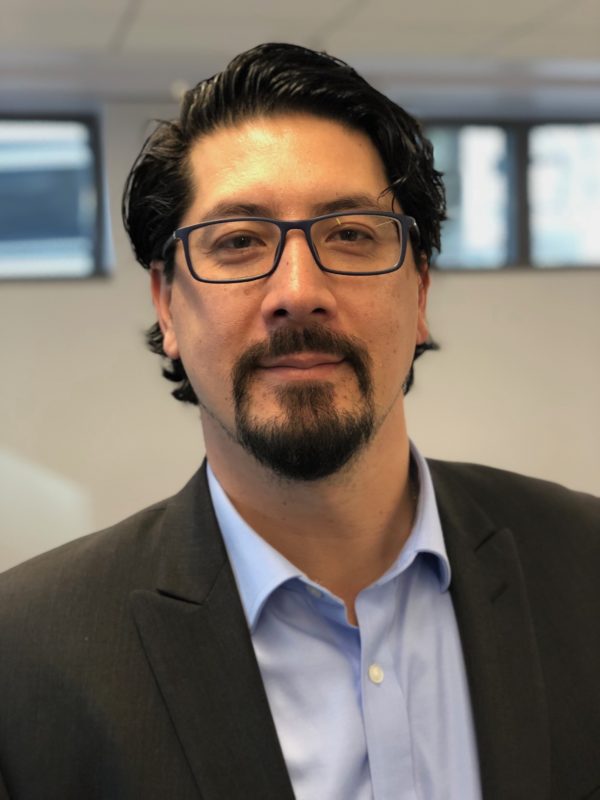
Paul Decker, Executive Vice President, Parsons Corp.
Paul Decker joined Parsons Corp. in 2018, bringing 20 years of professional experience with more than half concentrated in cyberspace operations. He’s a skilled cyber operations strategist focused on innovative leadership, vision and sound financial drivers.
In 2019, Decker helped Parsons reach a number of milestones. The company’s cyber organization portfolio grew significantly because of performance on existing contracts, while also winning new work across the Defense Department and the intelligence community.
In total, the team received more than $1 billion worth of awards in 2019, primarily in the intelligence community. Organizationally, Parsons has steadily focused on establishing a culture of ingenuity, rapid prototyping and mission advancement, which is evident in increased engagement and collaboration both inside and outside the office.
“Our team hosts regular technical exchanges and cyber ‘capture the flags,’ for example, which started in Maryland and are now spreading across the country,” Decker said.
Parsons also won the company’s largest-ever cyber contract — a $590 million effort supporting combatant commands around the world. In addition, the company completed the acquisition and integration of QRC Technologies into its Cyber and Intelligence market.
“They’ve brought some serious innovation and agility into the organization, which will only help the company continue being successful as we focus more on product development and integrated cyberspace capabilities,” Decker said.
For Decker, Parsons represents the revolution of cyber operations and actionable intelligence across the entirety of multidomain operations.
“Truly from sea to space,” he said. “Whether we’re supporting our men and women in the shadows, empowering the operator at the edge or protecting the world’s critical infrastructure and national weapon systems, our rapid, open, interoperable and scalable suite of capabilities further the warfighter’s mission.”
But the real secret, Decker said, is Parsons’ amazing people.
They range from technology experts and early-career software and hardware engineers who are problem-solving enthusiasts, to military veterans with mission-focused perspectives who share real-world experiences and case studies to help their teams deliver solutions to customers.
Parsons also relies on strategic initiatives and emerging technologies to advance its customers’ missions. It has developed capabilities that prioritize edge-to-cloud processing, enrichment and data flow. Its edge sensors are optimized to enrich raw network data and pass back only the metadata necessary for analytics in processing systems.
“This can enable systems to become applicable to handling all types of cyberspace operations data,” Decker said.
Parsons is also focused on speed.
“We are large enough to compete, win and prime major efforts, yet agile enough to execute on work quickly and as promised,” he added.
In the cyber world, Parsons intentionally has a developer-in-the-loop approach so there’s a direct line for customers to partner with their counterparts at Parsons, co-develop the necessary solution and get it into the hands of the operator within hours or days.
Why Watch:
In 2020, Decker is focused on delivering.
“We are hyperfocused on successfully performing on our existing contracts and delivering rapid, interoperable and scalable cyber solutions and products,” he said. “Delivery also includes delivering for our people. Making sure that we are continuing to enhance their personal and professional growth and make them as successful as possible.”
The company is launching several initiatives — including technical and management career tracking — to ensure its employees have the skills and strategic mindset required for long-term success.
“The legacy mindset of employees staying in one place forever because that is what their parents did is far from today’s reality,” Decker said. “As an organization, we must continue evolving and transforming to build a collaborative environment that is focused on the employee experience. We must make employees want to stay, and Parsons is committed to doing that.”
Parsons is also significantly increasing its footprint in the space market, by leveraging its cybersecurity expertise and engineering capabilities to ensure resiliency across platforms and critical assets.

Venice Goodwine, Chief Information Security Officer, Agriculture Department
Just a few weeks after Venice Goodwine became the Agriculture Department’s chief information security officer in December 2018, she successfully led the department’s Information Security Center through the 35-day partial government shutdown. During that time, she continued to secure USDA’s mission leading a team of essential staff, who operate the 24/7 security operations center.
While providing USDA with cybersecurity thought leadership throughout the year, Goodwine’s 2019 signature accomplishment was consolidating all USDA cybersecurity operations into a single Security Operations Center. This move enabled USDA to be a leader in achieving compliance with the White’s House’s 2017 executive order on hardening federal networks and improved SOC service delivery through a unified vision with consistent implementation. In November 2019, more than 100 USDA cybersecurity professionals who provided SOC and SOC-like functions were reorganized into the new center.
These achievements demonstrate the value of the extensive leadership training Goodwine received through her 35 years of service in the U.S. Air Force both as active duty and as a reservist, achieving the rank of lieutenant colonel. Through her service, she realized the value of her people and the importance of investing in them. This passion continues through her dedication to the workforce by providing USDA employees opportunities through the federal CIO Council’s Federal Cyber Reskilling Academy, speaking to fellowship groups and higher education and supporting her staff with educational and detail opportunities.
Why Watch:
During 2020, Goodwine continues her work to mature USDA’s SOC with the goal to provide mature, world-class SOC services and to achieve Department of Homeland Security cybersecurity service provider certification. She continues to lead USDA as it works toward cybersecurity tool rationalization and modernization.
As USDA continues its work with robotic process automation and network flattening, Goodwine advocates for thinking differently about cybersecurity to support and enable technologies that advance mission delivery.
“From fighting forest fires, supporting the hungry, performing cutting-edge research, opening agriculture markets, making capital available to rural America, supporting producers and much more, I continue to be amazed at the broad and diverse mission of the USDA,” she said. “It is my honor and privilege to secure the systems that support a mission that impacts every American, every day.”

Tommy Gardner, Chief Technology Officer, HP Federal
As chief technology officer for HP Federal, Tommy Gardner overseas technology leadership, strategic technology plans, product strategies and customer and partner relationships. His portfolio spans federal agencies, educational institutions and state and local government segments.
In 2019, Gardner was one of the key architects of HP Federal’s proposal for the end-user hardware portion of the U.S. Navy’s Next Generation Enterprise Network Recompete contract, which HP ultimately won after a competitive process.
Gardner was also selected to co-chair the advanced computing roundtable for the U.S. Council on Competitiveness, where he advises on the future of computing architectures, including cybersecurity architectures.
For the past year and a half, Gardner has been involved with the Quantum Economic Development Consortium, where he advises on quantum encryption for device protections and quantum networks. He leads HP’s efforts in strategy and policy in quantum information science and is working with the Energy Department on 3D printing of micro reactors.
Gardner is also a voting member of the DHS Task Force on Supply Chain Risk Management and co-chairs the Threat Evaluation Working Group. He advises the National Institute of Standards and Technology, ANSI and ASME on advanced manufacturing standards. He was also named a 2018 ASME fellow.
In terms of cybersecurity, HP has spent the past few years investing in security solutions, working to empower businesses and federal agencies with the endpoint security they need to secure employee, customer and government data.
As CTO, Gardner is an adviser within HP on security research and investment strategies. He advises on specific products as well as long-term research and was involved in HP’s acquisition of endpoint security firm Bromium in September 2019. In partnership with Bromium, Gardner co-promoted HP SureClick Enterprise, a security tool for secure web browsing, file downloads and access, as well as comprehensive monitoring and analysis using micro virtual machine containment.
Gardner’s expertise and leadership on the U.S. Navy’s NGEN-R contract provided HP Federal with the opportunity to provide new hardware used on the Navy Marine Corps Intranet, the OCONUS Navy Enterprise Network and the Marine Corps Enterprise Network. The goal is to update more than 400,000 pieces of hardware during the 3-year base period.
In terms of advancing federal cybersecurity, Gardner works closely with HP Labs and is currently involved in researching cyber physical systems that protect the end user and can be scaled for cyber protections of large systems.
Why Watch:
In 2020, Gardner is continuing to advance HP’s presence in the quantum information science field in partnership with HP Labs. Projects include research in quantum information and other innovations including device architecture and 3D printing. He also lends his expertise on supply chain risk management to help HP and public sector stakeholders navigate supply chain purchasing requirements and secure technology sourcing.
Most recently, Gardner assisted with HP’s COVID-19 response. As part of those efforts, he connected academic institutions and researchers with mask, ventilator and air purification designs to HP’s 3D printing facilities to rapidly produce much-needed equipment for health care providers. Gardner was instrumental in creating a secure supply chain for information sharing and production of this equipment at a rapid scale.
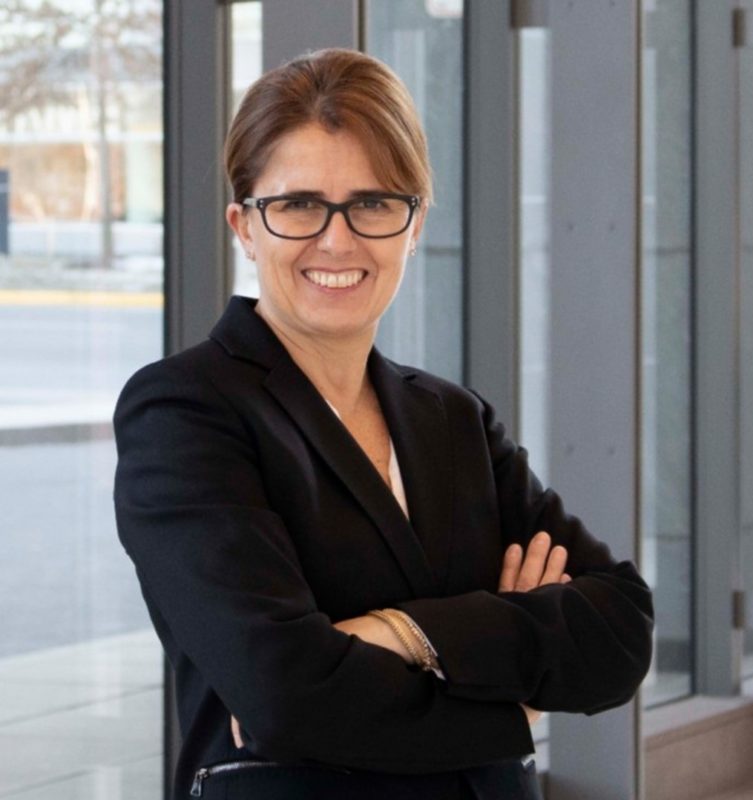
Kris Lovejoy, Global Advisory Cybersecurity Leader, EY
Named EY global advisory cybersecurity leader in 2019, Kris Lovejoy leads more than 7,000 EY employees across the globe to help organizations protect and grow their businesses through proactive cybersecurity initiatives.
Lovejoy launched the EY Security by Design initiative — driving a new mindset toward business and security alignment by building in cybersecurity into every technology-enabled business initiative. The Security by Design philosophy is about enabling trust in systems, designs and data so organizations can take on more risk, lead transformational change and innovate with confidence.
In the face of mounting cyberthreats, many organizations go on the defensive — and miss a golden opportunity to gain a competitive edge by putting enhanced cybersecurity and privacy at the heart of their strategy. The Security by Design approach is created to make sure organizations don’t miss out on these opportunities.
Why Watch:
Given the need for businesses to adopt more proactive approaches to prepare for cybersecurity crises — which have escalated during the COVID-19 outbreak — Lovejoy is working even closer with clients to help them get ahead of threats by creating the Security of Design culture. Implementing this approach is essential for companies to bridge the divide between the security function and the C-suite and enable the chief information security officer to act as a consultant and enabler instead of the stereotypical roadblock.
Lovejoy is also passionate about promoting diversity in the cybersecurity industry and more broadly in the workplace. She recently spoke about women’s empowerment at the Global Cybersecurity Forum, where she highlighted that the EY security team in Saudi Arabia is now 46% female — an outstanding statistic considering women make up only 12% of the industry. She was recently named a Women Leader in Tech Consulting by Consulting Magazine.

Bill Malone, President, Coalfire Federal
Under Bill Malone’s leadership, Coalfire Federal in 2019 completed the successful transition from an 8(a)/small business to a large cybersecurity services provider. Coalfire Federal grew 20%, achieved its ISO 20000 certification to go along with its IS0 9001/27001 and CMMI III and was named to the Top Workplaces for 2019 by The Washington Post.
As a Federal Risk and Authorization Management Program third-party assessment organization, Coalfire continued to support the ever-growing cloud services provider market and to advise federal clients on cloud security.
Why Watch:
Coalfire Federal’s top priority in 2020 is to leverage its multiframework experience to become one of the first accredited 3PAOs in the Defense Department’s emerging Cybersecurity Maturity Model Certification program. The Pentagon’s priority now is to safeguard every mission and to ensure security in every vendor along its supply chain, including the largest industrial contractors and the smallest administrative and support firms, Malone noted in a recent GCN article.
“With the move to the cloud, mission-critical priorities must be certified for security across all missions due to supply-chain exposure and third-party vendor risk,” he wrote. “We intend to leverage our unique experience and practitioner’s perspective to help the CMMC program achieve success and most importantly, help secure DOD’s and eventually the Federal government’s supply chain.”
And as one of the pure-play cybersecurity companies in the federal marketplace, Coalfire Federal is well-positioned to bring its years of expertise to bear. As Malone tells his teammates all the time, “You are in the right business at the right time . . . and at the right company!”

Juliana Vida, Chief Technical Adviser for Public Sector, Splunk
In the spring of 2019, Juliana Vida became Splunk’s first-ever chief technical adviser, a position created to leverage her extensive military and government career and skills as a communicator and storyteller.
Splunk has long been a key player in helping public sector agencies turn their data into doing, and Vida proved the perfect person to help bring massive data transformation to the company’s mission. Vida personifies agility, as evident in her shift from helicopter pilot to technology executive. Her curiosity and drive to learn from everyone around her propelled her career, from 24 years as a naval officer to eight years as a senior IT policy leader at the Pentagon, ultimately leading to her position as the U.S. Navy deputy chief information officer.
Vida’s experience and inquisitive nature drove her to truly understand the difference Splunk brings to government and higher education institutions. Splunk’s Data-to-Everything Platform empowers agencies to leverage all of their data to accelerate mission outcomes. Over 19,000 organizations use Splunk to solve their toughest business challenges with data, allowing them to turn data into action across IT, security, application development and the business.
Feeling firsthand the pain of tools and products that did little to help overcome the real challenges the government faces, Vida showcases how the Splunk platform can be a force multiplier for a federal, state or local agency or higher-education institution, delivering value in the form of improved security and productivity, modernized citizen/employee experiences and lower costs.
The government’s journey toward better leveraging data is long and involves cultural changes that won’t happen overnight. But Vida continues to push forward, as the dividends are a more efficient, inspired and vibrant government ready to tackle new challenges. She helps inspire, motivate and empower fellow women and veterans through the local industry organization Women in Technology, the Naval Academy’s mentorship program and also internally at Splunk. She is also a special adviser to the Washington Cyber Roundtable and a member of the Armed Forces Communication and Electronics Association standing Cyber Committee.
Why Watch:
In 2020, Vida is focusing even more on being agile in today’s changing workplace landscape. New workplace behaviors are taking root, so added security, technology adoption and behavior change around expanded remote work, distance learning and telehealth will be a driving force. Vida and Splunk are ready to pivot on a dime.
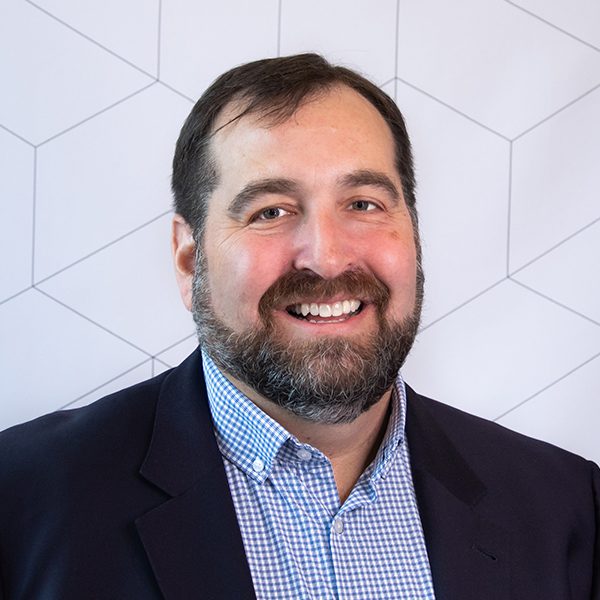
Josh Salmanson, Vice President and Chief Architect, ECS
Josh Salmanson joined ECS in July 2019, making his first and most significant effort solidifying critical partnerships in advance of the Cybersecurity Maturity Model Certification framework. His work ensures ECS will be level 5 compliant and able to provide compliance-as-a-service for other companies.
What stands out to Salmanson so far is how ECS hires the best people and empowers them to succeed. That means training them on the latest technology, providing abundant corporate resources and giving them meaningful work, he said.
“Smart, capable personnel are the most important asset a company can have, all the more so when it comes to cyber,” Salmanson said.
To advance federal cybersecurity missions, Salmanson is looking toward deception technology as one of the most critical technologies in cybersecurity today — which is why ECS partnered with Attivo Networks to bring this capability to the government customer.
“Deception technology takes the pressure off of defenders and puts it back onto the attackers through a proactive security posture that seeks out and mitigates cyberthreats,” Salmanson said.
Why Watch:
In 2020, Salmanson is leading a team to develop an end-to-end software supply chain that uses DevSecOps to build products and platforms that are secure on day one.
“Too many of today’s software supply chains are unprotected, with nonstandard handoffs between different, often siloed groups,” he said. “This project is an effort to protect that entire process, a machine that allows its user to control inputs and outputs smoothly and securely.”

Kevin McNeill, Senior Vice President of Cyberspace Solutions, CACI
Following CACI’s acquisition of LGS Innovations last year, Kevin McNeill helped lead the successful integration of LGS’ cyber research and development capabilities into CACI.
Additionally, CACI opened a new office in Port San Antonio, Texas, to further collaborate with the U.S. Air Force and other government customers in the region, and to provide research and development of full-spectrum cyberspace solutions. The integration of LGS and CACI has allowed CACI to further invest, ahead of customer needs, in new ways to apply these capabilities to deliver advanced solutions in 5G communications, artificial intelligence, distributed computer networking and more.
Before joining CACI during its acquisition of LGS, McNeill served as senior vice president of cyber solutions at LGS. Before LGS, he held various senior roles at BAE Systems, including technical director, solutions architect and vice president of engineering at BAE’s Intelligence and Security Sector. In both roles, he led research and development of multiple methodologies, technologies and knowledge skills.
Why Watch:
McNeill is leading efforts to differentiate CACI’s cyberspace solutions from those of competitors by highlighting the company’s synergetic expertise across a wide range of capabilities crucial to the delivery of solutions for cyberspace operations and information operations. These include 5G communications, natural language processing, artificial intelligence and machine learning, and cloud network security, among other areas.
“Our work spans from fundamental research to supporting mission operations, including a range of technology from handsets to desktops and network infrastructure,” McNeill said. “I’m proud that our highly skilled researchers and scientists continue to rapidly respond to emerging customer needs.”
CACI’s cyberspace solutions also focus on developing secure next-generation modeling and simulation products. For example, the high-fidelity LiveRAN solution, which provides hardware-in-the-loop capabilities to model and simulate 4G LTE and 5G protocols. McNeill is continuing to direct the addition of new features to this solution this year, addressing high demand for robust modeling and simulation technologies. LiveRAN also offers benefits to military training exercises, operational analyses and mission rehearsals.
“We will continue our research on the impact of 5G technologies across multiple domains, including methods to address network vulnerabilities for our customers,” McNeill said.

Mark Gamis, Senior Vice President, Booz Allen Hamilton
Building on a 27-plus-year career, Mark Gamis has served as a senior leader with Booz Allen Hamilton for nearly 16 years. He leads the firm’s civil cybersecurity business, integrating leading cyber and engineering capabilities to defend against increasingly complex cyberthreats. Gamis drives mission-centric, modernized cyberdefense solutions for federal clients that deliver rapid, durable improvements to security program maturity and effectiveness while generating cost savings.
As the largest cybersecurity professional services provider in North America, Booz Allen solves clients’ most consequential cybersecurity challenges. The firm supports federal, defense and intelligence agencies, as well as Fortune 500 and Global 2000 companies, leveraging its deep expertise and experience across sectors.
To support the Department of Homeland Security’s Continuous Diagnostics and Mitigation program and its critical need to scale telework capabilities while maintaining enterprise security, Gamis’ team is investing in cloud security solutions, 5G and advanced artificial intelligence-powered approaches. Gamis remains committed to help clients translate these advanced technologies and tools, optimizing them to meet diverse mission needs.
Why Watch:
In 2020, Gamis is focused on advancing cyberdefense solutions to help clients build long-term cyber resiliency and respond to an expanding attack surface. He’s investing in accelerated secure cloud adoption and deployments, 5G application, machine learning/AI solutions and integration of threat sensor data from operational technology. Gamis is also working with Booz Allen clients to move from reactive defense postures to a proactive, automated, integrated and intelligent cyber operation.

John DeSimone, Vice President for Cybersecurity and Special Missions, Raytheon Intelligence and Space
John DeSimone oversees strategy and operations for Raytheon’s cybersecurity solutions and services business, a unit whose commercial partnership program is unique to the federal mission, he says.
As a traditional mission partner, Raytheon Intelligence and Space integrates complex, high-consequence systems and optimizes them for maximum operational efficiency. The company infuses its cyber expertise into these solutions and is now merging advanced commercial technology into the portfolio.
“We evolved our delivery model so that we can rapidly infuse these technologies into federal missions and realize cyber superiority at the speed of relevance,” DeSimone said.
These strategic initiatives proved successful last year. RI&S brought advanced cyberdefense solutions and training to its international partners in various areas and continues to support nation-scale defense of networks and systems in addition to providing hands-on training that fosters lasting security.
“Our Raytheon Cyber Academy is running its successful second class in Qatar and we have a number of cyber systems integration programs that have expanded into new markets,” DeSimone said.
Last year, Cybersecurity and Special Missions leveraged artificial intelligence and machine learning to help customers identify unknown threats and defend an organization’s entire attack surface with automated threat prevention, detection and response capabilities.
Going forward, CSM’s continuing mission is to provide innovative solutions to solve the complex challenge of cyberdefense and defend mission-critical operations and enterprises.
“Enhancing the cybersecurity posture of our customers is our priority, and we’re working on investments and forging partnerships to help deliver better solutions to proactively keep those organizations and missions secure against the most complex adversaries,” DeSimone said.
Why Watch:
DeSimone plays an integral role in driving cutting-edge capabilities, leading thousands of engineers and cybersecurity professionals in innovating bold and trusted solutions that disrupt the cyber domain, keep enterprise systems secure and protect national security.

Jennifer Walsmith, Sector Vice President and General Manager, Cyber and Intelligence Mission Solutions Division, Northrop Grumman’s Mission Systems Sector
Transitioning from nearly 30 years in the intelligence community to private industry, Jennifer Walsmith brings to Northrop Grumman Corp. an expert ability to build collaborative and agile teams as she is tasked with growing the cyber and intelligence mission solutions business portfolio.
Walsmith leverages her deep knowledge from her former U.S. government experience to guide a more than 2,300-person workforce, spread out across the nation from Maryland to California. Her team provides a critical cyberdefense platform to the Defense Intelligence Systems Agency for detecting and thwarting the 36 million cyberattacks the Defense Department faces every day.
Her team also serves as the leading system developer for the National Security Agency, the epicenter of the war in cybersecurity.
Why Watch:
With a focus on agility and operational success, Walsmith has been tapped to lead important capability development areas for Northrop Grumman, including the company’s artificial intelligence and machine learning portfolio, cyber survivability capabilities and transformational computing offerings.
Her main focus in 2020 is to continue to grow her workforce and be the first in each of the core markets her business competes in.

Jim Schifalacqua, Vice President and Chief Information Security Officer, Peraton
Joining Peraton in 2018, Jim Schifalacqua has worked to integrate an entirely new infrastructure and cybersecurity architecture using a cloud-first approach. This architecture proved critical during the COVID-19 crisis, when employees were able to quickly pivot to a remote working environment, having the same secure capabilities as they had in their offices.
The Peraton approach uses high-assurance cloud services, multiple software-as-a-service security components, and integrated multifactor authentication to achieve a zero-trust architecture with private access, advanced information protection and advanced security threat detection. Peraton was able to rapidly comply with the National Institute of Standards and Technology’s 800-171 cybersecurity requirements.
Schifalacqua’s team of motivated cybersecurity experts transitioned Peraton’s SOC from a bloated proprietary managed security services provider solution with low-visibility into the environment to a high-performance, cost-effective hybrid model where in-house threat hunters easily work across the enterprise with advanced detection and response tools. Schifalacqua received a 2020 CSO50 Award for this innovative cybersecurity approach.
Why Watch:
Schifalacqua has been advancing the infrastructure for Peraton and its partners to reach least CMMC Level 4. His team is also helping Peraton’s federal customers migrate to secure cloud environments. Schifalacqua also plans to establish a standard DevSecOps environment model using Peraton’s cloud-first approach to better integrate cybersecurity into supply chain risk management.

Amanda Satterwhite, Vice President of Cyber Defense & Enablement, Novetta
Amanda Satterwhite leads a team in developing progressive and resilient tools and infrastructures in support of full-spectrum cyber missions. A software developer in her early career, Satterwhite has risen through the ranks of federal contracting, taking on increasing responsibility along the way. She has a history of delivering critical mission systems and leading strategic growth in both small and large businesses.
With a focus on continuous learning and passion for serving the defense and national security community, Satterwhite has built a culture that empowers her team of talented engineers and researchers to drive innovation and technical excellence in support of customer mission success.
Recently, Satterwhite led her division in successfully averaging 110% year-over-year revenue growth over the previous three years and winning four new prime contracts of over $900 million in total contract value.
Through staying attuned to the cyberthreat landscape and investing in research that provides the most impact to mission needs, Satterwhite’s division last year also successfully transitioned multiple proof of concepts by leveraging commercial cloud and machine learning technologies into advanced cyber capabilities for national security customers.
Strong culture and retention are major tenets of Novetta’s success, and Satterwhite’s division is proud to achieve a solid 96% retention rate today. Her team designed and engineered a “disconnected development” environment that allows for a secure but unclassified research and development network that supports the company’s ability to recruit, employ and retain talent.
Why Watch:
Satterwhite is on a trajectory for another aggressive growth year that includes expansion and diversification of her team’s cyber research and development services into two new customer spaces. Her team is continuing to focus on several new internal research and development concepts, including advancing the intersection of vulnerability research and machine learning. The team’s research is accomplished through significant investment from Novetta through the creation of the Machine Learning Center of Excellence.

Ted Wagner, Vice President and Chief Information Security Officer, SAP National Security Services
Ted Wagner joined SAP National Security Services in 2015, tasked with the security and compliance of the corporate network, sharing best practice with customers and security oversight of NS2’s FedRAMP and commercial cloud offerings.
In 2019, SAP NS2 spent a significant amount of time transitioning from a single-product focused Federal Risk and Authorization Management Program environment to a FedRAMP NS2 secure cloud platform. It added a payroll management system to SAP SuccessFactors and gained authorization for SAP Analytic Cloud, which allows SAP to normalize and standardize the way it applies security controls across a growing number of SAP and non-SAP software products.
“By certifying our secure management plane, we can ensure that we patch, monitor and audit everything we do across a variety of single and multi-tenant software solutions running across a variety of infrastructure providers like AWS, Azure, and Google Cloud Platform,” Wagner said.
This represents a maturation of SAP’s view of managing cloud software at scale across platforms in a more consistent way.
“We achieve this through extensive automation in our cloud operations,” Wagner added. In fact, SAP automates everything it does, including security controls auditing, patching and ongoing monitoring so it can more easily adjust to evolving security threats.
Another significant achievement under Wagner’s leadership was receiving the 2019 James S. Cogswell Outstanding Industrial Security Achievement award from the Defense Department’s Defense Security Service.
In 2020, SAP is focused on making security and compliance more accessible, and delivering the Secure Intelligent Enterprise to new customers and new sectors in regulated industries, such as oil and gas.
“We are focusing on customers and partners who are migrating software to a cloud environment and want to ensure they maintain compliance with NIST, FedRAMP, DOD and other regulated standards for cloud computing,” Wagner said. “This will allow us to share the years of knowledge we have acquired and thousands of hours of development to extend the Secure NS2 Cloud capabilities to our customers’ private cloud environments.”
Also this year, SAP started development of a cloud security poster management product it plans to offer to customers later this year.
Why Watch:
As a technology company, SAP is uniquely positioned to help the community, customers and employees navigate a rapidly changing world.
“Some of the software and services we are known for are now more important than ever, as they empower people to learn, share and communicate,” Wagner said. “We have focused much of the early part of 2020 on exercising and evolving our contingency plan to operate in a world where we need to ensure the security of our cloud operations, while maintaining a workforce that has transitioned to working remotely.”
On the customer side, SAP’s focus remains on security automation, compliance standards expansion, international expansion and constantly evolving its security posture to meet the always-evolving threat landscape.

Janet Vogel, Chief Information Security Officer, Department of Health and Human Services
Janet Vogel joined the HHS Office of the Secretary in 2018 with more than 25 years of experience, and has been instrumental in spearheading the department’s adoption of a cybersecurity risk management philosophy.
Under her leadership, HHS has implemented more comprehensive toolsets that facilitate risk-based decision-making. Vogel also led the expansion of cybersecurity risk management programs at the enterprise level, and ensured cybersecurity risk is a key component of HHS’ overall enterprise risk management approach.
Through the implementation of capabilities such as the Health Sector Cybersecurity Coordination Center and Health Industry Cybersecurity Practices initiatives, Vogel also spearheaded efforts to engage the health care and public health sector on cybersecurity issues that could impact or interrupt health care delivery and patient care.
By using existing HHS tools and technologies, Vogel led efforts to develop proactive, automated solutions leveraging machine learning and artificial intelligence. These solutions comb HHS cybersecurity data sets flagging potential cybersecurity issues while reducing the volume of manual activities required by analysts. Among other benefits, this has allowed the team to identify previously unknown phishing campaigns and allowed command and control infrastructure to be taken down before traditional perimeter defenses are aware of the activity.
Why Watch:
Throughout her tenure at HHS, Vogel has worked to improve the department’s performance regarding compliance with Federal Information Security Modernization Act cross agency priority goals. This has increased not only the department’s performance against key cybersecurity metrics, but strengthened the overall program and contributes to increased performance on HHS’ Federal Information Technology Reform Act scorecards.

Alicia Lynch, Vice President and Chief Information Security Officer, Science Applications International Corp.
Alicia Lynch joined the Science Applications International Corp. team in April 2018, bringing more than 30 years of experience with the Defense Department, the defense contracting community and the private sector. She retired as a colonel from the U.S. Army in 2012, where she served as both an intelligence officer and a cybersecurity specialist.
Over the past two years, Lynch led the company’s effort to build a consolidated, high-performing cybersecurity organization, uniting critical processes and groups to provide new and improved capabilities and operational support to the business. Lynch has been instrumental in strategically securing SAIC’s future technology efforts, including cloud services, managed security services, supply chain security and advanced threat hunting efforts. Her ability to direct large, enterprisewide initiatives to realize new security functions serves as a major innovation driver for the company.
Lynch’s leadership has also resulted in a high retention rate amid an extremely competitive talent market in the cybersecurity sector. Her continued focus on communicating vision and strategy to all members of SAIC’s cybersecurity organization empowers and enables every security professional on her team. She provides mentoring and development of leaders and technical professionals to achieve measurable outcomes for SAIC, focusing on the long-term sustainability of the organization.
Lynch has also directed the development of the ServiceNow GRC platform to track, manage and report on all cybersecurity risk throughout the organization. All elements of policy, compliance, risk, incident response and vulnerability management are now integrated into SAIC’s ServiceNow ITMS system, providing efficient and timely reporting throughout the enterprise. This success is often replicated as a service that SAIC provides to some federal customers.
Why Watch:
Lynch’s proudest accomplishment to date is recently leading SAIC through a successful DCMA assessment of SAIC’s implementation of security controls. Her main focus area for 2020 is to carry that momentum from the assessment forward as SAIC begins a journey to meet and exceed the Cybersecurity Maturity Model Certification standards of excellence.
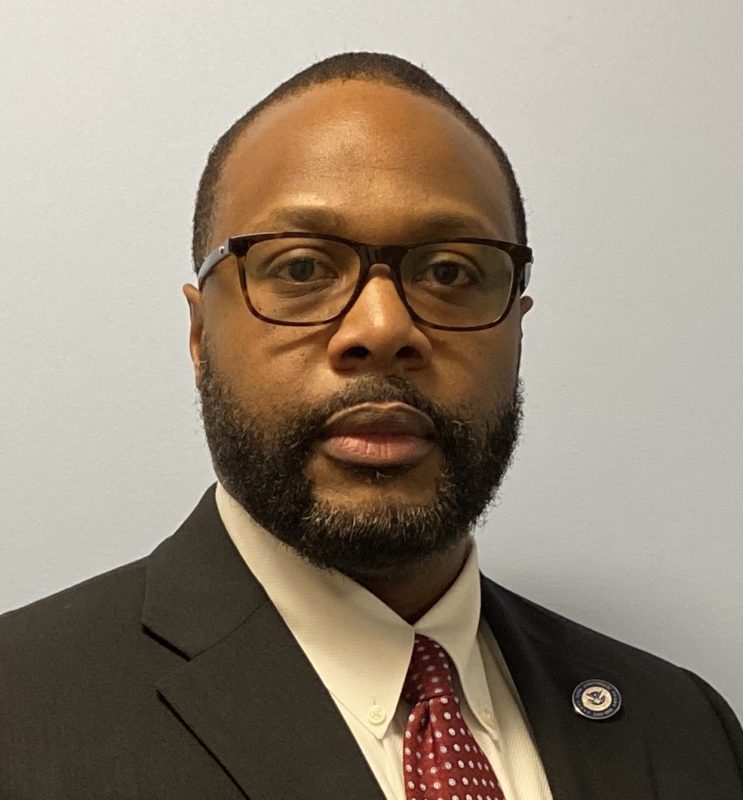
Garth White, Chief Information Security Officer, Science and Technology Directorate, Department of Homeland Security
Garth White is responsible for information security for all research and development programs and oversees the cybersecurity activity of a network of nationwide employees leveraging classified and unclassified systems and hundreds of R&D programs annually.
“I spearhead the prioritization of robust and scalable security solutions that include managing a network of five DHS laboratories with over 700 R&D personnel and 13 Department of Energy laboratories that are vital to our nation’s homeland security mission,” White said.
He’s also an active member of the DHS CISO Council, and has more than 20 years of experience serving in technology, security and executive-level positions for the federal government and at government technology firms.
The programs White and his teams support extend beyond DHS to other federal agencies, major universities, state/local law enforcement and private industry. The emergence of artificial intelligence, machine learning, robotic process automation, blockchain, and cloud computing are all helping to advance the DHS S&T mission. These technologies led to a DHS departmentwide implementation of the Derived Access Credentials Smartcard and implementation of the Security Center engine that tightened the Border and Coastal Information Service Program’s Integrated Multi-Domain Enterprise security posture.
In 2019, White’s team designed and implemented solutions for some of the most complicated threats including maritime, active shooter response, opioid detection and border control emerging technology.
“We deployed new robust security tools, securing 2,500 devices to enhance DHS’s ability to anticipate, identify and avert civil transportation threats,” White said.
His team also led a new Traveler Verified Information Protection program, which provides integrity checking of mobile devices deployed by more than 40 federal agencies and is estimated to save millions of dollars annually.
White is particularly honored to support the Spectrum Efficient National Surveillance Radar program. This multibillion-dollar cross-agency infrastructure program aims to modernize the nation’s aging weather and aircraft surveillance radar systems and assess the feasibility of auctioning a band of government-owned radio frequency.
Being a first-generation immigrant from Jamaica gives White a different perspective, too. His family moved to the U.S. in 1975, settling in the Maryland-D.C. area.
“It may sound cliché, but we firmly believed that: ‘In America, you can be anything you want to be as long as you work hard for it,'” he said.
Seven of his family members went on to serve in the U.S. military, and White believes the value his family placed on serving the country helped to shape who he is and his passion to directly serve the federal government.
“Who knows, maybe even the defensive mindset I learned both playing free safety for the Robert Morris football team in college and coaching afterward translated to my professional life that you must be able to not only suppress threats as they come, but also sniff them out in advance!” White said.
He strives to enable effective, efficient and secure operations across the mission by applying engineering, analytical and innovative security approaches that help prevent, respond to and recover from potential cyberattacks.
“I work closely with my teams to enable the S&T mission — the labs, the scientists, the creative professionals innovating for the DHS mission — while maintaining our security vision and enforcing FISMA compliance to strengthen the S&T security posture,” White added.
Why Watch:
In 2020, White and his team’s responsibilities monitoring the nation’s cyberthreats remain a key priority.
DHS S&T is currently working on some of the nation’s hardest challenges — developing security solutions to address global pandemic mitigation, commercial aircraft vulnerability, opioid screening and detection, border safety and security, innovative traveler scanning technology, and chemical detection capabilities.
“In order to successfully solve these challenges, we will leverage artificial intelligence, machine learning, robotic process automation, security algorithms, improved cybersecurity decision-making, network risk scoring and user/machine behavioral analysis,” White said.
And while it is important to advance technological outreach through innovation and creativity, it is critical S&T does so while safeguarding the nation’s systems, data and people.
“It’s my job to ensure that we play unmatched defense!” White said.
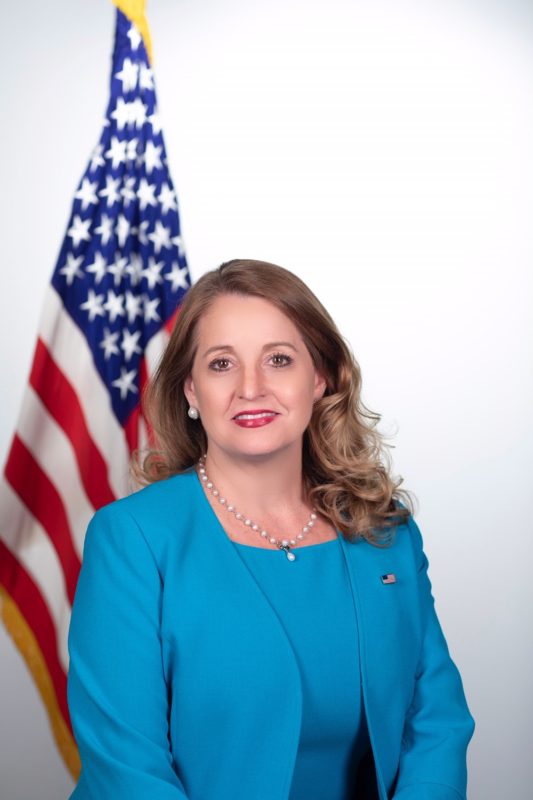
Suzette Kent, U.S. Chief Information Officer, Office of Management and Budget
Suzette Kent was appointed federal chief information officer in January 2018, and has already helped turn visions and early ideas into reality
Those achievements include updating key policies, such as shared services, identity, credential and access management, the Cloud Smart strategy and Trusted Internet Connection.
In 2019, Kent’s office also launched a first-of-its-kind Federal Data Strategy and associated action plan for 2020. Additionally, she advanced the President’s Management Agenda goals for cybersecurity, including the creation of the cyber reskilling academies, the President’s Cup Cybersecurity Competition and directing the Federal Acquisition Security Council to facilitate a whole-of-government approach for supply chain risk management.
Kent’s leadership supported a mindset of continuous development to further shape 2020 efforts and successes. These include detail opportunities for cyber reskilling academy graduates, and the designation of Cybersecurity and Infrastructure Security Agency as the Cybersecurity Quality Service Management Office through the Sharing Quality Services Strategy.
Kent’s background and previous industry experiences influence the way she directs the office today.
“The experiences working in financial services with banks, software companies and consulting companies around the world over my career has emphasized some key themes that always influence how I approach any initiative,” she said.
Those themes include clarity of mission and an importance of understanding the expectations of stakeholders.
“This is important in both public and private sector, but often much more complex in the government realm,” Kent said.
She also ensures security is a part of every consideration — from technology and operations to workforce behaviors.
“In the federal government, like in financial services companies, security of networks, data and privacy are critical to gaining trust and confidence from those you serve and crucial to achieving mission,” Kent said.
Along with the influential themes she’s kept with her throughout her career, Kent relies on strategic and innovative initiatives to advance federal cybersecurity missions.
She said the administration has focused on improving cybersecurity for federal agencies in a range of key areas — technical capabilities, operational capabilities and workforce development.
“On the technical side, we have improved protection and defense capabilities and addressed specific threat vectors,” Kent said. In fact, quarter-over-quarter progress was reported on Performance.gov.
“Operationally, we worked with agencies’ CIOs and CISOs and CISA to take an all-of-government enterprise approach to monitoring, improving quality of information and response activities,” Kent added.
Recently, Kent’s office designated its first cybersecurity-focused Quality Service Management Office to continue to improve and expand cybersecurity programs, products and services made available to agencies.
“These accomplishments and continued focus will advance cybersecurity missions today and create the foundation for continuous improvement,” she said.
Why Watch:
In 2020, Kent and her team will continue to focus efforts on enabling a secure, modern and data-driven government.
“As we expand cloud-enabled solutions, digital citizen services and leverage automation and data to improve mission effectiveness, our cybersecurity operations and technical capabilities must also expand,” she said. “We will continue to focus on improved ways to collect, analyze, visualize and integrate cybersecurity data into federal security operations.”
Kent also looks forward to expanding workforce development programs working with agencies, the Cybersecurity and Infrastructure Security Agency, vendors and public-private partnerships.

Greg Touhill, President, AppGate Federal
Retired U.S. Air Force Brig. Gen. Greg Touhill currently serves as president of AppGate’s Federal Division, supporting agencies across the federal government with secure infrastructure solutions delivered from data centers.
Appointed by President Barack Obama as the nation’s first federal chief information security officer in 2016, Touhill was tasked with ensuring proper digital security policies, strategies and practices were adopted across government. During his earlier time in the Air Force, he served in the U.S. Transportation, Central and Strategic commands, and led the creation of the Air Force’s cyberspace operations training programs.
He’s also an adviser to organizations, institutions and corporations on cybersecurity, and is known for his tireless public efforts to teach and inform good cyber hygiene to the next generation. In fact, he’s a faculty member at Carnegie Mellon University’s Heinz College, where he teaches cyber risk management. He’s also the author of “Cybersecurity for Executives: A Practical Guide,” which is used at colleges and universities across the country.
Why Watch:
Currently, Touhill is heavily focused on zero trust, and has participated in numerous interviews and written extensively on the matter. His passion and knowledge has helped inform and teach the government how to make the move to adopt zero trust into their agencies and processes.

Srini Iyer, Senior Vice President and Chief Technology Officer, Mission Solutions and Services Group, ManTech International
As senior vice president and chief technology officer of ManTech’s Mission Solutions and Services Group, Srini Iyer said one of the many achievements he was proud to help lead in 2019 was the unit’s work on the Secured Tactical Edge Platform.
This platform provides the capability to deliver vital intelligence to warfighters at the tactical edge quickly, securely and reliably, giving warfighters the ability to run complex analytics at the edge where they typically operate in a delayed or disconnected, low bandwidth environment.
“By utilizing the zero trust model to prevent hostile forces from intercepting or interfering with the data, we are safeguarding troops while advancing mission performance,” Iyer said.
One very important strategic initiative in 2019 was the opening of ManTech’s Cyber Training Center in Orlando, Florida. This facility is the epicenter of the company’s work in Persistent Cyber Training Environment for the U.S. Army. The center uses open architectures, agile DevSecOps methodology and virtual software factories to automate development and deployment of systems and applications using microservices and containers, Iyer said.
“These applications are essential to training America’s next-generation cyberwarriors,” he added.
ManTech is a mission-focused company, and by bringing digital to the mission, it’s making warfighters and other federal customers more efficient. ManTech understands its unique role — more than 48% of its employees are veterans.
According to Iyer, one of ManTech’s key differentiators is its focus on teamwork and collaboration when it comes to testing, validating and deploying best-in-class solutions for its customers.
“We hire great talent with proven experience, and provide ongoing training and mentoring to keep them on top of their game and our company ahead of competitors,” he said. “We drive innovation through our work at ManTech Labs, where we explore and develop exciting new technologies.” And using communities of practice, ManTech has practitioners dedicated to solving customers’ toughest problems.
Why Watch:
ManTech’s 2020 focus is “Bringing Digital to the Mission” in everything it does, with a sense of urgency.
The company automates and accelerates offense-informed cyber, digital engineering, workload interoperability in a multicloud environment, advanced warfighting capabilities, securing weapons platform and applying sophisticated analytics in ways — some of them surprising — that help secure the nation during the global pandemic.
“When you read of known coronavirus carriers stopped while trying to plane-hop illegally between different nations, that is ManTech analytics at work,” he added.

Randy James, Senior Vice President and General Manager, Mission Services & Technology Solutions, ICF
Since 2017, Randy James has overseen Mission Services & Technology Solutions’ mission of providing transformative, integrated and adaptive risk management, IT and resiliency solutions for federal, state and commercial customers. This includes identifying, prioritizing and mitigating threats to missions across critical infrastructure, networks and systems.
In 2019, James recognizes the hiring of a mission-driven team focused on client execution as one of the year’s great achievements.
“It is with focused and dedicated leaders that an organization achieves results,” he said. “My solid team of leaders helped to drive results in client satisfaction and also a growth enabled organization.”
He also put a renewed focus on developing solutions for increasingly connected reality, which presents “massive challenges to military and commercial entities working to safeguard networks from diverse, emerging and growing threats to information and physical security,” James wrote in a 2019 commentary for Nextgov.
His team’s first approach was to look at each problem as a set of cyber challenges that included both physical aspects and virtual environments as a combined problem set. Then, the approach applied an agile, whole-of-nation approach to cyber and physical infrastructure resilience and called for increasing public-private sector collaboration to help solve the nation’s biggest challenges.
“I specifically focused how we view our current connected world and how that presents massive challenges to military and commercial entities working to safeguard networks from growing threats,” James said. “I view cyber as an enabler for resilience, one of many domains that affect the security of the entire enterprise.”
The team is specifically focused on providing holistic solutions designed to secure all systems — from IT, people and processes to physical infrastructure — where clients have access to a diverse set of capabilities designed to meet the full scale of diffuse and asymmetric cyber threats.
“Our approach is the view of the entire domain and not specifically by market,” James added. “We are capabilities focused and our consultant model is focused on the approach to solving the problem.”
Ultimately, the organization has a broad and deep set of capabilities that it applies to the domains.
“This enables us to not address just one challenge but allows us to take the integrated approach I described above,” James said.
Why Watch:
James renamed the division he leads the Mission Systems and Technology Solutions because he knows the organization is dealing with guaranteeing mission delivery, primarily focused on technology solutions to execute on that promise.
“Additionally, we will continue focus into the physical, cyber, IT domains within DOD and federal civilian markets where this holistic approach solves big problems,” James said.
This means showing a renewed attention on how to solve emerging threats — including the proliferation of weapons of mass destruction, information warfare against the election system and cyberattacks targeting both defense and civilian networks that put the nation’s military capability, critical infrastructure, democratic institutions and the safety of civilians at risk.

Caesar Nieves, Senior Vice President and General Manager, Cyber Business Unit, Jacobs
Caesar Nieves brings to his role at Jacobs more than 20 years of senior-level experience as a business and technical leader directly supporting government clients and growing cyber businesses. He also served in the U.S. Air Force, where he was responsible for the acquisition, configuration and maintenance of network operations while assigned to HQ Air Combat Command.
In his current role, Nieves provides senior leadership, strategic vision and focus for Jacobs’ cyber business as the company rapidly expands its global cyber footprint amid four major cyber acquisitions including Key-W, Blue Canopy, Van Dyke Technology Group and Verizon FNS over the last four years.
Nieves is focused on delivering capabilities and solutions in cyber readiness, cyber operations and cyber analytics. Jacobs’ cyber portfolio includes a variety of customers in the Defense Department, intelligence community, federal civilian, state and local, and international markets. Under Nieves’ leadership, the firm has developed a Cyber Center of Excellence that oversees its intellectual property. Nieves recently reorganized the business unit to align to major cyber customer groups and brought in many of the industry’s best P&L and sales leaders to execute the firm’s new cyber strategy.
Why Watch:
Jacobs Cyber is composed of more than 2,000 cyber professionals globally solving the world’s most complex cyber and advanced analytics problems. Through a series of acquisitions, Jacobs is transforming its existing business model as an engineering firm into a global cyber service provider. Nieves has been tasked with doubling the company’s cyber footprint in the upcoming year.
To achieve this growth, Nieves has developed and leads a new go-to-market portfolio delivering capabilities in cyber readiness, cyber operations and cyber analytics.
To strengthen the Jacobs cyber readiness capability, Jacobs Cyber recently established the Jacobs Cyber Innovation Training Center in Maryland. Among other features, it has a mock security operation center with a full video wall and global connectivity that can handle large-scale military, national security and civilian exercises within a team-based setting.
“This Training Center is cutting edge and provides the exact training needed for defending our nation against evolving cyberthreats,” Nieves said.
In addition, to help bolster Jacobs Cyber analytics capability, Nieves also established the Jacobs Data Fusion Innovation Center in Austin, Texas, made up of cyber, data science and cloud-scale engineering professionals developing next-generation data analytics.
“This is just another example of how Jacobs is driving and proactively staying ahead of the constantly evolving cyberthreats to provide our customers with cutting-edge technology and world-class solutioning,” he said.

Katie Selbe, Senior Vice President and General Manager, Cyber Network Solutions Group, Alion
In July 2019, Alion reorganized to establish the Cyber Network Solutions Group to exclusively focus on cyber and network solutions. Katie Selbe was tapped to lead that organization, given her track record of operational excellence and background in cyber and C5ISR domains. She now leads a diverse portfolio of programs and capabilities delivering full-spectrum cyber operations; big data analytics; cloud architecture; cross-domain network engineering, cyber hardening and operations; live, virtual and constructive training; and integrated artificial intelligence.
Selbe has been instrumental in aligning the Cyber Network Solutions Group for the future.
“Culture is foundational, and what motivates and retains talented people to drive business growth,” she said. “Culture enables the development of high-performing teams that leverage cross-organizational capabilities, and through a culture of diversity, to better challenge the status quo and deliver world-class results.”
Selbe’s team leads the largest, integrated and secure training environment across the Defense Department and developed a revolutionary massive-scale data fusion platform able to process petabytes of data at phenomenal speed.
Selbe’s teams engineer solutions and break barriers partnering with industry and military innovators to present solutions that can fuel and contribute to the military/business ecosystem. Her team has been a winner of the AFWERX Multi-Domain Operations Challenge presenting the Big Data Platform, a DOD-accredited DevSecOps platform used for cyberspace operations in commercial clouds on all classification environments.
Her team was also selected to present a mixed-reality wargaming system for the AFWERX Wargaming Challenge.
Why Watch:
Selbe has a wealth of industry knowledge in the cyber and intelligence sectors. She leads a portfolio of services, technologies and solutions that propel Alion forward. Her focus on customer requirements, program growth and strategy has uniquely positioned Alion in the cyber market.
Under Selbe’s leadership, the Cyber Network Solutions Group is creating a consolidated information warfare and joint all-domain offering that combines the cyber, big data/cloud and network capabilities of her group with Alion’s ISR and EW capabilities to provide comprehensive solutions to customers. To execute this organizational strategy, Selbe is focusing on creating strong collaborative teams that know the customer, business and technologies.

Marianne Bailey, Cybersecurity Leader, Guidehouse
Marianne Bailey joined Guidehouse in October 2019, bringing to the role three decades of experience protecting the nation’s critical security systems, including as deputy national manager for U.S. national security systems at the National Security Agency.
While leading the NSA cybersecurity program, Bailey drove the largest cybersecurity and cryptographic modernization program in the last two decades to secure the nation’s future digital environment.
Through an extensive awareness campaign, she garnered resources, strengthened government and industry partnerships and delivered a plan. Through these efforts, Bailey laid the foundation for and began the development and implementation of innovative capabilities which protect the nation’s most critical networks, enabling over 4 million secure communications capabilities globally including secure mobile solutions, weapons systems, diplomatic communications, state-of the-art satellites and protection of the national nuclear armament.
Bailey outlined significant strategic outcomes that amounted to an investment of over $1 billion to the topline budget — the largest increase ever to that mission set. The investment will fuel cryptographic defenses, significantly scale the cyber workforce and augment the tools and infrastructure that prevent and eradicate global cyber conflict.
Bailey was also a major driving force behind NSA establishing the new Cybersecurity Directorate.
After quickly realizing the current operating structure wasn’t going to be supportive of taking NSA into the future cyber world, she championed an executive review of the current state of operations to include development of a detailed Responsibilities, Accountability, Consult and Inform activity. Over the course of a year, she met with dozens of customers and industry partners and reported findings to leadership, which resulted in a tiger team effort and ultimately a major restructure to meet the nation’s cyber challenges.
The impact of the effort she spearheaded will be seen for decades to come.
While Bailey’s government career has resulted in cornerstone efforts that have set the stage for cybersecurity since the 1990s — including her work at NSA, the Defense Department and the intelligence community — she brings that same strategic leadership to her clients at Guidehouse.
Bailey is teaching executive leaders how to prevent, prepare, respond and recover from a cyber breach before they are faced with handling an actual incident. This includes legal, reputational, communications and overall security posture beyond the specific weakness that led to the breach.
She’s also developing a comprehensive federal program for high-value asset identification and protection to ensure federal clients understand the impact on their business of possible cyberattacks and how to defend against them.
Bailey is also providing critical identity and access management support from strategy and architecture to implementation across varying technologies ensures Guidehouse clients have a solid foundation for their cybersecurity programs.
Why Watch:
In 2020, Bailey’s primary focus will be on the firm’s people — Guidehouse’s No. 1 asset. She says she believes Guidehouse has built a strong brand and has the right culture, helping the firm to develop its people while attracting top talent. And as a learning organization, Guidehouse is ambitious and innovative, with strong partnerships with industry and clients.
Guidehouse is also focused on working with agencies, as most have a jumble of cybersecurity components that don’t work together, with stove-piped products that are not fully operationalized. In partnering to deliver an effective cybersecurity program, Guidehouse will work with them to identify a comprehensive plan that involves not only policies, processes and education but also integrating disparate technical disciplines such as cloud, digital modernization, mobility, analytics, threat monitoring, automated patching and remediation.
And in leading Guidehouse’s cybersecurity practice, Bailey helps the firm drive strong cybersecurity disciplines and programs to increase the security posture of Guidehouse’s federal government and commercial clients.

Kevin Fogarty, Chief Technology Officer of Cyber and SIGINT Solutions Operation, Leidos
Kevin Fogarty has spent 18 years developing a career at Leidos, and is now focused on creating scaled-agile approaches to cyber mission management application development and implementing a companywide cyber R&D lab to provide for rapid prototyping and testing of cyber capabilities.
Differentiated by the breadth of cybersecurity experience across its four business groups – Defense, Intelligence, Civil and Health – Leidos supports the nation’s most critical cyber missions.
“Our teams operate three of the federal government’s four largest security operations centers and conduct full-spectrum cybersecurity support,” Fogarty said. “We seek opportunities for applied R&D through the Leidos Innovations Center (LInC), which performs advanced cyber research for customers including DARPA, IARPA, and other DoD research labs.”
Fogarty’s team focuses on areas such as deepfake technologies and persona development, and application of data science and machine learning principles to cyber mission management.
“We have a keen interest in the state of quantum computing,” Fogarty said. “These advancements will have a significant impact on the architecture of our system defenses and capabilities.”
Why Watch:
In 2020, he will focus on continuing to grow and integrate new capabilities.
“Leidos has well-established technical core competencies, and with the recent acquisition of Dynetics, this will only add to our complimentary cybersecurity capabilities,” Fogarty said. “By integrating their advanced R&D, we will continue to offer differentiated solutions that protect our customer’s most critical platforms.”