
Close Menu
WashingtonExec
    Podcast Episodes
    LinkedIn Facebook X (Twitter) Instagram YouTube
    LinkedIn Facebook X (Twitter) Instagram YouTube
    WashingtonExec
    Subscribe To The Daily
    • News & Headlines
    • Executive Councils
    • Videos
    • Podcast
    • Events
      • 🏆 Chief Officer Awards
      • 🏆 Pinnacle Awards
    • About
    • Contact Us
    LinkedIn YouTube X (Twitter)
    WashingtonExec
    You are at:Home»News»Tom Suder on Sequestration: “A Good Business Would Never Do Across The Board Cuts”
    News

    Tom Suder on Sequestration: “A Good Business Would Never Do Across The Board Cuts”

    By Brynn KoeppenMarch 8, 2013
    Share
    LinkedIn Facebook Twitter Email
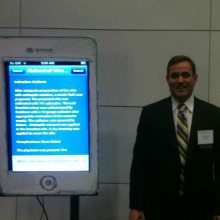
    Tom Suder, Mobilegov

    Over the last few months federal spending cuts, budget restraints and federal contracting’s favorite word, “sequestration,” have been on everyone’s mind. This past week a new word was invented to describe the current budget climate: “snowquester.”

    WashingtonExec reached out to area executives in the federal contracting space to share their insights regarding how this uncertain budgetary climate is impacting their customers, business, as well as future initiatives.

    Tom Suder, CEO of Mobilegov and recent Fed100 winner gave us his input:

    WashingtonExec: How has sequestration impacted your customers?

    Tom Suder: New spending has all but stopped. Existing spending has certainly slowed. Uncertainty means most agencies just are not spending money. Once this matter is resolved, the spigots will open again.

    WashingtonExec: How has/will sequestration impact your overall business?

    Tom Suder: Slight affect. Most spending for mobile is likely to use “end of the year funds,” which should be significant this year. Body shop integrators will be most affected. It will be hard to increase body counts on projects.

    I’m not necessarily thinking that this is a bad thing in most cases.

    WashingtonExec: What is your personal view of sequestration?

    Tom Suder: A good business would never do across the board cuts. You would rather make cuts where it makes sense by eliminating under performing areas/performers.

    You could argue that target rich investment areas should receive more funds if that makes sense even in a cost-cutting environment.


    Previous ArticleSAVE THE DATE: SECAF’s Executive Briefing March 14th
    Next Article “Navy STEM for the Classroom” Program Hopes to Bring STEM Field to High Schools Nationwide

    Related Posts

    Knox CEO Irina Denisenko is ‘Wired to Move Toward Complexity, Not Away From It’

    Auria Adds Chris Hassett as EVP & GM of Commercial & Public Sector Business Unit

    Leidos Names Elena Fenton Federal Health IT Growth Lead

    Comments are closed.

    LinkedIn Follow Button
    LinkedIn Logo Follow Us on LinkedIn
    Latest Industry Leaders

    Top CFOs to Watch in 2025

    Top HR Execs to Watch in 2025

    Load More
    Latest Posts

    Knox CEO Irina Denisenko is ‘Wired to Move Toward Complexity, Not Away From It’

    December 4, 2025

    Auria Adds Chris Hassett as EVP & GM of Commercial & Public Sector Business Unit

    December 4, 2025

    Leidos Names Elena Fenton Federal Health IT Growth Lead

    December 4, 2025

    Top CIOs to Watch in 2026: Arcfield’s Glasford Hall

    December 4, 2025

    Top CIOs to Watch in 2026: Amentum’s Luis German

    December 4, 2025
    Quick Links
    • Executive Councils & Committees
    • Chief Officer Awards
    • Pinnacle Awards
    • Advertise With Us
    • About WashingtonExec
    • Contact
    Connect
    • LinkedIn
    • YouTube
    • Facebook
    • Twitter

    Subscribe to The Daily

    Connect. Inform. Celebrate.

    Copyright © WashingtonExec, Inc. | All Rights Reserved. Powered by JMG

    Type above and press Enter to search. Press Esc to cancel.