 View Top Space Execs
Space exploration is soaring to new heights. In 2023, Congress allocated $25.4 billion to NASA, a 5.6% increase from the previous year. Additionally, lawmakers gave the green light to a $26.3 billion budget for the U.S. Space Force. Recognizing that exploring the vast unknown requires a joint effort, the nation frequently collaborates with both GovCon and private space companies. These partnerships supply the essential technology, know-how and teamwork necessary to maintain a leading position in global space exploration.
Those spearheading space-relation initiatives oversee a variety of tasks, from defense-based space support to advanced technologies, robotics, geospatial and business. For WashingtonExec’s Top Space Execs to Watch in 2023, we identified the directors, managers, leaders and C-suite leaders in industry and government helping advance the U.S. space mission.

Dave Micha
President, Intelsat Government Solutions
In the last two years, Intelsat Government Solutions changed its focus as part of its growth plan. Instead of mainly offering commercial SATCOM to the Defense Department and international partners, the company now acts as a full-service communications integrator.
As part of this transition, Dave Micha said the focus has been on growing and enhancing the team across all functions (program management, engineering, operations, finance and supply chain). They have added talent to the company’s existing outstanding team with people from diverse backgrounds with industry and government experience.
Why Watch
“As the leader of our government business, Dave Micha is driving our strategy to move up the value chain to become a full solutions provider for our USG customers,” said Dave Wajsgras, CEO of Intelsat. “The company has made tremendous progress executing critical partnerships to bring the right mission solution to the right customer at the right time.”
Micha’s team is working on new customer solutions, like the Multi-Layer Communications System that offers a combined GEO/LEO service in a single view. They’re also launching the Multi-Orbit Tactical Terminal later this year, an Intelsat-made terminal with GEO and LEO functions for ground mobile use. Lastly, they’re collaborating with DOD and the intelligence community to provide unique, cyber-secure, resilient, multi-orbit and multi-band communication solutions for their most challenging issues.
“These are exciting times in our industry and especially here at Intelsat as we launch new satellites, enhance our global ground infrastructure, and incorporate 5G capability into our global network,” Micha said. “As the foundational architects of satellite communications technology and with 60 years of experience in this industry, the capabilities and solutions we bring to our customers are critical to mission success.
“We are proud of our partnership with the DOD and intelligence community, and we look forward to contributing to their success as a trusted partner that continues to innovate and bring new capabilities to our customers.”

Todd Ham
Vice President and General Manager, Defense and Space Programs, Public Sector Earth Intelligence, Maxar Technologies
Todd Ham recently took on his new role within Maxar leading the combined Defense and Space Programs team and is heavily focused on what lies in the future.
“In my engineering days I was ⏤ and still am ⏤ a big believer in what I called ‘design for the future; implement for today,’” he said. “That simple approach forces one to consider where you’re going strategically and the architectural or business model flexibility that will be needed to adapt to uncertainty while being practical with how much to spend, now.
“Today, in this role, I challenge myself to provide sufficient foresight so teams can make those design decisions and implementation tradeoffs while also setting the environmental conditions so team members can excel in mission execution.”
Prior to changing roles in late 2022, he focused on helping develop next-generation systems and optimizing Maxar’s internal operations. As a former small business chief operating officer, Ham always is on the lookout for opportunities to generate innovative and agile practices within a large corporation like Maxar.
“In his history with Maxar, Todd has applied a combination of business and technical acumen to anticipate the challenges the business will face and position to address them,” said Tony Frazier, executive vice president and general manager of Maxar’s public sector Earth intelligence. “Combining those skills with his understanding of both Maxar’s systems and operations creates opportunities to delivery substantial value to address customer needs.”
Why Watch
In 2023, Ham is excited to see the progress his team, Maxar and the broader remote sensing community will make in accelerating the delivery of multisource data and intelligence for customers domestically and globally.
Maxar is launching the next-generation WorldView Legion satellites and complementing those with its partner Umbra’s synthetic aperture radar capabilities, as well as radio frequency data from Aurora Insight acquisition, to provide a more holistic intelligence mission value for customers. They’re enabling business systems interoperability and also accelerating delivery timelines for both the data and analytics.

Bill “B.K.” Kelley
Vice President and Division Manager, Air Force and Space Division, ManTech
B.K. Kelley’s biggest achievement with ManTech was work that made the James Webb Space Telescope operational last spring. ManTech designed and created the 18×56-foot shield that protects the telescope from heat, light and infrared radiation emitted by the sun, moon and Earth ⏤ factors that would otherwise impair its functionality.
As the JWST orbits the sun at 1.5 million kilometers from Earth, ManTech’s sun shield keeps the telescope at a safe temperature of 50 Kelvin (minus 370 degrees Fahrenheit) ⏤ and ensures the device’s ability to see farther into space than ever before.
In addition, ManTech supported the Commercial Crew Program at launch and capsule recovery for SpaceX rockets that take astronauts to and from the International Space Station.
“In the 30 years I’ve done this work, the space arena has undergone significant changes,” Kelley said. “We’ve seen many advances in civil space such as the Hubble and James Webb Space telescopes, and just as significantly, the transition from large geostationary satellites to today’s proliferation of smaller, interconnected low-earth orbit satellites that are less expensive and lower risk ⏤ plus reusable assets that can actually return to earth. Commercial participants like SpaceX today play a huge role in every aspect of space, including the military and intelligence domains.”
Why Watch
In 2023, ManTech is laser focused on what the U.S. Space Force deems the nation’s key threats in space ⏤ sophisticated technology weapons unfriendly states can use to disrupt the nation’s space assets and engage in space warfare.
These on-orbit space threats include electronic warfare, directed energy weapons, cyber counterspace weapons, direct ascent anti-satellite weapons and co-orbital ASATs ⏤ any one of which can disable or take down a satellite. Space as a contested domain has fundamentally changed, and how the nation operates in space has to shift as ManTech protects and preserves the nation’s security.
“We are not alone,” Kelley said. “For many years, U.S. dominance of space was uncontested, but no longer. For the U.S., this means building a sufficient deterrent to avoid a space war, and ManTech will be there to help our nation build and continue advancing that capability.”

David Broadbent
President of Space & C2 Systems, Raytheon Intelligence & Space
As the president, David Broadbent’s role involves overseeing the development and implementation of state-of-the-art space solutions that support a wide range of critical missions. S&C2 provides cutting-edge space solutions that support essential missions, such as missile warning, intelligence gathering, weather monitoring and navigation.
Broadbent and his team’s work has a direct impact on the safety and security of people worldwide, and he feels humbled to be leading such an essential initiative.
“The importance of space and the technology that my team is developing cannot be overstated, as it plays an increasingly critical role in every aspect of our lives,” he said. “Our reliance on space technology is evident, such as using GPS to navigate our cars to work and trusting the weather forecasts meteorologists provide during severe storms”.
“The development of this technology requires the hard work and dedication of a team that works tirelessly behind the scenes to provide us with everything from up-to-date weather forecasting to protecting our nations’ skies, and their efforts have a profound impact on our daily lives.”
Why Watch
In 2023, Broadbent’s focus is to lead the business through the evolving defense industry landscape, where customers require solutions in a much shorter time frame of 18 months, as opposed to the previous 5- to 7-year acquisition cycle. To meet this demand, they have launched a new strategy that prioritizes the development of resilient and cost-effective proliferated satellite capabilities.
This year, Broadbent’s objective is to solidify the organization’s reputation as a proactive and responsive partner, delivering critical technologies to customers with utmost urgency to help them achieve their goals.

Jane Chappell
CEO, Altamira
Under Jane Chappell’s leadership in February, Altamira closed on its acquisition of Virginia Systems & Technology, Inc., a Warrenton, Virginia-based signals intelligence mission company. The acquisition of VaST is a game changer for Altamira.
VaST brings very strong SIGINT mission knowledge and capabilities and core national intelligence customers to the Altamira portfolio. VaST’s culture of mission first and marrying elite engineering with critical operations is a strong match with Altamira’s culture.
Altamira’s strong prime contract performance, national intelligence customer base and core strengths in missile defense/missile warning, space, cyber, data science and data analytics along with the size and capabilities of VaST, allow the combined company to make larger and more impactful contributions to the defense of the nation.
Chappell has supported the U.S. government her entire career.
“Missions and customers have always come first for me ⏤ which is how I knew VaST would be a tremendous addition to the Altamira culture,” she said.
Why Watch
In the two years since joining Altamira as the CEO, the company has almost doubled its revenue and more than doubled EBITDA. Given Altamira’s contract portfolio and Chappell’s focus on growth, the company has made significant strides in its focus areas of space, cyber and analytics. This has happened through strong organic growth and most recently, inorganic growth.
In addition to the focus on growth, Chappell and her team have instilled the programmatic and financial discipline and structure to ensure performance and predictability while still maintaining the agility of a mid-tier company.
“Since becoming chief executive officer in 2021, Jane has developed and implemented a strategy to make Altamira one of the preeminent companies servicing the space, cyber and analytic domains in both the intelligence and defense communities,” said Joe Wright, Altamira chairman. “She is an extraordinary exec who has also built one of the strongest teams in the business and we are seeing the results of her efforts.”

Heidi Wright
Vice President of Space Solutions, Parsons Corp.
This year, Parsons continued delivering on legacy contracts and developing state-of-the-art capabilities while establishing the foundation of its ops-as-asService business model, which provides customers with affordable, operationally ready, off-the-shelf solutions for their space mission requirements.
With the Space Force exploring more commercial offerings, Parsons is ahead of the market and ready to deliver mission solutions today.
Additionally, Heidi Wright helped establish a new organization within Parsons, focused on government space services and solutions, which will deliver high-quality technical solutions to key challenge areas and operational imperatives set forth by the Defense Department.
“Heidi’s depth of knowledge, energy and leadership are driving positive change and growth across our defense and intelligence business, ensuring that Parsons continues delivering innovative solutions to our customers across the space domain,” said Carey Smith, chair, president and CEO of Parsons Corp.
Why Watch
“While the past year has been transformational for our space business, my favorite thing is that we’re just getting started,” Wright said. Parsons is a new partner for DARPA and NOAA, providing commercial ground capabilities to fly new and legacy spacecraft on quick timelines, and combined with its existing work across the Space Force, intelligence and commercial customers, Parsons will continue delivering integrated solutions that unlock the space domain for customers.
Space is constantly evolving and growing exponentially. Wright and her team’s focus will remain on early missile warning and defense, especially against the hypersonic threat; command and control; space domain awareness; and the merger of government space solutions with the development of Parsons commercial space products, which provide so much value from both capability and affordability perspectives to customers.
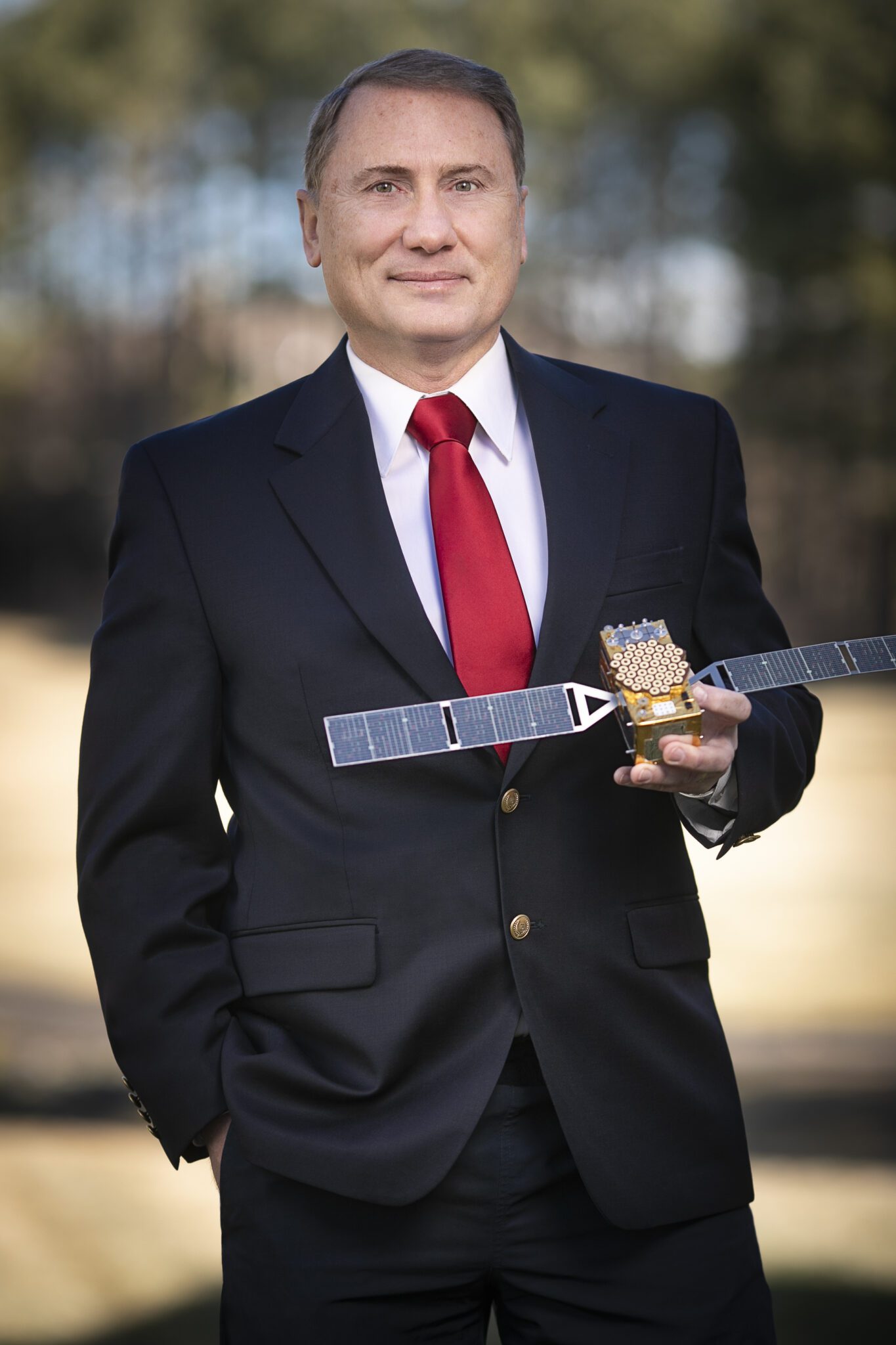
Clint Crosier
Director, Aerospace and Satellite Solutions, Amazon Web Services
Under Clint Crosier’s leadership, his team conducted two first-of-kind on-orbit demonstrations in 2022 that helped show the value cloud can provide to space customers.
Last summer, they also sent an AWS edge computing device called a “Snowcone” to the International Space Station. The device used machine learning models to analyze images of onboard research experiments and optimize the limited bandwidth available between space stations and Earth.
In November, AWS announced it had been analyzing Earth observation imagery directly in space using a purpose-built cloud computing package integrated into an orbiting satellite. Crosier and his team demonstrated that with AWS machine learning, it is possible to reduce massive raw images and data files by 42%, which helps speed up processing time, enables real-time insights and demonstrates the value of cloud computing in space.
“Our space customers continue to turn to the cloud to reimagine their space missions, taking advantage of edge computing, machine learning, and digital engineering tools,” said Max Peterson, vice president of worldwide public sector at Amazon Web Services. “It’s exciting to see how Clint and his team are helping customers leverage the cloud to drive innovation, reduce costs, and generate meaningful insights from their space data.”
Why Watch
In 2023, Crosier and his team are heavily focused on building on the successful on-orbit cloud demonstrations in 2022 to help customers push the boundaries of what’s possible in space even further. From innovative applications of artificial intelligence and high-performance compute to digital engineering and digital twin applications, they are focused on bringing industry-leading cloud-based capabilities to customers to help them achieve missions not previously possible. The goal is to change the way space companies build, launch and operate their space systems.
“The world will never rely on space capabilities less than we do today, nor will space ever be less important to the global economy than it is today ⏤ our reliance on space will only grow,” Crosier said. “From my 35 years of experience in the space industry, the cloud is a gamechanger, and it will become the indispensable platform upon which nearly all future space capabilities will be built.”

Steve Kitay
Senior Director, Azure Space, Microsoft
The Azure Space team has built new products and launched new partnerships to support customers with cloud and space technologies. Microsoft Azure Space is committed to enabling every person and organization to achieve more, on and off the planet. This mission has transcended various industries, including agriculture, finance, insurance and health care.
“Our mission encompasses not only commercial industries, but also empowers government missions such as the U.S. Space Force, NASA, NOAA and others,” said Steve Kitay.
Some recent achievements of the Azure Space team include advancements on the Hybrid Space Architecture for the Defense Innovation Unit, and the U.S. Space Force and Air Force Research Lab ⏤ with new partners and demonstrations that showcase the power, flexibility and agility of commercial hybrid systems that work across multipath, multi-orbit and multivendor cloud-enabled resilient capabilities.
Another recent achievement is the partnership with Ball Aerospace and Loft Federal on the Space Development Agency’s National Defense Space Architecture Experimental Testbed program, which will bring 10 satellites with experimental payloads into orbit and provide the associated ground infrastructure.
SDA NExT builds upon Microsoft’s Azure Space products and partnerships. Central to Microsoft’s solution for NExT is the combination of Azure Orbital Ground Station and Azure Government Air Gapped Clouds, which will allow SDA to do its mission work in a secure cloud environment.
Through NExT, together with SDA and the Space Force, Microsoft will securely operate a government-owned satellite constellation with Azure Orbital Ground Station’s global network for the first time. Additionally, Microsoft 365 will provide them with productivity tools to enable personnel to share information, which help ensure a coordinated response.
Microsoft Azure Government Cloud will enable SDA to extract spaceborne data insights from the cloud to the ultimate edge, and to scale innovation faster and better meet the critical needs of the Guardians and strengthen national security.
“I am most proud of the amazing diverse team I get to work with and the critical mission we are supporting,” Kitay said. “I work alongside the most passionate, innovative and collaborative teammates to build the products and partnerships that are making a difference in the world ⏤ ranging from global security supporting the U.S. Space Force to science advancement with NASA, to new startups driving novel ways to connect and derive insights across the globe.”
Why Watch
In 2023, Kitay and his team are heavily focused on delivering on Microsoft’s commitments and driving innovation. They will be building new product features, deepening partnerships, and supporting customers with new cloud-powered technologies.
For government customers, they will work to enable a hybrid space architecture that leverages the best of commercial, government and allied space systems on a secure cloud platform to provide rapid, resilient and security data connectivity and processing.
“I am excited for what’s ahead and the ways Azure Space will empower our customers and partners to achieve more, both on and off the planet,” Kitay said.

Dr. Linda Braun
Vice President and General Manager, Optical and Photonics Systems, CACI
Dr. Linda Braun has dedicated her 30-year career to unlocking the mysteries and opportunities for deploying technology in space to enhance our national security. She leads a portfolio that includes transformative technology and advanced manufacturing in laser communications for missions ranging from national security to human spaceflight and across all domains.
Braun’s group is at the forefront of an industry focused on the deployment of photonic technology in space, which includes a wide variety of applications such as 3D imaging, gas sensing and precision navigation, but the largest and most mature application is secure, high-speed networks in space using laser communications technology.
“We’re becoming increasingly dependent on real-time data and communications ⏤ meaning no latency ⏤ to be able to understand what’s going on (sense), analyze it real-time, and act quickly to keep our nation and assets safe. In this dynamic, space-based communication is imperative,” she said.
Braun joined CACI in 2019 through the acquisition of LGS Innovations. In her three years at CACI, Braun’s strategic and visionary expertise has led to increased revenue year-over-year in her areas of responsibility, and she successfully executed several space hardware production programs.
In a series of progressively senior positions during her career, Braun led the creation of some of the most advanced free-space optical laser communication and remote optical sensing solutions available today. She has authored more than 30 technical publications, given numerous talks and presentations at conferences, universities and industrial and government laboratories. She holds two patents. In 2019, Braun was the recipient of the Rutgers School of Engineering Distinguished Alumna Award for Research. In 2022, she was named Space Executive of the Year, Public Company, by WashingtonExec.
Why Watch
It’s an exciting time to be in this business, and thanks to visionaries like Braun, CACI is at the forefront of capability development. CACI spans the entire market with respect to optical communications according to Braun.
“We’re one of the few companies with U.S.-based manufacturing and production that can provide hardware across low earth (LEO), medium earth (MEO), and geosynchronous (GEO) space orbits, as well as airborne and terrestrial environments and ground terminals,” she said.
CACI experts are working hard to realize the potential of deep space communication such as transmissions from the Earth to Mars or the moon. CACI is the leading U.S.-based free-space optical laser communications provider supporting space, airborne and terrestrial missions to U.S. government and commercial customers.
“I don’t think it’s an overstatement to say that Dr. Braun is a visionary,” says Todd Probert, president of the National Security and Innovative Solutions business for CACI. “CACI’s advances in photonics and laser communications are rightly viewed as breakthrough innovations for the multi-domain mission demands of today’s environment, and Dr. Braun’s strategic leadership is instrumental in this success.”

Chris Bogdan
Executive Vice President, Booz Allen Hamilton
Chris Bogdan was selected in February to lead the further development and execution of Booz Allen’s space business. He has since revitalized this business through a new strategy that brings together work across the defense and civilian space missions, including the Space Force, Air Force and DOD agencies, as well as NASA and NOAA.
He has created efficiencies and synergies through closer collaboration and unity of effort across the teams supporting Booz Allen’s space business in Los Angeles, Colorado Springs, Houston and Washington, D.C.
“Chris has created incredible momentum across defense, national security and civil space organizations as a prime digital integrator,” said Judi Dotson, an executive vice president who leads Booz Allen’s Global Defense business. “His team is delivering new technology and solutions at the heart of the challenge of space data.”
Why Watch
Space continues to be a top priority for Booz Allen’s business given the rapid proliferation of the domain due to emerging threats from our adversaries, new government and commercial priorities, increased funding, new technologies and a massive increase in space assets and stakeholders.
This year, Bogdan’s team will concentrate on implementing the company’s space strategy. Its main goals are to become a top provider of space data solutions for ISR, climate intelligence, and space awareness/traffic management, as well as a leading integrator of space systems like open architecture ground systems and constellations.
“The space market and environment are undergoing a significant transformation with new threats, new challenges, new players and new opportunities,” Bogdan said. “I am excited that Booz Allen is well positioned to bring many of our world-class capabilities such as open architecture data platforms, artificial intelligence/machine learning, data analytics and fusion, cyber capabilities and digital engineering and integration to help our military, civil and commercial partners solve their most difficult problems.”

Bruce Cathell
Vice President of Government Operations, Viasat
As vice president of government operations for Viasat, Bruce Cathell is the principal senior executive interfacing to the U.S. government and leads all aspects of Viasat’s defense and aerospace operations in the Washington, D.C., area. In this capacity, Cathell provides strategic, technical, policy, regulatory, budgetary and trade compliance leadership across all aspects of Viasat’s Government Systems broad products and services portfolio (sales around $700 million per year). Cathell also leads the congressional engagement for Viasat’s government business.
“Bruce is a tremendous asset to Viasat and a key leader on my team,” said Craig Miller, president of Viasat Government Systems. “I don’t think there is anything Bruce can’t do ⏤ his knowledge, experience and skills are one-of-a-kind and have significantly contributed to the outstanding growth Viasat has experienced.”
Cathell has worked on a variety of commercial, DOD and intelligence space programs over his 30-year career. He has chaired associations and served as a board member on multiple associations over the years. He routinely briefs members of Congress and spoke on satellite communications at the United Nations.
Prior to Viasat, Cathell worked at the Office of the Secretary of Defense, where his vast portfolio of responsibilities included program oversight of multibillion-dollar military satellite and terminal programs and all leasing of commercial satellite communications.
Why Watch
Viasat has seen tremendous growth year after year and just recently launched the first of three ViaSat-3 satellites, with the next two satellites being launched later in 2023 and early in 2024. With a data throughput of at least 1 terabyte per second for each satellite, this global constellation will provide massive amounts of capacity and enable significant company growth in 2023 and beyond.
Viasat is continuing to develop new technologies and capabilities in space, cyber security, free space optics and advanced hybrid networks. With the development and deployment of so many new technologies and capabilities in 2023 and beyond, “I will look to Bruce’s leadership to build on our successes and propel Viasat to the next level with significant growth both domestically and internationally,” Miller added.

John Moberly
Senior Vice President for Space, SpiderOak Mission Systems
The biggest threat to space architectures is non-kinetic cyber attacks, and for SpiderOak’s John Moberly who is leading the “birth to grave” vertical of providing secure and trusted data orchestration for space-enabled architectures, addressing this threat is about a strategy around the fully decentralized software capabilities of the company’s OrbitSecure platform.
SpiderOak is developing a transformative suite of capabilities not just for the Defense Department and intelligence community, but also for commercial space networks and hybrid space architectures combining commercial, national security, civil and allies together ubiquitously.
In less than a year of leading these efforts, Moberly has already made a significant impact. SpiderOak signed a contract with the Defense Innovation Unit for Hybrid Space Architecture in September and has been helping shape requirements for built-in data protection. This secure-by-design approach replaces outdated compliance and checklist methods, which don’t work for autonomous, machine-to-machine systems like space. The national security space community’s interest has increased, as shown by the focus on secure-by-design in requirements and budget requests for FY24. SpiderOak has also demonstrated secure, low-latency data transfer across multiple nodes.
“As the cyber attacks on space capabilities supporting Ukraine illustrated, there is an urgent need for SpiderOak’s capabilities to be built in to prevent exploitation through the link segment which can subsequently move laterally through the network,” Moberly said. “Ensuring secure and trusted data to the people with the need-to-know accesses in a zero trust architecture, that’s our enduring commitment to our clients, and to our country and would have solved some very recent issues of national importance.”
Why Watch
SpiderOak closed on its fundraiser in January, providing the runway to fully build out the fully decentralized software platform. The platform is needed for the disaggregated, discontinuous proliferated space environment feeding into the multi-domain command and control environment that relies on secure and trusted data out to the user, decision-maker and warfighter.
“Once SpiderOak set on the path to both create and lead the space cybersecurity market, as CEO I knew that we needed to find a unique leader who was not only conversant in the mission need, but with the technology chops to comfortably navigate the distinct and complex space and cybersecurity communities,” said David Pearah, SpiderOak CEO. “He’s a true space industry leader and innovator.”

Ken Bray
Business Development Manager, HII’s Mission Technologies
Ken Bray’s recent notable achievement is developing a strategy to take HII’s space business to the next level. HII invests in and develops leading-edge technologies to support space-based operations and protect space assets. Shaping and influencing HII’s strategic focus is both challenging and rewarding, and he looks forward to turning that vision into reality as the company assesses its the next steps.
“Ken has shaped an exceptional space strategy by identifying synergies across HII’s Mission Technologies division and is leading efforts to showcase the technologies and capabilities supporting space-based operations. Space is a dynamic and complex domain, and his knowledge, relationships and understanding of the customer environment are invaluable in propelling our business forward,” said Henry Choi, vice president of growth and strategy for HII’s Cyber, Electronic Warfare & Space business group.
Why Watch
This year, Bray and his team will focus on expanding HII’s space footprint, exploring customers’ critical needs and continuing to refine strategy. HII’s work in space is diverse but ties directly to the U.S. space strategy and enables the convergence of space, cyber and electronic warfare.
“We have smart people with great ideas at HII, and we look forward to talking to our customers and industry partners to explore possible synergies,” Bray said. “It is an interesting time to be involved with space. I am excited to be part of a team that understands the important role space plays in all-domain operations and securing our country’s future, and is committed to making a positive impact.”

Ronald J. Birk
Associate Principal Director, Development Directorate, The Aerospace Corp.
Ronald Birk joined The Aerospace Corp. in 2017 and today, provides strategic, technical and managerial guidance to development activities for emerging drivers and national priorities to advance future space capabilities.
“The complex challenges we face in space require that many organizations and people within the space community work together. We have limited abilities as individuals or individual organizations to move the needle in a meaningful way, but working collectively, we can and will achieve significant advancement of U.S. space capabilities in the national interest,” he said.
He also serves as director for development, advancing multiple strategic initiatives and partnerships aligned with national space strategies and priorities for the nation’s future space enterprise. He also served as chair of the Space Enterprise Integration Working Group at the 27th annual Ground Systems Architectures Workshop.
“The space enterprise is experiencing rapid transformation, and how we collaborate will influence greatly our ability to harness the breadth and pace of innovation,” said James Myers, senior vice president of the Civil Systems Group at The Aerospace Corp. “Ron Birk’s tremendous dedication to forging partnerships in critical areas of space development across government, industry and international boundaries is exemplary, and Ron is tangibly contributing to the delivery of a sustainable, prosperous space economy.”
Why Watch
Birk is actively positioned at the nexus of innovation and collaboration in space, energizing space community networks and consortia. His teams are establishing programs and partnerships for national space strategies and priorities to advance technical and operational capabilities for U.S. leadership in space, focusing on national priorities while addressing emerging drivers changing the face of space:.
Birk’s teams are also advancing standards, tools, processes and technologies to enable rapid development, deployment and evolution of evolvable structures and ecosystems in space.
“Space is not standing pat; standalone systems are giving way to evolving ecosystems that require interoperability, modularity and agility to evolve at the pace of innovation,” he said. “Our nation needs these evolving ecosystems and systems of systems aligned with and enabled by hybrid architectures of commercial capabilities integrated with government-acquired, purpose-built systems.”
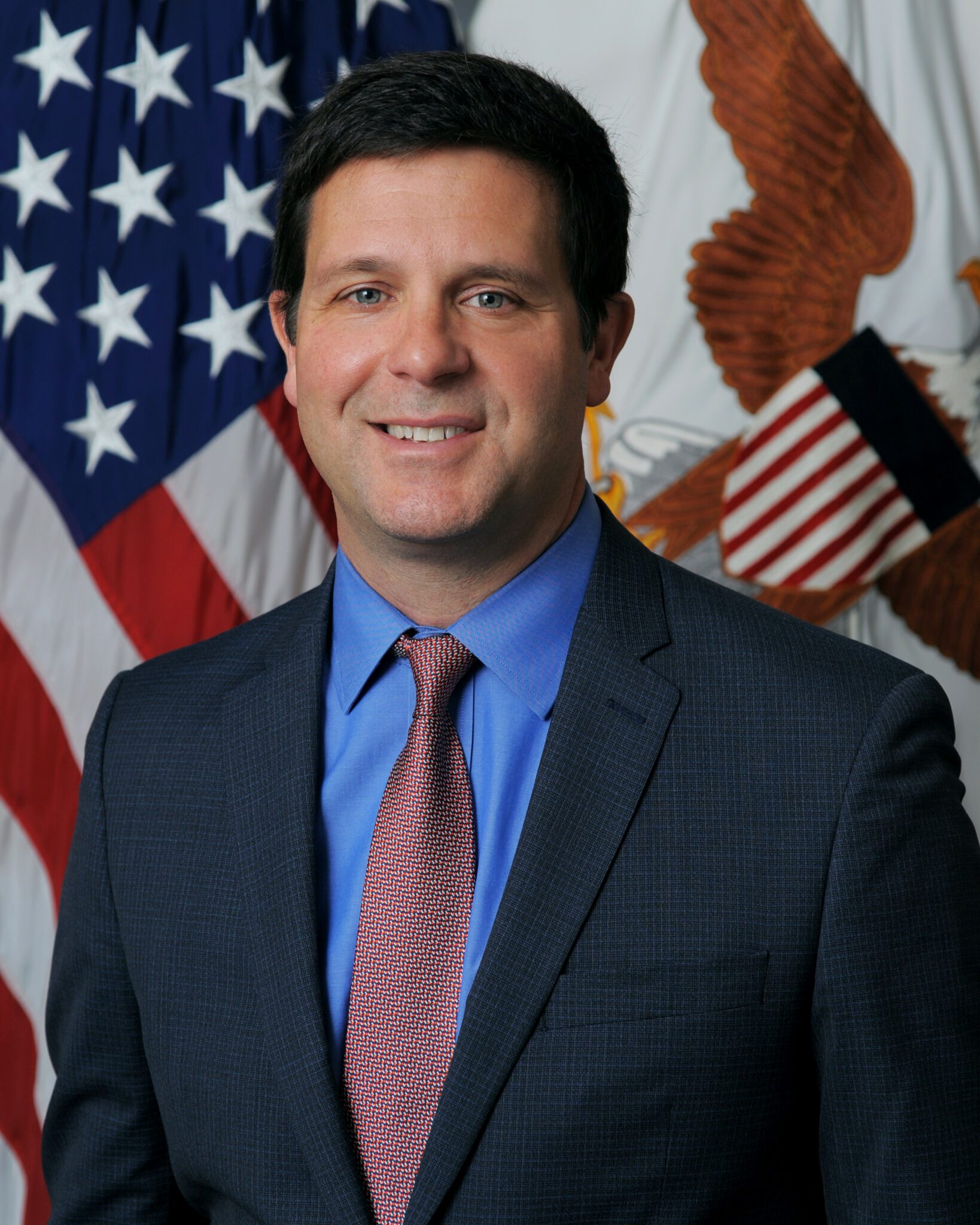
John F. Plumb
Assistant Secretary of Defense for Space Policy, DOD
John F. Plumb is the first assistant secretary of defense for space policy, confirmed in March 2022. He is responsible for overseeing DOD policy for space warfighting. Plumb also serves as the principal cyber advisor to the secretary of defense.
Plumb’s policy portfolio includes strategic capabilities for integrated deterrence: space, nuclear weapons, cyber, missile defense, electromagnetic warfare and countering weapons of mass destruction.
He brings extensive experience in national security to the role, having served as both an active duty Navy submarine officer and as a civilian in various roles at the Pentagon, the Senate and the White House. Before his confirmation, he also worked for federally funded research and development centers at the Rand Corp. for the Aerospace Corp.
Why Watch
At this year’s Space Symposium in Colorado Springs, Colorado, Plumb discussed DOD’s plans to normalize space as an operational domain, noting the Pentagon needs to “provide a frame of reference for our national security leaders who have spent most of their careers considering the air, sea, and land domains.”
Plumb plans to do so by first recognizing the threat to space systems and designing a force prepared to meet it. Then, investing in resilience; acknowledging the threat to the Joint Force, working closely with allies, partners and commercial industry, accurately classifying policies for space-related information, and involving civilian agencies.
“For the Department of Defense, it is our job to maintain space as a place of inspiration, not of conflict,” he said. “That is what this shift in approach is all about.”

Gen. B. Chance Saltzman
Chief of Space Operations, U.S. Space Force
As chief of space operations for the U.S. Space Force, Gen. B. Chance Saltzman is responsible for organizing, training and equipping all space forces in the U.S. and abroad.
He is among the service chiefs who serve as military advisers to the secretary of defense, National Security Council and to the president. Saltzman brings extensive operational experience with missile and space systems to the role, including serving as a satellite operator for the National Reconnaissance Office and as the first chief of combat plans for the Joint Space Operations Center, and later, as chief of combat operations.
Prior to his current assignment, he was deputy chief of space operations for operations, cyber and nuclear for the U.S. Space Force.
Why Watch
During a keynote speech at this year’s Space Symposium in Colorado Springs, Colorado, Saltzman said the rapidly changing and increasingly dangerous space domain requires new actions, mindsets and methods to keep up.
“The Space Force, our industry partners, our allies, and inter-agency teammates must collectively pivot to new ways of doing business to keep up with the new operating environment,” he said. As it is the Space Force’s responsibility to spearhead responses to increasing threats and capable competitors, he outlined “lines of effort” to focus on: Field Combat-Ready Forces, Amplify the Guardian Spirit and Partner to Win.
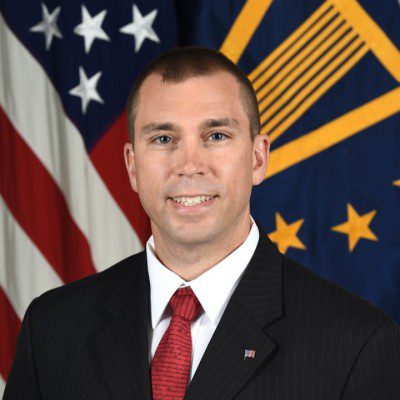
Derek Tournear
Director, Space Development Agency
The Space Development Agency was created to unify and integrate the Defense Department’s space development efforts, monitor the future space architecture, and accelerate the development of new military space capabilities.
As director, Derek Tournear has extensive experience in space development, having held leadership positions in government and industry. He previously served as the director of Harris Space & Intelligence research and development; as a senior program manager at the Intelligence Advanced Research Projects Activity in the Office of the Director of National Intelligence; and as program manager for the Defense Advanced Research Projects Agency.
Prior to his most recent role, Tournear was assistant director of research and development for space in the Office of the Under Secretary of Defense for Research & Engineering, where he coordinated all DOD efforts in space.
Why Watch
At the Navy League’s 2023 Sea Air Space Conference and Exposition in Washington, D.C., Tournear talked about resiliency in space and how SDA is delivering resilience capabilities to warfighters.
“The primary aspect that we’re looking at from SDA’s model is we want to make sure that we can provide those ships at sea the connectivity they need,” he said.
One of those solutions is SDA’s Proliferated Warfighter Space Architecture concept, which reduces the threat of adversaries shooting down SDA’s satellites and cutting off connectivity. SDA is also investing heavily in resources to protect systems and satellites against cyber threats and supply chain threats.

John “J.R.” Riordan
Strategic Programs Advisor to the Vice Chief of Space Operations, U.S. Space Force; Senior Advisor supporting Sigmatech, Inc./Washington, D.C. Operations
J.R. Riordan’s achievements include supporting the U.S. Space Force in its responsibility for organizing, training and equipping Guardians to conduct global space operations at Sigmatech, Inc.
This mission enhances the way joint and coalition forces fight, while also offering decision-makers military options to achieve national objectives.
“Returning to support and serve the warfighter directly was perfectly timed with Sigmatech’s offer to support the United States Space Force Guardians,” Riordan said.
Why Watch
The space warfighting domain is congested, contested and competitive. Peer and near-peer competitors are major concerns to operating space systems in support of the service mission. Having served as a professional staff member in the Senate Armed Services Committee in the Senate in the establishment of the U.S. Space Force, Riordan wanted to return to serving and supporting the warfighter — and Sigmatech provided that opportunity.
“Sigmatech has over 35 years of experience supporting aerospace, defense, federal, and commercial clients, with a 20-plus year history of winning follow-on contracts,” Riordan said. “They combine technical capabilities with extensive management expertise to meet the needs of our customers. They provide a low risk and high return to its customers every day. I am proud to be part of the Sigmatech team and providing support to the vice chief of Space Operations every day.”

Michael Gilkey
Executive Vice President and Manager of the Air and Space Technologies Sector, Infoscitex, a DCS Corp.
Under Michael Gilkey’s leadership, Infoscitex recently won Air Force Research Laboratory prime contracts, establishing a lead role in weapon systems effectiveness analysis across air, space, ground and surface domains through the modeling of synthetic environments and application of battlespace analytics.
“The ability to simulate the operation of complex, highly interoperable weapon systems in multi-domain, contested environments has proven to be a powerful tool to accelerate the development of next generation defensive capability,” Gilkey said.
“This approach is naturally aligned with the DOD’s digital enterprise initiatives. I’m proud that IST is playing an important role in the development of these frameworks, the building of representative models and scenarios, and application of data analytics to answer pivotal questions that support the acquisition of new war-winning capability.”
Why Watch
In 2023, Gilkey and his team are focused on strengthening space analysis capability by working with DOD and the intelligence communities to expand modeling of space elements, improving simulation fidelity and application of advanced analysis tools.
“Mike has been an incredible driver of IST’s growth and success for more than a decade,” said Jim Benbow, CEO at DCS Corp. “We are thrilled to have him continue to advance the technology and momentum of IST into the future.”

Mark Jahshan
Vice President and General Manager, Civil Space Business Unit, Space & Intelligence Sector, Peraton
Last year, Mark Jahshan and his team faced a significant challenge ⏤ identifying which legacy processes were working and what enhanced capabilities, workforce and agility were required to enable the future of space communications across 2 million kilometers.
“It’s a balance between stability and transformation,” he said. “You’re introducing something new — with a significant amount of risk ⏤ into a stable mission environment where we can’t afford to break things,”
Enhanced communication has been critical to their success.
“Mark and the team are evolving in lock step with our customers as the United States returns to human space flight,” said Roger Mason, president of the Space & Intelligence sector. “As we face an exciting but uncertain future, the next task is helping our government partners transform to more efficient, agile and scalable solutions that can keep pace with commercially-driving progress and competition.”
Why Watch
In 2023, Jahshan and his team will continue to leverage lessons from inside and outside civil space to generate optionality for customers driving the commercialization of space communications.
“We all face an exciting but uncertain future,” he said. “We must continuously evolve with our customers, rather than waiting to respond to their tasking.”
As the U.S. returns to human space flight, Jahshan and the team will help government systems transform to keep pace with commercial innovation and competition. “The future is commercial,” he said. “We know points A and B but the path between the two must be flexible enough to support missions across the evolutionary landscape.”

Tom Wilson
Corporate Vice President and President of Northrop Grumman Space Systems
Tom Wilson has been president of a fast-growing sector at Northrop Grumman Space Systems since 2022. Space Systems sector is the world’s largest, most diverse space business and is shaping the future of a dynamic and rapidly changing domain.
Last year, Northrop Grumman’s space business grew by about 15%, and that included welcoming nearly 7,000 new employees and expanding its footprint with new manufacturing facilities across the nation.
Major milestones during Wilson’s tenure include the launches of the Artemis I Space Launch System rocket, vital to the return to the moon and deploying the James Webb Space Telescope.
“Tom’s leadership across Northrop Grumman’s space portfolio is vital as we reimagine the future of space exploration, security and commercial space,” said Kathy Warden, chair, CEO and president of Northrop Grumman. “Northrop Grumman is experiencing incredible growth in our work supporting the U.S. and its allies to operate effectively and freely in space. His ability to inspire his team and foster an inclusive and innovative culture is key to our future success.”
Why Watch
Wilson’s team provides customers with advanced, end-to-end capabilities across a wide range of missions, with unmatched expertise in mission engineering and radiation-tolerant, cyber-resilient systems. They are drawing upon our decades-long legacy that goes back to the dawn of the space age, to innovate solutions that protect the nation and its allies, and make space safe, secure and sustainable well into the future.
“The rapid commercialization of space is changing the way we do business, with new and disruptive business models and capabilities driving everything from space-as-a-service opportunities for flagship civil space missions today, to cislunar opportunities tomorrow, and completely new missions on the horizon thanks to advances in areas such as in-space servicing,” Wilson said.
“With space as the backbone of our modern society and our national security, we at Northrop Grumman continue to look for new ways to deliver solutions more rapidly and affordably to our customers, in support of our nation’s most critical missions.”

David Ray
Senior Vice President of the Space Business Unit, National Security and Space Sector, SAIC
SAIC has a storied history with space, and the past year has opened a new chapter for the company in tackling challenges in new ways.
Best known for systems engineering and technical assistance work, a few years ago, SAIC began investing in processes, people and solutions that would enhance those engineering capabilities and expand the company’s impact into space systems integration.
“Today, we are integrating a first-of-its-kind space program for the DOD, bringing our customer brand new, in-orbit capability,” said David Ray. “We are also entering new markets through strategic relationships. Since the fall, we have partnered with two companies to accelerate the development of smallsats and cubesats for government missions. Finally, we are seeing huge payoffs from our digital engineering practice, which is leading the industry in an approach that is revolutionizing systems acquisition, development and operations.”
Why Watch
Looking forward, Ray is especially excited for SAIC’s partnerships and efforts to result in deployed missions.
“As a space systems integrator, we sit at the nexus of commercial speed and critical government needs,” he said. “In our Space Invaders contract with Rogue Space Systems Corporation, we will see an orbital robot perform a proof-of-concept operation that will result in the ability to examine and repair satellites. Additionally, we will soon begin delivering affordable integrated space systems, and SAIC will play a pivotal role in space situational awareness as result. The coming year promises to be full of firsts for space and SAIC.”
Michael LaRouche, president of National Security and Space for SAIC, described Ray as a bold thinker and ambitious business leader.
“His energy and creativity expands SAIC’s contribution across the entire space market,” LaRouche said. “He not only challenges his team, he partners with them to execute on new strategies and deliver remarkable outcomes for our company and the nation.”

Scott “Scooter” Altman
President, Space Operating Group, ASRC Federal
Last November’s Artemis I launch was a major milestone for Scott Altman and his team. Since 2012, over 200 ASRC Federal team members have worked alongside Lockheed Martin and NASA teams to assemble, test, integrate and produce the Orion Spacecraft, the Space Launch System and ground systems at Kennedy Space Center.
These efforts and the AI/ML toolkit ASRC Federal developed for NASA and NOAA were critical components to the mission’s success.
The team has combined the lessons learned from the success of the Artemis I mission with the institutional knowledge gleaned from their years of experience working in partnership with NASA to inform future missions to send humans back to the moon with the Artemis program.
“Scooter and his team have been at the forefront of accelerated innovation and exploration in aeronautics and space,” said Jennifer Felix, president and CEO of ASRC Federal. “As a former NASA astronaut with multiple missions to space, his insights have proven invaluable in guiding our customers to overcome challenges across the board.”
Why Watch
This year, Altman and his team are exploring the implementation of artificial intelligence and machine learning in lifecycle solutions for space. They are bringing cutting-edge technology to ASRC Federal’s space partners to expand exploration and space defense capabilities. Altman also invests in the next generation of space leaders through STEM outreach and events by sharing his engineering and space flight experiences with students all over the country, as well as giving presentations to current NASA operators and engineers.
“We are at a unique moment in time where U.S. space exploration and defense are making huge strides, specifically through the Artemis program and the next generation Proliferated Warfighter Space Architecture,” Altman said. “I am proud that our team has been helping to develop and advance these programs since the beginning.”
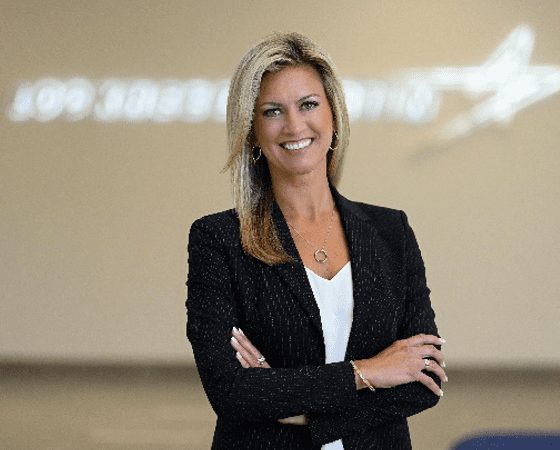
Stacy Kubicek
Vice President and General Manager, Mission Solutions, Lockheed Martin Space
Stacy Kubicek’s team has a legacy of being thought leaders within the industry, using AI/ML to advance sensemaking and other operator analytic capabilities, while continually looking for ways to leverage technologies and subject matter expertise in new critical mission areas.
One of the team’s current efforts, with the National Oceanic & Atmospheric Administration, is a great example of this where they will create a digital twin of the Earth, fusing multiple data sources to give NOAA scientists more observational information and synthesized data intelligence regarding the planet’s current conditions.
This will also enable predictive modeling, which will help provide keener insights into the relationship between our planet and its complex climate. This team has truly embraced its ability to translate complex military capabilities, culminated over years of diverse technology development, toward other critical missions and remain at the forefront of innovation within the industry.
“Stacy exemplifies strategic leadership and has directly shaped our portfolio at Lockheed Martin Space. She is a strong advocate for our customers and their mission success,” said Robert Lightfoot, executive vice president of Lockheed Martin Space.
Why Watch
This upcoming year, Kubicek and her team are adapting to new organizational and operational paradigms within the industry to infuse the agility of a start-up with the team’s deep mission knowledge, which combined at scale will positively disrupt the way the industry does business. Additionally, they are increasing independent research and development investments to get ahead of customers’ needs and streamline enhanced tech readiness levels.
“My team’s portfolio is one of the most diverse in the space industry and we are committed to bringing the best programs, products and solutions forward to positively impact National Security imperatives and give the decisive advantage to our warfighters. It is incredibly challenging work, which also makes it incredibly rewarding!” Kubicek said.

Debra Facktor
Head of Airbus U.S. Space Systems, Airbus U.S. Space & Defense, Inc.
As head of Airbus U.S. Space Systems, Debra Facktor’s biggest accomplishment was growing the Airbus U.S. space line of business over the past three years.
“We are building out our space team as well as the engineering, supply chain, finance and other functions across Airbus U.S. that support our space programs,” she said.
Airbus U.S. is developing the ARROW450 commercial satellite product line, based on the ARROW150 product of which over 600 are currently operating in orbit. Airbus has experienced great interest in its larger platform as a solution to commercial and U.S. national security space mission needs.
“This team is making it all happen!” she added.
Robert Geckle, chairman and CEO of Airbus U.S. Space & Defense, Inc., noted Facktor’s passion for the field.
“Debra’s passion for space and people is a winning combination for Airbus U.S. Space & Defense,” he said. “She’s widely known in the industry for building teams and mentoring women and younger-generation space professionals and its evident in the stellar results of the high-performing team she’s building here. Her enthusiasm and vision for the future are what I most admire about her.”
Why Watch
Looking ahead, Facktor and her team are heavily focused on the execution of customer programs and simultaneously preparing for future growth to meet the demands of the constellation market. The company is also strengthening its relationships with suppliers, who are important partners in its ecosystem.
“I enjoy bringing together a diverse team, harnessing their ideas and energy, and working collaboratively to turn our collective dreams into reality,” Facktor said. “We all benefit from the innovation that a vibrant, inclusive culture enables, and I’m passionate about creating this environment at Airbus U.S. and within the broader space community.”

Zac Gorrell
Vice President of the Space Market, LMI
Zac Gorrell’s biggest recent achievement was leading his prior company, Synaptech, through the acquisition process during 2022 and facilitating the successful integration of Synaptech into LMI during the first half of this year.
As the CEO and cofounder of Synaptech, Gorrell built the company from the ground up, growing it into a thriving company of approximately 60 full-time engineers and scientists in the Colorado Springs, Colo., area. Synaptech focused on becoming one of the top technical solution providers and trusted partners in the national security space industry.
“We found the perfect strategic partner in LMI. We share the same culture, mission focus, spirit of innovation, and vision for the future,” Gorrell. said.
Doug Wagoner, president and CEO of LMI, said Gorrell has been an integral asset to LMI’s space market development and success.
“He and his team are pushing the frontier of space innovation with transformative, efficient, and effective technologies to solve our customers’ most pressing challenges at the pace of need,” Wagoner said. “Zac’s passion for the mission is evident and it’s a privilege to witness his team’s success in forging new paths in the space domain.”
Why Watch
In 2023, Gorrell and his team are focused on expanding on the momentum from Synaptech. His team delivers innovative software and analytical solutions at scale that focus on the protect and defend mission. Their work ensures that space warfighters make key decisions with confidence, speed and clarity. They will leverage LMI’s extensive capabilities and expanded resources for even greater outcomes for customers like the Space Warfighting Analysis Center, Space Training and Readiness Command, National Reconnaissance Office and U.S. Space Command.
“The dawning of this new golden age in space protection, technology, and exploration offers us a unique opportunity. I am humbled and grateful to lead LMI’s space market. It is an honor to work with the best and brightest minds in the space industry each day,” Gorrell said.
“At LMI, we are passionate about the mission. We will always work our hardest to support our customers’ needs and ensure the continued peaceful use and protection of the ultimate high ground.”