The cyberthreat landscape is constantly evolving — creating new challenges, expanding vulnerabilities and leading to more sophisticated hacks and breaches. Government and industry alike are in a never-ending fight to preemptively detect threats, constantly protecting and actively defending systems, networks and enterprisewide IT infrastructures. And as the federal and private sectors modernize legacy systems and integrate new and emerging technologies, the cybersecurity execs leading these efforts are always working to strategically, efficiently and securely improve and innovate system processes.
WashingtonExec’s Top Cyber Execs to Watch in 2023 list highlights executives in both government and industry consistently staying one step ahead of adversaries, equipped with the technical know-how to safeguard systems and information. They have achieved significant milestones and goals with the support of strong leadership, teams and processes, and they possess the know-how to navigate the complexities of the cyberthreat landscape.

Meghan Good
Vice President & Director of the Cyber Accelerator, Leidos
Meghan Good recently achieved great success by improving Leidos’ customer cyber defense and innovating its mission ecosystems with new technology. She takes pride in the widespread customer popularity of the technology she planned and invested in.
Good and her team created and implemented zero trust roadmaps and solutions in various sectors. They launched Castle Clone to enhance environmental modeling and resilience through active adversarial emulation. The team also showcased practical post-quantum cybersecurity measures for critical networks, all while operating in some of the federal government’s most challenging cybersecurity environments.
“I am excited that my career has led me to the nexus of technology development and cyber defense,” Good said. “Our world depends on the mission ecosystems that we envision, build and operate for our customers, and yet simultaneously, adversary tradecraft to attack those environments is more frequent and sophisticated. I create capabilities and teams today to significantly improve our defenses for the future.”
Why Watch
In 2023, Good and her team are accelerating the adoption of artificial intelligence and machine learning in cyber operations and enhancing cybersecurity of critical systems through better detection and speedy responses. At Leidos, they rapidly turn data into intelligence, which drives automation of countermeasures. They also develop and integrate technology to improve overall resilience and help customers outmaneuver evolving threats and operate through adverse events at scale.
“Meghan Good is a cyber national asset,” said Jim Carlini, Leidos chief technology officer. “From cutting-edge technology to operations, she brings incredible depth and experience to offensive and defensive cyber, with the skillset to articulate needs and solutions at any level, to any audience. She is, without question, a Top Cyber Executive to Watch.”

Steven Kapinos
Vice President of Cognitive Cyber, ManTech
Steven Kapinos’ team recently completed the development of a novel Insider threat capability meant to help provide full context to investigators. This is particularly important in zero trust environments, which deploy per-user encryption keying.
They also employed a collaborative approach between their cyber defenders and insider threat personnel. In a zero trust world where adversaries will increasingly co-opt legitimate user accesses, this collaborative approach ensures investigators have full context ⏤ and can quickly transition investigations between teams.
“Under Steve’s leadership, we are deploying cybersecurity systems and solutions that identify and stop sophisticated attacks on contact ⏤ at speed and scale,” said Eric Brown, vice president and division manager of the innovative security solutions mission, Cyber & Intelligence Solutions Group at ManTech. “ManTech builds AI into everything we do. In the cyber arena, our goal is to keep the U.S. government lightyears ahead of hostile nation states determined to penetrate systems that are vital to national security.”
Why Watch
In 2023, Kapinos and his team are integrating ManTech’s cyber expertise into their AI and digital engineering services, delivering fast, defensible and resilient solutions. Leading the Cognitive Cyber group since 2020, Kapinos has been an early thinker about AI’s impact and the importance of its responsible implementation. His team uses a threat-informed approach and open implementation to leverage multiple models in their assessments.
“Two thoughts frequently come to mind,” Kapinos said. “The first is, ‘What’s next?’ Often in cybersecurity there is an idea that once you address an issue you won’t need to worry about it again. This is never the case because the adversary adjusts.
“The second: ‘Once you understand that premise, how do you improve the process of identifying the change in adversary behavior when it happens?’ Which leads to a quote ⏤ ‘Why are you storing data if you aren’t doing anything to operationalize and derive insight from it?’ At ManTech we’re helping customers leverage data insights to effectively manage the evolving cyber threat landscape.”

Eric Rattanavong
Vice President of Cybersecurity, LMI
Eric Rattanavong helped formally create and launch LMI’s cybersecurity service line and enabled 60% growth in less than one year for LMI by diversifying cyber capabilities to support customer missions.
“Generative AI marks the pivotal moment infosec has been eagerly awaiting ⏤ a catalyst for tangible victories in efficiencies and breakthroughs in analysis,” Rattanavong said. “However, this same technology has also captured the attention of adversaries, posing a race against time to outpace them before we’re left with no choice but to collaborate by sharing our valuable data.”
Why Watch
Rattanavong’s team is at the forefront of harmonizing LMI’s prowess in generative AI and cyber to empower customers with strategic, tailored roadmaps to achieve desired next-generation architecture. These blueprints harness groundbreaking technology to deliver cost efficiencies, enlighten stakeholders on security doctrine and architectural requisites and provide a comprehensive understanding of their attack surface for targeted remediation.
“Leveraging Eric’s extensive financial sector and high-tech experience, LMI has rapidly integrated cutting-edge commercial cyber innovations, providing invaluable support to our customers ⏤ particularly in the Department of Defense ⏤ as they adopt emerging automated solutions and elevate defense strategies for next-generation frameworks,” said Kristen Cheman, senior vice president of LMI’s digital and analytic solutions.

Jen Easterly
Director, Cybersecurity and Infrastructure Security Agency
Jen Easterly was nominated to her position by President Joe Biden in April 2021 and unanimously confirmed by the Senate on July 12, 2021. As director, she oversees CISA’s efforts to manage risk to the nation’s cyber and physical infrastructure.
Before CISA, Easterly was the head of firm resilience at Morgan Stanley, where she also was the first global head of the company’s Cybersecurity Fusion Center. She also served two tours at the White House, most recently as special assistant to President Barack Obama and senior director for counterterrorism. Before that, she was executive assistant to National Security Advisor Condoleezza Rice. Easterly was also the deputy for counterterrorism at the National Security Agency.
Why Watch
Easterly on Aug. 29 spoke at CISA’s Chemical Security Summit, where she urged Congress to reauthorize the Chemical Facility Anti-Terrorism Standards program. Easterly said the program has improved high-risk facility postures by 60%.
“It really is fundamentally about protecting our communities, and given how important chemicals are in our everyday lives it really [is]about ensuring that the economic foundation of our society can continue to thrive but to do so in a safe and secure way,” Easterly said, according to MeriTalk.

John Sahlin
Vice President of Cyber Solutions, Defense Division, GDIT
John Sahlin’s biggest achievement this year was leading a team to develop GDIT’s Everest Zero Trust Digital Accelerator that goes beyond slideware and platitudes and delivers real capability from the enterprise down to the tactical edge.
Sahlin and his team constructed a flexible, modular architecture that enables GDIT to help clients tackle real-world mission challenges swiftly and efficiently, avoiding vendor lock-in or analysis paralysis. Focused more on solutions than philosophy, Sahlin found it exciting to deliver GDIT’s tactical zero trust kit for the Army during the Talisman Sabre 23 exercise, facilitating data sharing with coalition and joint partners.
Why Watch
In the future, Sahlin’s team aims to strengthen cybersecurity by adding AI and digital tools to GDIT’s existing services. Their goal is to help clients actively protect and manage important data. They plan to work closely with various agencies to solve real-world challenges by identifying key issues and using technology to address them.
“Cybersecurity is not about compliance or even IT,” he said. “It’s about enabling the mission. Done right, zero trust is not only a lock to protect data but a key to improve mission effectiveness and efficiency.”

Amanda Satterwhite
Managing Director of Cyber Growth & Strategy, Accenture Federal Services
In addition to Amanda Satterwhite leading the national security practice in cyber, she was recently promoted to co-lead the cybersecurity practice, which allows her to have a larger impact on the organization.
“We’ve had a very strong contract win rate with our intelligence community clients,” Satterwhite said. “I’m proud that the Cyber Mission & Enablement group I initiated, which conducts specialized cyber research, has realized significant year-over-year growth over the past several years.”
She’s proud of the team’s positive impact on the most critical national security missions to date. The team is now focused on continued expansion and diversification of the business across the intelligence community, focused on specialized vulnerability research, cyber operations development and integration, and resilient infrastructures for national security missions.
“Thanks to Mandy’s creativity and leadership, our cyber practice and national security cyber mission capabilities are thriving,” said Kevin Heald, Accenture Federal Services’ national security portfolio lead. “Her optimistic drive, together with her ability to build and motivate teams to deliver mission-critical solutions for our federal agency clients has greatly enhanced our brand.”
Why Watch
In 2023, Satterwhite and her team are making an impact across the entire Accenture Federal Services cyber community. She’s focused not only on continued cyber mission support for national security, but on aligning their go-to-market cyber capabilities in zero trust, critical infrastructure, post-quantum cryptography and securing AI across civilian, public safety, national security and defense portfolios.
“When you experience a lull, whether in your career, your job or personal life, remember to focus on the light at the end of the tunnel,” Satterwhite said. “Living through those lulls can help you grow and learn. Staying focused on the goals you want to achieve really helps when you come out on the other side of that tunnel.”

Bill Geimer
Vice President, Enterprise Solutions, ECS
Bill Geimer’s biggest recent accomplishment is spearheading the remarkable growth of the company’s cybersecurity practice from 2022 to 2023, achieving a year-over-year growth of 50%. His team’s commitment to quality has earned it top ratings for nearly all the cybersecurity programs it manages.
The team has also fostered a thriving culture that attracts and retains top-notch experts who have been integral to the company’s success.
Why Watch
With a strong emphasis on the evolving threat landscape, Geimer and his team remain vigilant in assisting clients in defending against highly sophisticated adversaries. As federal mandates and rapid advancements in technology shape the environment, they continuously adapt solutions. Initiatives, such as zero trust architecture and the impact of AI and quantum computing, require they continually train and evolve methods to effectively protect clients’ systems.
“Our success stems from our enthusiasm for the field of cybersecurity and the culture we’ve created to ensure there is a community of experts supporting each other as a team,” Geimer said. “We love what we do. Our passion is contagious and key to our ability to expertly protect our clients’ networks and data.”

Paul Kurtz
Chief Cybersecurity Advisor & Field Chief Technology Officer, Splunk
Paul Kurtz’s biggest recent achievement was the incredibly rewarding work of bringing insights to customers that go beyond marketing materials. Historically, customers dealt with various challenges met with budget headwinds.
Alongside his team, Kurtz has had the immense pleasure of working closely with customers while brainstorming efficient solutions to difficult problems so they can prioritize efficiently without concern for their budget.
Why Watch
In 2023, Kurtz and his team are heavily focused on helping customers become more secure and resilient. Identifying and differentiating between events ⏤ whether it’s a software glitch, hardware failure or an attack ⏤ takes time. The SEC’s recent cybersecurity rule requiring publicly traded companies to disclose cyber incidents within four days proves just how crucial resilient infrastructure and advanced monitoring are in defending against incidents that require reporting.
“Paul’s extensive background in government, building cybersecurity organizations (overseas and in the U.S. and) co-founding an intelligence management startup (acquired by Splunk) brings great insight to our customers,” said David Whitwell, general vice president and chief strategic advisor at Splunk.

Steve Wagner
Vice President of Operations, Enlighten, an HII company
While guiding Enlighten through a third acquisition in four years, Steve Wagner’s focus on execution and innovation led his team to achieve significant compounded growth year over year. His team excelled at creating innovation addressing mission needs by expanding existing capabilities and developing new technologies that apply big data analytics to cyber challenges for government customers.
“Mission comes first at Enlighten, and we put that mindset into everything we do,” he said. “Our innovation is driven by asking the question: How can we make the warfighter more effective? Whether it’s automating cyber defense, connecting tactical forces with enterprise support, or creating a joint data fabric, our development is focused on delivering operationally impactful capabilities.”
Why Watch
In 2023, Wagner is guiding Enlighten with a focus on innovative and technical excellence. They’re making groundbreaking changes to how the government uses big data for cybersecurity. These updates will help customers save money and perform better, while also making it easier to analyze huge amounts of data. This work will greatly improve cyber defense strategies and set the groundwork for coordinated multidomain operations.
“Steve’s vision and leadership have helped the DOD standardize their enterprise data analytics and enabled a truly cross functional secure data platform,” said Grant Hagen, president of Mission Technologies’ Cyber, Electronic Warfare and Space business group.

Nicholas Jackson
Vice President of Cyber Collection and Analysis, Parsons
Nicholas Jackson has been key in securing recent and anticipated awards for Parsons in classified projects. He has helped the company grow significantly and is now focused on equipping his technical team with the resources they need to succeed in fulfilling customer objectives.
That includes driving improvements in tool automation, expanding mission capabilities for customers, remaining focused on identifying and mentoring key talent, continuing to establish Parsons as a destination employer, and facilitating strong collaboration across the business and its functions.
The Parsons Defense & Intelligence team has experienced accelerated growth over the past 12 months, winning multiple, new, competitively-bid awards over $100 million. And they’re just getting started.
“Nicholas’ leadership, technical competence and innovative ‘ethical hacker’ mindset is a catalyst for the incredible technology and solutions we’re delivering to our customers across the national security spectrum,” said Chris Brewster, Parsons senior vice president of high consequence missions. “He is a trusted partner to our customers and fully understands their needs, as well as a well-respected leader, mentor and guide who pushes the team to do a little better every day.”
Why Watch
In 2023, Jackson and his team are committed to creating a work culture that attracts and keeps top cyber experts. They’re quickly providing effective solutions to Defense Department and intelligence community clients, boosting their missions and national security. Jackson is very proud of the team’s skills and the company’s investment in its people.
“Parsons gives me the resources my team needs and the freedom to use those resources however we need to perform cyber thaumaturgy for our customers and have fun doing so ⏤ that’s why I’m still here after more than 15 years,” Jackson said.

Brian Morrison
Vice President & General Manager for Cyber Systems, General Dynamics Mission Systems
Since taking the helm five years ago, Brian Morrison and his team have laser-focused on delivering next-generation encryption and data protection products, leading to significant wins across the portfolio. Those wins have resulted from a combination of customer focus and differentiated technology, enabling mission results.
“The United States has seen our adversaries’ technology outpace our own efforts to protect communication networks over the last decade,” Morrison said. “This demands a once-in-a-generation effort to not only modernize and improve our cybersecurity but also to ensure our networks are future proof with flexible solutions that can be upgraded easily and at the pace of the threat.”
Why Watch
With the increased and evolving threats to communications security, Morrison’s team will continue to improve and expand its portfolio of in-network encryptors and will introduce significant advancements in high-performance computing space crypto and data separation.
“Brian built a team that operates in an environment that is predictably unpredictable, and he ensures our customers get the most relevant and impactful technology possible,” said Chris Brady, president of General Dynamics Mission Systems. “It has never been more important for our nation to do whatever we can to retain our advantage on the global stage, and Brian is a big part of making that happen.”
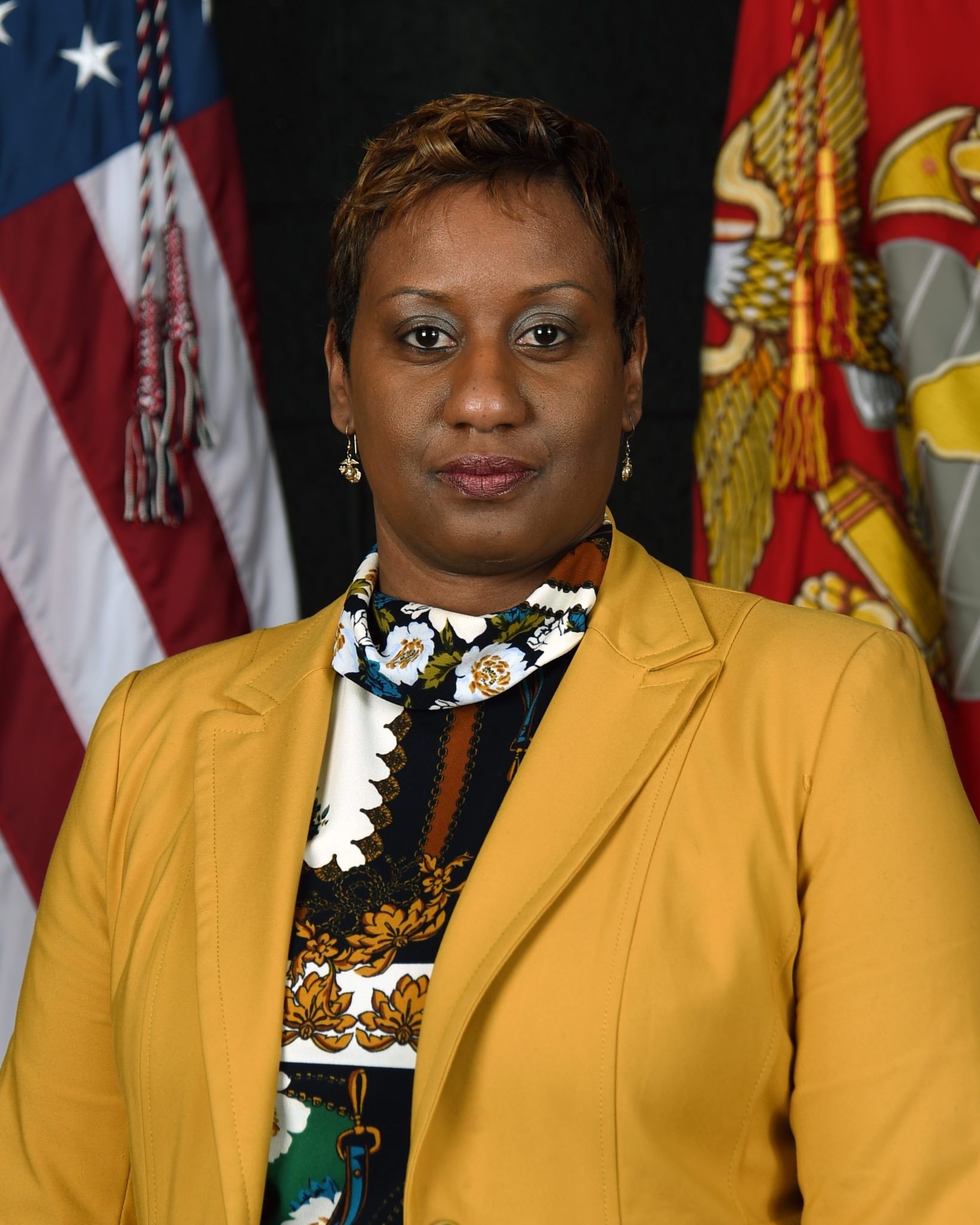
Renata Spinks
Acting Senior Information Security Officer & Cyber Technology Officer, U.S. Marine Corps.
Renata Spinks leads a portfolio focused on IT, policy, investments and cyber operations, while overseeing organizational leadership for the Marine Corps Network and Information Enterprise.
Prior to the Marine Corps, she served in the U.S. Army 44th MEDCOM 28th Combat Support Hospital and is a decorated combat veteran.
She worked for the Department of Homeland Security at the Immigration and Customs Enforcement’s Office of Acquisition and led asset management, budget projection and execution, audit and financial system security.
Her passion for cyber grew when she was a criminal research specialist and used computer forensics and human intelligence to help with human trafficking and child exploitation investigations. She has also served as special assistant to the director of IT in the Office of Financial Research at the U.S. Treasury, and later, was senior advisor to the assistant CIO for the Internal Revenue Service.
Spinks has led the USMC mobile and remote workforce operations design and architecture buildout since 2018, where cybersecurity has been a foundational guide.
Why Watch
According to her bio, Spinks is focused on many cyber-related areas. She works to enable cyber and intelligence-focused compute and store, access control and identity management, data encryption and governance and more. She leads defensive cyber operations for a hybrid cloud environment, creates opportunities for emerging technology for connected and disconnected environments and more.
In a recent Federal News Network panel, Spinks spoke of the Marines’ interest in using artificial intelligence and machine learning to better leverage data for intelligence and decision-making.
“I think artificial intelligence and machine learning investments are going to be very helpful there,” she said then. “Being able to have algorithms that can be trained to understand the repetition that occurs. After that pattern is created, artificial intelligence and machine learning will help us learn all of those repetitious things that we do every day.”

Christine Owen
Director, Guidehouse
Christine Owen is known for her expertise in identity and access management and zero trust architecture across different sectors. Since 2020, she has worked on a zero trust project for a major federal department. The project recently gained enough support within the department to proceed with fully implementing the new system.
This has been a massive achievement she’s extremely proud of, as it’s taken so much hard work and late nights from her highly motivated team, as well as a ton of preparation, departmentwide workshops, senior briefings and one-on-one discussions to convince the department’s stakeholders of the importance of a centralized zero trust architecture.
“Christine is a people-centric individual who loves to see her team excel both personally and professionally,” said Marianne Bailey, a partner at Guidehouse and Advanced Solutions Cybersecurity practice lead. “She is a compelling, persuasive advocate and trusted advisor. We are so fortunate to have her on our team as we help our clients navigate the complexities surrounding IAM and zero trust.”
Why Watch
Looking ahead, Owen and her team are focused on the implementation of enterprise IAM and ZTA using stakeholder requirements, current technology, knowledge of threat vectors and privacy concerns and have a passion for finding innovative and effective solutions to issues that make a real difference.
“I am passionate in helping organizations secure people, things, applications, devices and the cloud taking an identity-centric approach within a zero trust architecture,” Owen said. “This is a huge task for our teams, and I like to take a servant-leader approach ⏤ I see my role as the person who removes blockers and advocates for the team, so they can do their best work for our clients.”

Jennifer Walsmith
Corporate Vice President of Cyber and Information Solutions, Northrop Grumman
With Northrop Grumman continuing to rapidly grow and scale within the defense industry, Jennifer Walsmith ⏤ a 36-year intelligence industry veteran ⏤ has played a prime role in cyber and intelligence mission solutions.
Her leadership role helps support the Defense Department and the intelligence community across all domains: ground, space, sea, air and cyber. She helps provide solutions for sensing the environment and protecting the nation’s systems.
Northrop Grumman’s team recently placed fourth in a big hacking contest at Defcon, where it was one of only five teams to make it to the finals out of over 700 entries. This was a big deal, as it was the first time the U.S. government allowed hacking into satellites for the competition.
Before her current role, Walsmith worked 15 years at the National Security Agency. She played a significant part in U.S. national cyber plans and advised high-ranking defense and intelligence officials. Now, she serves as Northrop Grumman’s executive lead for university relations with the University of Maryland Baltimore Campus and is a board member of the Intelligence and National Security Alliance.
Why Watch
In 2023, Walsmith and her team will continue to forge new capabilities that will assist the government in preventing, deterring and de-escalating to maintain peace and build non-kinetic capabilities to disrupt, deny and degrade on the road to the Joint All Domain Command and Control vision.
“Jennifer’s unique combination of customer, mission and business expertise have been instrumental in breaking down traditional silos and accelerating the delivery of next generation, converged, multi-domain non-kinetic capabilities that will be increasingly important in giving our customers freedom of maneuver in the cyber domain,” said Ben Davies, corporate vice president general manager of the Network Information Systems Division, Mission Systems at Northrop Grumman.
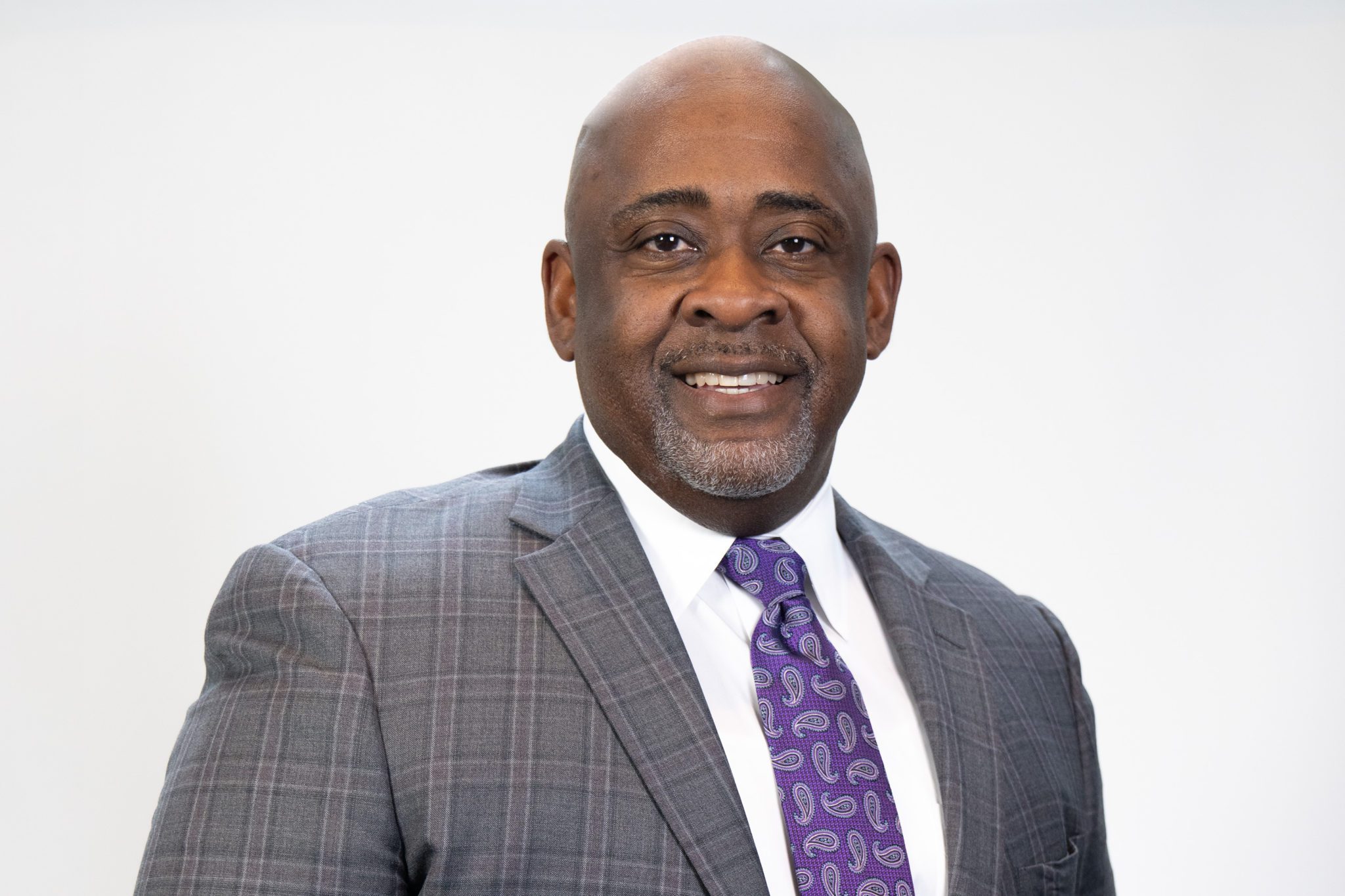
Richard Price
Executive Vice President & General Manager of National Security and Intelligence, QinetiQ
In just two months on the QinetiQ U.S. leadership team, Richard Price has quickly assessed the team and chartered a course for immediate and impactful individual and organizational growth.
The team is now hyperfocused on delivering phenomenal results to customers and continues to be recognized by senior government officials and the QinetiQ group leaders based in the U.K. The team is postured to deliver innovative solutions to the intelligence and cyber communities that will enable a strategic and operational information advantage for customers.
“Proud to serve with a group of dedicated professionals,” Price said.
Why Watch
The Intelligence and Cyber Information Advantage Business Unit that Price leads for QinetiQ U.S. is heavily focused on delivering innovative data collection, ISR and cyber CNO that helps customers solve some of the most complex national security challenges. The QinetiQ U.S. team is focused on being agile and flexible in the development of technologically advanced solutions, which allows them to meet the changing demands of today’s threat environment.