 Once a buzzword, now the norm, cloud has become the standard for digital environments everywhere. As government agencies use this technology to modernize and transform, IT leaders drive the push to integrate and maintain secure, cloud-based enterprises. We’ve identified those in industry and government who are helping ensure the nation is equipped with the tools it needs to drive productivity and build a foundation for advanced technologies.
WashingtonExec’s Top Cloud Executives to Watch in 2026 highlights leaders on the cutting edge of tech innovation. They’ve worked on cloud adoption throughout their careers and are dedicated to providing customers with environments that safely and efficiently meet mission needs. Plus, they bring the expertise, vision and problem-solving spirit that help the nation meet IT challenges.
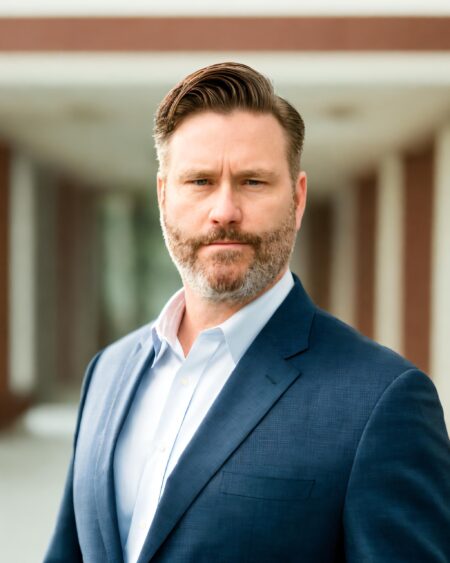
Blake Nelson
Vice President, Secure Cloud & Data Center, Leidos
Blake Nelson’s biggest recent achievement was scaling the Leidos Secure Cloud & Data Center Practice into a mission-ready, enterprise capability delivering measurable outcomes for federal customers.
Over the past year, he moved the practice from foundational cloud adoption to a repeatable, operationalized portfolio of multicloud solutions, driving new business growth and exceeding performance expectations. Through secure automation, FinOps discipline and industrialized migration factories, the practice helps agencies modernize faster, operate more resiliently and redirect resources toward mission priorities.
Leidos’ solutions support hyperscale cloud platforms and interoperability across legacy, hybrid and cloud-native environments, grounded in rigorous security, compliance and governance. The work positions Leidos as a trusted partner for mission-critical cloud transformation as federal customers pursue modernization, stronger operational effectiveness and sustained mission impact at scale.
“Blake has driven innovation in next-generation cloud capabilities, delivering scalable, AI-powered platforms that enable federal customers to modernize operations, automate mission-critical systems, and achieve measurable mission success,” said Paul Wilkinson, senior vice president and Digital Modernization Practice leader at Leidos.
Why Watch
In 2026, Nelson’s team is focused on leading automated multicloud and data center operations through scalable managed services and repeatable solutions that strengthen security, reduce costs and accelerate mission outcomes. By embedding AI-driven automation, predictive analytics and data-informed decision-making across cloud environments, the team increases operational resilience and helps agencies move faster with confidence. Its emphasis on governance, security-by-design and policy-driven controls allows customers to safely unlock hyperscale cloud capabilities and deliver secure, mission-ready, AI-enabled ecosystems.
“The real challenge isn’t adopting cloud or AI — it’s making them reliable, repeatable and mission-ready,” Nelson said. “By embedding automation and intelligence into everyday operations, we help agencies move from experimentation to execution — delivering resilience, efficiency and trust at scale.”
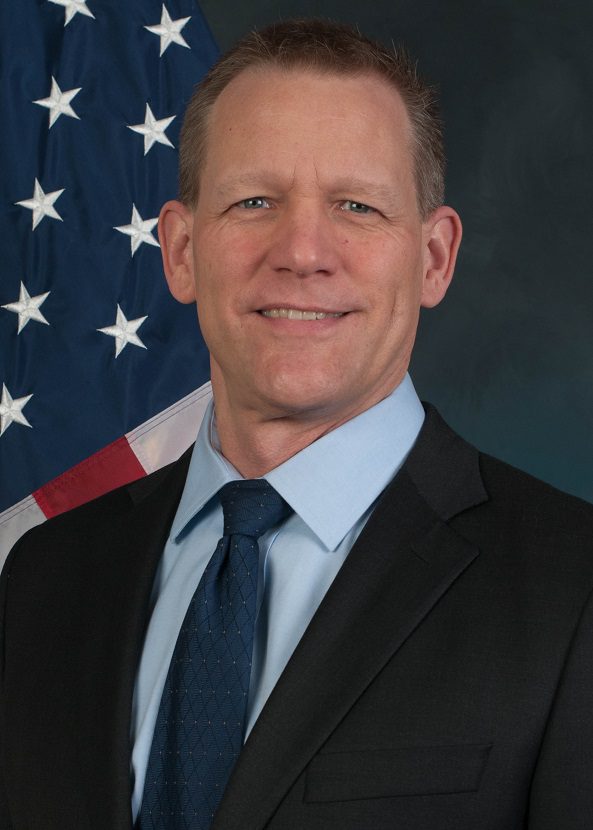
Dave Hinchman
Director of IT & Cybersecurity, US Government Accountability Office
For the past several years, Dave Hinchman’s team has focused on reviewing the dramatic growth of cloud across the federal government and how it is shaping efforts to improve and streamline government services, while identifying areas where those services can be strengthened. In GAO’s role as a legislative branch oversight agency, he has worked closely with congressional clients to surface the most pressing cloud computing issues and challenges for oversight.
As a legislative branch agency, GAO provides Congress with objective, nonpartisan, fact-based information to help the government save money and operate more efficiently. As congressional interest in how the administration’s cloud priorities and initiatives are advancing those goals continues to grow, GAO will work to ensure Congress has the information it needs to effectively carry out its oversight role.
“Dave plays a vital role in improving the state of cloud across the federal government,” said Nick Marinos, GAO’s managing director of IT and cybersecurity. “As a senior executive with deep subject matter expertise in GAO’s extensive work on federal data center optimization and cloud computing, his work in these areas has consistently delivered information essential to congressional oversight efforts. Additionally, his steady focus on quality and balance in his work allows him to build strong relationships with both his congressional clients and the agencies he reviews, which in turn, helps GAO better fulfill our important mission.”
Why Watch
In 2026, Hinchman’s team will focus on how the government can better secure cloud deployments and streamline the approval of new cloud service offerings. Planned for late spring, GAO will issue a report on agencies’ efforts to ensure service provider compliance with federal cybersecurity requirements. Later this year, the office will follow up its January 2024 FedRAMP report with a review of changes made under FedRAMP 20x.
“In my role at GAO, I’ve realized that my job is not just about the important role my team plays in congressional oversight efforts and seeing the results of those reviews published in our reports,” Hinchman said. “I’m also extremely grateful for the invitations I’ve received to speak publicly about my team’s results and show the more human side of government program auditing. I will always enjoy the chance to talk about the incredibly hard work my team does and to show off the sophisticated data that they have collected and analyzed, all in support of helping the government operate with greater efficiency and effectiveness.”
Fun fact: Hinchman says he is borderline obsessed with college football and has never met a game he will not watch. He also says he misses the seemingly endless parade of bowl games that used to be played on New Year’s Day.

George Forbes
Director, Digital Operations Directorate, Headquarters Air Force A3X
Last year saw the successful development and launch of the Air Resource Tool Enterprise Mission Information System, replacing legacy aviation resource management systems with a secure, scalable, cloud-native platform that consolidates fragmented data into a single source of truth for aviation readiness.
By tracking medical compliance, training and flight hours for over 68,000 Air Force aviators, ARTEMIS gives commanders near real-time visibility into force readiness. What once took eight to 10 weeks to report can now be delivered in about two hours, saving thousands of hours each year and directly increasing operational readiness and lethality, said George Forbes.
The Air Force’s main focus is modernizing systems and automating tasks so airmen can focus on what matters most, while improving how the service spends resources and prioritizes funding where it has the greatest impact, Forbes said.
Technology must be an enabler, not an inhibitor, and programs like ARTEMIS show what is possible when the Air Force partners with industry, Forbes said. Built in just 180 days, ARTEMIS shows there is no reason the service cannot leverage private-sector advances to move faster and innovate at pace.
“I’m tremendously proud of our team and the work we’re delivering the enterprise,” Forbes said. “The team is transforming aviation resource management and modernizing how we track so much for aircrews — we’re providing airmen and commanders with almost real-time, decision-ready information. That visibility directly supports Air Force warfighters, boosts our collective readiness, and scales our potential lethality. We’re driving purposeful change, and I look forward to seeing what we accomplish next.”
Why Watch
One of the Air Force’s key priorities is developing and fielding the Aerospace Readiness Enterprise System, a next-generation, cloud-based enterprise platform that replaces legacy aircrew scheduling, stan/eval, and training systems.
“ARES will be a game changer for our warfighters,” Forbes said.
Fun fact: Forbes is an avid outdoorsman, and traveling by RV to explore new locations and national parks across the country is a passion he shares with his wife and family.

James Norcross
Executive Vice President, Digital and Enterprise Solutions, CACI
James Norcross is a proven executive with more than two decades of experience driving modernization across defense, intelligence, and federal civilian agencies. He recently took on the role of executive vice president of digital and enterprise solutions at CACI, where he oversees a team that supports national security efforts by investing ahead of need in cloud, artificial intelligence, automation, and more.
This year, Norcross has focused on migrating critical government applications to the cloud and securely transforming them to be cloud-native through CACI’s Agile Solution Factory delivery execution model.
Recently, Norcross’s team achieved Amazon Web Services Managed Service Provider status. This latest recognition adds to CACI’s current arsenal of technical and business accomplishments achieved through precise hybrid cloud execution and robust qualifications, uniting edge-to-cloud delivery with audited 24/7 operations for mission workloads. Specifically, the team leverages AWS cloud-managed services and the AWS Migration Acceleration Program (MAP) to return real dollars back to customers.
“CACI continues to leverage multiple cloud providers to ensure we are delivering differentiated software-defined capabilities that achieve the highest security accreditations in the cloud,” said Norcross. “These latest achievements in cloud will carry this momentum forward as we continue to strengthen and scale the nation’s most critical enterprise programs.”
Why Watch
In 2026, Norcross and his team are heavily focused on helping customers achieve their enterprise vision by leveraging the cloud. He will lead the team as it continues to build trusted partnerships across the Department of War, delivering enterprise cloud and service management capabilities that support mission readiness. Through his customer-first approach, Norcross will further define CACI as a leading provider of network modernization, infrastructure modernization, and enterprise service delivery.
“Jimmy brings a wealth of experience, a proven track record of leadership, and outstanding business performance,” said CACI President of U.S. Operations, DeEtte Gray. “With his strategic guidance, CACI empowers government agencies with advanced cloud capabilities that pave a clear path to efficient modernization. I am confident that Jimmy will position us for greater success and allow us to better serve our customers.”

John Nemoto
Vice President, CGI
John Nemoto put much of his attention in 2025 on continuing the expansion of the shared services offering of the Continuous Diagnostics and Mitigation program of the Cybersecurity and Infrastructure Security Agency. The multiyear project now extends cloud-based cybersecurity services to more than 70 federal agencies.
The Continuous Diagnostics and Mitigation (CDM) program, one of the most impactful federal cloud modernization initiatives in recent years, delivers advanced cybersecurity capabilities across over 1 million endpoints and identities, leveraging leading cloud services providers like AWS, Microsoft Azure and Google Cloud. Nemoto’s work has contributed to increasing efficiencies within the government by driving adoption of CDM across more agencies, leveraging the shared services model to reduce costs and increase speed to adoption. Under his leadership, CDM has experienced steady growth.
Recent innovations have included deploying AI-driven tools to combat cloud sprawl, strengthen security posture and identify cost-saving opportunities. These efforts have set a new standard for governance and efficiency in federal IT transformation.
Why Watch
CDM will remain a top priority over the next year as Nemoto will continue deepening collaborations between public and private sectors to expand the shared services platform’s value. His roadmap includes integrating cloud-native security capabilities, enabling agencies to standardize controls, streamline remediation and maintain consistent risk visibility across diverse environments.
This strategy positions federal programs to accelerate innovation with confidence — balancing speed, security and cost discipline as complexity grows. Within this context, Nemoto leads CGI’s partnership with AWS on cloud-enabled cybersecurity capabilities. This includes a zero-trust accelerator capability enhanced with AI, tailored to government agencies, and aligned with CDM data collection and analysis principles.
Nemoto is also tracking the rapid growth and maturation of AI, quantum-ready cryptography and other emerging technologies, striving to ensure his team is always ready for what’s coming next. In cybersecurity, new tools and techniques are often a double-edged sword, strengthening defenses while simultaneously creating new kinds of attacks.
“A hostile actor could already be inside an agency’s environment in the form of polymorphic malware that is being propagated through their enterprise using AI to advance,” he said. “We have to bring new tools and expertise to bear to fight against those kinds of threats.”
Fun fact: While Nemoto’s education includes a bachelor’s degree in political science and government and a master’s in public policy, he started his academic career as a music major. Today, he claims proficiency in six instruments, including guitar, piano and drums.
He approaches practice and performance with humility and a time-honored philosophy that erstwhile musicians since the invention of electrical amplification have lived by: “You can always compensate for lack of experience by turning the volume up all the way.”

Patrick McConnell
Senior Vice President, Health Engineering Solutions, ICF
Patrick McConnell’s biggest recent achievement was leading ICF’s nearly 450-person health engineering team through a transformation that reshaped how the company uses AI to design, build and deliver systems for federal clients. By embedding AI across client delivery, the team is building software faster, more accurately and more securely, while improving the user experience. The shift has accelerated operational and cost efficiencies and delivered measurable outcomes for federal customers.
McConnell’s team has also expanded its support for the American health care system through work with the Centers for Medicare and Medicaid Services, increasing cloud transformation efforts in Medicaid while continuing to support Medicare programs.
ICF is bringing the right mix of cloud technologies and AI innovations to customers through flexible, production-ready solutions such as ICF Fathom, which allows teams to apply proven patterns and agentic AI solutions once and reuse them across programs rather than building from scratch. This approach shortens delivery cycles, lowers total cost of ownership and strengthens reliability, resiliency and security from day one.
For many agencies, these frameworks meet most core requirements out of the box, with the service layer used to tailor remaining needs. These advances form the foundation for stronger decision-making and continuous improvement, with AI and automation applied where they add value.
“Patrick has rewritten our engineering playbook, operationalizing AI and cloud technologies that improve time to value and deliver measurable outcomes across complex federal health portfolios,” said Tonia Bleecher, ICF senior vice president for health technology. “The result is faster delivery, more efficient spend, and resilient systems that readily scale to meet the needs of large federal health programs.”
Why Watch
In 2026, McConnell and his team will prioritize responsible adoption of AI agents and accelerators so teams can build once and deploy across programs to deliver high-value outcomes quickly, safely and securely. The team is also helping agencies reduce risk and control costs through multicloud strategies, particularly as recent industry disruptions have highlighted the risks of overinvesting in a single cloud provider. The approach supports greater resilience, flexibility and agility as organizations adapt to changing needs and emerging technologies.
“I’m incredibly proud of how my team has leaned into AI and cloud technologies to deliver modern, resilient systems for federal health clients during a time of rapid change,” he said. “They’ve really stepped up to help our clients meet their challenges head on and have stayed focused on creating better experiences for the people our clients’ programs serve.”
Fun fact: About 15 years ago, McConnell and his wife spent three years traveling around the world through Europe, Asia, Africa and Australia. They combined backpacking with stays in hostels and short-term rentals, sometimes traveling with their dogs. He said the experience taught him to be resourceful, curious and adaptable, traits he brings to his work with teams and clients.

Paul Williams
Vice President of Solutions, Koniag Government Services
Paul Williams’ biggest achievement in 2025 was securing the AWS Migration and Modernization Competency in March 2025 and the AI Competency in December 2025 for Koniag Government Services, making KGS the only Alaska Native Corporation to hold both designations and the only U.S.-based 8(a)-certified contractor approved for the Generative AI Competency.
These validations underscore the expertise of KGS’ technical staff and the company’s ability to deliver secure, agile cloud migrations, modernizations and generative AI solutions for federal customers. The dual milestone positions KGS as a trusted leader in driving efficiency, innovation and mission outcomes across government IT.
KGS is focused on scaling AI in the cloud for customers and has deployed cloud-based solutions that integrate automation and AI to support mission objectives more efficiently.
“Paul’s focus on secure, mission-critical AI across multi-cloud environments exemplifies the forward-thinking leadership our Government customers need to maintain technological edge while improving efficiency and operational effectiveness,” said Kevin Wideman, KGS CEO. “He is helping transform how our Federal customers leverage technology to achieve mission success and driving cloud and AI innovation that strengthens our position as a trusted Federal technology partner.”
Why Watch
In 2026, Williams’ team will focus on scaling agentic AI and generative AI integrations across secure, multicloud government environments, including AWS, Azure Government and Google Cloud. KGS is expanding compliant, mission-critical AI that speeds decision-making, automates workflows and improves operational efficiency for Defense Department and civilian agencies. The work aims to help federal partners maintain a technological edge while aligning with priorities for cost reduction and streamlined operations.
“The adoption of AI is going to be absolutely required to maintain the lethality of our forces in the U.S. government,” Williams said. “Our team at Koniag Government Services is committed to pushing the boundaries of what’s possible with AI for our armed forces in 2026 and beyond.”
Fun fact: During COVID, Williams and his wife lived in a camper and traveled the country while working remotely. They outfitted the camper with solar power and reliable internet to stay connected across the U.S. and explored public lands and national parks across the country.

Renzo Rodriguez
Senior Director, Partner and DIB Sales & Solutions Engineering, Oracle – Government, Defense, and Intelligence
Renzo Rodriguez’s biggest recent achievement has been scaling two core organizations: the partnerships team supporting Oracle Government, Defense and Intelligence and Marketplace solutions for Oracle’s government business, while also leading the Defense Industrial Base solutions engineering team.
Under his leadership, Oracle has strengthened how it sells with partners by making it easier to package, validate and deploy mission-ready solutions. The result is faster execution for partners and simpler adoption for government customers.
Oracle is supporting the current administration’s priorities to reduce costs, streamline operations and improve government efficiency by helping agencies modernize legacy environments, automate routine operations and strengthen cost transparency and governance. The company is simplifying deployment and operations through standardized architectures and repeatable patterns so teams spend less time integrating and maintaining systems and more time delivering outcomes. The approach reduces operational burden while improving performance, security and reliability.
“Renzo has quickly strengthened how we scale partnerships, Marketplace solutions, and DIB solution engineering across Oracle GDI,” said Kim Lynch, executive vice president of government, defense, and intelligence at Oracle. “His leadership is improving execution velocity and helping partners deliver mission-ready capabilities with consistency.”
Why Watch
In 2026, Rodriguez and his team will focus on expanding the GDI partner ecosystem and a Marketplace-led delivery model that reduces friction from onboarding through production, aligned to mission needs across classification levels and compliance requirements. The team is investing in repeatable architectures, security by design and solution engineering rigor to speed adoption. The objective is to deliver secure outcomes faster and at scale.
“My priority is building a partner and Marketplace engine that makes secure adoption faster and more repeatable,” he said. “When we reduce technical and security friction, agencies gain time back, partners execute with confidence, and missions move forward.”
Fun fact: Outside of work, Rodriguez is a constant learner, with a focus on AI, quantum technologies, cryptography and space systems. He is interested in how these shifts will reshape security, resilience and mission execution over the next decade.

Sandeep Shilawat
Cloud CTO Lead, IBM Federal
Sandeep Shilawat is a well-established leader and a prominent and trusted authority for agencies modernizing with AI-driven infrastructure and advanced cloud-based capabilities. In 2025, he played a critical role in guiding agencies to adopt integrated, mission-aligned AI capabilities built on secure hybrid cloud foundations. His leadership helped federal teams mature their approaches to trust, governance, and operational readiness in support of largescale modernization efforts.
This past year, Shilawat shaped IBM Federal’s cloud and AI strategy across several major programs, building the organization’s pipeline and supporting the capture and delivery of federal work. He has been instrumental in helping agencies design and implement architectures aligned to outcome-based procurements, continuous authorization, and operational resilience requirements. His impact is especially visible in programs where AI, AIOps, and hybrid cloud are positioned as core mission capabilities.
Why Watch
Shilawat is recognized for his ability to connect policy, engineering, and economic considerations to help agencies scale technology responsibly. In 2025, his influence was evident across several areas central to the modernization strategies of federal agencies.
He is guiding AI from concept to operational capability by helping agencies adopt AI as mission infrastructure supported by governance, risk management, and measurable performance outcomes. His work is strengthening agency readiness for responsible AI and GenAI deployment and integrating trustworthy AI into hybrid cloud, AIOps, and mission delivery models.
His leadership has been instrumental in aligning programs with NIST AI RMF, cATO frameworks, and Zero Trust requirements — ensuring AI capabilities can scale securely and consistently across environments. His guidance enables large-scale federal programs to deploy AI as a production-grade capability that demonstrably supports agency objectives.
Fun fact: Beyond his technical and delivery work, Shilawat is a regular contributor to Forbes and an industry recognized voice on LinkedIn, where he helps shape the broader conversation around AI enablement —distinguishing real operational value from hype and promoting responsible, mission-aligned adoption across government and industry.

Sharon Woods
Senior Vice President of Enterprise Accounts, Public Sector, Invisible Technologies
After 20 years at the Defense Department, Sharon Woods transitioned to the private sector to join Invisible Technologies, an AI software company that partners with governments, leading model builders and enterprises to put AI to work in real-world environments.
During her government tenure, Woods led several major cloud initiatives, including the Commercial Virtual Remote effort, which deployed Microsoft Teams to more than 1 million users in under a month during the pandemic. She also spearheaded the Joint Warfighting Cloud Capability program, bringing commercial cloud offerings to the department across all classification levels.
Invisible Technologies helps public sector customers automate burdensome, repetitive processes and deliver measurable outcomes. The company’s platform ingests complex, unstructured data and produces agentic insights that help agencies move faster and make better decisions. Common use cases include fraud detection, portfolio management, logistics and back-office functions, supporting efforts to streamline operations and improve efficiency in line with administration priorities.
Why Watch
In 2026, Woods and her team will focus on helping global public sector organizations adopt AI to achieve outcomes that were not feasible with traditional technology. The team is working to operationalize AI across mission-critical functions, including fraud detection, logistics, portfolio management and back-office operations. The goal is to help agencies automate repetitive processes, reduce costs and improve efficiency at scale.
“2025 was a year of change for me,” Woods said. “After two decades focused on getting the best technology into the hands of the warfighter, I joined Invisible Technologies to help accelerate the adoption of AI across the global public sector. In 2026, we’re focused on helping agencies turn messy data into real, measurable outcomes with AI, improving efficiency and unlocking capabilities that weren’t possible with traditional systems.”
Fun fact: Woods is a heavy metal fan.