In the highly competitive and evolving world of government contracting, companies need to stay ahead of the game and on top of the technology trends driving solutions to customers. But this innovation also needs to happen within and, considering how technology is reshaping the industry, the role of the chief information officer has never been more important.
These experts help build internal digital platforms, modernize internal IT infrastructure, adjust operating models, manage incoming innovation, and enhance processes with technology. These standards set the bar high for customer solutions and differentiate each organization from the next. Meet the CIOs with the management and IT knowledge to implement change from the inside out.

Derrick Pledger
Chief Digital and Information Officer, Maximus
Maximus has been at the forefront of AI-driven technology change across the federal government in 2025. The strategic direction and business expansion has been led by Chief Digital and Information Officer Derrick Pledger.
Since joining Maximus in January 2024, Pledger integrated innovative AI, data analytics and customer experience solutions into the company’s enterprise technology strategy. His leadership has been central to Maximus’ continued success in helping government agencies modernize systems, enhance cybersecurity and deliver more efficient citizen services.
Supported by Pledger’s executive leadership, Maximus recently secured two major U.S. Air Force contracts: an award valued up to $77 million to deliver advanced cybersecurity and cloud-based services, and a Joint Cyber Command & Control Readiness contract worth up to $86 million to enhance interoperability and readiness across critical defense systems. These wins underscore Maximus’ growing role as a trusted technology partner for the Defense Department, providing secure, scalable and mission-focused digital capabilities.
“As cyber threats continue to evolve, the Air Force and the broader Department of Defense need partners who can keep pace with innovation,” Pledger said. “This new work represents a significant expansion of our technology footprint and highlights our ability to deliver engineering excellence, software modernization, and data-driven mission outcomes.”
Why Watch
As CDIO, Pledger is responsible for shaping the company’s technology strategy, leading modernization efforts, and ensuring digital and operational alignment across Maximus’ global portfolio. A U.S. Army combat veteran with more than 20 years of technology leadership experience, he brings a deep understanding of mission-driven digital transformation.
Pledger’s focus for 2025 and beyond is clear: leveraging AI, automation and data to create more responsive and efficient systems that meet the evolving needs of government partners. As one example, Pledger has emphasized with agency leaders how AI-powered CX can transform government services by connecting citizens to the right resources faster and more effectively.
“By combining intelligent AI agents with human expertise, we can help agencies deliver outcomes that truly make a difference,” he said.
Pledger is also advancing Maximus’ role in fostering innovation through collaboration. In partnership with the National Defense Industrial Association, Maximus sponsored a major defense hackathon over the summer that was designed to accelerate rapid capability development and align government, industry, and academia in solving real operational challenges.
“At Maximus, our mission is to help government agencies modernize and deliver services that improve lives,” Pledger said. “Technology, when used with purpose, becomes a force multiplier for efficiency, readiness, and impact.”

Dr. Kelly Fletcher
Chief Information Officer, Bureau of Diplomatic Technology, State Department
Dr. Kelly Fletcher oversees simple, modern and secure tech delivery for 100,000 users in 190 countries. She has strengthened State’s cybersecurity posture and played a key role in the department’s response to the China-linked Microsoft hack. She also advanced user experience, operational performance, global connectivity and new capabilities across all classification levels.
Fletcher’s previous roles span some of the biggest and most complex technology portfolios in government. As principal deputy CIO at the Defense Department, she oversaw policy and governance for IT, cybersecurity, positioning and navigation, electromagnetic spectrum operations and software modernization. Her portfolio covered about $50 billion in annual spending and supported over 4 million end users.
Why Watch
Fletcher’s work has been recognized through major industry honors, including WashingtonExec’s Chief Officer Award. With a Ph.D. in engineering from Georgia Tech and a bachelor’s from Washington University in St. Louis, she has spent her career at the intersection of security, technology and strategy.
Fletcher brings rare experience across cybersecurity, global operations and strategic resourcing. Her decisions influence how a major federal department secures its systems and supports diplomacy at scale.
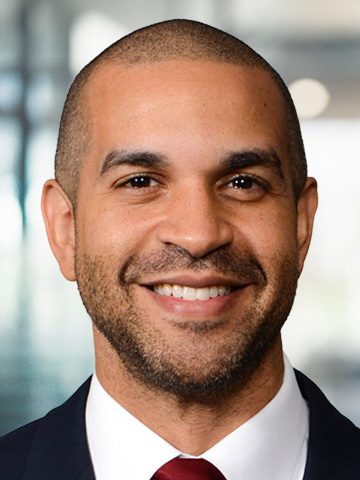
Errol McEachron
Senior Vice-President, Federal Solutions Group, CGI
Errol McEachron and his team are leading through transformation and helping to reimagine the future of government technology. Recognizing that the role of technology leaders is no longer confined to managing infrastructure or delivering systems on time, McEachron views transformation as a continuous journey that demands bold thinking, operational discipline and a deep understanding of client missions.
“Transformation is a mindset,” he said. “To truly transform, agencies and their industry partners must rethink how they build, secure and deliver government technology. Think of it as an operating ethos rather than a series of milestones to hit.”
Over the past year, McEachron led meaningful progress in reshaping how CGI Federal operates, secures and delivers technology. In early 2025, McEachron assumed leadership of CGI’s Federal Solutions Group, and under his direction, the team moved decisively from experimentation to execution, embedding AI into enterprise solutions to automate complex workflows, enhance decision-making and improve user experiences. These capabilities help federal agencies streamline operations, elevate service delivery and unlock new insights from their data.
CGI shares the government’s priorities—increasing efficiency, eliminating redundancy, preventing fraud, waste and abuse, and streamlining operations. Under McEachron’s guidance, the solutions team is building the foundational pieces and components to enable nimble change.
Why Watch
FSG supports stakeholders across the company, which provides McEachron a holistic perspective on the larger business and its strategic priorities. The move puts him at the forefront of advancing multiple strategic internal and external initiatives, including the company’s artificial intelligence initiatives and cybersecurity strategy, as well as developing and deploying new solutions like CGI’s accredited digital forensics lab.
McEachron and his team laid a solid foundation this year for the rapid expansion that is just on the horizon. AI plays a central role in the group’s strategic vision, and McEachron is committed to turning that vision into tangible outcomes in 2026. CGI is building toward a future defined by agentic AI, automation and reinvention-readiness. McEachron’s team is exploring how intelligent agents can not only assist but initiate workflows, learn from outcomes and adapt in real time.
“AI continues to reinvent the landscape,” he said. “We want our foundational building blocks to be enabled and ready for that reinvention.”
CGI is investing in automation that spans the enterprise, from AI-augmented engineering to mission-critical service delivery. McEachron’s team is working to align platforms with a composable, cloud-first and AI-native architecture that’s built for change.
Most importantly, McEachron is aligning investment with meaningful outcomes. Whether it’s optimizing operations, improving citizen engagement or enabling data-driven oversight, his team measures success by the value they deliver. Through co-creation with clients, continuous feedback and mission-aligned innovation, they ensure solutions meet requirements and rise past them.

Glasford Hall
CIO, Arcfield
When Glasford Hall joined Arcfield as CIO just over one year ago, he was on a mission to implement a comprehensive optimization of Arcfield’s end-to-end IT operations across both classified and unclassified environments. In doing so, Hall and his team ensured reliable, secure and cost-effective services to support the company’s mission-critical work.
Most notably, Hall’s keen eye for enhancing operational efficiency and sustainability across the IT portfolio has resulted in improved system availability, faster incident resolution, and higher service quality for the entire Arcfield enterprise.
Why Watch
In 2025, Hall and team will continue to focus on modernizing corporate infrastructure, enhancing programmatic maturity, and realizing Arcfield’s AI policy, strategy and initiatives. They are championing a growth and learning mindset to continually innovate and advance the mission while working to exploit embedded AI capabilities within corporate business applications to transform routine processes into predictive and generative experiences.
Additionally, they are concentrated on driving technology innovation to maintain a competitive advantage by leveraging emerging technologies to enhance mission outcomes and create sustainable value for the business.
Glas believes that the CIO organization should be a business and profit enabler. He is often asking his team “if our initiatives aren’t growing the business or profit, why are we doing it?”. This can be viewed as a bit of a paradigm shift for a function that is more often viewed as internal facing. He has successfully done this by identifying and leveraging the strengths of his direct reports and prioritizing their growth and development.
“Glas has a unique gift for turning complex technical challenges into collaborative successes,” said Chris McCall, chief administrative officer at Arcfield. “He encourages our teams to innovate with purpose, align around shared goals, and consistently deliver solutions that are both forward-looking and financially disciplined.”
Fun fact: Hall loves to travel abroad but isn’t a fan of air travel. Most recently, he enjoyed a pilgrimage to Turkey, Greece and Italy.

Luis German
CIO, Amentum
Luis German’s biggest recent achievement was playing a role in the successful integration of two major government services companies in the transformational merger combining Amentum and Jacobs’ Critical Mission Solutions and Cyber and Intelligence businesses.
The talented, high-performing team in the CIO office achieved significant integration milestones like consolidating critical business systems into single platforms, finding and leveraging companywide efficiencies, and consolidating technology infrastructure and cybersecurity operations.
“We recently celebrated our first year on the New York Stock Exchange, and the CIO office teamed up with the other business functions to successfully launch, file and report as a publicly traded company,” German said.
During the integration process, Amentum achieved over 30% savings in IT efficiencies through streamlining processes and consolidating operations. The CIO office is working very closely supporting other functions, working toward similar objectives. As a company, Amentum is continuously looking for ways to use technology to deliver real business value and best serve its people and customers.
Why Watch
In FY26, German’s team is heavily focused on completing the integration and ending the year with all systems consolidated. It will also be working on accomplishing full Cybersecurity Maturity Model Certification compliance under the Defense Department framework. Another key focus area for the CIO office is using data and AI in its processes and workstreams for enhanced collaboration among its people, and identifying greater efficiencies for the benefit of employees and customers.
Fun fact: German works out every week with a great guy named Messi. “He is an excellent runner. But he’s my dog, not the famous soccer player!” German said.
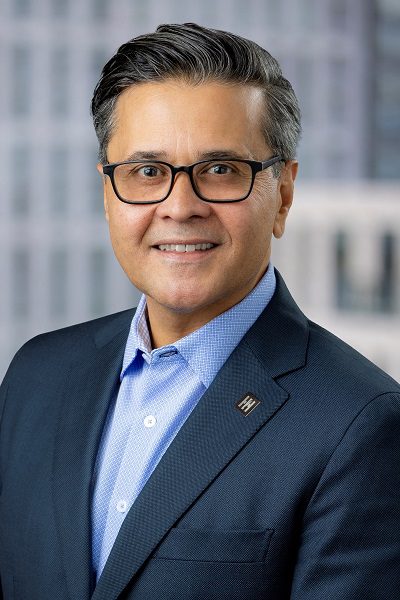
Marc Sosa
CIO, HII Mission Technologies
Marc Sosa oversees all aspects of IT and cybersecurity, enabling the division’s strategic objectives and advancing its digital priorities. He spearheaded digital transformation and implemented shared services that unify operations, streamline processes and strengthen collaboration across Mission Technologies. By establishing this foundation, he positioned the company to harness next-generation AI and automation —creating a more efficient, resilient organization and delivering strategic advantage across the enterprise.
In his dual-hatted role, Sosa also leads enterprise shared services sustainment across HII as vice president.
“Marc is not only modernizing infrastructure—he’s redefining the CIO role as a strategic partner and innovation catalyst,” said Chris Soong, HII CIO. “His next wave of initiatives includes AI, automation and advanced cybersecurity, making him a standout leader in the GovCon tech space.”
Why Watch
Sosa has built a career leading complex IT transformations, cybersecurity initiatives and enterprise modernization efforts. Known for his strategic vision and collaborative leadership style, he is driving innovation at Mission Technologies by aligning digital capabilities with national security priorities and empowering teams through secure, resilient infrastructure.
He emphasizes culture as a key enabler of innovation, citing shared ownership and open communication as powerful tools in his IT arsenal — hallmarks of his transformative leadership in digital modernization and enterprise security.

Rizwan Jan
Vice President & CIO, CNA Corp.
Rizwan Jan’s most significant recent achievement was transforming IT operations to directly support CNA’s mission, which is dedicated to the safety and security of the nation.
By deploying AI and automation, streamlining ServiceNow workflows and leveraging Morse Code (the company’s internal LLM), Jan’s team turned complex processes into actionable insights and faster decision-making. The outcome: a 15% reduction in IT labor, accelerated service delivery, and scalable operations that enhance business performance while strengthening the company’s ability to support national security.
CNA is also laser-focused on reducing costs and being good stewards of government funds — doing more with less and doing it smarter. By strategizing data as a strategic asset and combining it with AI-driven automation, CNA is accelerating decision-making, cutting manual effort and unlocking higher-value outcomes.
CNA’s Morse Code is at the center of this transformation. As the first FFRDC to implement its own LLM, CNA is paving the way for secure, scalable AI adoption that boosts efficiency today and sets the stage for a truly future-ready, data-driven organization.
“In 2020, I laid out my vision of CNA as a modern research and analysis organization. Now, five years later, I am so impressed with how far we’ve come,” said Katherine McGrady, CNA president and CEO. “With the support of leaders like Rizwan Jan, we have streamlined our processes, reduced overhead, and created revolutionary new tools, all in the service of CNA’s commitment to analytical excellence.”
Why Watch
In 2025, Jan’s team is focused on turning research data into a strategic asset that drives smarter and faster decisions for sponsors and clients. By integrating AI and customer relationship management tools, the team is improving data access, generating actionable insights and personalizing engagement to maximize impact. The goal is to turn information into intelligence that strengthens national security in new and powerful ways.
Fun fact: Most people see Jan as the CIO focused on big strategies, but they don’t always see the builder behind the title. Whether he’s renovating a room, crafting a table or rolling out a complex tech platform, he gets energy from turning ideas into something that works.
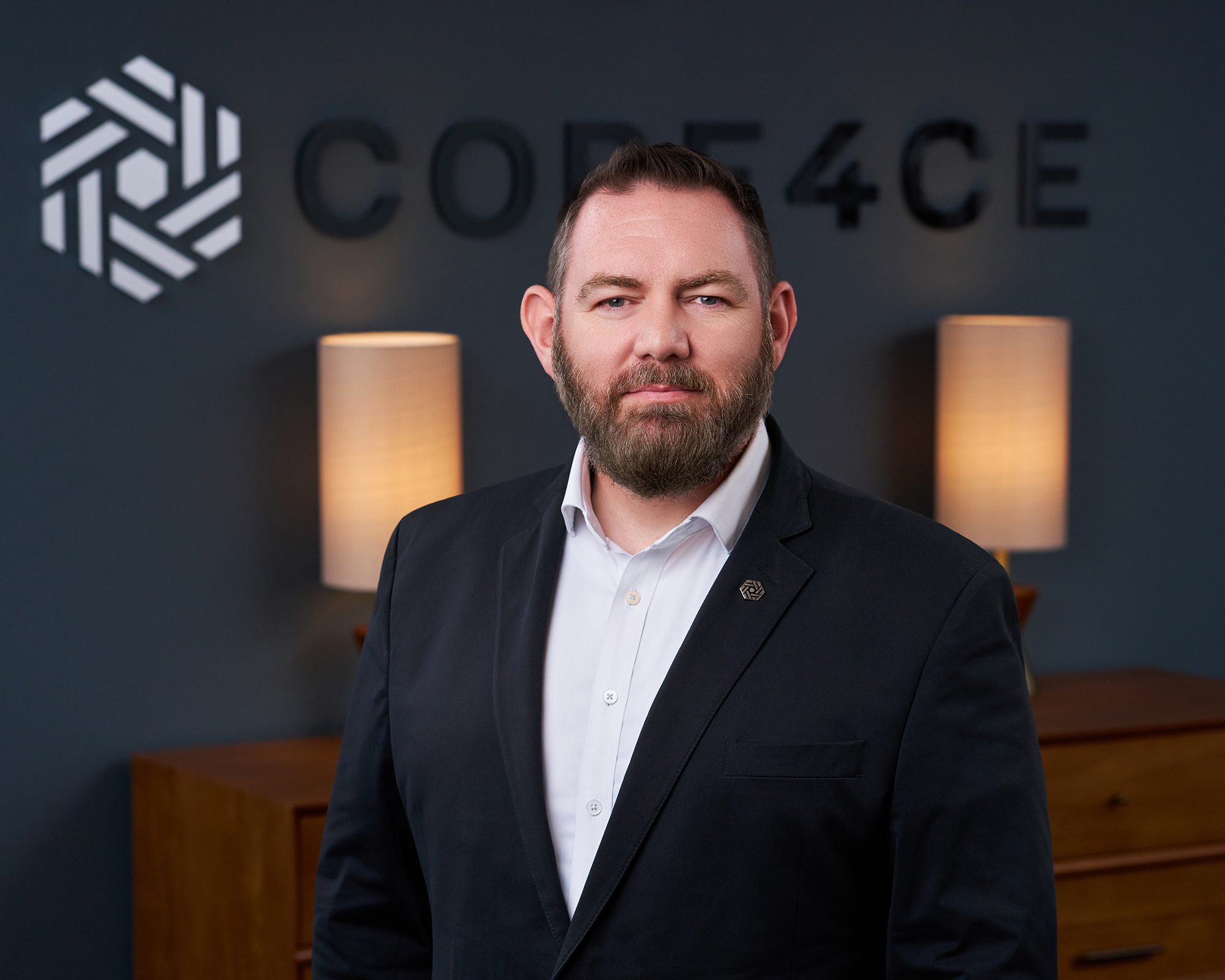
Shane Breland
CIO, Core4ce
Shane Breland’s biggest recent achievement was leading Core4ce’s effort to obtain Cybersecurity Maturity Model Certification Level 2 with a perfect score of 110/110.
The certification reinforces the company’s commitment to protecting sensitive government information and strengthens its position as a trusted partner to the Defense Department and other national security agencies. It required a comprehensive review of Core4ce’s cybersecurity practices aligned with NIST’s strict standards and reflects the dedication and expertise of the IT and cybersecurity teams over the past 18 months.
By integrating intelligence, automation and advanced analytics within an adaptive prototyping ecosystem, Core4ce can minimize development cycles, reduce rework and deliver mission-ready solutions faster and more affordably. This continuous, AI-enabled innovation model helps agencies modernize securely, operate more efficiently across cloud and edge environments and ensure maximized returns on taxpayer resources.
Why Watch
In 2025, Breland’s team is focused on integrating AI technologies across enterprise applications to streamline workflows and raise productivity while maintaining strong security standards. The team is automating repetitive high-effort tasks such as cybersecurity response, user lifecycle management, proposal generation and employee skill mapping. This work lets the organization move beyond system maintenance and concentrate on higher-impact priorities.
“Achieving the CMMC Level 2 certification with a perfect score underscores Core4ce’s dedication to maintaining the highest standards of cybersecurity,” he said. “The road has not been easy, and we have faced many challenges along the way, but I could not be more proud of our IT and Cybersecurity team’s expertise, hard work, and relentless pursuit of excellence.”
Fun fact: Breland is a Louisiana boy who doesn’t fool around when it comes to his gumbo. He makes his roux from scratch and doesn’t stop stirrin’ ’til it’s darker than a bayou at midnight.
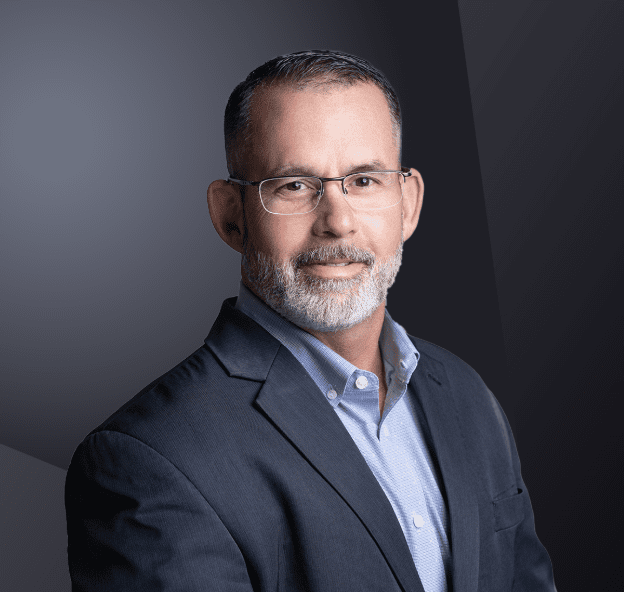
Steve Hittle
CIO, ECS
Steve Hittle’s team successfully achieved two major enterprise milestones that significantly improved ECS’ operational capability, security posture, and competitiveness within the defense sector.
First, the completion of the GCC High environment marks a critical advancement in securing and modernizing the ECS enterprise infrastructure. This effort established a compliant, resilient, and scalable platform that supports DOD, federal, and defense-industry workloads while enabling ECS to deliver managed services and solutions within highly regulated environments. The deployment required extensive coordination across IT, cyber and compliance teams to ensure seamless integration, data sovereignty, and mission readiness.
Second, the successful attainment of CMMC Level 2 certification reinforces ECS’ commitment to the highest standards of cybersecurity maturity and federal compliance. This achievement not only validates the company’s adherence to rigorous NIST 800-171 controls, but also positions ECS as a trusted and qualified partner for DoD contracts requiring CUI protection.
Together, these accomplishments strengthen ECS’ enterprise foundation, expand addressable market opportunities, and demonstrate organizational excellence in execution, governance, and security leadership. They exemplify the collaborative effort and strategic focus required to maintain ECS’ standing as a premier technology and cyber services provider within the defense and government ecosystem.
“Steve and his team are hard-charging and innovative,” said ECS President John Heneghan. “They’ve helped drive our business and increase our productivity with secure infrastructure, tools, and systems that leverage the latest AI technologies and service delivery best practices.”
Why Watch
Hittle’s team is driving one of ECS’ most transformative initiatives — the enterprisewide rollout of Virtual Desktop Infrastructure. This effort is modernizing how ECS operates by delivering secure, scalable and high-performance virtual workspaces to every corner of the organization.
The team is tackling the complex challenge of unifying user experience, strengthening data protection, and enabling seamless collaboration across on-prem and cloud environments. The VDI program is not just a technology upgrade; it’s a strategic shift toward agility, security, and efficiency that directly supports ECS’ mission readiness and customer delivery excellence. Watching the team’s progress means seeing innovation, execution discipline, and enterprise impact in real time — as we redefine how ECS works, supports, and secures its workforce in a modern, digital-first environment.
“In our world, technology may enable the mission, but it’s teamwork that makes it unstoppable,” he said. “Success in the DoD space isn’t defined by the systems we build, but by the people who stand together to deliver them.”
Fun fact: Hittle is an avid bowler who competes in several leagues and maintains a 217 average. It’s his way to unwind, stay sharp and channel the same focus and precision he brings to his work.

Leonel Garciga
CIO, Department of the Army
Leonel Garciga brings a mission-first mindset to one of the most complex technology portfolios in government. In his role, he advises the Army secretary on information resource management and IT strategy and oversees integrated architecture, information sharing, cybersecurity policy and the synchronization of the Army information enterprise.
His path to the role traces back to the Navy. Garciga earned his submarine warfare pin aboard the USS Memphis and graduated from Naval Nuclear Power School before starting his civilian career as a mechanical engineer at the Navy Engineering Logistics Office. Since 2003, he has worked across the Defense Department and the intelligence community in acquisition, engineering, intelligence and IT.
Before becoming Army CIO in 2023, he served as director of Army Intelligence Community Information Management in the G-2, where he provided operational, technical and security oversight for intelligence information management and IT capabilities. He also served as the Army intelligence community CIO.
Why Watch
Garciga is driving the Army’s continued move toward a modern, secure and data-driven enterprise. His expertise in enterprise architecture, secure software development and intelligence information systems positions him to guide major upgrades across Army networks.
With experience that ranges from CTO roles at JIDO to intelligence modernization in the G-2, he brings a deep operational lens to the Army’s technology priorities. Watching his agenda unfold means seeing how the Army bolsters cybersecurity, streamlines information flow and builds an IT foundation ready for future missions.

Antoine McCord
CIO, Department of Homeland Security
Antoine McCord’s career has been shaped by missions where information, speed and precision determine outcomes. He began in the U.S. Marine Corps, specializing in cyber and intelligence operations. That work grounded him in hands-on technical work, threat detection and the operational realities of defending national security networks.
After leaving the Marine Corps, McCord continued that mission in the intelligence community, where he led cyber operations against advanced threats and advised on national security. His work included multi-agency coordination, cyber defense planning and technology integration to support high-risk operations.
In March 2025, McCord was appointed the Department of Homeland Security’s CIO. In this role, he oversees departmentwide IT strategy, cybersecurity operations, digital modernization and enterprise technology governance across DHS components. As CIO, he is responsible for strengthening cybersecurity, modernizing legacy systems, improving cross-component data sharing and guiding technology investments across one of the largest civilian IT portfolios in government.
He is also dual-hatted as DHS’ chief artificial intelligence officer, a role that places him in charge of promoting AI innovation, accelerating responsible adoption and implementing DHS’ AI compliance requirements in alignment with OMB guidance. His CAIO role includes coordinating how AI supports mission areas like screening, vetting, threat detection and workforce readiness.
Why Watch
McCord’s portfolio spans enterprise technology, cybersecurity and AI governance. His leadership is central to DHS’ modernization priorities in 2026 as the department advances cyber defense, strengthens digital services and sets standards for responsible AI across its mission space.
With experience that runs from Marine Corps cyber operations to high-level intelligence work and enterprise leadership, McCord is positioned to shape DHS’ future as a more secure, data-driven and AI-ready organization.