In the competitive, evolving world of government contracting, companies must stay ahead by keeping up with technology trends that drive customer solutions. Companies must adapt their solutions and capabilities to align with customer mission needs, ensuring they provide efficient, compliant tools to the government. As technology reshapes both industry and government, the importance of chief technology officers has surged.
These professionals are key in modernizing IT infrastructure, advancing critical technologies, directing technology investments, recruiting and nurturing a top-tier technical workforce, and forecasting future technology focuses. Their technology strategies and solution development plans help customers and set their organizations apart. WashingtonExec’s Top Chief Technology Officers to Watch in 2026 list invites you to meet the CTOs who have the management and IT expertise to drive change from within.

Atul Singh
CTO, RELI Group Inc.
In his first months at RELI, Atul Singh is most proud of helping establish the foundation for an agile innovation engine—bringing practical R&D discipline through initiatives like RELI Labs and the broader innovation/COE efforts. He drew on his background modernizing large solution portfolios to build a scalable innovation foundation, translating strategy into tangible momentum.
Aligning with the administration’s priorities, Singh said he and his team are excited about agentic AI’s potential to automate government workflows end-to-end, cutting costs while improving accuracy and efficiency.
“We believe that a cohesive data layer, which serves as the ‘source of truth’ and can handle high volumes of diverse data types, is instrumental to this success,” he said. “That’s why we have prioritized a strong Data+AI solution strategy.”
Their approach is intentionally human-in-the-loop, ensuring subject-matter experts retain oversight, judgment and control at critical decision points. Program integrity is an early example; they plan to expand into additional processes where automation paired with human oversight can deliver real efficiency gains.
“Atul Singh is the kind of leader who doesn’t just talk about innovation, he operationalizes it,” said Vishal Tulsian, president and COO at RELI Group. “He has an exceptional ability to translate emerging technologies into real, mission-driven outcomes for our customers, ensuring that innovation is not theoretical, but impactful. Atul leads with both vision and precision, building teams and solutions that consistently push boundaries while staying grounded in what matters most: delivering meaningful results for the agencies and communities we serve.”
Why Watch
Singh is focused on a RELI technology and solution strategy—with an executable roadmap—built around what he and his team are hearing directly from customers. A major priority is advancing a data and AI strategy across “all flavors” of AI, anchored in a strong data foundation, while evaluating emerging technologies including quantum and their implications for government missions.
His team is already applying AI and automation to program integrity, improving medical record review volume, velocity and accuracy to prevent fraud, waste and abuse.
“We’re in a knowledge industry, and it moves fast, so what drives me is leading by example: staying current on how the industry is evolving and translating what’s real into what’s useful for our customers,” Singh said. “At RELI, that means building a culture of proficiency and bringing the latest best practices into our work every day, all while separating hype from what’s practical and delivering tangible value quickly through ‘practical innovation.'”
Fun fact: Over the last three years, Singh has taken up yoga and meditation, and it’s been genuinely fulfilling. His wife is a yoga instructor and encouraged him to start. “I also enjoy golf (admittedly, I’m not great at it – yet) and I love travel,” Singh said.

Charles Onstott
Executive Vice President & CTO, CALIBRE Systems
Over the past year, Charles Onstott led a high‑performing team at CALIBRE Systems to launch practice areas with key technology partners, including RegScale, Spectro Cloud and VAST Data Federal.
Onstott and his team built trained delivery teams offering assessment, implementation and managed services in mission environments. In parallel, they partnered with the line organizations to apply digital transformation across CALIBRE services, contributing directly to multiple successful major recompetes.
“Charles has been laying the foundation for CALIBRE’s next phase of growth,” said Richard Pineda, president & CEO of CALIBRE Systems. “He has focused on building partner‑led capabilities and shaping practical offerings that meet mission needs while supporting faster, more outcome‑driven acquisition models. His leadership is positioning CALIBRE to respond effectively as AI and mission solutions move at increasing speed.”
Why Watch
In 2026, Onstott’s focus is on driving CALIBRE’s evolution from a digital transformation company to an AI Transformation company and extending the company’s reach from functional solutions into mission solutions.
A key part of this is deliberately building deep technical and mission expertise across CALIBRE Systems’ teams through continued investment in the CALIBRE Innovation Center and partner‑focused practice areas, enabling the company to help clients tackle their most challenging mission problems.
“I’m humbled to lead an exceptional team of innovators who continue to build momentum at the CALIBRE Innovation Center,” Onstott said. “Together with our technology partners, we’re delivering mission‑focused solutions and helping government clients navigate AI and other emerging technologies for operational advantage.”
Fun fact: Before diving into doctoral research, Onstott pushed limits on two wheels by completing a 100-mile and several 100K mountain bike races. These days, he’s trading trail time for dissertation writing as he pursues a PhD in Business at Virginia Tech, where he researches the dilemmas AI creates for entrepreneurs and technology executives.

Gloria Glaubman
CTO, ATS
Gloria Glaubman’s most significant recent achievement is designing ATS’ Technology & Capability Strategy, an 11-pillar framework transforming the company into a technology-enabled integrator and solutions provider for the Intelligence Community and Defense Department. Glaubman also led the enterprisewide prioritization and implementation of these pillars.
The effort includes establishing a formal Technology Governance Council to align investments and roadmaps with mission and growth priorities, building an enterprise analytics infrastructure, and positioning ATS to compete in critical and emerging mission areas — Applied AI, cybersecurity, data modernization and Human-Machine Teaming — by systematically developing the necessary capabilities, partnerships and delivery models.
“Gloria hit the ground running at ATS as our first CTO, and she leveraged the full extent of her experience as a former government executive to very quickly build rapport with colleagues and gather input from stakeholders and SMEs in conceptualizing a technology strategy that both makes sense for ATS and will lead to transformational change in the solutions we deliver for our clients,” said David Popelier, CEO of ATS. “In the coming months and years ATS will be an even greater asset to our national security customers as we deliver new capabilities at the speed of mission, and that will be in large part due to Gloria’s vision, leadership, and drive.”
ATS is also aligned with the administration’s efficiency mandate. The company’s technology strategy was designed to help government customers do more with less through automation, AI-enabled workflow optimization and reduced vendor fragmentation.
Internally, ATS has integrated back-office platforms into a unified analytics environment, eliminating redundant processes and giving leadership real-time visibility into workforce and financial performance.
Why Watch
In 2026, Glaubman and her team are focused on delivering capability, not just technical strategy. She’s leading the company’s transition to high-velocity, technology-enabled mission execution, operationalizing ATS’ core technology pillars and turning strategic roadmaps into immediate tactical advantages for mission partners.
Their immediate focus is accelerating applied AI across multiple missions—delivering and integrating capabilities tailored to the government’s most urgent requirements at the pace the mission demands. Simultaneously, Glaubman and her team are modernizing ATS’ internal “intellectual infrastructure” through enterprise AI adoption, embedding intelligence into how the company hires, develops, manages and deploys its people.
Together, these efforts position ATS not merely as a contractor that uses AI, but as an organization that operates through it — driving faster decisions, sharper insights and more resilient mission outcomes.
“The Intelligence Community taught me that the most dangerous assumption is that yesterday’s approach will solve tomorrow’s problem,” Glaubman said. “Staying ahead of critical and emerging technology isn’t a competitive advantage, it’s a professional obligation. The pace of change in AI, autonomy, and data science means our customers can’t afford a partner who’s catching up. At ATS, we’re building a technology company with mission DNA, purpose-built to help the Federal Government ride the wave of what’s next.”
Fun fact: Glaubman is a military brat who grew up moving every few years—and never outgrew it. Most people who know her professionally see the policy work and the technology strategy, but not the incurable wanderlust underneath. She’s never stopped chasing the next place, the next culture, the next adventure. Growing up without a hometown taught her early that home is wherever you plant your flag, and she’s planted a lot of them.

Joy Angela Shanaberger
Chief Technology Officer, U.S. Central Command
Joy Shanaberger joined CENTCOM as its new chief technology officer on Feb. 28, 2025, bringing a background in defense and military innovation built across the public and private sectors. Before that, she most recently served as a senior advisor in the Office of the Secretary of Defense, where she drove joint rapid production programs to accelerate military capabilities through leap-ahead technology integration.
Earlier in her career, Shanaberger worked as a special assistant in the Office of the Under Secretary of Defense for Acquisition, Technology & Logistics. She also founded and led Boone, a tech-enabled firm delivering intelligent automation and emerging technology to defense and intelligence communities. She holds an MBA from the George Washington School of Business.
In her role, Shanaberger advises the CENTCOM commander on the implementation of cutting-edge innovations across the command’s operations. She stepped into the position following Sky Moore, CENTCOM’s first CTO, who was mobilized overseas as a Navy Reservist.
CENTCOM Commander Gen. Michael Erik Kurilla has called her the right person to enhance lethality and effectiveness in new ways throughout the region.
Jason Bales
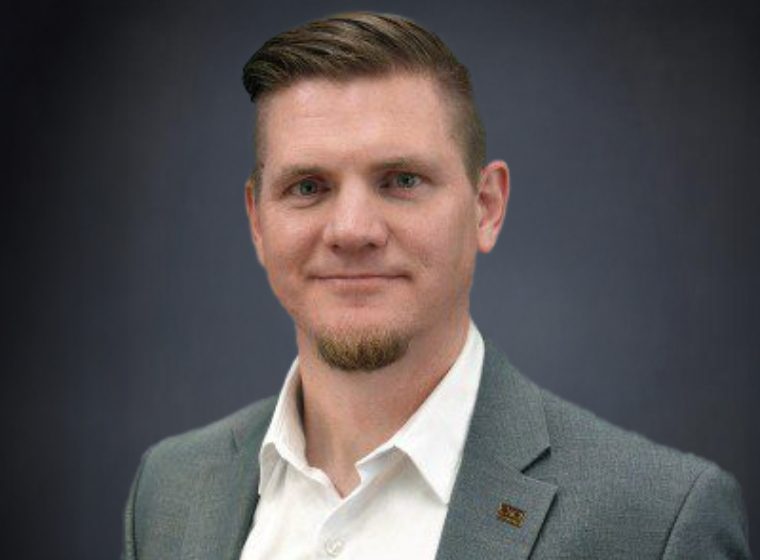
Senior Vice President, Chief Technology Officer, CACI
As the chief technology officer at CACI, Jason Bales is driving the company’s software-defined mission solutions across space, the electromagnetic spectrum, intelligence, cyber, IT and resilient communications. He champions an outcome-driven approach focused on understanding and anticipating the needs of the nation.
Under his leadership, CACI melds deep operational expertise with cutting-edge software-defined capabilities to expand the limits of national security. To accomplish this, he drives cross-functional teams committed to advancing technological innovation and delivering flexible, high-value capabilities that support an ever-evolving threat landscape.
Additionally, Bales prioritizes empowering his workforce to take their own journey: modernizing skills, embracing continuous learning and deepening mission awareness. He centers his leadership strategy on fostering progress and enabling teams that grow alongside the challenges CACI is solving.
Working with CACI’s talent acquisition team, Bales prioritizes enhancing and building CACI’s talent ecosystem through initiatives like the Virginia Tech Scholars Program, the new George Mason Scholars initiative, and service-academy partnerships, embedding students and fellows into mission-aligned technical roles preparatory to their operational careers.
“My career isn’t about hitting a finish line, it’s about enabling teams to modernize, upskill, and lead with an outcome mindset,” Bales said. “Our workforce truly understands the warfighter’s reality, and we’re focused on building technology that makes a difference.”
Why Watch
In 2026, Bales is focused on accelerating innovation in software-defined capabilities across CACI’s technology portfolio. He believes spectral and space dominance must be built long before conflict through sensing, effects, resilient communications and software systems that produce actionable intelligence to afford decision advantage to warfighters.
CACI’s recent acquisition of ARKA Group L.P. has brought advanced sensing and space-based technology into CACI’s portfolio, enabling the company to deliver modular, resilient architectures that operate effectively under threat conditions. Bales will pair these technological gains with a workforce whose distinctive operational experience informs design and deployment, anchoring innovation in real-world mission outcomes.
“Jason’s strategic vision and expertise are pivotal to advancing our technical acumen,” said John Mengucci, CEO of CACI. “He brings together what truly differentiates CACI — deep mission understanding, software-enabled innovation, and operationally grounded talent — and leverages them to deliver capabilities that give our nation a decisive advantage.”
Fun fact: Outside of work, Bales is a tabletop gaming enthusiast. He has co-hosted podcasts, play-tested
games with publishers, designed his own games and even hosted national gaming tournaments, all while balancing family time with his wife and six children.

Jason Prow
US Federal Chief Technology Officer, IBM
Under Jason Prow’s guidance, the federal market is tapping into IBM’s legacy of innovation and a trusted, outcomes-driven approach to service delivery. IBM oLabs, an innovation center under Prow’s direction focused on federal clients’ needs, highlights how transformative technology initiatives are driving measurable value for federal agencies.
Federal teams work side-by-side with IBM experts at oLabs to design, test and scale production-ready assets and solutions in environments that mirror real-world conditions. This collaborative service delivery approach, Prow said, accelerates the adoption of generative AI and hybrid cloud in support of core government priorities — streamlining manual processes, boosting productivity and enhancing citizen experiences.
At the same time, Prow’s CTO team is expanding IBM’s delivery of intelligent automation platforms tailored to federal mission needs — modernizing outdated workflows and helping agencies reduce waste and inefficiencies. He points to the IBM ATOM platform — an open, AI-driven platform that connects data, workflows and systems across federal ecosystems — as a leading example of IBM’s future-ready capabilities.
With nearly two decades of experience at IBM supporting military and civilian agencies, Prow continues to advance intelligent automation through platforms like ATOM while also leading the development of next-generation technologies that streamline operations and improve efficiency.
These efforts have generated significant cost savings and operational efficiencies while enabling large-scale productivity gains across federal missions.
Why Watch
Prow and his team remain focused on helping agencies stay ahead of evolving mission demands. Through IBM oLabs and the CTO function, agencies can design, test and scale enterprisewide solutions that extend from headquarters to the field. Building on proven success in areas such as edge AI, IBM enables agencies to rapidly pilot and operationalize capabilities across diverse mission environments.
Fun fact: Prow is an avid soccer fan and former Division I player at Butler University. He
continues to follow international football leagues, with a particular interest in the Netherlands
national team.

Jill Bruning
CTO, Amentum
Jill Bruning’s biggest achievement has been redefining how mission outcomes are delivered through advanced engineering and technology at Amentum, especially with advances in AI.
“We are embedding AI into operational solutions and offerings that connect with our deep domain expertise to drive mission impact,” Bruning said. “AI is defining the next generation of mission advantage.”
Why Watch
In 2026, AI is becoming an inherent part of how missions are executed and will be integrated from the outset within engineering and digital capabilities. The focus is not on how much AI is deployed, but on where it delivers the greatest value, Bruning said. “I am excited about how we continue to evolve Amentum’s technology and solutions to deliver smarter, faster, and more resilient mission outcomes,” she said. In early 2027, Amentum will be moving into a new HQ building in Reston, Virginia, featuring a next-generation Technology Showcase.
Fun fact: Bruning is deeply interested in how humans and technology intersect, i.e. how teams adapt and thrive through technological advancements, especially AI-driven change. “That perspective has shaped how I approach AI integration with a strong focus on usability and mission impact,” she said. “I am driven by continuous learning which I greatly enjoy.”

Justin Fanelli
CTO, Department of the Navy
“Our teams’ biggest recent achievement is hard to pin down because so much has changed for the better,” said Justin Fanelli.
His team’s pilot, Flank Speed Wireless, recently won the Defense Department award for Flexibility in Acquisition and is already scaling across several ships. The solution provides secure, high-speed cloud connectivity to sailors on deployed vessels.
This solution is following in the footsteps of STtNG, which was led by another maverick and scaled rapidly, Fanelli said — similar to projects Maven Afloat and Team America.
On the enterprise side, the Zero Trust and Naval Exchange Points teams just won the DOW CIO award for
speed and impact for warfighters.
“There are tidal waves of software-defined warfare in the Innovation Adoption Kit pipeline, but I’d say the number of unleashed folks right now and the sea change overall will be the gift that keeps on giving,” Fanelli said.
Why Watch
In 2026, Fanelli and his team are heavily focused on getting as many positively disruptive wins through this fiscal year as humanly possible.
“Forrester called the Department of the Navy the best Technology Strategy Impact organization in North America in 2025, when they awarded that to our team over impressive corporate giants like Verizon and CBRE; I think we can double or triple down on execution and results will grow,” Fanelli said.
Fanelli and his team are also focusing on “simplicity-consolidation-divestment” on the optimize hand, and on the increased capability hand of Applied AI, manufacturing, C5ISRT, Contested Logistics and the reusable connective tissue that all of that binds.
“The biggest wins come from bringing the two hands together,” Fanelli said.
He’s also personally excited to see his team’s investment horizons, outcome-driven metrics and other tools showing up at SOCOM, the Department of Homeland Security, the intelligence community and industry partners.
“We hosted a Commercial Bootcamp back in December on the difference between the old way and new way, and it’s heartening to watch the new way spread,” Fanelli said.
Matthew Teschke
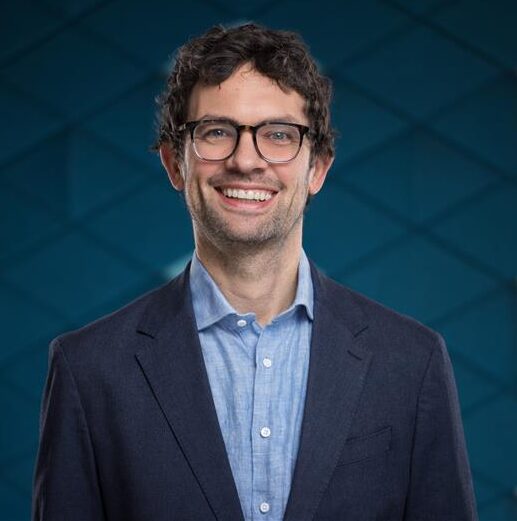
CTO, Redhorse Corp.
Under Matthew Teschke’s leadership, Redhorse Corp. recently developed and deployed its own AI chat platform, giving every employee secure access to the latest models.
“Adoption has been organic and widespread, which tells us the tools are genuinely useful across a variety of use cases,” Teschke said. “This internal capability directly strengthens our ability to deliver AI-powered solutions for our mission partners.”
In terms of aligning with the current administration’s priorities to reduce cost, streamline operations and improve government efficiency, AI agents let Redhorse Corp. automate labor-intensive processes that have traditionally required large teams, thereby providing more flexibility for government partners as to how they allocate resources. By building agents that handle routine analysis and workflow management, they are streamlining operations so mission professionals can focus on higher-value work.
Why Watch
This year, Teschke anticipates seeing the practical application of AI agents such as autonomous assistants that manage information flows, surface what matters and handle tedious work without waiting for a person to direct them.
Teschke and his team are also using AI coding agents internally to accelerate how they build and modernize software. “The shift from tools you talk to, to agents that work alongside you, changes what’s possible,” he said.
“Matt has a track record of placing the right technology bets early and then executing on them,” said Noah Klemm, Redhorse Corp. CEO. “His work on AI has put Redhorse in a position where we’re not reacting to the future, we’re building it.”
Fun fact: Teschke’s college mascot, a purple cow, often makes the top 10 lists for the most unique college
mascots.

Matt Webster
CTO, Epoch Concepts
Matt Webster’s biggest recent achievement was leading a companywide deployment of generative AI that changed how Epoch Concepts’ staff actually works.
“We rolled out secure AI assistants integrated directly into our databases, including partner tracking and meeting workflows using Model Context Protocol, giving our team natural language access to the data they need without switching between systems,” Webster said.
On the customer side, Webster and his team developed the Epoch Modern Workflow platform, which turns spreadsheets and manual processes that slow agencies down into secure, purpose-built applications. They also implemented the AZTEC zero trust methodology across customer engagements, giving agencies a practical framework for modernizing security without ripping and replacing what they already have.
The result is that analysts who used to spend hours pulling data now ask a question and get an answer in seconds. That’s the shift that moves a company from reseller to solutions provider, Webster said.
“Matt combines deep technical skill with the ability to turn complex capabilities into real mission outcomes,” said Marcus Smiley, CEO and founder of Epoch Concepts. “He works side by side with our team on architecture and builds, and that hands-on approach drives results for our government and commercial customers.”
Epoch Concepts is also directly supporting federal priorities around cost reduction and operational efficiency. The company is one of just 49 selected for the Army’s ITES-4H contract, a $10 billion, 10-year vehicle that positions it to deliver hardware and integrated solutions across the Army, DOD and other federal agencies.
Epoch Concepts is also supporting critical defense modernization efforts through its MDA SHIELD contract, bringing integrated IT capabilities to missile defense and national security missions. Beyond procurement, the company is helping agencies get more from what they already own through its AZTEC Zero Trust framework and AI-powered data access tools.
“We are making existing investments work harder so agencies can redirect resources toward mission,” Webster said.
Why Watch
In 2026, Webster and his team are focused on a simple idea: government agencies shouldn’t need a six-month integration project to get value from AI. They are building secure, lightweight applications through their EMW platform that turns manual workflows into intelligent ones, and they’re investing in AI research and development on NVIDIA DGX infrastructure to stay ahead of what’s coming next.
“I’m a CTO who still writes code and I think that matters,” Webster said. “When I can go from a customer’s problem description to a working prototype in an afternoon, it changes the conversation from ‘what’s your roadmap,’ to ‘when can we start.'”
Webster and his team are operationalizing AI, zero trust and hybrid cloud not as buzzwords but as practical tools that help agencies do more with less in environments where security and speed are both non-negotiable.
“The best technology disappears into the work. If your people have to think about the tool it isn’t yet done,” Webster said.
Fun fact: Webster’s dad was retired Air Force, so every summer the family flew Space-A to Saudi Arabia, the Soviet Union (pre-Russia), Eastern Europe, Asia and Australia. Those trips gave him an early comfort with ambiguity and unfamiliar systems he still relies on today. Outside of work, he practices origami, studies languages, does book-shares with his 13-year-old daughter, and is currently 3D printing projects with his 11-year-old son.

Sunil Madhugiri
CTO, U.S. Customs and Border Protection
Sunil Madhugiri has served as chief technology officer at U.S. Customs and Border Protection since April 2021, leading the Office of the CTO within CBP’s Office of Information and Technology. He joined CBP in 2019 as chief architect before being selected as CTO.
In the role, Madhugiri leads the creation and identification of novel technology products built using agile methodologies and open standards to strengthen CBP operations. He also chairs the Technical Review Board, a governance body focused on improving the quality, cost-effectiveness, sustainability and resiliency of CBP’s IT solutions. His office drives innovation through vendor engagement, emerging technology research and proof-of-concept demonstrations.
Before joining federal service, Madhugiri spent 30 years in the private sector. He served as chief database architect at Salesforce, where he established technology solutions for the federal government and worked with vendors and customers to integrate platforms across technologies.
Prior to Salesforce, he was a database architect at Oracle, developing digital standards using APIs and supporting digital transitions for federal agencies.
He holds a master’s degree in computer and information sciences from Temple University.

Mike Raker
CTO, Maximus
Mike Raker’s biggest recent achievement is aligning Maximus’ technology organization directly to growth. “Fortune named Maximus one of America’s Most Innovative Companies last year, and the momentum has only accelerated,” Raker said.
Raker’s team supported more than 30 major contact center modernization pursuits this year, representing billions of dollars in federal pipeline, while generating significant new program revenue through on-contract innovation.
“Mike turned our technology organization into a growth engine,” said Derrick Pledger, chief digital and information officer at Maximus. “We moved from competing on operational scale to leading next‑generation modernizations against the largest firms in the industry — and earning Fortune recognition for innovation along the way. He rolls up his sleeves to do the hard work alongside his team, setting the standard for how we win.”
In terms of aligning with the current administration’s priorities, the administration is asking agencies to deliver more with less, and that’s where Maximus operates best. Maximus runs some of the largest AI implementations in government — production systems processing billions of pages of documents that reduce manual workload and accelerate service delivery. Its SNAP Accuracy Assistant can prevent costly eligibility errors before they become improper payments, directly addressing an administration priority.
Nearly 60% of Maximus’ revenue comes from outcome-based contracts, which means Maximus succeeds only when the government sees measurable results.
Why Watch
Raker and his team are heavily focused on scaling how Maximus delivers next-generation citizen experience across government. Maximus’ strategic framework treats contact centers as intelligence platforms — built around mission insight, operational optimization and citizen outcomes — and in 2026, Raker and his team are pushing that into new programs, new partnerships and new agencies.
They are also creating pathways for commercial innovators to reach government by streamlining the path from commercial innovation to secure, mission‑ready deployment, so agencies can deliver services that keep pace with what citizens expect.
“Every technology decision we make comes back to one question: does this make government work better for the human being on the other end? If we build it right — reusable, scalable, validated before it touches a citizen — the impact compounds,” Raker said. “That’s what drives my team.”
Fun fact: Raker grew up traveling around Iowa with his grandfather, who owned a company that built water and wastewater treatment plants. He tagged along to job sites, watching how his grandfather led engineers and earned trust in small communities — then they’d end the day fishing nearby. Long before he had the words for it, that’s where he learned that good engineering is about people, places and responsibility, not just technology.

Peter O’Donoghue
CTO, Tyto Athene
Peter O’Donoghue’s biggest achievement in the past year has been transforming Tyto Athene’s Chief Technology Office into an operationally validated innovation engine — standing up TALON, a mission-focused technology accelerator, and delivering mission-critical solutions at a pace the defense community rarely sees from an integrator.
In less than six months, the team was assembled and Tyto Athene moved from inception to live field-validation of the Cognitive Data Transport Layer, proving resilient data synchronization for expeditionary warfighters operating in contested, DDIL environments.
Tyto Athene has also taken a leadership role in architecting an AI-driven SOC-as-a-Service within a FedRAMP High boundary, now on track for production launch in the coming months.
“Peter O’Donoghue is redefining what a modern CTO can deliver, transforming our Chief Technology Office into an operationally validated innovation engine that is moving at mission speed,” said Dennis Kelly, CEO of Tyto Athene. “From standing up TALON to rapidly field-validating capabilities like the Cognitive Data Transport Layer and advancing our AI-driven SOC within a FedRAMP High boundary, Peter is ensuring Tyto is not just innovating but delivering impact where it matters most. In 2026, his leadership will be critical in scaling these capabilities into durable solutions that directly support our warfighters and mission partners in the most demanding environments.”
The company also remains directly aligned with the administration’s call for speed, efficiency and measurable AI adoption across the federal government. Through TALON, the company has pioneered an exercise-driven co-development model that compresses the traditional development-to-deployment timeline, moving from concept to field-validated capability in as little as 120 days, dramatically reducing program risk and cost for government customers.
Tyto Athene is also rapidly bringing to market a suite of cyber and compliance service offerings, spanning STIG automation, RMF acceleration, AI-powered SOC capabilities and post-quantum cryptography
remediation — structured as commercial services to simplify acquisition and accelerate value delivery for the
government customer.
“We are at a genuine inflection point — AI systems processing vast intelligence across thousands of data streams at machine speed are fundamentally changing what it means to make a decision in a mission environment, and that transformation is irreversible,” O’Donoghue said. “My team exists at that frontier: rapidly testing, validating, and safely deploying these capabilities so that our defense and cyber mission partners can act with confidence, not just speed. Something has changed utterly, and the organizations that help the mission community harness that change with both urgency and integrity will define the next era of national security.”
Why Watch
O’Donoghue said 2026 will be a defining year for TALON: he and his team will significantly mature the innovation engine, complete collaboration spaces and GPU-enabled data center infrastructure and sharpen governance processes to maximize mission impact across the company’s core investment areas — quantum-safe networking, AI-driven cyber and RMF compliance acceleration, Cognitive Data Transport, and ‘blue-collar’ AI innovations for IT Service Management.
O’Donoghue and his team will also deepen their exercise-driven co-development model with their most important mission partners, particularly expeditionary warfighters and mission cyber leaders, ensuring that what is built is shaped by the environments where it must perform.
“This year is about moving from proof-of-concept to program delivery, turning field-validated capability into durable, scalable solutions for the defense and intelligence communities,” O’Donoghue said.
Fun fact: Occasionally, O’Donoghue can’t resist the call of the stage. His most notable performance came in 2013 at the ancient Theatre of Epidaurus in Greece — world-renowned for its extraordinary acoustics. His unprompted, entirely unauthorized rendition as a ham tenor proved something of an acquired taste. Security escorted him out mid-crescendo. The acoustics, at least, were everything they promised.

Raghu Bemgal
CTO, Next Phase Solutions and Services
Raghu Bemgal’s biggest recent achievement has been shaping the company’s technology direction to better align innovation with evolving market needs while ensuring consistent delivery at scale.
Bemgal has led efforts to transform internal capabilities into scalable offerings and guided how those capabilities are introduced and adopted across customer environments. At the same time, he has maintained a strong focus on execution, ensuring that new ideas translate into reliable, high-impact outcomes.
“Raghu brings a disciplined approach to innovation,” said Lisa Wolff, CEO of Next Phase Solutions and Services. “He ensures that emerging technologies are not just explored, but implemented in ways that are practical, scalable and aligned to mission needs. His leadership consistently translates vision into results.”
Under Bemgal’s leadership, the organization is also focused on helping agencies improve efficiency and reduce complexity across their technology environments. By minimizing duplication, strengthening operational visibility and improving how solutions are delivered, the team enables agencies to make better use of resources while accelerating mission outcomes. This approach supports broader federal priorities around cost reduction, streamlined operations and improved accountability.
Why Watch
In 2026, Bemgal and his team are focused on helping organizations translate emerging capabilities into measurable outcomes. The emphasis is on accelerating adoption, improving how solutions are delivered and ensuring that investments in technology lead to tangible gains in efficiency, scalability and mission performance. A key priority is aligning innovation with real-world needs so organizations can move faster, operate more effectively and sustain long-term growth.
“The real opportunity in technology is not just building what’s new, but ensuring it drives measurable progress. When innovation, execution and adoption come together, that’s when organizations start to see lasting impact,” Bemgal said.
Fun fact: Bemgal enjoys golf, where he’s learned that confidence and humility can exist in the same round. A great shot is often followed by one that brings you right back to reality. It’s equal parts challenge, perspective and time with friends.

Randy Fields
Vice President & CTO, Ultra I&C
Randy Fields’ biggest recent achievement has been leading the launch of a new Edge Compute product line, the Knox-10 MFP, and standing up a deliberate AI/ML product strategy that positions Ultra I&C’s core capabilities to integrate naturally into emerging AI workflows.
This has been a total team effort to experiment, pathfind and set a direction for how Ultra I&C delivers mission-relevant technology at the edge, said Fields.
“Watching those products move from literal napkin concepts to customers has been one of the most rewarding chapters of my career,” he added.
“Randy’s leadership has helped sharpen how we turn technical vision into real capability,” said Mladen Brkic, president of Ultra I&C Mission Solutions.
“He delivers real solutions under pressure, communicates them clearly across technical and non-technical audiences, and does all of it with a positive attitude that makes him a pleasure to work with. His ability to connect emerging technologies, mission needs, and product strategy continues to push our innovation forward in meaningful ways.”
In terms of aligning with the current administration’s priorities to reduce cost, streamline operations and improve government efficiency, Fields said Ultra I&C has taken Secretary Hegseth’s message about the urgency of the moment seriously and built it directly into the company’s technology strategy.
Ultra I&C is aligning with government reference architectures, investing in scaling commercial hardware production and continuous ATO software delivery, all while delivering capabilities with highly favorable data rights so that the government owns what it pays for.
“We’re not shy about FFP contracting, we actually recommend it, because government efficiency isn’t a talking point for us, it’s genuinely how we want to do business,” Fields said.
Why Watch
In 2026, Fields and his team are heavily focused on delivering defense-grade AI and edge compute capabilities at commercial speed and scale, working to close the gap between what the mission needs tonight and what industry can actually put in the field.
They are investing in production scalability, building a cleaner path into GSA and government catalogs, and making sure Ultra I&C’s products carry the data rights posture that government customers deserve. The goal is straightforward: be the partner that shows up ready, priced fairly and fight-tonight capable.
“A vision without an implementation plan is a hallucination,” Fields said. “The best ideas I’ve seen succeed weren’t the flashiest ones in the room, they were the ones with someone deliberately building the bridge between the whiteboard and the warfighter.”
Fun fact: One of Fields’ favorite things to do is sit down with someone and just talk through their strategy. “It doesn’t matter if it’s a scrappy startup or a large corporate transformation; I genuinely enjoy stress-testing a plan, exploring the risks and opportunities, and then thinking about who in my network could help them move faster or go further,” Fields said. “Bringing the right people together around a good idea might be the thing that gives me the most energy outside of the day job.”