Artificial intelligence has moved from the realm of science fiction to bonafide disruptive ⏤ and transformative ⏤ technology. Don’t expect humanoids anytime soon, but the power of AI to enhance business and government is more about automation and streamlined processes than in bringing “The Terminator” to life. In fact, we already experience AI in various ways that improve human work, automate repetitive tasks and assist in making intelligent predictions.
The following executives are leading the AI charge. They include general managers, a chief data scientist, chief AI officers, CEOs and presidents in industry and government. What they all have in common is their drive to use AI to realize more efficiencies in government, while ensuring its safe and ethical use.
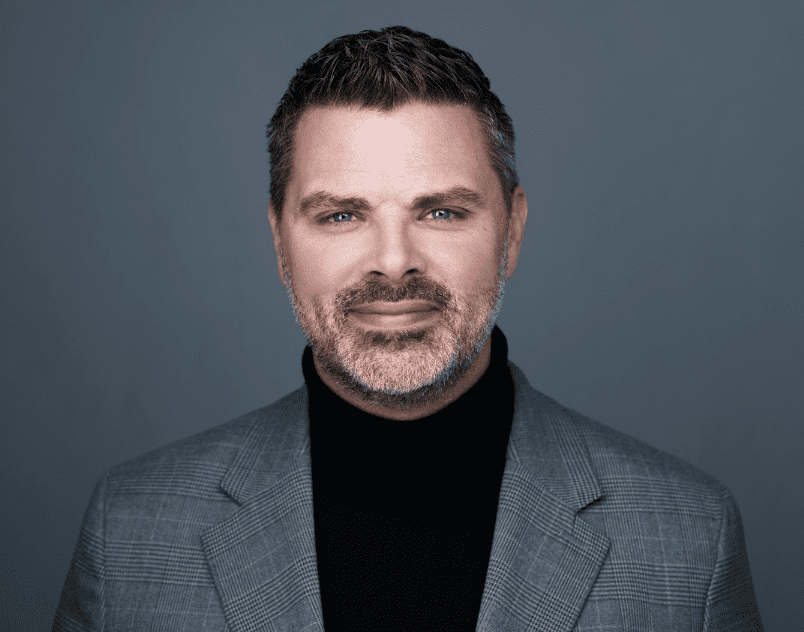
Andy Henson
Senior Vice President of Digital Innovation, SAIC
Andy Henson recently rolled out a comprehensive AI strategy for SAIC with a governance council and executive steering committee. This initiative included embracing large language model adoption and rollout for all 25,000 SAIC employees and establishing an AI ethics office to govern the implementation of AI where SAIC and subcontractors use it.
From Henson’s perspective, AI integration will accelerate getting the right data to the right people and at the right time to make decisions with real impact on the nation’s hardest problems. His team has witnessed the direct effects on warfighters, civil servants and citizens’ experiences in many of the country’s national imperatives.
Why Watch
In 2024, Henson is focused on the operationalization of trusted AI in missions that can realize benefits today in lieu of waiting for a perfect AI solution to come along. This effort includes establishing several public-private partnerships to ensure the ethics and trustworthiness of AI are a conversation that everyone has a voice in.
“The work that Andy and his team are doing is integral to solving the country’s most complex problems,” said Lauren Knausenberger, chief innovation officer at SAIC. “We have seen the direct impacts of how using AI for operational challenges can drastically change the outcomes of our nation; ensuring our security, securing our borders, enabling our warfighters and providing a better experience.”

Kathleen Featheringham
Vice President of Artificial Intelligence & Machine Learning – Federal, Maximus
A little more than a year after joining Maximus, Kathleen Featheringham’s impact has been felt across the company’s federal business as her experience coincided with an explosion of interest in the technology.
“For years, Maximus has been a leader in federal technology, particularly when it came to utilizing emerging technologies like AI and machine learning,” she said. “We are at an extraordinary convergence for technology, and federal agencies are seeking help from industry partners to find the best ways to implement AI to realize its full potential.”
Featheringham joined Maximus with nearly two decades of experience working with federal agencies on large-scale technology projects, and her first priority was to establish a refined AI strategy to expand upon the company’s robust offerings.
“We’ve reached the stage where we cannot do AI for the sake of AI,” she said. “Maximus had unique experience with AI, so my goal was how to focus our efforts on how to integrate AI into operations and workflows. The goal is to identify the best ways for agencies to utilize AI to maximize the investment in the technology.”
Why Watch
As Featheringham and Maximus look ahead through 2024 and beyond, the emphasis is on implementing AI technologies that allow their human counterparts to focus on what they excel at ⏤ critical thinking.
“There’s been a lot of conjecture about how AI will impact our daily work, but it’s important to remember the goal of AI is to improve how humans conduct their jobs,” she said. “We can integrate AI to make workflows and processes better, or to quickly analyze information and data, but there still needs to be a human being at the other end to provide that critical thinking to ensure AI is being used responsibly.”
The notion of “responsible AI” is a popular one, as agencies such as Department of Homeland Security have issued their own guidance and guidelines on how AI should be used moving forward.
“At Maximus, we’re really pushing hard into the responsible operationalization of AI, which means adaptive and continuous modernization,” Featheringham said. “The best way I can describe it is, we have to modernize the plane as we’re flying it. How agencies approach technology is fundamentally changing, and AI is at the leading edge of this evolution.”

Darin Powers
CEO, Absolute Business Solutions Corp.
With over two decades of expertise in behavioral analytics, Darin Powers spearheads a targeted strategy at ABSC to amplify the company’s ability to protect both people and technology. The most significant AI milestone to date has been the creation of an initial foundation for AI-centric pathways within the Chief Digital and Artificial Intelligence Office.
Looking ahead, ABSC plans to progressively implement data, automation and AI solutions to improve its core competencies across three strategically focused customer mission areas.
Firstly, leveraging its profound expertise in unique human resource missions, ABSC is committed to improving service to and protection of personnel operating globally in a ubiquitous data collection environment.
Secondly, with its established engineering expertise, the company is focused on enhancing the protection of critical national security intellectual property. This ensures the nation continues to maintain a competitive edge in weapon systems, underscored by ABSC’s innovative Left of Theft concept.
Thirdly, ABSC is using Syntasa, a solution selected from the Tradewinds Marketplace and approved for high-side use, to boost the digital skills of customers’ non-data science workforce. This low/no code data analytics and AI platform accelerates data operations to mission speed, enhancing operational efficacy.
Powers said, “We apply a team approach to advancing these critical missions, broadening our AI capability, through the mission solutions produced by ABSC Labs, our in-house innovation engine led by our exceptional CTO, Danny Holloway.”
Why Watch
Powers is leading ABSC on a steady, focused pursuit to bring AI to the people and technology protection space.
“My time in the Marine Corps was exceptionally formative ⏤ people truly matter and the tools our warfighters employ must provide overpowering advantage,” he said. “At ABSC we are creating a company to safeguard our warriors and their capability to defeat our enemies. We will employ data, automation and AI where appropriate to do so. Keep an eye on us as we bring value to our nation’s warriors.”

Benjamin Bachrach
Senior Vice President, Office of the CTO, BlueHalo
Ben Bachrach’s strategic vision and innovative approach have helped shape BlueHalo’s Internal Research and Development program and drive product innovation through research and development. His AI/ML focus began with his career at BlueHalo over 20 years ago, when he foresaw the need for advanced machine vision, reasoning and knowledge representation for the successful operation of advanced autonomous systems.
Today, he works alongside a team of leaders from across the organization to develop AI-backed capabilities addressing critical government and industry needs in areas such as swarming, counter-UAS, satellite communications, cyber threat detection and prediction, surveillance and reconnaissance, logistics, transportation and geospatial intelligence.
“My biggest achievement, by far, has been assembling a team of incredibly talented, ethical and committed professionals who are able and eager to tackle the most difficult AI problems of our time,” he said. “I am incredibly proud and grateful for our dedicated AI/ML team. BlueHalo’s success in delivering innovation-rich solutions has been driven by our people, who continue to adapt and develop AI amidst a rapidly evolving technical landscape.”
Why Watch
BlueHalo recently made news as the first publicly acknowledged deployment of a working laser weapon for air defense outside of experimental testing with its LOCUST Laser Weapon System. The company is now improving LOCUST’s effectiveness by adding WISARD, an AI/ML processing extension. This upgrade will improve and expand LOCUST’S ability to identify potential threats, select and track a target’s weakest points, and deliver a more precise, more effective beam on target.
This AI/ML expertise also powers BlueHalo’s HaloSwarm autonomous sUAS swarming platform, Titan and SkyView radio frequency-based C-UAS systems, and Argus perimeter security system, to name a few. The company recently launched METIS, its own proprietary AI/ML tech stack at the core of many of BlueHalo’s world-class products and customized solutions.
Bachrach and his team are actively advancing AI technologies, integrating them into BlueHalo’s offerings to tackle urgent and complex national security challenges. In the coming year, look for new AI/ML-enhanced features in SIGINT, GEOINT, and OSINT from BlueHalo.
While his work is of critical national security importance, you’ll rarely see Bachrach without a smile. He attributes his positive outlook and demeanor to his avid love of running (for mental clarity more than physical health) and to the sage advice from the Dalai Lama XIV to which he ascribes:
“If there is a solution to a problem, there is no need to worry. And if there is no solution, there is no need to worry.”

Barry Smallwood
President of Emerging Markets Group, Akima
One of Barry Smallwood’s most significant achievements is working to ensure Akima’s customers are not only technically ready for AI adoption, but culturally ready as well. Akima worked closely with a major government agency to integrate AI into its customer relationship strategies, with a focus on technically sound solutions, enabled by a human-centric implementation strategy. Akima empowers customers to adopt AI seamlessly by providing organizational change management expertise, which significantly improves their ability to glean value from their stakeholder interactions.
Smallwood advocates for a responsible and holistic approach to adopting new technologies at Akima, emphasizing the importance of leading by example and adhering to the principles the company promotes. Akima maintains a research and development environment that values experimentation and views failures as learning opportunities.
Additionally, the company focuses on developing practical, real-world applications, ensuring its solutions are technically sound and useful. This approach helps Akima build trust and demonstrate the real-world impact of AI.
Why Watch
Akima is a leader in AI research, particularly in creating effective use cases for emergency management, training and mission exercises. The company’s main objective is to improve real-time situational awareness, decision-making and response strategies. By developing and refining AI applications, Akima is setting the stage for future advancements that will boost efficiency and safety in these critical areas.
A current focus is on developing realistic, AI-driven training simulations, powered by advanced machine learning algorithms, that adjust in real-time based on operator performance to provide a dynamic, personalized experience. The human-centric approach drives everything the company does, and its biggest research focus has been on explainable AI, particularly for high-stakes environments. By ensuring AI decision-making processes are transparent and understandable, human-AI collaboration and reliability are enhanced.
“The most important thing to consider when developing AI solutions is the adoption by those that the technology is intended to serve,” Smallwood said. “If the solutions are technically sound but it does not yield a meaningful, positive experience for the users, what’s the point of deploying them? The human-centric approach is the heartbeat behind our work, and it enables the transformative power of AI to continue moving us forward in practical, impactful ways.”
Fun fact: Smallwood’s lifelong fascination with the sky and outer space inspired him to earn his pilot’s license.

Denise Johnson
Vice President for Health Research and Analytics, Battelle
Denise Johnson, a seasoned executive with over two decades of experience, leads a team dedicated to advancing science to protect against public health threats, support quality patient care, drive health equity, and improve health outcomes. Their key activities include using AI and machine learning to develop innovative solutions in health and biomedical research for both government and commercial clients.
Johnson’s biggest recent achievement was successfully integrating Battelle’s deep expertise in biology, chemistry and physics with recent advances in AI and machine learning. This fusion ignited a new era of multimodal AI solutions, revolutionizing the organization’s approach to research, health care delivery and community health protection.
One example of this is Johnson’s team’s recent work in pioneering sophisticated computational toxicology methods, using both physics-based and machine learning-based models, including digital twins, to simulate and predict complex biological interactions. This innovative approach not only enhances drug development and environmental health studies but also provides crucial data that is more accurate and far-reaching.
Why Watch
In 2024, Johnson and her team are working to transform how AI is used in crucial areas like health care quality, biomedical research, environmental health and public health. They aim to ensure AI technologies are safe and effective, focusing on AI assurance for health-related applications for federal health agencies.
They are also creating advanced modeling tools tailored for health policymakers. These tools will offer actionable insights to help shape health policies, aiming to enhance health outcomes and boost the effectiveness of public health interventions.
“Denise’s leadership in integrating AI and ML with our core scientific capabilities has been transformative,” said Greg Kimmel, health general manager at Battelle. “Her work is not only driving breakthroughs in health and biomedical research but also positioning Battelle at the forefront of AI innovation. Denise embodies Battelle’s mission to apply science and technology for societal impact.”
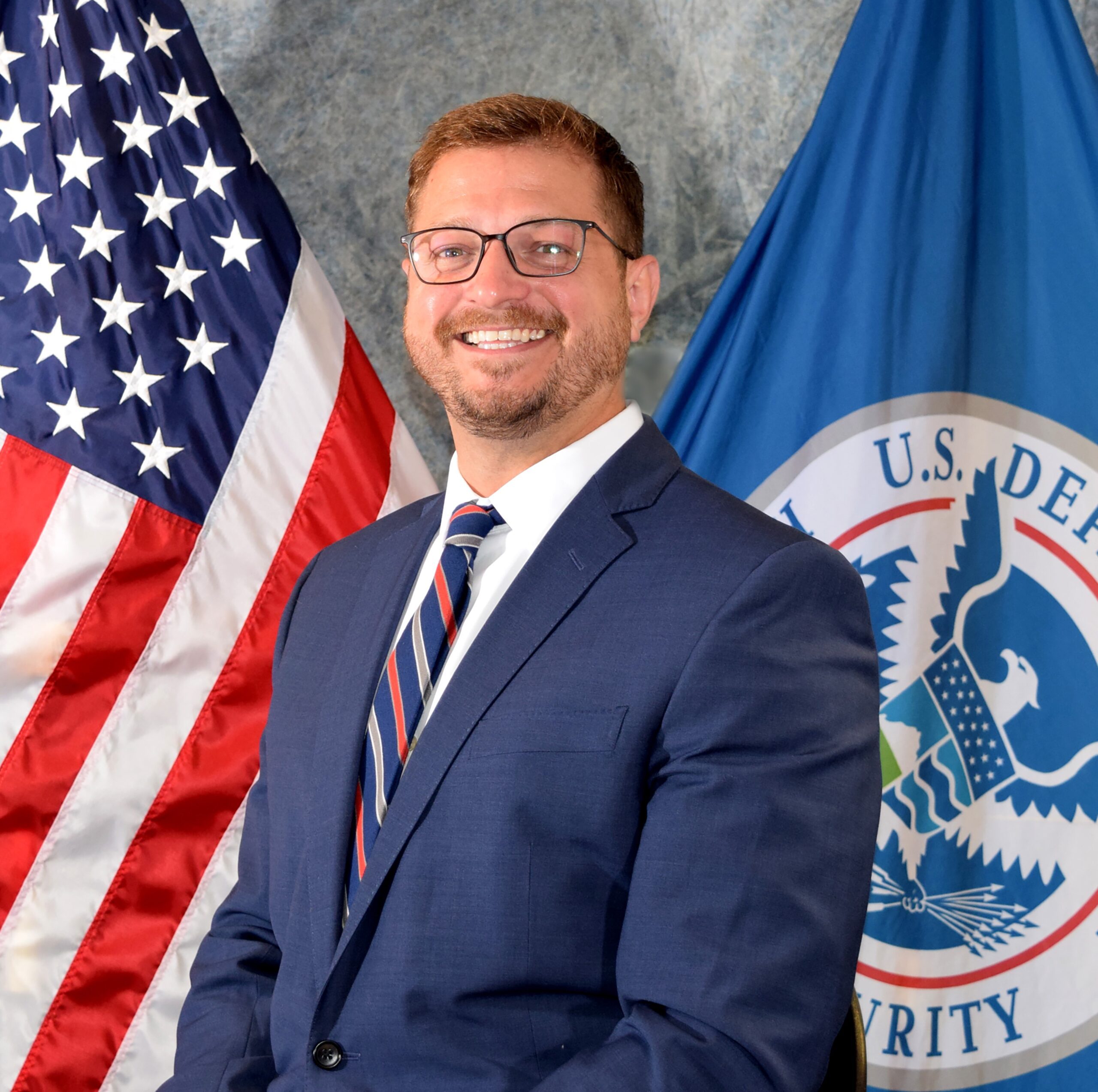
Dave Larrimore
Chief Technology Officer, DHS
Dave Larrimore’s biggest recent achievement was bringing the power of generative AI to over 4,000 DHS employees through developing and implementing a commercial generative AI program. What makes this really special is that the company packaged the program up and shared it to be usable by other federal agencies.
His personal motto is: “When all else fails, be yourself. You may find that’s all that you needed to do all along.”
Why Watch
In 2024, his team is heavily focused on the safe, transparent and responsible adoption of AI by the Department of Homeland Security. This includes standing up the DHS AI Corps to drive mission impact, responsible AI and innovation to the entire agency.
Fun fact: Larrimore has a literal College Degree in Art (Visual Communications).
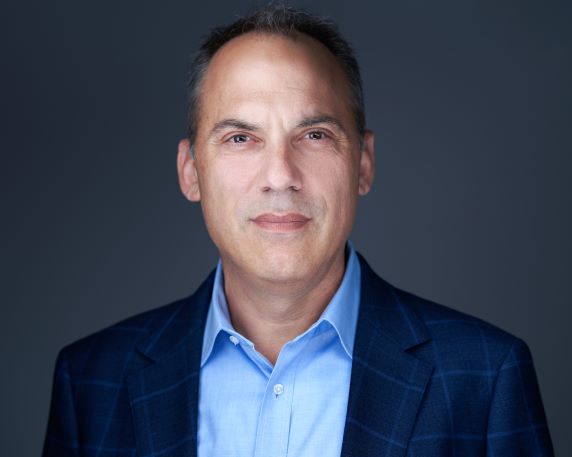
David Appel
Vice President of U.S. Federal, Amazon Web Services
David Appel’s most significant recent achievement was assuming his current leadership position. Every day, he sees the direct impact of AWS technology, employees and partners on enabling customers across civilian, defense, financial and national security sectors to achieve their mission outcomes. His work with the government has a lasting impact on the nation, a source of pride for him each day.
“At AWS Federal, our priority is delivering solutions that ensure our customers can meet mission and be on the forefront of U.S. innovation and leadership,” he said.
Why Watch
In 2024, Appel’s team is deeply committed to the leadership principle of customer obsession. They are focused on helping customers adopt and integrate the latest AI technology securely, enhancing how the public sector serves citizens. Looking ahead, the adoption and integration of AI technologies are expected to accelerate and expand across agencies. These agencies are increasingly leveraging cloud technologies for machine learning and generative AI to drive innovation, especially in mission-critical workloads.
“David’s commitment to innovation and deep understanding of how AI can serve our customers make him the ideal leader for our federal business at this pivotal moment,” said Dave Levy, AWS vice president of World Wide Public Sector. “His dedication will ensure that AWS remains at the forefront of AI leadership, driving solutions and empowering government agencies to achieve their missions with maximum efficiency and effectiveness.”
Fun fact: Throughout his career, Appel has traveled to 36 countries, including engagements with two heads of state and a royal family member. He has also played golf with a PGA and LPGA golfer, whose skills, unsurprisingly, far surpassed his own.

Brandy Durham
Vice President of Global AI Practice, ManTech
Brandy Durham and her team are enthusiastic about the recent launch of ManTech’s Data Analytics and AI Solutions Practice. Positioned to assist U.S. federal clients, the team combines the expertise of AI subject matter experts and mission specialists to operationalize data and improve decision-making against national adversaries. Their approach focuses on providing comprehensive AI consulting, engineering and implementation services, enabling clients to address their most significant challenges effectively.
Why Watch
Durham and her team are committed to helping government clients leverage AI to overcome their challenges. ManTech’s proprietary AI Consulting methodology, the AI Turbocharger, helps fast-track clients’ AI adoption. By conducting thorough assessments based on their deep mission knowledge, they design and implement customized solutions using the appropriate processes and technologies. This results in clients successfully using analytics and AI solutions to tackle their toughest challenges.
“I like problem solving, doing something new and driving clarity for our clients,” she said. “We not only solve their day-to-day issues ⏤ we help them see what their biggest challenges are, and how to fix them.”
Fun fact: Durham is a third-degree black belt in Chung Do Kwon Tae Kwon Do. She spent many years training in this martial art and found it has helped ingrain a deep sense of discipline and focus, not just for self-defense, but also in her life and work.

Melvin Greer
Fellow & Chief Data Scientist, Intel Corp.
Melvin Greer’s biggest recent achievement was winning the Black Engineer of the Year, Technologist of the Year award. It changed the trajectory of his career. More than that, the Technologist of the Year award isnt just an honor, it’s a torch. It ignited a fire in him to inspire the next generation. To show young minds, especially people of color, that STEM careers blaze with possibility. The award amplifies its collective voice, proving that brilliance comes in all colors, and together, they will shape a more innovative future.
“The future is built on innovation and understanding,” he said. “STEM fuels the first, and financial literacy empowers the second. Without both, we’re passengers, not pilots, in a world shaped by technology and finance. Equip oneself with the tools to navigate, not just react, and watch your dreams take flight.”
Why Watch
In 2024, Greer’s team is heavily focused on driving adoption of AI and providing best practice and strategic insights on predictive and generative AI.
“In the very complex world of AI, Melvin is one of the few who understand the depth and breadth of the technology and how it applies in the context of enterprise productivity and return on investment,” said Monica Livingston, who leads the Intel AI Center of Excellence. “This is exactly why Melvin’s guidance is highly sought after by CIOs and C-suite executives.”
Fun fact: “Most people don’t know that I’m an ice (cream) connoisseur,” Greer said. “My first job (at 15 years old in Detroit) was at an ice cream shop. I spent long hours honing my understanding of ice cream and what makes it so good.”

Brian Sacash
Director of Data Science, Redhorse Corp.
Brian Sacash’s biggest recent achievement was engaging with technology partners to bring the most cutting-edge AI capabilities to the mission space. But rather than simply implementing the latest off-the-shelf solutions, his team is pioneering custom approaches that seamlessly blend this advanced technology to redefine the role of AI as an enabler, not a replacement, for human potential.
“While Brian has the technical skills expected of a senior engineer, what sets him apart is his ability to make an impact in other ways: mentoring junior staff, presenting and discussing technical topics, and continually looking for ways to improve Redhorse,” said Matt Teschke, Redhorse chief technology officer.
Why Watch
In 2024, Sacash is heavily focused on working with the Redhorse technical teams to help customers intelligently adopt transformative technologies. By combining traditional AI/ML and cutting-edge generative AI, they empower people and organizations to access new potential and excel at what they do, with greater speed and efficiency.
“Generative AI has opened doors to new worlds of possibilities,” he said. “While we are still exploring and navigating these new areas, we must move forward, understanding that generative AI is here to stay, bringing both challenges and opportunities.“
Fun fact: Sacash is passionate about writing and enjoys combining his background in physics and expertise in technology with the science of crafting stories.

Dave Vennergrund
Vice President for AI and Data Insights, GDIT

Anna Belova
Senior Data Science Advisor, ICF
Anna Belova’s most notable recent achievement involved her contribution at ICF to the development of new U.S. national drinking water standards targeting per- and polyfluoroalkyl substances, commonly known as “forever chemicals.” These chemicals are widely used in various commercial and industrial products and pose significant environmental and health risks, leading to regulatory actions by the Environmental Protection Agency.
Belova’s team supported EPA by using the best available science, along with advanced data analysis and modeling, to quantify the health benefits of reducing PFAS in public drinking water. Their research played a crucial role in establishing legally enforceable PFAS limits in drinking water, aimed at protecting the health of approximately 100 million people.
Why Watch
As subject matter experts in regulatory policy analysis and AI, Belova’s team is dedicated to responsibly, transparently and robustly incorporating generative AI into its processes. Generative AI promises to enhance their efficiency and effectiveness, particularly in processing and analyzing extensive natural language information from various fields such as health sciences, policy, economics and environmental health.
In 2024, they plan to merge their policy evaluation skills with their technological expertise to develop best practices for using generative AI in labor-intensive tasks like narrative analysis and summarization, aligning with the U.S. federal information quality standards.
Fun fact: Belova is an aficionado of all things Halloween.

John Larson
Executive Vice President of Artificial Intelligence, Booz Allen
As AI is rapidly transforming the world, John Larson’s leadership has been instrumental in establishing Booz Allen’s position as the leading provider of AI services to the federal government. With over 200 active AI projects across critical areas like national security, health and defense, Booz Allen is delivering scaled enterprise-wide AI powered solutions to accelerate the mission for national priorities, including many of the largest AI contracts across the federal government.
In FY 2024, Booz Allen’s AI revenue reached approximately $600 million, supported by a team of 2,300-plus world-class AI practitioners and an AI Ready certification program that ⏤ training 10,000 AI Aware practitioners ⏤ allows unskilled or reskilled employees to contribute to AI endeavors. He also oversaw the launch of an AI Stacks strategy ⏤ generative AI, vision AI, cyber AI, responsible AI and secure AI ⏤ which are integrated Booz Allen and commercial technology solutions that compress time to mission by providing scalable solutions that lower operational risk.
“Under John’s leadership of our AI practice, Booz Allen has become the single largest provider of AI services to the federal government and serves as a trusted partner on our clients’ most critical AI challenges,” said Susan Penfield, chief technology officer at Booz Allen Hamilton.
“John brings extensive government and commercial sector experience to our business, driving responsible AI governance and adoption to bring leading-edge AI solutions to missions at scale.”
Why Watch
Larson is focused on continuing to position Booz Allen as the technology partner of choice for the federal government by bringing enterprise AI to bridge the gap between tech and mission. Critical to this vision is the need to integrate the entire AI ecosystem ⏤ beyond just algorithms ⏤ to ensure success including data, software engineering, human centered design, AI governance and adoption.
He also believes the pace and scale of the challenges the federal government faces today are too complex to solve through traditional means. It is critical that the government integrate dual use technologies to unlock innovation to solve the nation’s greatest challenges.
Larson is committed to anticipating trends that will impact clients, investing early in innovation and talent. For example, he is currently leading a quantum investment which presents revolutionary advances that are expected to profoundly disrupt almost every industry. He remains committed to ensuring Booz Allen consistently plays the role of AI integrator, optimist and educator to drive innovation in the AI landscape.
“Artificial Intelligence is the single most transformative technology of a generation ⏤ if not since the advent of electricity. It represents an unprecedented opportunity to address the most critical challenges we face as a nation,” Larson said.
“I believe that Booz Allen has an obligation and responsibility to harness its power ⏤ in a transparent and trustworthy fashion ⏤ to ensure our country’s continued leadership in this technology for the good of our economic and national security.”
Fun fact: Larson is an avid cyclist. He is competing in the Leadville Trail 100 MTB, a marathon mountain bike race, this August.

Jason Payne
CTO, Microsoft Federal
As CTO at Microsoft Federal, Jason Payne’s mission is to accelerate the adoption of data, analytics and artificial intelligence across the U.S. federal government to enable missions, enhance citizen services and strengthen national security. Payne’s responsibilities include leading strategy development, breaking down barriers to adoption, creating digital infrastructure, and scaling AI solutions with partners. He focuses on the importance of responsible AI principles and the parallels of cultural and technical transformation in agencies.
“Artificial intelligence is not just a technological improvement; it is a game-changing instrument that enables the federal government to serve our citizens with remarkable speed, creativity and accuracy,” Payne said.
“By using the potential of AI, we can create a future where public service is more agile, data-informed and effective than ever before.”
Why Watch
Microsoft’s Federal organization brings a unique combination of mission understanding, engineering expertise and leading technology to drive improved outcomes in government. As Payne’s team looks to the future, it’s focused on driving AI transformation in three pillars: enhancing productivity, augmenting cognition and accelerating scientific discovery.
The team is excited about the transformational potential of combining both conventional and generative AI to assist in some of the most common challenges in government ⏤ modernizing legacy code and applications, securing and defending against cyber threats, increasing access to information, and more quickly deriving insights and intelligence from large and disparate data sets. By focusing on cloud and AI platform capabilities, the Microsoft Federal team is democratizing access to leading edge technology, driving the next wave of transformation.
“Jason is truly passionate about leveraging AI to achieve mission success, constantly innovating to solve even the most pressing challenges faced by our federal customers,” said Candice Ling, senior vice president of Microsoft Federal.
“One of Jason’s many ‘superpowers’ is his ability to simplify complex technical information while expertly explaining the value and potential of AI to any audience. With 25 years of industry experience, Jason is an invaluable asset to our team and the federal community as a whole.”

Marshall Thames
Senior Vice President of Mission Solutions, ECS
The prime contractor for the Defense Department’s premier AI effort “Project Maven,” ECS is spearheading analytics and AI efforts across the services, combatant commands and intelligence community — all under Marshall Thames’ direction.
Executing AI programs in all domains, from space to seafloor to cyber, Thames and his team helped ECS become the largest provider of AI/ML solutions to the DOD (according to data from fiscal years 2019-2022).
“From CONUS clouds to deployed environments and everything in between, Marshall and his team have delivered solutions that have helped prove the value of AI to the warfighter,” said ECS President John Heneghan. “One of their most impressive accomplishments has been the deployment of a DevSecOps program for building AI solutions at scale. This ‘AI Forge’ factory has supported multiple contingency operations and is one of the most successful AI programs in the DOD.”
Why Watch
In 2024, Thames and his ECS team are focused on collaborative AI development platforms, as the AI advances needed by the DOD require collaboration and coordination with our closest international partners.
Thames is also focused on supporting Deputy Secretary of Defense Kathleen Hicks’ current autonomy efforts. Key to this work is the accelerated provisioning of enterprise platforms and model and simulation environments to deliver operational impacts to the warfighter at scale and speed.
“We’re leveraging lessons learned to drive mission impact in more operational areas and expand the ability of AI to support higher order reasoning and decision-making,” Thames said. “With the vast proliferation of sensors across domains, commanders are faced with overwhelming amounts of information. Future conflicts will happen faster than ever before, and future AI will empower decision-makers at all echelons to make better decisions faster.”
Fun fact: Thames started out as a software developer and still codes for fun. He is passionate about technology and the impacts it can have in the world around us.