
There’s no doubt artificial intelligence has moved from the realm of science fiction to bonafide disruptive technology. But don’t expect humanoid robots anytime soon. The reality is that the power of AI to transform business and government lies more in automation and streamlined processes than in bringing “The Terminator” to life. And in fact, we already encounter some form of AI every day to augment human work, to reduce repetitive tasks and to help with intelligence predictions.
The following nine executives are leading the AI charge. They include general managers, a chief data scientist, CEOs and presidents — and even a chief artificial intelligence officer, the first of its kind in the GovCon space. What they all have in common is their drive to use AI to realize more efficiencies in government, while ensuring its safe and ethical use.
Why Watch: These executives are instrumental in driving AI implementation and thought leadership in the GovCon space. They encompass the civilian, defense and national security sectors. They’re not only thinking about the technology itself, but about its wider legal, ethical and societal implications. How will humans and machines work together? How do we remove bias from AI? And how do we prepare the future workforce to both work with the technology and benefit from it? These are all key questions that need to be considered to fully realize the promise and potential of AI.

Wendy Anderson, SparkCognition
Recognized as one of the top 25 women in the U.S. to shape defense policy, Wendy R. Anderson brings 20 years of experience in national and international security to her position as general manager, defense and national security, at SparkCognition. The company provides advanced AI solutions to advance the most important interests of society, including energy, defense, finance and aviation. Anderson’s experience includes serving in the Obama administration as a leader in the departments of Defense and Commerce. She has also been twice awarded the Department of Defense Medal for Distinguished Public Service, the department’s highest civilian service award.
Why Watch: Anderson is compelled by and committed to the way in which leading-edge technologies such as AI can transform societies from the inside out, especially for defense.
“In the defense world, the U.S. maintains its military edge by retaining our technological superiority,” she said. “This is my deepest commitment — to ensure that our country remains out front technologically.”
Such examples have included SparkCognition’s collaboration with the U.S. Air Force to augment high-level budgetary decision-making with AI and offer the service a defense aircraft platform with an applied natural language processing capability.
“We will soon see AI used to autonomously pilot passenger aircraft and make decisions based on dynamic and changing defense situations in real time, utterly transforming commercial travel but also the very ways in which societies have waged war,” Anderson said.
Her company is dedicated to advancing the science of AI and finding new ways to employ that science not just in novelty apps and entertainment, but to advance the most important interests of society. That includes how we think about, approach and execute in warfare.
Nevertheless, Anderson explains how an increase in AI use among society heavily depends on companies’ pre-existing infrastructure and sensors, their current level of data science expertise and the problem they want to solve. Although “disruption” is a motivating factor for many companies, Anderson said not going in with a clear set of goals to address specific problems and having a measurement for success will lead to failure.
“By considering adopting or incorporating AI — rather than abiding by the status quo — organizations are already moving in the right direction,” she said.
Overall, Anderson and her team continue to incorporate rationale into AI for its decisions and recommendations to increase trust among customers as well as helping to remove data shaped from human bias to train AI systems.
“If we don’t want AI to learn bias and prejudice, we have to work hard to remove bias and prejudice,” Anderson said. “This a problem that is beyond the scope of AI, but it is no less necessary for it.”
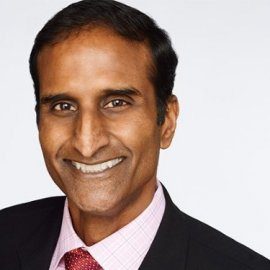
Balan Ayyar, Percipient.ai
Balan Ayyar is president and CEO of Percipient.ai, which he founded in January 2017 to deliver advanced artificial intelligence for national security missions. A retired U.S. Air Force general officer, Ayyar comes from a family that emigrated from India shortly before he was born. He went on to attend the Air Force Academy and build a 27-year career that culminated in his role as the commanding general of the Combined Joint Interagency Task Force 435 in Kabul, Afghanistan. Before founding Percipient.ai, he was president and CEO of Sevatec, Inc. He is a member of the Council on Foreign Relations and served in the White House as a White House fellow.
Why Watch: With its Mirage computer vision/machine learning platform and a leadership team that includes the former head of Google Maps Data, Percipient.ai has been named among the world’s most innovative tech startups in the 2018 TiE50 awards. Earlier this year, it received $14.7 million in venture funding from Venrock, an early investor in Intel and Apple. And it’s a serious contender for joining the Defense Intelligence Agency’s digital arms arsenal.
In the wake of Google’s decision this spring to not seek renewal of a contract helping the Defense Department analyze video data through computer vision, Ayyar says that decision doesn’t reflect everyone’s approach.
“Percipient.ai is a great example of a Silicon Valley firm precisely focused on the national security missions that computer vision and machine learning tools are so desperately needed for,” he said. “For example, we’ve built a best in class module for the type of FMV data our Armed Services have enormous costs around the exploitation of. We believe the integration of these foundational AI tools will save time and money for these important missions.”
Amid a broader debate around ethics and privacy concerns with the proliferation of AI is the fact that surveillance tools and increasing availability of personal data are, in many cases, already in our adversaries’ hands. Providing advanced analytics to the government helps the speed at which in some cases decisions can be made in life-saving missions, Ayyar said. Mirage can, for example, detect individual people, vehicles or objects associated with terrorism or other kinds of attacks, potentially helping prevent or solve crimes. Ayyar said Mirage’s architecture allows the integration of other forms of data that could make this analysis and decisions even faster.
“Right now, we have humans doing tasks that really are inhuman in nature, for example, going through thousands of hours of data,” he said. “We’re now in a period where the machine’s tasks can accelerate and elevate human decision making. From our perspective, this is a very natural and transparent transition.

Shaun Bierweiler, Hortonworks
Shaun Bierweiler is president of Hortonworks Federal and vice president of U.S. public sector. Bierweiler’s 16-year public sector career includes experience at Red Hat and Raytheon as well as a software engineer internship for an Air Force project. He is a member of the AFCEA International Technology Committee.
Why Watch: As head of a unit within a company named to the fastest-growing tech stocks of 2017, Bierweiler is primed to play an increasing role in harnessing the power of big data in ways that make an impact.
“I’m most proud of the numerous instances where our team and technology has enabled and empowered customers across the public sector to accomplish the tasks that were previously impossible,” Bierweiler said. “Whether it be predictive maintenance for a Department of Defense customer, a real-time toll and traffic analytics platform for state and local customers, a comprehensive data platform for the upcoming decennial 2020 Census, or the modernization of a federal enterprise data warehouse — the use cases and value propositions have been so interesting, exciting, vast and rewarding.”
Bierweiler sees big data as “the ability to empower and unlock the potential of your data across your various data sets,” and he’s in a prime position to help unlock that potential.
“When we are talking with customers about their data challenges, it often involves a scenario where their data sets have become so large, complex and/or fast that their traditional tools, systems and data processing approaches are no longer adequate — and customers are left with either no insight or extremely long processing times,” he said.
Hortonworks, he said, provides government customers with “a truly comprehensive enterprise data platform” at a time when the amount of data is larger than ever and stored in a variety of locations.
“Hortonworks is uniquely positioned to provide government customers with a truly comprehensive enterprise data platform — built for massive scale with world-class support, encompassing both data-at-rest through Hortonworks Data Platform (our enterprise Hadoop offering) and data-in-motion through Hortonworks DataFlow (the industry’s only enterprise NiFi offering), and spanning on-prem, in the cloud, and hybrid multicloud environments,” Bierweiler said. “And we are doing so while staying true to our commitment to the open source development model — which ensures that the government can maintain innovation, interoperability and integration of future data sets and technologies. There is no other company out there that can say this.”

Patrick Biltgen, Perspecta
Patrick Biltgen, Ph.D., serves as director of Perspecta’s analytics offerings and has over 13 years’ experience in large-scale data processing, machine learning, decision support tools, and modeling and simulation methods. He directs internal research and development efforts in machine learning and analytics for the intelligence business group and collaborates across directorates in support of multiple customer missions. In addition, Biltgen mentors many young professionals at Perspecta.
Why Watch:
Biltgen literally wrote the book on activity-based intelligence: “Activity-Based Intelligence: Principles and Applications” is widely regarded as the preeminent source of information on the topic for students, teachers and enthusiasts worldwide. It’s the first unclassified textbook on a methodology for multisource correlation for pattern-of-life analysis and discovery of the unknown. In addition, Biltgen not only has an unparalleled level of technical expertise with AI; he knows how to explain this complex topic with passion and enthusiasm in a way the novice can understand.
Over the last several years, Biltgen has dedicated himself to advancing intelligence community mission-enhancing software solutions, defining future concepts and roadmaps for analytics supporting multiple agencies, architecting groundbreaking R&D solutions, and recruiting new talent into the IC workforce.
His hard work hasn’t gone unnoticed, especially in the past two years alone. This year, Biltgen received the Edwin H. Land Industry Award, which is part of the Intelligence and National Security Alliance Achievement Awards that recognize young professionals for their exceptional leadership, mentorship and contributions to U.S. intelligence, national security or homeland security. In 2017, he won the Neil Armstrong Award of Excellence, presented to a former Astronaut Scholarship Foundation scholar whose research and work positively impacted industry and who exemplifies a passion to expand the boundaries of exploration through science and technology.
Biltgen’s work includes the development of the initial concepts for automated “pipeline” processing of GEOINT data, multi-INT data discovery and correlation, and object-relationship linking with graph theory. His research work at Georgia Institute of Technology integrated machine learning with aircraft design capabilities to simultaneously optimize tactics and technologies for a long-range bomber. He’s an expert in highly-dimensional multidisciplinary design optimization, and capability-based trade studies, and has a bachelor’s degree, master’s degree and doctorate in aerospace engineering from Georgia Tech.
Prior to joining Perspecta, Biltgen served as the senior mission engineer for BAE Systems’ intelligence integration directorate, where he oversaw the implementation of activity-based intelligence capabilities for the National Geospatial-Intelligence Agency. Before to that, he spent nine years at Georgia Tech, most recently as a level 2 research engineer managing a team of 25 graduate research assistant and directing over $1.3 million in sponsored research for the Air Force Research Lab’s National Air and Space Intelligence Center, Raytheon, BAE Systems and Applied Research Associates.

Aaron Dant, ASRC Federal
Aaron Dant is ASRC Federal’s chief data scientist and architect, designing cloud scale analytic environments using machine learning, Natural Language Processing, and human behavioral analysis capabilities. He’s a technology evangelist for solicitations and business development, training staff, expanding the artificial intelligence service offerings and conducting principal research. Dant most recently spent nearly 15 years leading analytic programs, including: signals processing, human language technology, geospatial, cellular, medical, and human cultural and social behaviors. Dant’s main focus has been the software engineering world, designing and executing large-scale enterprise production systems.
Why Watch:
Dant believes it’s crucial to share thought leadership as customers try to make sense of how they can best leverage AI and machine learning solutions to support their missions. He advocates for the secure and ethical use of AI tools and platforms, and he contributes to thought leadership in production of ML implementations, fraud/waste/abuse detection, predictive analysis, informational warfare and augmented search. Dant is also a sought-after speaker and a core researcher of computer augmented informational warfare. He has co-authored three peer-reviewed papers on this topic this year, including “This One Simple Trick Disrupts Digital Communities.”
“My recent papers are related to identifying radicalization and adversarial influence operations in online communities, which is really pertinent right now,” Dant said.
Working with federal data, it’s often tough to apply deep neural networks as the volume and distribution of the available tagged data can be scarce. His team depends on simulation to generate massive amounts of representative tagged data to build its models. As the model is applied to real data over time, the simulations get updated in a roundtrip to better match the real-world conditions.
When it comes to specific technologies, Dant focuses on Java, Scala, Python, R and big data technologies such as HBase, Accumulo, Spark and MapReduce. Some of the AI solutions he’s helped develop are created as an a la cart selection of MicroServices and analytic tools running on Amazon Web Services with an Angular front-end.
Looking at the near-term challenges with AI, Dant points to the fragility of some of the technologies.
“ML techniques are extremely effective at certain tasks, but have proven to be brittle, and in the case of deep networks are difficult to provide transparency for why a particular decision was made,” he said. “This results in ‘black box’ systems, which are potentially dangerous. Additionally, all ML models are only as good as the data they are trained with, presenting potential unintended consequences of bad models trained on insufficiently diverse data.”
While government and industry alike face challenges across the field, “the federal space is more at risk as there are fewer pipelines to sufficiently label large and diverse data sets,” Dant said. “So, ensuring AI tools are both ethical and secure is ASRC Federal’s primary objective when designing these systems.”
Beyond the challenges with AI, technology writ large moves through a phase of “barely manageable” systems, where numerous individual systems or agents interact in diverse but defined ways, and into a place where complex systems begin to have unplanned behaviors as the services, devices and AIs form an autocatalytic ecosystem, Dant said.
“I genuinely believe this is going to require a paradigm shift in how software is designed going forward taking cues from multidisciplinary research including ecology and information science,” he said.

Tiffanny Gates, Novetta
Tiffanny Gates is president and CEO of analytics technology firm Novetta, which serves nearly all government agencies related to defense and national security. Her career experience spans a range of leadership roles in the federal space at companies including Raytheon, Blackbird Technologies Inc. and Mantech International Corp. From 1995 to 2000, she served in the Navy as a cryptologic officer.
Why Watch: Gates is leading the way as Novetta’s partnership with Amazon Web Services continues to build from strength to strength.
“In the early days, we were one of the first to earn AWS Government Competency and this past May, Novetta achieved AWS Machine Learning competency, which still only stands at 18 total companies,” Gates said. “Then, in June, while attending AWS Public Sector, we launched one of our flagship products, Novetta Entity Analytics on the AWS marketplace platform. NEA provides customers with scalable entity resolution capabilities on top of high performance distributed computing architecture powered by tools such as AWS Elastic Map Reduce and Apache Spark.”
“As we head into the fall, we are particularly excited that AWS has invited us to take to the stage at AWS Re:Invent to showcase early capabilities from Novetta’s new Machine Learning Center of Excellence,” Gates added.
She’s also paying attention to logistical concerns customers sometimes have around cloud migration.
“Migrating massive data to the cloud, safely and swiftly, doesn’t have to be a headache,” she said. “We’ve heavily invested in migrating our data analytics capabilities to the cloud already, which means we can offer our tools to our customers with very little migration frustration. We’re staying one step ahead by exploring and adopting new cloud technologies before our customers ask for them, or sometimes, are even aware of them. The key to handling cybersecurity threats in the cloud is to ensure that data security and data migration are considered together, mitigating additional complexity and cost.”
Named by Washingtonian Magazine as a top 50 great place to work in 2017, Novetta focuses both on the workforce pipeline as well as ensuring more technical training and certifications for current staff.
“We increased our investment in our internship program, which quadrupled participation versus past years,” Gates said. “This incredible group of students focused on approaching current customer challenges from a new perspective. They brought great ideas and great energy to our offices up and down the coast.”
Over the next 12-18 months, Gates will join the board of the Alliance for Digital Innovation alongside other community members to help shape government IT modernization efforts through advocacy and thought leadership. She will also lead Novetta toward advances in applying machine learning and deep learning to drive down manual data processing times and increase higher-value insights.

Melvin Greer, Intel Corp.
Melvin Greer is chief data scientist, Americas at Intel Corp., where he builds Intel’s data science platform through artificial intelligence and machine learning to accelerate transformation of data into a strategic asset. In his role, he supports the public sector as well as the major U.S. industries, i.e. financial services, energy, oil, gas, hospitality and retail. He is a professor teaching AI and a member of the American Association for the Advancement of Science and U.S. National Academy of Science, Engineering and Medicine, GUIRR. He participates in Data for Democracy, an organization developing a code of AI ethics, for data scientists, by data scientists, focused on addressing the legal, ethical and societal implications associated with AI adoption.
Why Watch: Over the next 12-18 months, look for Greer to lead enterprisewide AI strategy projects which assist government agencies harness the power of their data and accelerate innovation in military and citizen service delivery.
Intel’s development of AI in health and life science is designed to help federal agencies, physicians and researchers securely share private clinical, genomic and biometric data. Greer drives adoption of computer, object and image recognition technology, which enhances baggage and passenger screening and speeds up deep learning applications at the edge. Also, look for his work in advancing code and workload optimization on Intel silicon architectures.
“CPUs will continue to dominate training of AI algorithms,” Greer said. “You will also see a move from general purpose silicon to ASICs — application specific integrated circuits. We have extremely aggressive plans for new memory and storage capabilities at the chip level, and we are focused on the internet of things at the edge. The trend is to move compute to where the data is, and that will require a new way of thinking about being able to analyze data at the edge in a low power, high-performance CPU construct.”
Through a Commerce Department’s National Technical Information Service contract, Intel is helping shape AI adoption and implementation strategies through its role as one of the first 34 companies participating in governmentwide initiatives focused on data science and AI.
As privacy concerns increase with the growing availability of public data from social media platforms, Greer sees an increased focus on transparency and explainable AI. Data is the fuel that drives AI and we can expect to see an increased emphasis on data standards and guidelines that help identify and discourage bias in AI.
“I’m encouraged that more and more people are engaging in this discussion about the legal, ethical and societal implications associated with AI adoption,” he added. “Everyone from legal folks, ethicists, social scientists, academicians, and of course, data science practitioners, are all having these conversations, and that’s an extremely good thing.”

Brad Mascho, NCI
Brad Mascho is chief artificial intelligence officer at NCI. Prior to this, he co-founded AI firm CrossChx in 2012. There, he headed a company that took AI solutions to the commercial health care sector to address issues around unique patient identification, medical records and drug abuse. CrossChx was named three years in a row as a best place to work in Columbus, Ohio.
Why Watch: The first chief artificial intelligence officer in the GovCon space, Mascho leads a team that leverages the human-machine partnership through NCI’s Shai solution. Shai operates as a typical user given passwords, accounts and other technology solutions to automate high-volume, repetitive tasks.
Mascho said NCI prepares workforces to experience optimal results of AI by guiding them through every step of the process from education to implementation.
“Customers are experiencing the max utility of AI because we understand it and use it to scale human potential,” he said. “With our AI solution, Shai, we enable our customer’s workforce to focus on higher-value work by removing repetitive tasks. Shai stands for Scaling Humans with Artificial Intelligence —and that’s exactly what we’re doing.”
As AI technologies continue to emerge and evolve, more and more organizations desire its benefits, but don’t always know how to leverage them, Mascho said.
“That’s where NCI is different,” he added. “We provide our customers AI as a service. We approach every use of AI by building a strong foundation through AI governance, enterprise security and change management. Coupling superior solutions with our experience and dedicated services are the reason we’ve been successful in this area.”
As a way to counter potential bias within the solution, the company developed its NCI P3methodology, which factors in programmatic interactions and collaboration to better understand business objectives, deployment of agile methodologies for prioritizations based on business objectives, and creation of a backlog of workflows to drive solution deployment, Mascho said.
NCI intentionally chooses AI tools entirely made and maintained in the United States, he said, thus meeting strict federal security requirements.
“It’s an exciting time in artificial intelligence,” he said. “Commercial industries pioneered it, and government agencies are really beginning to embrace the efficiencies that AI can bring. I wholeheartedly believe these next-generation technologies, such as AI and advanced data analytics, are the true keys to solving our customers’ complex missions.”

Sanjay Sardar, SAIC
Sanjay Sardar is vice president of modernization and digital transformation at SAIC, a role he’s been in for about seven months. Prior to that, he served as SAIC’s vice president of advanced analytics and simulation. He joined the company from the Federal Energy Regulation Commission, where he served as the chief information officer.
Why Watch: Sardar keeps a close watch on the AI and data market, following the trends and how they intersect with modernization efforts within the federal government.
When it comes to artificial intelligence, Sanjay Sardar sees incredible potential in being able to build insights and prescriptive analysis from what’s been already done in the space. Although in a nascent stage in the federal space, Sardar said AI is going to pick up speed and become more leveraged over the next few years.
“As compute power continues to increase, we are going to see much more interesting use cases applying AI and machine learning within the federal government,” he said. “We’re already seeing adoption of GPUs for parallel processing of the massive amounts of data and the evolution of different architectures in the high-performance computing market.”
Where he expects near-term AI to play a powerful role in is making intelligent predictions and automating nonrepetitive processing in specific problem domains.
“We love the fact that government is exploring artificial intelligence to better drive mission results and efficiency,” he said. “SAIC is investing in research in the practical applications of big data, machine learning and AI, and continues to grow our capabilities in this space.”
AI though, however buzzed-about these days, is a maturing technology and adoption in the federal government is still limited. Sardar says use cases involving machine vision analysis, natural language processing, cyber threat mitigation and responses based on sentiment analysis will quickly start to mature and add real value to the mission.
As for the headlines about AI bias, Sardar says it’s a real concern — and a hard problem for AI technologists to solve.
“It is very difficult to take bias out the system,” he says. “The industry is still exploring AI technology and maturing its usage.” So, for the AI practitioners, “it’s crucial that there is transparency and traceability in the AI decision-making,” Sardar said.
AI, however, should not be seen as a replacement to humans; instead, it should augment the work humans do, Sardar said.
“It doesn’t obviate the need for a human analyst but should be used as a supplement to the human decision-making,” he said.
As for the humans working with AI, how should they be best prepared to maximize the use of AI? Modernization is playing a major role in the exploration and adoption of these new types of technologies, but the focus shouldn’t be just on IT.
“It’s not just about technology modernization,” Sardar said. “It’s also about modernizing the workforce to accept and use these new technologies to make data-driven decisions.”
With workforce modernization, Sardar said there’s a big re-skilling component. With the government customers SAIC serves, Sardar said one of the first things to look at is the impact of technology modernization on the workforce.
“We bring in organizational change management and training, and we start looking at how the business process are impacted,” he said. “That leads us down the path of thinking about what are the skills that the next generation of workforce should have. In every modernization project, including use of AI, it’s important to focus on how to implement the organizational change components, the training components and reskill workers so they can better consume and process data to perform more effectively and discover new ways to advance the mission.”
Sardar concluded: “Modernization can be complex. While we should continue to gain benefits from the infusion of technologies such as AI, we have to also really understand the challenges and impacts, and prepare to deal with them as early as feasible. Only by keeping an unrelenting focus on the mission needs can we appropriately disrupt today to simplify tomorrow.”

Gary Shiffman, Giant Oak
The founder and CEO of Giant Oak Gary Shiffman is a behavioral economist and retired Navy veteran who has served in policy roles at the Defense Department. He is a former chief of staff for Customs and Border Protection, where he helped revamp the border enforcement process. Today, his company offers technology designed to help combat illicit behaviors such as drug and human trafficking, terrorism and other types of corruption. He is an adjunct professor in Georgetown University’s Security Studies program.
Why Watch: Search technologies abound, but Shiffman’s company offers a very targeted system that remains important in today’s security environment. It can, for example, help financial institutions avoid loaning money for illicit purposes, offer behavior-based analysis on terrorist activity, and uncover any number of insider threats.
“We are uniquely bringing together behavioral science with technology, with artificial intelligence and machine learning into the domain of illicitness,” Shiffman said. “I don’t know anybody else doing that.”
This summer, the company received a $10 million investment through a partnership with Edison Partners to further develop and market its core platform, Giant Oak Search Technology. GOST scans the open, deep and dark web to create dossiers on individuals and groups and help leaders make mission critical decisions within the public and private sectors.
“GOST understands the specific information that the human is looking for, goes out into this massive and ever-changing universe of publicly available data, and retrieves what the human wants,” Shiffman said.
Through a feedback loop, the human can then direct GOST toward more specific results, thus driving machine learning. So, how do you account for human error in the process? Shiffman said the answer lies in training the technology to meet the user where he or she is.
“The way to prepare the human to work with an AI is not to expect the human to change, but to train the AI to understand the context in which the human interacts,” he said. “If you’re doing it well, AI systems are easy to use; they don’t require extensive training; and they’re not inherently error-prone.”
AI, he said, can theoretically be applied in almost any context as long as it is used properly.
“The example of AI gone wrong is in every science fiction movie you’ve ever seen, starting with ‘2001: A Space Odyssey,’ ‘The Matrix,’ ‘The Terminator’ and the list goes on and on,” Shiffman said. “There’s this very powerful meme of humans being afraid of machines, and the machines taking over. So, I think we have to be very careful as we move into this new era of artificial intelligence — which is really cool and exciting — that we make sure we design the systems where the humans are in control and keep the humans in the loop.”