
Serving the Defense Department requires deep knowledge of its mission, the ability to provide secure innovative solutions, and a status as a trusted, strategic partner for the nation’s top line of defense. As technology and the defense landscape evolve, so do the needs of agencies and service members to continue protecting the nation effectively, efficiently and strategically.
For WashingtonExec’s Top 25 DOD Executives to Watch in 2021, we identified the best of the best leaders providing the tools, strategies and systems in service of U.S. defense needs. We considered not only their personal accomplishments but also their impact on the defense community and their vision for the near-term future. These leaders, some having served the country themselves, bring the experience, knowledge and expertise the Pentagon needs to stay on the cutting edge.

Tim Spadafore
Senior Vice President, CGI Federal
In 2021, Tim Spadafore’s team secured a data transformation project at an intelligence agency that will evolve how it processes its intelligence, military and infrastructure data.
This is the single largest award for CGI Federal’s intelligence practice. It’s also the company’s first pivot into the mission space within the intelligence community, Spadafore said.
“This win sets us up for future growth, especially for data and data transformation, allowing us to springboard to the space and intelligence community within the U.S. federal market,” he added.
Why Watch
Spadafore and his team are focused on strategic hires who will facilitate growth into new areas and build on their strategic alignment with federal organizations migrating enterprise systems to low code, no code and open source platforms.
With the successful re-compete of the Marine Corps Logistics Command contract, CGI Federal is also expanding its 5G and geospatial capabilities, after a successful mission-critical adjustment made in the early part of the pandemic.
“My focus for this coming year is to have CGI be viewed as an industry leader for mission-based solutions so we can deliver directly to mission critical systems,” Spadafore said.

Karen Dahut
Global Defense Group Lead, Booz Allen Hamilton
After a year of growth supporting some of the Defense Department’s most critical programs, Karen Dahut is especially proud of her team’s work around delivering open, connected and resilient solutions to the warfighter.
“I’m particularly proud of our work around networking data across the department through both enterprise solutions like Advana and edge solutions like the Army’s Rainmaker program,” she said.
Dahut is proud of the transformation Booz Allen’s workforce has made to deliver more remotely over the past 18 months.
“We’ve had team members deliver solutions entirely remotely, some use labs in a more hybrid model, and others continue to work daily out of secure facilities,” she said. “This transition toward a more flexible work model is critical in retaining top technology talent across the defense industrial base in the years to come.”
Why Watch
The Booz Allen Global Defense Group continues to make key investments in future solutions that will support DOD’s pivot toward the Indo-Pacific region with a focus on technologies that support JADC2.
Dahut said her team is investing in areas like command and control; electronic warfare; and ISR — digital-centered solutions to help position DOD for decision advantage in the digital battle space. The team also is developing cutting-edge technologies for operational missions and importantly, shortening the timeline to bring solutions from the lab to the field.
“We are establishing ourselves as the premier digital integrator for the Department of Defense, combining decades of mission experience with state-of-the-art AI/ML, next-generation data solutions, networking, cyber and advanced software development,” Dahut said.

Vince Vlasho
Defense Portfolio Lead, Accenture Federal Services
As a Navy veteran and senior business executive using technology and innovation to help transform how the Defense Department delivers its mission and supports its workforce, Vince Vlasho is a man with a record of bringing big ideas and producing industry-leading results. Under his direction, Accenture Federal Services is bringing fresh thinking and new approaches to the branches of the U.S. military.
This year alone, Vlasho engineered a long-range precision fires program to assist the Army with innovative data architecture to consolidate and enhance command/control options. For the U.S. Cyber Command, Vlasho and his team are developing new strategies and mechanisms to elevate the Air Force defense against cyberattacks.
Vlasho’s mastery in adapting the proven commercial capabilities of Accenture into federal missions at scale is a distinctive skill.
“I’m especially proud of how our leadership and teams come together as a cohesive unit to share knowledge and resources,” he said. “The team element is huge.”
Why Watch
Vlasho is guiding DOD clients into the cloud, helping them realize the full potential of big data, analytics and artificial intelligence by accelerating the path to apply superior technology for the war-fighting mission. As a leader, he’s managing billions of dollars in high-tech contracts and projects spanning the entire DOD.
To Vlasho, it’s not just business; it’s personal.
“We need to consider not only the tech side but the human side of cloud,” he said. “We need to help our clients embrace and adapt emerging technologies and new tool sets that are available, with those applications that will make them truly effective.”

Leigh Palmer
Senior Vice President, Defense Division, GDIT
In the past year, Leigh Palmer led a team that delivered major wins, expanded critical services to Defense Department customers and cared for its own by focusing on empathy, flexibility and accessibility.
In the fourth quarter of 2020, Palmer’s team secured the $4.4 billion Defense Enterprise Office Solution contract to facilitate the largest-ever deployment of Microsoft Office 365 and the first-ever deployment of O365 in a DOD classified environment.
It also won the $695 million Enterprise Mission Information Technology Services task order to continue critical mission support to the U.S. Army in Europe by delivering secure IT service. And her team recently won a $136 million indefinite delivery, indefinite quantity contract to transform the Navy IT service desk by leveraging artificial intelligence, machine learning and predictive analytics.
Palmer said this year has crystallized the importance of encouraging leadership at all levels. One of her primary motivations has been to have conversations and build roadmaps on career experiences and mindset requirements for future leaders.
“I’ve been laser focused on developing talent and taking care of our people,” she said. “We’re leading with empathy and compassion — ensuring we’re accessible and also prioritizing flexibility in this period of disruption. It’s been a unifying time, fueled by dedication to our customers’ missions. It is my belief that we have emerged as a stronger, more engaged team.”
Why Watch
GDIT customers are pivoting to strategies such as Joint All-Domain Command and Control, and the company’s capabilities in cloud, identity and zero trust are critical to making these visions a reality. GDIT leaders said the company will continue to innovate and pivot at increased speed as world events require.
“I’m excited by the investments we’ve made in cloud innovation and zero trust architectures in particular that are driving capability to mission in order to realize the department’s all-domain strategic vision in JADC2 and to meet the evolving threat environment,” Palmer said.

Steve Tolbert
Executive Vice President, Business Systems Group, CACI International
Steve Tolbert has served as CEO of a fast-growing regional engineering firm, as a senior vice president at Perspecta and as a leader at SRA helping provide advanced technology solutions to federal, state and local agencies.
Now, he is leading a group at CACI that provides critical business solutions to the Defense Department through advanced capabilities in agile development at scale, model-based systems engineering, cloud migration, cybersecurity, business analytics and process automation. And his team has developed detailed knowledge of DOD’s business processes.
“CACI’s Business Systems group is proud of the durable partnership we’ve established with the DOD and of the material improvements we’ve consistently brought to the department across dozens of major systems and initiatives,” Tolbert said.
Why Watch
As a critical partner to the Navy, CACI is bringing 55 disparate systems into a single target architecture that will consolidate and modernize the Navy’s entire human resources enterprise. Partnered with the Army, CACI is helping build what will be the largest PeopleSoft implementation in the world, streamlining the support for more than 1 million soldiers worldwide.
Under the Defense Agencies Initiative, CACI has implemented a flexible, modern financial management and accounting solution for more than 70,000 users across 27 DOD agencies. The solution streamlines work processes and improves accountability and auditability of more than $75 billion in transactions annually.
In fact, every DOD budget request flows through one or more CACI systems, and its acquisition support solutions are helping DOD process more than a half-trillion dollars in contracts and payments each year.
“Our solutions are helping the DOD streamline the way it manages its business,” Tolbert said. “We have a direct impact on the improvement of force readiness and quality of life for service personnel, on the DOD’s ability to manage complex budgets and finances, and on the DOD’s modernization of its business systems across the enterprise.”

David Appel
Vice President, Command and Control Data Solutions, Raytheon Technologies
In 2021, David Appel led a talented team and strategy across the company’s C2 Digital Solutions mission area within Raytheon Intelligence & Space’s Space & C2 product line that has delivered consistent predictable growth and execution that meets customers’ challenges in a rapidly changing market.
“We are establishing innovative solutions that integrate our mission understanding and technology with commercial capabilities and partnerships in AI/ML, agile DevSecOps, cloud and other areas to deliver ready-now solutions,” Appel said.
During 2021, his team was successful in key pursuits such as the Army TITAN program to provide multi-source intelligence support to targeting and situational awareness and understanding for commanders.
TITAN is designed to be a flexible, extensible, modular platform that will allow the future expansion of the software platforms. RI&S will be able to adjust hardware capabilities and data sources, including third-party and commercial solutions. The mission-domain experience RI&S brings is essential to ensuring the integration of a solution to its customers.
Also in 2021, Appel’s team has worked on providing signals intelligence field services for the Air Force’s Distributed Common Ground System, which collects, processes and analyzes intelligence; NASA EED-3 to support the continued improvement, reliability, availability, functionality, operability and performance of hardware, software and cloud-based systems that provide science data management for the Earth sciences; and NOAA’s EPIC program to develop a user-friendly and accessible Earth-modeling research-to-operations platform.
Why Watch
Appel’s team will continue to drive growth through digital transformation into its markets and for its customers. RI&S is also using artificial intelligence and machine learning to improve intelligence, surveillance and reconnaissance capabilities. Its solutions synthesize reams of data into actionable intelligence and accurate targeting information at speed and scale, in high-risk environments.
“Ultimately what we are delivering on a daily basis keeps our warfighters safe and allows them to complete their missions,” Appel said. “My role is like a general manager and coach of a sports team: to develop the overall game plan, put the right people in the right roles and let them play the game. The players are the folks who win the game.”
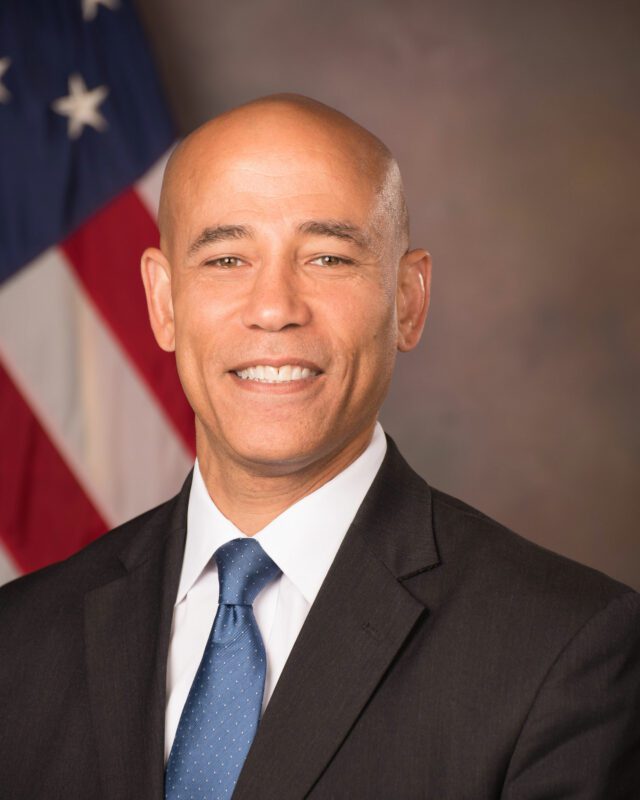
Harry Wingo
Assistant Professor, National Defense University, College of Information and Cyberspace, Defense Department
Applying his over 25 years of government and corporate leadership experience, including 15 years focused on information and communications technology law and policy, Harry Wingo is a thought leader in the strategic use of emerging technology in cyberspace. Currently, he leads a CIO Leadership Development Program at Fort McNair in Washington, D.C.
He has served the past five years at the nation’s cyber war college, educating leaders on how best to counter the evolving threats to U.S. cybersecurity, including cyberattacks against critical infrastructure, the erosion of U.S. technological supremacy through industrial espionage, and the use of cyber effects to undermine faith in the nation’s democratic institutions.
In addition to teaching cyber law and policy, Wingo engages in outreach and education efforts.
In 2019, he testified before Congress on the supply chain risks presented by the U.S. overreliance on small unmanned aircraft systems or drones, and the opportunities for increasing domestic innovation in this smart-city technology.
Why Watch
In 2022, the world will see increasing tensions between the U.S. and China as global efforts to recover from the COVID-19 pandemic unfold within the context of heightened geopolitical tensions. In addition to great power competition, cyber bad actors will continue to cause disruptive events like the 2021 SolarWinds and Colonial Pipeline cyber incidents.
The ability to translate national security risk management into terms that best inform C-suite executives and boards of directors about the broader challenges and opportunities in technology is increasingly important.

Matt Jones
CEO, Sigma Defense Systems
Since partnering with Sagewind Capital, and joining Sigma Defense in January 2021, Matt Jones and the Sigma team have quietly positioned the company for the next phase of growth in 2022 and already have several large prime contract wins to validate their strategy. They continue to build upon relationships with their customers and industry partners, building an agile mission-focused ecosystem for customers to access.
“Phase 1 was establishing the platform, enabling the next phase of rapid growth which will be fueled both organically and through deliberative acquisitions that accelerate technology delivery and expand our customer base,” Jones said. “We will grow, but we will not lose focus on what is important, and that is maintaining unassailable customer focus.”
With a focus on Joint All-domain Command and Control by delivering and connecting sensors for the military services into a single network, Sigma is poised to help the Defense Department modernize mission architectures.
“We’re positioned to solidify the sensor-to-shooter concept and do so without requiring our customers to pay huge licensing fees or subject themselves to vendor lock,” Jones said. “Sigma is the department’s data logistics partner; we don’t own the data, we’re the custodian of it until it arrives uncompromised at the location it was intended to go, enabling information advantage in contested environments.”
Why Watch
Jones has two successful exits over his 25 years supporting the intelligence community and DOD. Couple the experienced leadership team with Sagewind’s access to support and resources and one can expect supercharged growth. Sigma currently has several large full and open prime contracts, strong backlog and a renewed strategy to deliver the capability DOD is seeking.

Liz Martin
Director, Department of Defense, Amazon Web Services
Since assuming her role leading the Defense Department business for Amazon Web Services last year, Liz Martin has helped customers in the armed forces and related agencies enhance security, innovate faster, become more agile and lower costs.
Earlier this year, Martin helped announce a new AWS collaboration with GDIT that makes AWS services available through the milCloud 2.0 contract. The collaboration provides DOD mission partners access to an expanded portfolio of secure cloud services in areas such as analytics, edge computing, end user computing and security.
“We’re excited that this collaboration gives our DOD mission partners an additional form of access to AWS services, and the streamlined contracting process means accounts can be provisioned quickly, increasing the speed that our customers can deliver their critical missions,” Martin said.
Why Watch
The team’s commitment to supporting DOD includes special attention to its Joint All-Domain Command and Control strategy. Earlier this year, AWS participated in a technical demonstration to test edge computing capabilities for the Air Force’s Advanced Battle Management System, the Air Force’s contribution to JADC2.
“AWS is honored to support our nation’s warfighters and continue delivering innovative solutions that support their missions at the speed of mission need,” Martin said.

Heidi Grant
Vice President, Business Development, Boeing
Heidi Grant has deep global expertise in defense space and security, including a two-decade track record as a high-impact leader in global defense sales and services. She is an expert in Defense Foreign Military Sales, technology transfer and full spectrum support to include training, maintenance and sustainment for all functional domains.
Grant joined Boeing in November, after serving as the director of the U.S. Defense Security Cooperation Agency. There, she led a “Team USA” approach through enhanced collaboration with interagency and industry global security stakeholders to enable the U.S. to be the defense partner of choice.
She also created and instituted PARTNER Values (Proactive, Accountable, Transparent, Networked, Empowered, Respectful) across the Defense Security Cooperation enterprise, contributing to the U.S. remaining as a top strategic partner worldwide.
Grant noted additional achievements over the last year:
She shaped a Defense Department trade review that identified proactive policies and practices to enhance U.S. Industry competitive position by reducing costs, and improving finance options and timelines for technology transfers. She also directed and completed three defense organizational realignments and initiated transformations to improve the effectiveness an efficiency of business practices in support of security cooperation stakeholders. This enabled the U.S. to be the partner of choice for national defense capability and capacity building as opposed to the nation’s strategic competitors.
Why Watch
“I’m continuing my three-decade passion to support global defense and security needs as part of an innovative company with an inclusive culture,” Grant said.
In her new leadership position with The Boeing Co., Grant’s defense, space and government services business development team will focus on listening to global customers to understand their national security needs as the world emerges from the COVID-19 pandemic.
The team will then work across the vast Boeing portfolio to provide customers with the most digitally advanced, simply and efficiently produced, and intelligently supported solutions.
“As the partner of choice through unparalleled customer collaboration, Boeing is driven to understand customer requirements,” Grant said. “Enhancing the stakeholder experience, showcasing innovation, and continuous process improvement will be focus areas in an environment that values integrity, quality, safety, diversity and inclusion, trust and respect.”

Robert Miller
Executive Vice President, Defense and Intelligence, Parsons Corp.
Robert Miller joined Parsons Corp. in 2017, bringing 20 years of professional and military experience with more than half concentrated in growth and strategy. He’s a skilled strategist focused on innovative leadership, vision and sound financial drivers.
As executive vice president of defense and intelligence — which concentrates Parsons’ strategic acquisitions into one cohesive business unit — Miller has led his team in winning more than $4 billion of awards this year alone, including new and recompete work.
That work includes:
- A $2.2 billion, 7-year contract supporting Next Missile Defense Systems Engineering for the Missile Defense Agency
- A new 10-year, $953 million indefinite delivery, indefinite quantity contract to operate and maintain air base air defense systems for Air Force service members across Europe and Africa
- A $618 million task order by the General Services Administration for professional services that advance the intelligence community’s global cyber and intelligence technologies; and
- A $28 million multiple-award contract to support the networks division at the Naval Warfare Center, Pacific in engineering and technical services.
Why Watch
Miller is excited about the potential opportunities within the aerospace market segment supporting the Air Force, Space Force, Space Systems Command, NASA, research laboratories and commercial space technology companies.
His team will work to deliver transformative growth for defense and intelligence by capitalizing on legacy Parsons programs; internal research and development; and the acquisitions of Polaris Alpha, OG Systems, QRC Technologies, Braxton Science and Technology, Blackhorse Solutions and Echo Ridge.
This collaboration will enhance Parsons’ ability to pursue and win new work in high-growth segments, such as cyber, C2, directed energy, missile defense and space.
“Growth is a team sport,” Miller said. “To achieve growth at scale, you must have a north star strategy that is continually refined and the ability to be radically agile as needed given the ever-changing landscape of the defense and intelligence markets. I look forward to supporting and inspiring our industry-leading team to do remarkable things in 2022 and beyond.”

Juvy McCarthy
President, Technology Solutions and Products Group, Akima
As president of the Technology Solutions & Products Group at Akima, an Alaska Native Corporation, Juvy McCarthy has been instrumental in building a sustainable business for the company’s more than 14,000 Iñupiat shareholders.
When she began at one of Akima’s subsidiaries nearly 18 years ago, McCarthy set out to build an IT services business from scratch with the mission to create sustainable and profitable businesses for Akima’s shareholders in the hope that one day they could run their own companies.
By focusing on attracting and retaining top talent and maintaining a close working relationship with original equipment manufacturers, McCarthy’s business today has grown from less than $5 million and a handful of full-time employees to more than $700 million (projected for 2021) and 800-plus full-time employees.
Her portfolio of companies includes multiple Alaskan Native shareholders in leadership/technical positions with others poised to grow into those positions. Of the 10 companies in the portfolio, five have successfully graduated from the 8(a) program to continue in their growth and service to the federal government.
Akima has supported cybersecurity and incident response for the Bureau of Indian Affairs for over 10 years, achieving “ZERO Weakness” ratings in its FISMA audits. This project has deployed 200-plus security appliances and technologies and has identified and resolved 18,000-plus incidents with zero data breaches.
Another project team helped the Defense Health Agency quickly complete Risk Management Framework accreditation for a critical lab analyzer technology that speeds the processing of COVID-19 test results.
Why Watch
The Akima TSPG team is now in the fourth phase of an Air Force program to modernize data center infrastructure and replace and upgrade end of life servers, storage and network systems for 850,000 users worldwide. Working with Dell, Akima developed a replacement product platform in three discrete sizes to support different sized Air Force locations.
The team installed the new products at more than 100 sites with another 80 anticipated to be completed by summer 2022 — saving the Air Force $14 million in user IT support, reducing IT man hours by 200,000 and reducing ticket submission time from 1 hour to less than 10 minutes. McCarthy is now working with Dell and other OEMs to replicate the success of this modernization program for other Air Force bases and DOD branches.
But this is far from the only enterprise innovation McCarthy and her team are leading.
Under the Enterprise Technology Integration, Governance, Engineering, and Requirements II program, McCarthy’s team is providing support for both cultural and digital transformation of Army Human Resources Command systems to address key initiatives such as operational energy, multi-hybrid cloud and Data Services Layer-Army. And within Akima, McCarthy champions the Akima Women in Technology recognition program to highlight the formerly unsung merits of Akima’s women technologists.

Bruce Crawford
Senior Vice President, Strategic Development, Jacobs
Retired Army Lt. Gen. Bruce Crawford joined Jacobs’ Critical Mission Solutions leadership team in November 2020, bringing with him more than 34 years of leadership, executive management, national security, enterprise IT and cybersecurity experience.
Crawford’s previous roles include Army’s chief information officer/deputy chief of staff G6; senior Army IT official; and most recently, principal policy, governance and oversight adviser to the secretary of the Army and the Army chief of staff.
In this role, Crawford and his team of military and civilian professionals provided oversight of the Army’s $13 billion annual IT budget, laid the foundation for the Army’s data strategy and stood up a first-ever Army Enterprise Cloud Management Office (now the Enterprise Cloud Management Agency), while also overseeing the Army’s transition to cloud-enabled virtual capabilities at the beginning of the pandemic.
Crawford was recognized by WashingtonExec as one of the Top 25 Execs to Watch in 2021. He was also named the Black Engineer of the Year Association’s 2020 Black Engineer of the Year for his contributions as a CIO and his work in mentoring youth. He was also selected to co-author Palo Alto Networks’ third edition of “Navigating the Digital Age” cybersecurity guide.
Why Watch
Crawford is responsible for driving growth via new and emerging markets in the $5.5 billion Critical Mission Solutions line of business, led by Executive Vice President and President Dawne Hickton.
“I’m super excited about the company’s unique approach to challenge what’s accepted, using our expertise, customer intimacy, and best in class capabilities to rethink the way we solve problems, with the culture of our people as the differentiator,” Crawford said.
“I’m inspired by both our growth trajectory and endless opportunities to illuminate the art of the possible. Clearly, the challenges that await us in this evolving era of great power global competition are exceeded only by the opportunities to make an enduring difference for both the customers and the partners that we serve,” he added. “Definitely exciting times ahead.”

Angela Heise
Corporate Vice President, Defense & Intelligence, Microsoft
Angela Heise became Microsoft’s corporate vice president of defense and intelligence in June 2021, bringing with her more than 20 years of experience.
“Joining a company with a culture that embraces a growth mindset and is customer obsessed, energizes me and allows me to put all my focus into helping our customers,” Heise said.
This year, Heise is focused on helping defense and intelligence agencies across the globe to advance their missions to promote stability and security for residents, nations and multinational alliances. Rapid changes in regional and national stability, an increasingly complex threat landscape and a global pandemic are forcing defense and intelligence organizations to evolve at an unprecedented rate.
Why Watch
Like Microsoft’s commercial customers, defense and intelligence customers are wrangling with their ever-growing data estates and trying to derive insights, decisions and actions to better carry out their missions, while also aiming to achieve improved economies and accelerated innovation to deliver new mission capability at speed and scale. As a trusted partner, Microsoft is in a unique position to help governments across the globe to tackle their largest challenges and transform how they achieve their missions.

Sam Swenson
Senior Vice President, Defense & Intel Operating Group, ASRC Federal
Under Sam Swenson’s leadership, ASRC Federal’s defense and intel operating group has continued to achieve significant strategic priorities for the organization and its customers, with 31% year-over-year growth for the division.
His group recently won a $360 million Air Force Installation Contracting Center’s Kirtland Engineering Operations Services contract, which furthered the company’s position as a leader in base operations and maintenance capabilities.
Additionally, Swenson successfully spearheaded the capture for the Defense Counterintelligence and Security Agency’s Case Processing Operations Center contract, where he onboarded more than 700 employees during a global pandemic.
“Our team was challenged to remain focused on mission continuity while also being nimble during the pandemic, and they excelled,” Swenson said. “I am incredibly proud to be part of the ASRC Federal family as we support our customers and ensure national security on a daily basis.”
Swenson serves on the WashingtonExec DOD Council and has been an American Corporate Partners mentor for the past two years, supporting service members as they transition into the civilian workforce.
Why Watch
In 2021 and beyond, Swenson’s team will focus on continued growth and diversification of ASRC Federal’s work with the Army, Air Force and Defense Information Systems Agency in base operations, IT and cybersecurity. With an employee base growth of 14% so far this year, Swenson will continue to build a positive and fulfilling career path for his team to support critical customer missions.
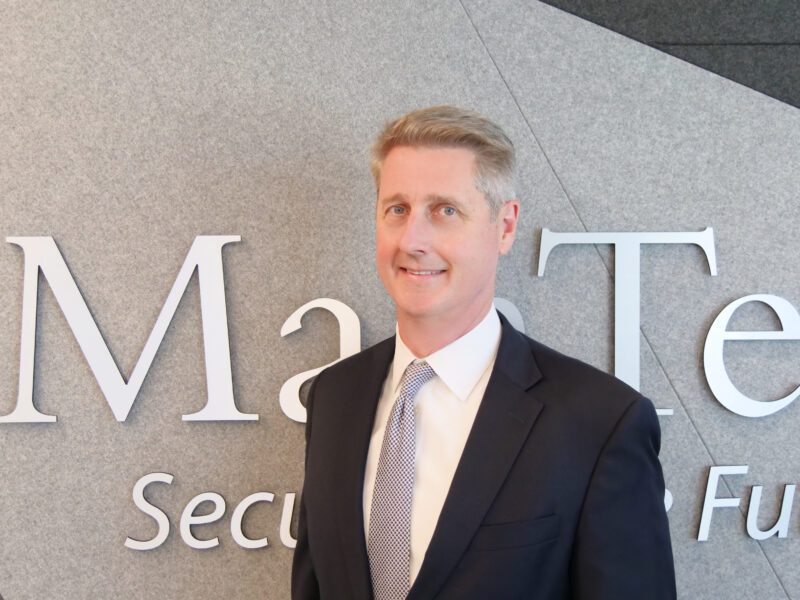
David Hathaway
Executive Vice President, General Manager, Defense Sector, ManTech
David Hathaway has been in and around the Defense Department most of his life. He grew up in the Washington, D.C., area and watched his father support the Navy as a career civil servant. When Hathaway was named general manager and executive vice president of ManTech’s defense sector, it was a highlight of his career.
“I am passionate about (DOD) missions and the people that make them happen every day,” he said. “ManTech is ideally suited and equipped to bring digital transformation to the DOD.”
Hathaway’s position enables him to roll his past experience as an active Air Force officer, IBM technologist and his experience directly supporting operational missions at Vectrus into one role.
“I have what could be considered ‘3D’ expertise bringing the best of technology, operations and mission know-how to ManTech customers,” he said.
Why Watch
Looking ahead, Hathaway and his team are heavily focused on bringing digital to the mission as DOD embarks on digital transformation of the organization as a key imperative that advances operational missions of all DOD agencies.
“That’s where ManTech can come in and address this journey from start to future,” he said.

Glenn Hickok
Vice President, Noblis Defense Mission Area/President, Noblis MSD and Mikros Technologies
Under Glenn Hickok’s leadership, Noblis’ defense programs have grown from less than $30 million to over $180 million in just under a year.
This growth stems from both organic activity and the acquisition of McKean Defense, which the company recently rebranded as Noblis MSD. Hickok played a key role in finding and integrating McKean, a company he believes is the right organization and platform for Noblis to insert critical technologies in a changing mission set. He defines the McKean acquisition and subsequent launch of Noblis MSD as both exhilarating and rewarding.
“The combined companies bring advanced competencies, in-depth mission knowledge, a rare combination of talent and 100% commitment to customer missions,” Hickok said.
Why Watch
The recent growth is just the beginning.
“DOD needs to rapidly adjust the capabilities base to ensure viability against near-peer competitors in the decades to come,” Hickok said. “As a nonprofit and trusted advisor to the government, Noblis is the ideal platform to rapidly develop, integrate and deploy these capabilities.”

Gerry Fasano
President, Defense Group, Leidos
Leidos impressed industry insiders with its recent win of the coveted $7.7 billion Next Generation Enterprise Network Service Management, Integration and Transport contract. The company’s Defense Group, headed by Gerry Fasano, led the charge and wrestled the Navy’s biggest IT services contract away from a two-decade incumbent.
The award was Leidos’ largest win to date and illustrative of Fasano’s relentless work ethic and technical prowess that has only sharpened over his 30-plus years in the industry. Leidos is a Reston, Virginia-based company that has seen explosive growth in its defense business under Fasano’s leadership — even amid a global pandemic.
While others in the defense industry responded to COVID-19 by initially slamming the brakes, Fasano underscored to his employees that while the days ahead would be undoubtedly challenging, the company’s focus on supporting its customers with “can’t fail” missions could not falter.
His directive resulted in monumental success for the technology, engineering and science solutions company. At the height of the pandemic, Leidos retained the critical recompete $6.5 billion GSMO II contract — a testament to Fasano’s strong leadership and strategic foresight.
Why Watch
Fasano has been laser-focused on helping Leidos to achieve a differentiated and scaled defense business. The Fortune 250 company has not only accelerated its growth, but undergone a rapid transformation. In 2021 alone, Leidos acquired the 1901 Group, a leading provider for managed IT services and cloud solutions, and Gibbs & Cox, the largest independent ship design firm in the nation.
With customer requirements continuing to evolve, expect Fasano and his team to make additional investments in solutions and technologies as they continue their pursuit to grow the company’s footprint in the defense market.

Mary D. Petryszyn
Corporate Vice President, President, Northrop Grumman Defense Systems Sector
Mary Petryszyn has built Northrop Grumman’s newest sector, Defense Systems, into a multibillion-dollar business focused on growth and future success for her customers.
Her broad portfolio includes missiles and tactical weapons, all-domain command and control architecture, integrated battle command systems, and sustainment and modernization capabilities.
Petryszyn’s extensive global experience in business and operational leadership within the government and defense markets, along with her strong advocacy for diversity and doing what is right, has created an energized environment where employees connect, perform and grow.
“In order to deliver systems capable of tackling the threats of tomorrow, it’s paramount that our team grows the next corps of leadership for the industry,” Petryszyn said.
Why Watch
Petryszyn plans to leverage Northrop Grumman’s demonstrated expertise in all-domain command and control to connect all sensors and effectors for warfighters — a promise of Defense Department’s JADC2, Project Convergence and Project Overmatch imperatives.
Likewise, Petryszyn is committed to keeping U.S. and allied aircraft fleets mission ready, across various services, as the team is doing for E-2D, P-3, KC-30, E-8 and Global Hawk.
Petryszyn’s keen strategy and people-oriented culture have poised the business for significant growth. In conjunction with the enterprise’s multifaceted digital transformation, Petryszyn and her team are creating offerings such as advanced weapons and missiles, with open architectures and digital design practices. This results in improved quality and rapid development for DOD and international customers.

Ronald “Fog” Hahn
Executive Vice President, Strategic Growth Organization, Amentum
Since launching Amentum as an independent company in early 2020, Ron “Fog” Hahn has been focused on driving the company’s growth.
By infusing new technologies into existing work, adding to Amentum’s indefinite delivery, indefinite quantity contract vehicles, building the brand and transforming the business through mergers and acquisitions, Hahn has steered the company to becoming one of the largest government services providers in the market today.
When AECOM spun off its managed services to an investment group in February 2020, Hahn and his team delved into creative digital marketing strategies to deploy the new company brand under COVID. And when Amentum purchased DynCorp International in November, it continued the momentum with a complete integration campaign — all virtual.
Hahn’s team’s efforts have earned Amentum the No. 1 spot in VIQTORY’s Top Military Friendly Company awards, U.S. Veterans Magazine Best of the Best Top Veteran-Friendly Programs, and National Veteran Small Business Coalition’s Champion of Veteran Enterprise award.
More important than accolades, however, is building an Amentum culture — putting pieces together from the legacy companies to create a new culture of increased capabilities and innovation to better serve clients across the board while continuing to grow and transform.
Why Watch
In 2021, Hahn is focused on continuing to build out best-in-class technology offerings to deliver to Amentum customers.
“Looking at the market today, you have to leverage emerging technologies to improve efficiencies, decrease cost, and enhance performance,” he said.
His team is rolling out solutions like predictive and prognostic maintenance technology; augmented reality tools; and a revolutionary live-training sensor system that improves the ability to train in synthetic environments.

Joe Kehoe
Vice President, DOD Practice Leader, Maximus
In the year-plus that Joe Kehoe has served as the Defense Department business leader for Maximus, his team has seen 20% year-over-year growth in key areas such as digital transformation and innovation, cybersecurity, IT modernization, application development and advanced analytics. His team’s success comes from unrelenting focus on the warfighter and the DOD mission.
“My goal is to bring together technology, process and digital solutions to meet our DOD clients’ mission objectives — from the enterprise environment to the tactical edge,” Kehoe said.
Last year, Maximus experienced significant growth in its cybersecurity business and saw an accelerated need for innovation and precision within critical DOD domains. Kehoe and his team responded to this need by delivering deep cyber expertise, advanced analytics that provide actionable intelligence, continuous monitoring and secure cloud services.
As a result, they empower DOD and national partners to prevent, detect, defeat and recover from attacks quickly, efficiently and effectively.
Why Watch
Maximus delivers secure and accurate data insights at the point-of-need, which is essential in gaining a tactical advantage. Kehoe and his team are highly focused on advancing government and military partners’ missions by accelerating the integration of emerging technologies and delivering transformational IT solutions.
“Whether the focus is around information dominance, operational scalability or warfighter readiness, what we do matters … both to our clients and the people that they serve,” he said.

Scott Goldstein
Head of Advanced Missions, Anduril Industries
Scott Goldstein started with Anduril in March and immediately stood up the Advanced Missions organization. The team focuses on next-generation capabilities across the company, including its Lattice software platform, artificial intelligence, mission autonomy, tactical air systems, UASs, counterdrone technology, base defense and border security.
“As head of Advanced Missions, Dr. Goldstein draws on his unique blend of military, intelligence community and homeland security experience, as well as engineering expertise to lead Anduril’s development of special capabilities for our government partners,” said Matt Steckman, Anduril chief revenue officer. ”He expertly leverages his leadership, technical expertise and business acumen to advance Anduril’s mission. We are proud to have him on our team.”
Anduril acquired two companies this year: Area I and Copious Imaging.
“I’m very excited to be working with them and their cutting-edge technologies and incorporating them into Anduril’s family of systems,” Goldstein said.
Why Watch
Goldstein’s team is heavily focused on the development of new capabilities for solutions and products that enable the U.S. to strengthen its national security posture and meet current and future challenges.
“Anduril is revolutionizing the way in which future defense companies could interact and do business with the U.S. government and our allies,” Goldstein said. “Anduril is developing the future of warfare using AI-enabled autonomous capabilities.”

Jeff Bohling
President, Defense Solutions Sector, Peraton
Jeff Bohling has full responsibility for the Defense Solutions sector’s strategy development and execution, program performance and growth objectives. The sector supports the mission to keep the U.S. and citizens safe by delivering solutions to improve software, systems engineering, IT, training and logistics, and fleet management to key agencies in national defense.
Bohling’s biggest achievement in 2021 was restructuring three defense organizations into one as part of an acquisition. This brought together seven business units and more than 4,100 staff across the globe.
Bohling supported the consolidation of IT, finance, HR, recruiting and other functions, resulting in an agile organization able to bring innovation and new capabilities to customers. He also ensured a smooth restructuring despite the prevalence of remote work because of pandemic restrictions.
Finally, Bohling regularly engages staff members on town hall meetings, helps them work through the challenges of migrating to new systems and positions the organization to take advantage of opportunities and grow.
Why Watch
Bohling and his team are heavily focused on growth this year. The combination of three organizations under Peraton has created a $7 billion powerhouse, and the Defense Solutions sector represents a durable foundation of the new Peraton.
The company has more resources, new offerings and a drive to compete at all levels for Defense Department contracts. One sector Bohling eyes for exceptional performance is terrestrial and satellite communications. Peraton has a competitive advantage as the only systems integrator licensed as a telecommunications carrier and provider of global network and satellite communications.
“Technology, data and process tend to dominate conversations in our business, but we must recognize that it’s the relationships we have with customers, colleagues and partners that make the business successful, and we have to nurture those,” Bohling said.

Robert Lech
Vice President, Sector Lead, Defense market, LMI
Under Robert Lech’s leadership, LMI’s defense and space market has experienced exponential revenue growth and client delivery excellence, winning 100% of its recompetes. Over the past three years, LMI deliberately and boldly transformed growth by reorganizing the company around a matrix model, prioritizing LMI’s core capabilities and markets.
This change in operating model allows LMI to quickly respond to client needs and advance digital and analytic innovative solutions. LMI’s go-to-market strategy is centered on cross-functional teams and creating a growth culture where every employee plays an integral role in delivering solutions and growing the business.
“I am extremely proud when it comes to the deliberate employee and customer engagement LMI has instilled during these unprecedented times,” Lech said. “Being ranked as a Top Workplace by The Washington Post is further affirmation that our senior leadership remains committed to ensuring employees, no matter the location, feel as though they are a valued member of the LMI team.”
Why Watch
As LMI achieves 60 years of supporting the federal government, Lech is focused on enhancing and implementing the organization’s capabilities throughout the defense market, including LMI’s continuation of wide-ranging strategic support to its founding client, the Office of the Secretary of Defense.
Lech’s focus on the collaboration between OSD and LMI is intentional so change is anticipated, and outcomes are achieved across DOD.
To further anticipate the government’s ongoing needs, the LMI Research Institute has established formal working relationships with several universities, bringing industry and academia together to spur innovation and explore groundbreaking research.
Looking ahead, Lech’s team will focus on expanding its services to the space market. Thus in partnership with the U.S. Space Force Association, LMI launched the Space Force Association Space Center of Excellence, which is composed of space leaders with industry expertise who will guide a community of professionals in the pursuit of space dominance.
Lech also plans on expanding LMI’s geographical locations to Orlando and Tampa, Florida., as well as Huntsville, Alabama.
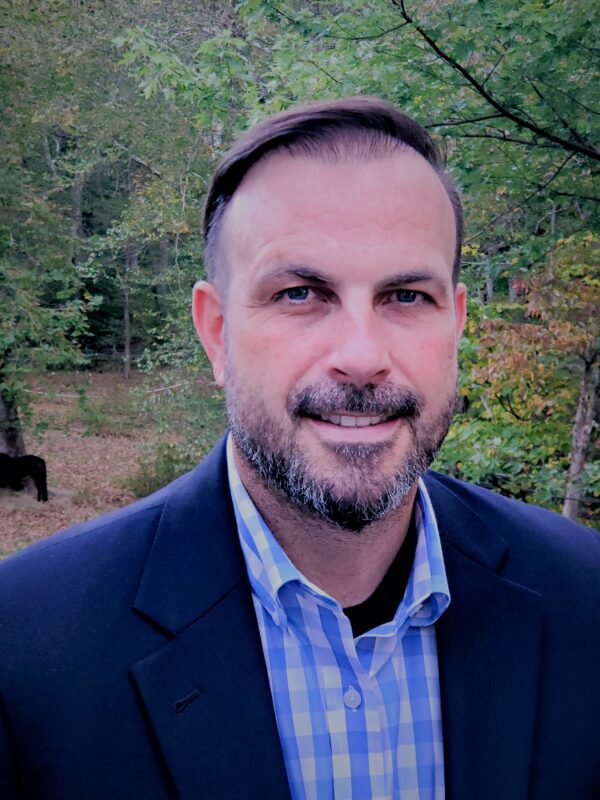
Greg Clifton
Director, DOD & Intelligence, Intel
Greg Clifton’s team works with the customers and ecosystem partners to understand how new technology and offerings will positively impact the mission and then matching technology and solutions to mission challenges.
“We are focused on being a mission partner, not just a silicon provider,” he said.
During Clifton’s tenure, Intel has been the processing engine — the foundational technology — inside of many of the biggest deals awarded across the sector.
From cloud, XaaS, and high-performance computing environments, to network modernization and 5G pilots, to computing on tactical platforms, and being a key supplier of processing power in the PCs deployed across the Defense Department, Intel has been a trusted partner to DOD for over 40 years.
This year, Intel made big changes by bringing in a new CEO and making major announcements around U.S.-based manufacturing with its IDM2.0 strategy and now offering commercial foundry services. This has led to new opportunities to partner with customers to build unique capabilities and expand the business.
Why Watch
For 2022, Intel’s defense and intelligence team is focused on growth. With new client and data center products along with the foundry services coming to market in 2022, Clifton is growing the team to better reach and serve customers as they deploy solutions like intelligent edge, 5G, artificial intelligence, cyber and hybrid cloud to meet mission needs.