
Serving the Defense Department requires deep knowledge of its mission, providing secure innovative solutions and being a trusted, strategic partner for the nation’s top line of defense. As technology and the defense landscape evolve, so do the needs of agencies and service members to continue protecting the nation effectively, efficiently and strategically.
For WashingtonExec’s Top 25 DOD Executives to Watch in 2020 list, we identified the best of the best providing the tools, strategies and systems to do so, based not only on their accomplishments but on their impact on the defense community and their vision for the near-term future. These leaders, some having served the country themselves, bring the experience, knowledge and expertise the Pentagon needs to stay on the cutting edge.

Jennifer Chronis, General Manager, DOD, Amazon Web Services
Over the past four years, Jennifer Chronis has led the Defense Department business for Amazon Web Services, which supports customers of all missions and sizes. She previously spent 15 years in the federal IT industry and served for two decades of combined active and reserve duty in the U.S. Army as a logistics officer.
Since joining AWS, Chronis has helped DOD deliver its missions more effectively and support its warfighters through accelerating cloud adoption, increasing efficiency, and enabling deeper innovation.
For example, last year the Navy migrated its largest enterprise resource planning system — consisting of 72,000 users across six Navy commands — to the AWS Cloud. Moving the system into the cloud has allowed the Navy to make more timely and informed decisions, as well as conduct advanced analytics. Chronis anticipates that migrating critical business systems to the cloud will remain a strategic priority for DOD.
Why Watch:
Chronis predicts DOD will pursue deeper integration of artificial intelligence and machine learning into critical mission and business systems. Organizations like the Joint Artificial Intelligence Center and the Army AI Task Force will help accelerate the use of cloud-based AI to improve warfighting capabilities.
Chronis says AWS remains deeply committed to DOD’s mission and values. Adoption of cloud computing at scale will ensure the U.S. military maintains its technological advantage and delivers on its critical missions from garrisons to the tactical edge.

Tim Spadafore, Vice President, Consulting Services, CGI
Building on a 24-plus-year career, Tim Spadafore led TeraThink’s integration of its agile enablement, application development and data analytics capabilities during its merger with CGI earlier this year. His experience and contributions in the federal marketplace led to his return to CGI as vice president of defense and intel practice at CGI Federal.
“By working collaboratively to understand client goals, business needs and objectives, and building on our members’ strengths and understanding of defense programs and contracting, I’m confident we’re positioned to help our defense and intel clients solve problems they face, introducing systems modernization into missions support to help them achieve success,” Spadafore said.
Spadafore served as president and chief operating officer of TeraThink, where he led day-to-day operations and provided executive oversight across the Defense, National Security and Civilian business units. He also served as the acting defense executive responsible for oversight of the Defense Business Unit, including multiple Momentum projects at the federal agencies.
Prior to TeraThink, his leadership roles included COO for Dominion Consulting, which he joined through its merger with IBC.
Why Watch:
Following his leadership in two integrations, Spadafore is leveraging CGI’s success in the civilian space to address the common problems defense and intel clients face, such as making logistics management more efficient and managing data more securely and effectively. His team is committed to helping federal customers transition from legacy products to emerging software platforms, lower total cost of ownership, and benefit from agile-based enterprise IT and financial management and Enterprise Resource Planning solutions like Momentum.

Lt. Col. Jennifer “JJ” Snow, Chief Technology Officer, U.S. Air Force/AFWERX
AFWERX is an Air Force initiative that thinks beyond just Air Force requirements. This innovative team can be found collaborating with various Defense Department and interagency, academic and industry partners to enable solutions across the full spectrum of government and military operations.
“We aren’t a big team, but we work hard to make a big impact for all of our customers,” said Lt. Col. Jennifer “JJ” Snow. “This is what gets me excited to get to work every day. I love seeing the positive effect our team is having for the nation!”
One such project is the Strategic Latency Group Report. A team of 40 experts from government, academia and industry provided expertise into what comes next and how to best train, equip and fight in technology influenced environments.
“The insights captured in this report will ensure our forces maintain their competitive edge,” Snow said.
She is also a strong proponent of the “werx” innovation models for government. What makes these initiatives unique is their ease of accessibility, their speed to solution, persistent end user involvement and the successful agile acquisitions models backing each endeavor.
“For the first time, the government can move at the speed of industry,” Snow said. “I’m really proud of all the positive feedback we’ve been receiving and the collaborative ecosystem growing around these hubs.”
Why Watch:
For 2020, Snow said innovation for the COVID-19 response is a priority. When the pandemic hit, her team stood up the AFWERX Unite and Fight initiative to rapidly identify technologies and solutions that can help front line responders today.
“We are passionate about making a difference, always smartly pushing the envelope to challenge the status quo, to do better for ourselves and others,” she said. “Even in crises we can see opportunities to move beyond just ‘surviving the virus’ towards building something amazing for the future. Today, we are working hard to do just that for the American people.”

Jeff Bohling, SVP and General Manager, Defense Group, Perspecta
In 2019, Jeff Bohling’s team achieved significant growth fueled in large part by a contract to provide cybersecurity operations support to the U.S. Army. Another win under Bohling was the agreement to modernize the U.S. Air Force’s Secret Internet Protocol Router Network for transmitting classified information. Additionally, the defense group secured a prime position on the Systems Engineering, Technology and Innovation program from the Defense Information Systems Agency.
Taken together, these programs represent Perspecta’s range of solutions from mission support to enterprise IT.
Last year marked a high point for Bohling with the company’s acquisition of Knight Point Systems. With this addition, the defense group delivers enhanced capabilities in cloud computing and cybersecurity to its Defense Department customers. Included in this acquisition is a joint venture, Invictus JV, LLC, which provides even more expertise to DOD through the Small Business Enterprise Applications Solutions contract.
Accomplishments in 2019 were further boosted with the opening of an office in Silicon Valley. Located in the heart of Santa Clara, this office will support Perspecta’s Navy customers and serve as a conduit for bringing the region’s innovation to DOD.
Why Watch:
These successes are a testament to Bohling’s strong leadership and strategic foresight. And with Bohling at the helm, 2020 looks to be another exciting year for Perspecta’s defense group.

Sunil Ramchand, President and Chief Growth Officer, VT Group
“VT Group is making big changes” — a big statement for a company that can trace its 150-year legacy to 1866. That excites Chief Growth Officer Sunil Ramchand, who teamed up with CEO John Hassoun and a cadre of seasoned industry executives in 2018 to transform the Victorian-era shipbuilder into a full lifecycle engineering player across warfighting domains.
The veteran naval officer, White House staffer for three presidents, and former CEO of defense and intelligence firm Mission Essential is bullish about VT Group’s new strategic positioning.
“We’re developing and delivering the capabilities that America needs to expand its competitive advantage in the modern battlespace,” Ramchand said. “Acquisitions, aggressive organic growth and enterprisewide operational improvements that deliver differentiating benefits to our customers are all part of our repositioning strategy.”
VT Group acquired National Technologies Associates in early 2019 to build out its aerospace engineering portfolio. It also purchased systems engineering expert DELTA Resources, and won a contract to integrate next-generation directed energy laser weapons onto the Navy’s ARLEIGH BURKE-class destroyers.
It has been a busy year for VT Group. But how is the company coping amid the COVID-19 pandemic?
“The pace hasn’t slowed down,” Ramchand said. “I’m amazed by the resiliency of the VT Group family, and I’m grateful to those members of our team who, despite the dangers, continue to work aboard the Navy’s ships and submarines to ensure the fleet is deployment ready.”
Why Watch:
The company plans to introduce a redefined brand later this summer that showcases its modernization solutions across warfighting domains. “We’re going to continue making investments in the portfolio, and we’re going to continue taking big swings,” Ramchand said.

Terri Walker-Spoonhour, Senior Vice President, Operations, Alion Science & Technology
Terri Walker-Spoonhour is responsible for the overall health of Alion’s business portfolio to include program performance, business planning and strategy, measurement, and financial and business growth. She was previously the senior vice president of the Alion Distributed Simulation Group, where she led a team that consistently achieved or exceeded performance targets.
Walker-Spoonhour’s expertise is in optimizing business strategy to strengthen the overall enterprise. She works closely with Alion’s financial organization implementing strategies to improve program performance and drive margin growth, enhanching overall operational efficiencies.
In 2019, as a member of the executive leadership team, she supported the integration of Alion-acquired MacAulay-Brown, Inc. into the company, and divestiture of Alion’s Naval Systems Business Unit to Serco.
Walker-Spoonhour has been instrumental in the success of program execution across the organization, exceeding contractual commitments and customers’ expectations. Alion benefits from Walker-Spoonhour’s keen business acumen seeing an increase in large-scale contract awards in legacy markets and in key growth areas.
Why Watch:
Walker-Spoonhour has operational, program and industry experience that make her a leader driving positive results across the corporation. There is continued demand for Alion’s expertise and technologies in supporting defense and intelligence communities. This is directly attributed to Alion’s strong business strategy and plan, areas Walker-Spoonhour works side by side with Alion’s CEO and chief financial officer to define and implement.
Walker-Spoonhour will continue to be instrumental in leading Alion’s business portfolio, business planning and strategy, measurement and performance, and financial and business growth, while embedding a culture across Alion that facilitates excellence in program execution and customer success.

Steve Tolbert, Executive Vice President, Business Systems Group, CACI
Steve Tolbert leads CACI’s Business Systems group, which provides the Defense Department and intelligence community with enterprisewide business solutions in finance, human capital management, acquisition support and business operations support.
Prior to joining CACI, Tolbert served as a senior vice president at Perspecta, and before that, as a senior vice president at SRA. He also previously was CEO of a regional engineering firm.
Why Watch:
Tolbert leads a group providing expertise and advanced technology in the DOD business systems industry, including advanced end-to-end solutions that drive DOD’s mission effectiveness.
For instance, CACI recently completed the deployment of the Integrated Personnel and Pay System-Army, which will be the largest HR system of its kind. It currently supports over 300,000 soldiers, and the final release will support over 1 million users.
“Our solutions have a significant positive impact on DOD’s business,” Tolbert said. “Our human capital solutions provide the DOD with immediate readiness statistics and make real-time individual personnel records available to service personnel on their mobile devices.”
Under Tolbert’s leadership, the Business Systems group supports 23 DOD agencies and over 45,000 personnel with end-to-end, auditable financial solutions that address over 3,000 unique financial and budgetary requirements. In fact, every DOD budget request flows through one or more CACI systems and the company’s acquisition support solutions help the department process more than a half-trillion dollars in contracts and payments each year.
“CACI’s Business Systems group has had tremendous success, but we’re not resting; we continue to research advanced processes and technologies to help DOD adapt to new challenges,” Tolbert said.

Heather Reilly, Principal, Defense, Security & Justice Leader, Deloitte Consulting LLP
Heather Reilly has over 20 years of professional experience and oversees a $1 billion portfolio of work across the departments of Defense, Homeland Security, Justice and intelligence sub-sectors, encompassing over 5,700 practitioners.
Reilly is one of the firm’s experts on immigration and border security work. In this capacity, she led delivery teams focused on enhancing border security, facilitating trade and travel and improving lawful immigration to the U.S. through improved technology, processes and strategy.
Previously, she served as Deloitte’s GPS Alliances leader, responsible for setting the industry strategy and helping Deloitte’s public sector teams build partnerships with key technology providers to bring the next generation of innovative solutions to clients and drive firm growth. She has also served as Deloitte’s GPS Technology Strategy and Architecture leader, focusing its client delivery on enhancing U.S. government and DOD mission and enabling operations through improved technology, processes and strategy.
Reilly is also the co-founder of Deloitte’s Immigration Community of Interest Network, and currently leads Deloitte’s immigration reform investment team and Refugee Community of Interest, a nationwide organization of practitioners dedicated to leveraging their Deloitte skills to provide socially impactful solutions to the refugee crisis.
In 2016, Reilly received Consulting Magazine’s Women Leaders in Consulting award, measuring the impact of women on the consulting profession.
Why Watch:
As the DS&J Sector Leader, Reilly continuously pushes her business and her clients to put a lens on “the possible” and bring in nonconventional partners and alliances (often using Deloitte’s commercial successes as a start) to prepare for the shifts across government and DOD.

John Coleman, President, Defense & Homeland Security, Peraton
Bringing together complementary technical capabilities from the former Defense & Electronic Warfare and Homeland Security sectors, John Coleman positioned Peraton to address a broader array of growing customer needs in border C4ISR, identity and threat detection and response, data analytics, software development, advanced logistics and systems modernization.
Coleman strategically organized the business for key growth campaigns in C5ISR and defensive cyberthreat operations and built a team of experienced leaders and subject matter experts. After the acquisition of Solers, Coleman integrated the company’s Defense Systems Division capabilities.
Establishing Peraton as a leading provider of lighter-than-air sensor support, Coleman captured the U.S. Customs and Border Protection’s $184 million Tactical Aerostat Systems program and successfully recompeted CBP’s $277.5 million Tethered Aerostat Radar Systems program.
Coleman finished off 2019 strong by leading recompete wins for four U.S. Navy unmanned maritime task orders worth $27.5 million that covered unmanned underwater vehicle services including operations, support representatives and enhanced software support.
Why Watch:
Building on Peraton’s longstanding support of Navy UUV programs, Peraton in early 2020 won a spot on the Naval Sea System Command’s Unmanned Surface Vehicle Family of Systems $982 million indefinite delivery, indefinite quantity contract, with eligibility to compete across all capability areas.
Another focus area for Coleman in 2020 will be to use Peraton’s extensive full-spectrum cyber capabilities to increase the company’s support for government customers in the ever-changing arena of defensive cyberthreat operations.

Retired Lt. Gen. William “Bill” Bender, Senior Vice President, Strategic Accounts & Government Relations, Leidos
In 2019, Bill Bender took on an increased leadership role at Leidos, when field account and enterprise IDIQ management responsibilities were placed in his organization. Bender was designated as the corporate lead for customer relationship assessments, helping to ensure differentiated services and solutions for Leidos’ federal and commercial customers.
Last year was an exciting year of growth for Leidos with the acquisitions of Dynetics and L3 Technologies Security Screening business. These acquisitions open the door for increased opportunities to enable client missions through hardware solutions, advanced defense R&D and enhanced capabilities including software development, artificial intelligence, sensor fusion, missiles, hypersonics, cyber solutions and space.
One of Leidos’ primary differentiators is its workforce’s ability to create innovative technology solutions to solve highly complex problems. With a culture of innovation, fortified by deep mission knowledge, Leidos is committed to investing in critical internal research and development efforts in response to customers’ greatest challenges, working hard to deliver the next generation of agile, cohesive solutions necessary for today’s rapidly changing environment.
Why Watch:
Bender is keenly interested in ensuring customer relationships as a differentiated capability at Leidos. He believes increased partnership and shared experiences between industry and government will serve to simultaneously shift more mission work to government contractors while also enhancing government’s ability to innovate and move fast. He is steadfastly committed to working with both government customers and other best in class industry providers to develop highly-scalable, integrated platform approaches to meet government’s needs for mission effective and cost-efficient services and solutions.

Katie Arrington, Chief Information Security Officer, Assistant Secretary of Defense for Acquisition, Defense Department
Katie Arrington came to the Defense Department in early 2019 as a change agent and bridge between departmental information security efforts, Congress, industry and academia. In her short tenure, she has been driving the cybersecurity portion of the most significant acquisition reform in DOD through the development and implementation of the Cybersecurity Maturity Model Certification program.
This is the start of Arrington’s initiative to secure the DOD supply system as she has taken on an expanded role within the department to include cybersecurity of the sustainment functions. To aid in this new role, she introduced supply chain illumination tools not just to the DOD but also to the Federal Emergency Management Agency and the Department of Health and Human Services in her role as lead for accelerating FEMA’s supply chain task force for the government’s response to COVID-19. These tools allow for the identification of foreign influence and help in informing senior leaders of risks within the industrial base.
Why Watch:
These two foundational changes to DOD are just the beginning of Arrington’s career as she looks to the future and ensuring the department continues to secure U.S. defense industrial base through auditable cybersecurity standards, weeding out foreign influence within the supply chain, and establishing security as a foundation capability within DOD.

Rich Gustafson, Vice President and Chief Technology Officer, SAP NS2 Cloud
Rich Gustafson first joined the defense community when he was just a kid living on military bases with his family. Now a Defense Department executive, he has spent most of his professional career advancing the missions of DOD and the intelligence community through secure technology modernization and transformation.
Today, he’s is chief technology officer for the SAP NS2 Cloud, a Federal Risk and Authorization Management Program-compliant, secure cloud and human capital management solution created specifically for public sector and regulated clients.
“We built the SAP NS2 Cloud to support the unique security requirements of our government and regulated customers,” Gustafson said. “The stakes are high, because at the end of the day, we’re helping to empower our U.S. forces and warfighters.”
Last year, Gustafson and his NS2 team hit a major milestone when they completed the deployment of a major DOD enterprise resource planning system to the SAP NS2 Secure HANA Cloud — the customer’s largest system cloud migration to date. The upgrade was a critical step toward modernizing tech within DOD to enhance performance and efficiency. The customer’s ERP is now entirely cloud based and operating significantly faster using in-memory applications.
Why Watch:
Cloud use is surging as a result of the coronavirus pandemic, and security will be top of mind for both government and commercial customers.
“From securing the supply chain, to supporting health services, to facilitating compliance, remote work and training, the cloud is quickly becoming the keystone of our customers’ operations,” Gustafson said. “And NS2 is here to safeguard it.”

Ruth-Ann Nowakowski, Vice President, Defense Sector, Steampunk
Having spent her entire life in the Washington, D.C., area watching many of her family members serve the country in both the military and civilian sectors, Ruth-Ann Nowakowski jumped at the opportunity to help stand up Steampunk’s Defense Sector business from scratch.
Steampunk is a design-led company where human-centricity is a part of its DNA. Its foundational tenets of people, culture, communication and impact drive the company’s passion for helping federal clients solve their technology, process and organizational challenges through collaboration and co-creation with their true end-users.
Steampunk’s integrated human-centered design approach to dynamic problem solving, called Design Intelligence, puts the warfighters’ and stakeholders’ problems at the forefront of solutioning — increasing adoption and accelerating speed to capability.
Nowakowski’s professional passion lies in the tight linkage to mission impact. The closer industry can get to supporting warfighters (like her son, a U.S. Marine) at the tactical edge, the more successful it is.
When technological innovations like data exploitation and digital platforms are married to an implementation lens like Design Intelligence, things get really cool — really fast. Nowakowski is particularly excited by the innovative approaches encouraged by mission enablers in the Defense Department like NavalX and AFWERX. Nowakowski is most proud when she can take on the federal defense mission as her own, and help move the ball in a meaningful way.
Why Watch:
Nowakowski’s focus for 2020 is both unique and exciting, as this will be her first experience bringing the energy and innovation of a startup to market. 2020 will be a year of educating the defense space about innovative new approaches like Design Intelligence as well as spreading the word with industry partners who can benefit from Steampunk’s approach.

Frank Helmick, Senior Vice President, Mission Solutions, SOS International LLC
Retired Army Lt. Gen. Frank Helmick joined SOS International LLC in 2012 after a 36-year military career. He now leads its Mission Solutions business, which supports U.S. national and NATO forces, and foreign military sales contractors supporting a variety of diplomatic and defense missions around the world.
In 2019, SOSi established a new pipeline of foreign military sales and direct military sales opportunities it intends to use to expand its market. To support this effort, the company added several individuals experienced in conducting business across the Middle East. It also became registered to do business in the Kingdom of Saudi Arabia.
“We are actively pursuing several opportunities in the region as part of our aggressive strategy to expand SOSi’s global footprint and open the market in Saudi Arabia,” Helmick said.
The Mission Solutions team is specifically looking to leverage its global logistics expertise, language services experience and mission knowledge to support foreign military sales and direct commercial sales with friendly allied nations. It is also seeking to tap into its broader capability set to provide more robust service offerings and training curriculum for U.S. government and international clients.
“Ultimately, it is my responsibility to ensure that we are leveraging all SOSi technologies to enhance the efficiency and effectiveness of our programs,” Helmick said.
Why Watch:
Helmick is focused on expanding Mission Solutions’ portfolio and growing the U.S. government’s footprint in the Middle East to support Defense and State Department missions.
“We have market access to an impressive number of contract vehicles, and a geographic footprint spanning more than 20 countries around the world,” he said. “Ultimately, diversifying our customer base, winning new work and expanding our international presence are critical strategic goals as we position our Mission Solutions business for continued growth.”

Vince Vlasho, Defense Portfolio Lead, Accenture Federal Services
In 2019 under Vince Vlasho, Accenture’s Defense and Intelligence business expanded the integration of commercial solutions to support clients pursuing digital transformation through multiplatform solutions that enhance efficiency and reliability. This integrated solution model led to several important contract wins, including supporting the Air Force to modernize its payroll, leave-management and core human resources functions.
In addition to applying the strength of its global organization, Accenture takes a human-centered design approach that considers the user experience in its design methodology. For Vlasho, people are the center of this approach throughout, not an afterthought.
Accenture applies its leading position on cloud, combined with analytics, to help federal defense agencies modernize their enterprises.
“DOD agencies are deploying cloud-enabled digital services, including artificial intelligence and other emerging technologies to translate their vast storehouses of data into mission-advancing insights and operational efficiencies,” Vlasho said. “Accenture is excited about helping them advance their innovation and technology modernization goals.”
Why Watch:
Enterprise systems, human centered design, intelligent services, cloud computing, AI/analytics and robotic process automation are big focus areas in 2020. Additionally, Vlasho is looking to expand Accenture’s Defense and Intelligence business into extended reality, blockchain and quantum computing.

Katie Olson, Deputy Director, Defense Digital Service, Defense Department
Katie Olson learned to design with, not for, users — a core tenant of Defense Digital Service — when launching and running a tech organization in Chicago called the City Tech Collaborative, which reimagines the way cities use technology to manage essential infrastructure and services.
“If it doesn’t work for the end user, it doesn’t work,” she said.
2019 was a big year for DDS. First, it absorbed the Rogue Squadron counterunmanned aerial systems team, which was previously part of the Defense Innovation Unit. Second, it opened a field office in Augusta, Georgia, near Ft. Gordon, which it affectionately calls Tatooine. And third, it led significant recruiting efforts to find talent and diversify the team in terms of race, gender and skill sets.
Strategic initiatives and emerging technologies like these have helped DDS advance federal defense missions. In particular, its c-UAS Rogue Squadron develops hardware and software solutions for small unmanned aerial system and counter-UAS efforts.
The threats posed by sUAS are real, though the threat in theater is distinct, Olson said. Recreational and commercial sUAS traffic is common and indistinguishable from actual threats.
DDS is also continuing to grow its Hack the Pentagon portfolio, recently partnering with the Defense Advanced Research Projects Agency on ethical hacking efforts on hardware like voting machines, and launching Hack a Satellite at DEFCON this year with the Air Force.
Why Watch:
In addition to growing its c-UAS and Hack the Pentagon portfolios, DDS is working with DOD leadership on COVID-19 related efforts. These include MySymptoms.mil, an app designed for the DOD community to review symptoms and conditions to assess their likelihood of coronavirus, and Operation Warp Speed, which brings together federal entities to address emerging cyber threats during the race to produce a vaccine.

James Geurts, Assistant Secretary of the Navy for Research, Development & Acquisition, Department of the Navy
In an environment with high expectations for bureaucratic standards and oversight, James Geurts redefined and reorganized the research, development and acquisition community to align to mission and to increase its agility. His innovative leadership in 2019 took a multipronged approach on various fronts to drive speed and cost.
Of note, through creative contracting methods and driving efficiency into processes, his organization saved over $25 billion through major contracts. Geurts drove a two carrier-buy contract and conducted process improvements with block buys, use of Other Transaction Authorities contract awards, prize challenges, cooperative R&D agreements and accelerated contract awards.
Geurts strives to deliver output at scale to the warfighters to be relevant, setting a clear vision and culture that emphasizes the criticality of putting the right product into the hands of those in need, in a timely manner. Through his background with the Special Operations community and as a career active duty Air Force acquisition specialist, Geurts learned to cut quickly across boundaries, diversify the approaches to acquire mission-essential systems and technology, and that the future is unknown, so one must be ready to take advantage of upside opportunities.
In 2019, Geurts formed the Navy’s agility office in Alexandria, Virginia, to centrally facilitate the increased adoption of proven agility-enhancing methods across the Department of the Navy. Acting as a gateway for innovators and entrepreneurs inside and outside of the Navy, this effort included the establishment of five naval tech bridge locations that operate in concert with NavalX.
These new offices share best practices and quickly connect critical problems to capabilities for the Navy and Marine Corps. Today, the Navy has grown to 12 tech bridges across the country that are driving accelerated outcomes.
Why Watch:
Strategic organizational focus areas for 2020 include continuing to lead and not just manage, build trust and transparency, and a continued drive to improve collaborative processes. It’s important to Geurts to establish a diverse and inclusive environment where civilians and military can produce output at speed to ensure sailors and marines maintain their strategic advantage.
In addition, in response to COVID-19, Geurts is focusing on maintaining the health of the defense industrial workforce and the economic wellness of the defense industrial base. Keeping the funds flowing to the industrial base and accelerating the award of contracts is expected to minimize the impacts of this disruption to the maximum extent possible.

Janice Glover-Jones, Chief Diversity Equality and Inclusion Officer, Defense Intelligence Agency
Since Janice Glover-Jones became chief of equality, diversity and inclusivity in 2019, she has worked to eliminate barriers at the Defense Intelligence Agency. She is the first to suggest conducting year-round, in-depth barrier analysis that will focus on uncovering, examining and removing the obstacles that hinder equal participation at all levels of the workforce.
One of her key achievements in the past year has been the rebranding and redirecting of inclusive diversity from a “compliance-based” entity to an invested mission imperative. Previously considered an adjunct to the mission foundation, diversity inclusion at DIA has moved to the forefront of agency dialogues.
On an increasingly regular basis, Glover-Jones has either led or organized enterprise-level town halls, forums and conversations focused on diversity, equality and inclusion. DIA has also formed partnerships with other intelligence agencies and combatant commands’ equal opportunity offices and other industry EO leaders.
Glover-Jones is also committed to the growth of her staff. She has charged them, collectively, to develop the reintegration plan by examining data and understand the importance of project management, data analysis and teamwork across the office. Doing so has given the team new skill sets that enhance all of the equal opportunity efforts.
Why Watch:
Glover-Jones’ primary focus for 2020 is to get closer to working herself out of a job. While there may always be a need to have an office focused on EO matters, a shift from transactional to informational as would be a major indicator of success.
By institutionalizing the principles of inclusive diversity across the entire workforce, Glover-Jones is creating an environment of self-regulation and a culture of equality. And as the country navigates the post-COVID workplace, she plans on continuing to understand the environment through quantitative data and qualitative descriptions so resources are properly ascribed.

Andy Twomey, Executive Vice President and General Manager, Defense Sector, ManTech
In 2019, Andy Twomey helped lead ManTech’s work supporting the development of new sensor technology for manned and unmanned aircraft systems for the U.S. Navy. For instance, early in the year, ManTech won a contract to provide analysis, research and development support for the Naval Surface Warfare Center Crane Division to support Naval Air Systems Command unmanned aircraft.
ManTech also established a new Cyber Innovation Center in Orlando, Florida, to accelerate the development of systems to help train next generation U.S. cyberwarriors. This training will directly influence the effectiveness of future U.S. military cyberwarfare missions.
Considering nearly half of ManTech employees are veterans, they understand the mindset, skills and discipline required to execute the Defense Department’s most difficult and important missions.
“We hire exceptional and experienced talent with proven experience, and then provide them with ongoing training — via direct mentorship, and educational partnerships — to keep their skills sharp,” Twomey said.
Last year, ManTech debuted its Secured Tactical Edge Platform, which quickly delivers vital intelligence to warfighters at the tactical edge, securely and reliably via mobile cloud technology. It enables warfighters to run complex analytics in the field, even in a delayed/disconnected, intermittently-connected, low-bandwidth environment.
Why Watch:
ManTech’s continued focus this year is bringing digital to the mission across DOD — from IT modernization to innovative next-generation intelligence, surveillance and reconnaissance, electronic warfare, mission systems and survivability systems throughout the U.S. military.
“Our capabilities in offense-informed cyber, secure cloud technology, digital engineering, applied analytics and advanced sensors all contribute to ensuring our warfighters maintain their tactical advantage in the field,” Twomey said.

Jim Scanlon, Executive Vice President and General Manager, Defense Systems Group, Science Applications International Corp.
In 2019, Jim Scanlon led Science Applications International Corp.’s growing $2.9 billion defense systems portfolio, which includes responsibility and oversight for leading strategy, business development and program execution in support to the U.S. Army, the Navy, the Marine Corps and the Defense Logistics Agency.
In 2019, SAIC’s top priorities included integrating Engility and maintaining and growing its business. Last year, SAIC also won a $950 million single-award contract with the Defense Logistics Agency to manage the Federal Supply Group-80 commodity. The company also won a spot on a Naval Air Systems Command contract to provide aircraft sustainment services.
SAIC saw its hard work in 2019 come to fruition in 2020. It won a $2.9 billion Army contract to continue to provide mission engineering, integration, software development and other lifecycle support to the Army’s Combat Capabilities Development Command Aviation & Missile Center, Systems Simulation, Software and Integration Directorate in Huntsville, Alabama.
Companywide, SAIC is committed to delivering digital transformation to its customers. It recently launched its own Innovation Factory, which equips teams with highly automated, cloud-hosted toolsets and DevSecOps practices to rapidly build, test and deploy solutions that can be improved as customer mission needs evolve. In this virtual and distributed “factory,” the raw materials of technology and mission challenges are converted into real solutions in days rather than months.
Why Watch:
Digital transformation and modernization will continue to be SAIC’s focus, but it also sees digital engineering emerging as a primary focus area for its continued growth.
“We look to support our Army and Navy customers in their drive toward multidomain operations,” Scanlon said. “We currently offer a free validation tool to the engineering community as a way to guide modeling consistency to reduce errors, aid analyses and improve quality.”

Karen Dahut, Executive Vice President and Defense and Commercial Business Lead, Booz Allen Hamilton
The 2018 National Defense Strategy established a new priority: regaining the military’s technological advantage. Over the past year, Karen Dahut’s team has partnered with the Defense Department to advance this priority as evidenced by some of its most significant 2019 milestones.
First, Booz Allen won a task order to help the Army equip the digital soldier with the latest cross-reality, artificial intelligence and data-centric solutions to improve their physical and psychological performance. Second, the firm won a contract to support the Pentagon’s Joint Artificial Intelligence Center to conduct AI development and establish a development operations pipeline to rapidly deliver AI capabilities into mission environments. Third, the Army selected Booz Allen to build a new enterprise technology platform and help reach a new generation of soldiers through social media and community outreach.
Today’s digital ecosystems are composed of smaller components that must be networked — and no single solutions provider can manage it all, Dahut said. Legacy and proprietary systems must integrate the latest breakthroughs and emerging technologies to combat emerging threats.
“We’re focused on partnering with our defense clients to envision a digital battle space where our developers and innovators are pairing visionary ideas with an unprecedented convergence of technologies such as cloud, AI, virtual reality and augmented reality,” Dahut said.
Why Watch:
Booz Allen is investing in digital-centered solutions to help DOD gain an edge in the digital battle space. The firm is developing cutting-edge technologies for operational missions and shortening the timeline to bring solutions from the lab to the field.
“DOD leaders are talking about convergence and integration of technologies to give warriors real-time access to information,” Dahut said.

David Appel, Vice President, Raytheon Intelligence & Space
Under David Appel’s leadership in 2019, Raytheon Intelligence & Space modernized two major command and control systems — the Air Force’s Kessel Run program and the North American Aerospace Defense Command Cheyenne Mountain system.
And because the firm applied commercial technology development techniques, it can quickly adapt and upgrade the systems as new capabilities become available.
“That’s a significant advantage for our customers,” Appel said.
Raytheon is also putting programmer and analyst-run artificial intelligence, machine learning, automation and commercial technology into its products. An important aspect to what Raytheon Intelligence & Space does is ensure its customers understand how to get deeper insights produced by its solutions.
“The faster our customers have relevant data, the better decisions they can make,” Appel said, and customers need agile and quickly adaptable capabilities.
For example, Raytheon Intelligence & Space’s use of DevSecOps has significantly decreased delivery times, and allowed for early detection of challenges. It has also built agile software coding centers where engineers test and apply what they’ve learned prior to the deployment of a capability.
Why Watch:
“In this unprecedented time, we’re focusing on the safety and wellbeing of our employees,” Appel said. “They’re the reason for our success and ability to deliver capabilities critical to national defense.”
With the recent merger with United Technologies Corp., Raytheon Intelligence & Space is focusing on collaborating with the businesses under Raytheon Technologies to bring new and advanced capabilities to its customers.

Leigh Palmer, Senior Vice President, Defense, GDIT
Leigh Palmer leads the delivery of mission critical services and solutions to the Defense Department and other government customers, taking the helm of the Defense Division following the merger of General Dynamics and CSRA.
As part of the integration, Palmer developed a strategy for the organization predicated on agile operations and a culture of innovation, resulting in GDIT’s acceleration of enhanced offerings in cloud, mobility and artificial intelligence to DOD.
Her team focused on driving the market in three technology areas: cloud services as envisioned by the Pentagon’s chief information officer’s cloud strategy; pivoting toward as-a-service models across the industry wherever feasible; and reimagining acquisition through a focus on Other Transactional Authorities.
The current pandemic has also increased awareness of the importance of being able to work wherever, whenever, so GDIT’s Defense Division has implemented innovations that enable classified remote telework for its customers. While this technology isn’t entirely new, Palmer said the scale of the need surpassed anything previously operationalized.
“Our response to this unprecedented situation is a testament to our teams and another example of the organizational agility of GDIT and our ability to respond to changing mission needs,” she said.
Why Watch:
Palmer’s focus area for 2020 has evolved based on the emerging world situation and impact of the global pandemic.
“Customers need our solutions more than ever, and we are working to accelerate technology solutions for mobility, security and artificial intelligence,” Palmer said. “Getting capability to mission quickly is essential in a time of crisis.”
Equally important is motivating GDIT’s workforce, and ensuring leaders are available, present and proactively engaging with their teams during this challenging time.

Marshall Williams, Principal Deputy Assistant Secretary of the Army (Manpower and Reserve Affairs),
Department of the Army
Marshall Williams is responsible for the supervision of the Manpower and Reserve Affairs for the Department of Army, serving as the Army’s deputy for policy and performance oversight.
As part of his current team, Williams in 2019 created the first people strategy in the Army’s 244-year history. This policy focused on building a 21st-century talent management-based approach system capitalizing on unique abilities through policies, programs and processes.
Also in 2019, Williams led an effort to operate 932 major hospitals for 8.3 million beneficiaries, an initiative that arranged for the transfer of 7,300 staff employees from the Army.
Finally, also in 2019, he developed specific expertise within the organization that leveraged people analytics to provide innovative data solutions and foster collaboration across the Army and M&RA. As a result, his organization has a subordinate body that oversees a secured online database system to track many of the Army’s vital data feeds.
“I have had a unique opportunity to work at every echelon within the Department of Defense and have met a diverse group of people through those experiences,” Williams said.
Previously serving as the senior enlisted adviser to the defense secretary, Williams was the most senior, highest-ranking enlisted service member in DOD. Through career, he has developed an engaging leadership style that empowers his subordinates, who gain opportunities to advance, innovate and become critical thinkers.
As a result, his teams had notable achievements, including saving $2 billion and increasing talent recruitment in the Army by 8% from the previous year by analyzing modern youth stimuli and incentives, instituting gaming centers and teams on 256 recruitment centers in 54 states and territories.
Williams has also led a team to increase employment opportunities for military spouses by 23% in 86 countries by creating and instituting The Military Spouse Preference Program through training aids and individual trainers.
Why Watch:
In 2020, Williams is focused on and continues to prioritize efforts in a few critical areas: modernization of the total force; diversity and racism; development of online database systems that track critical information; recruitment and retention strategies within the Army; and medical reform, which encompasses contingencies against emerging medical concerns.
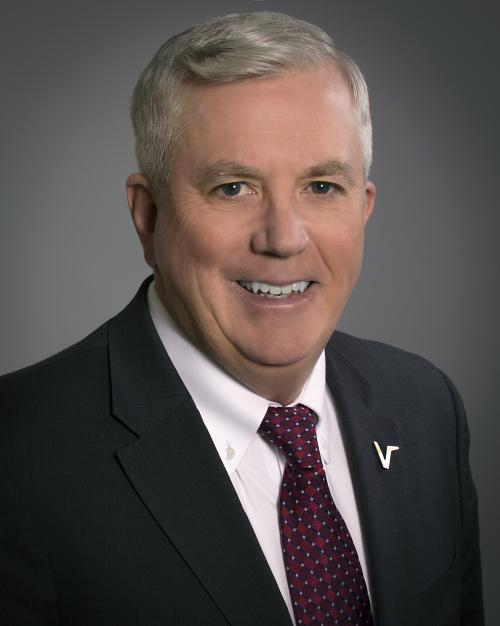
Kevin Leonard, Senior Vice President, Army and Expeditionary Programs, Vectrus
Kevin Leonard, a retired U.S. Army major general, joined Vectrus in 2017 to develop and execute short- and long-term strategies for Army and Expeditionary Programs, leveraging 33 years of leading complex transportation and logistics organizations.
Under Leonard’s leadership in 2019, Vectrus won multiple positions on the Logistics Civil Augmentation Program, or LOGCAP, indefinite delivery/indefinite quantity contract, which supports the U.S. Armed Forces in various services worldwide.
Leonard also takes pride in that Vectrus is composed of 38% veterans, and is committed to helping people transition out of service into industry following the company’s 2019 involvement in the Hire Our Heroes program.
And now, Vectrus is fusing digital and infrastructure capabilities, leveraging its technical and software development expertise to provide military base commanders with a full, integrated view of a base’s security apparatus and energy consumption.
As a retired Army logistician, Leonard is excited about the emerging technologies around delivering rapid water purification and power generation in disaster zones.
Longer term, Vectrus is working to reduce the demand for fuel to generate power and to provide alternative forms like solar power generators. Technologies like these, Leonard said, can ultimately reduce the size, weight, maintenance and logistics footprint required to provide water and power for humanitarian assistance missions and disaster relief.
As the SVP for contingency operations, it’s his job to find ways to implement these technologies where and when the government needs them.
Why Watch:
For the remainder of 2020 and beyond, Leonard and his team will focus on the company’s positions with the LOGCAP IDIQ, putting the right planners in place to support those command centers and integrate the capabilities needed.
“We provide the very best rapid support to the Department of Defense that we possibly can and use cutting-edge technologies,” Leonard said.
He also looks forward to continue investing in Vectrus’ growing veterans workforce, and encourages others in industry to do the same.