Who are the most influential leaders in health? We set out to find out, and our discovery led to 10 experts who are moving the needle and disrupting the health care space.
This inaugural list makes one thing clear: these executives achieved significant milestones and goals in short periods of time, thanks to their strong leadership. What they all have in common: possessing the know-how to navigate the complexities of the health industry, including challenges that come in the form of regulation and policy.
Challenging the status quo isn’t easy, but these executives bucked the trend and not only succeeded in driving progress but acted as catalysts for transformational change. We’re proud to shine the spotlight on these influencers and encourage you to follow their journeys.

Rob C. Thomas II, Strategic Account Executive, Leidos Health Group
When Rob C. Thomas II joined Leidos Health Group in October 2017, he saw the company’s ability to help health care organizations enhance their clinical care, public health and scientific research efforts, while creating efficiencies that reduce costs, as a perfect fit for him. “It is the ninth largest health IT company in the U.S. that focuses on electronic health records management, enterprise IT modernization, interoperability, solutions at scale, population health solutions, software development and systems integration,” he says.
Why Watch
Thomas’ focus at Leidos is to drive health care interoperability by integrating a layer above electronic health records and legacy systems to improve both outcomes and the patient experience. “All commercial health systems we know and work with are wrestling with this issue,” he says. “Across all of health care, longitudinal case management remains elusive.” Implementing such a layer will improve the patient experience in all areas: patient engagement, family member engagement, benefits awareness, population health management, and innovations to support patients such as transportation, secure communications and better access to health care services.
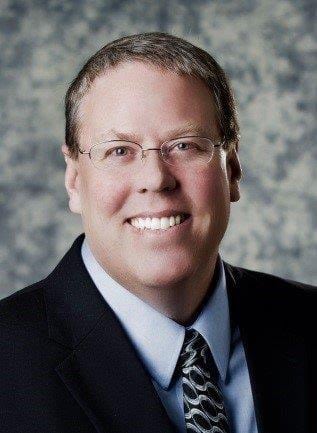
Erik Buice, VP, Health Solutions, Northrop Grumman
Even though Erik Buice has focused primarily on health and civil customer bases over the past 20 years, he has also led the Cyber and IT Services business unit supporting Defense Department customers. His work at Northrop Grumman involves delivering health solutions to federal, state, commercial and international customers. His department focuses on areas such as benefits management, health data integration and analytics, and innovative health solutions. One area they have concentrated on is helping to prevent Medicare fraud through the use of predictive analytics. “We’ve continued to invest and enhance this capability and are looking to bring our Fraud Waste and Abuse (FWA) expertise to additional health clients such as the VA,” he says.
Why Watch:
Buice’s group is on the leading edge of synthetic biology. “There is tremendous potential and opportunities around bio-defense, emerging bio-sensors and new materials that will be lighter and stronger,” he says. The group is advancing operational medicine in the military health arena by applying its extensive corporate expertise to the areas of medical logistics and medical command and control. “Our systems will integrate data across the battle space and improve situational awareness for in-theater medical care,” Buice adds.

Karen Shields, VP, Health Services, Serco
Karen Shields knows all about dealing with large health systems. As the previous Senior Executive Service member at the Health and Human Services Department’s Centers for Medicare Service, she was responsible for all administration and operations for HealthCare.gov. In that role, she led multiple open enrollment periods under the Affordable Care Act. In her position at Serco, she is responsible for its CMS contracts, which involves similar skillsets. She also leads the expansion of Serco’s consulting, business processing and operational solutions that assist federal, state and local governments in providing health care services and solutions.
Why Watch:
Shields sees a great need in more active federal-state collaboration to produce improved results in health care service delivery. She has been very active in speaking to states and legislative organizations while encouraging them to work together. “I use the term ‘ruthless collaboration’ to describe public companies and state agencies focusing on partnership and proactive problem solving to aggressively and permanently move the needle in solution design and consumer focused health care solutions,” she says.
Kristine Martin Anderson, EVP, Booz Allen Hamilton
Kristine Martin Anderson has dedicated her career to improving the quality, safety and efficiency of health care through health IT and analytics. She has been a leader in Booz Allen‘s federal health business for the past 12 years and at the helm during the last three years. Under her leadership, Booz Allen has supported some of the most important health care missions in the United States, including enabling the Veterans Affairs Department to expedite benefits to veterans and serving as the Marketplace System Integrator for the Centers for Medicare & Medicaid Services. “Health care in the United States still has tremendous challenges in access, affordability, consumer experience and safety,” she says. “Booz Allen is committed to helping our federal clients create and implement innovative, digital-first solutions to improve in every one of those dimensions.”
Why Watch:
Anderson leads all of Booz Allen’s Civilian Services business, which includes health, financial services, justice and homeland security. In this role, she leads a team aimed at addressing some of the most complex challenges faced by civil government. Affordability, citizen experience and quality of service are issues common across civilian agencies, and her group is developing digital solutions, machine intelligence and cyber protection capabilities key to solving these issues.
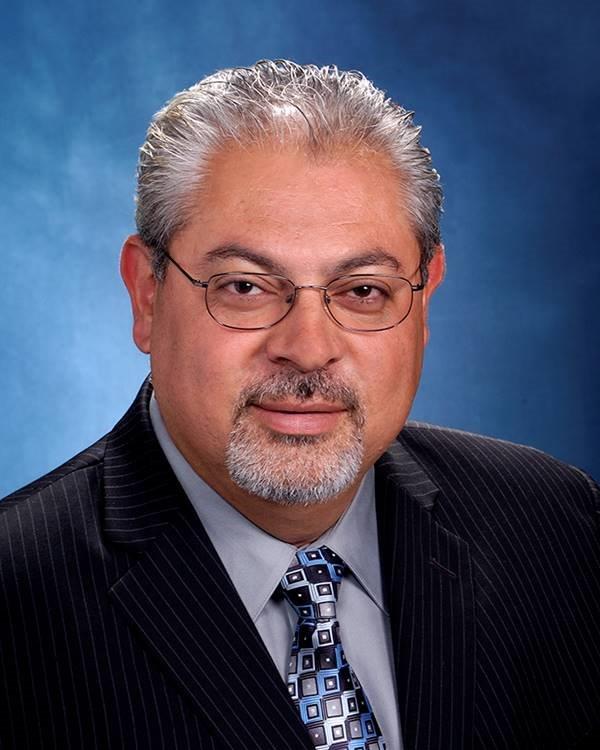
Antoine ‘Tony’ Azar, SVP, Healthcare Solutions, CACI
Tony Azar has a long history of working within the civilian health care market. During his tenure at General Dynamics, he worked in this arena for customers including the departments of Veterans Affairs and Health and Human Services. In his current role, he has growth and operational responsibility over the business unit, which provides subject matter expertise and professional services in the federal health care space. CACI also operates large data warehouses for DOD medical data and the Affordable Care Act for the Centers for Medicare and Medicaid Services. “Big data and data analytics are at the heart of creating solutions for some of the large benefits and health challenges facing the federal government,” he says. “Combating waste and abuse, and outcome-based payment models are some examples.”
Why Watch:
CACI’s primary focus will soon be on operational Medicine services. “We currently serve all four regular military branches, providing support anywhere our troops are deployed, including forward operational theatres and Navy vessels,” Azar says. “The Defense Health Agency (DHA) is undergoing a major initiative to modernize and replace DOD’s legacy software using a COTS application. Once operational, DHA will need to ensure a smooth transition from legacy to new technology with uninterrupted service. CACI will play a significant role in making that happen, as we have expertise in both environments, and extensive experience in theatre.”
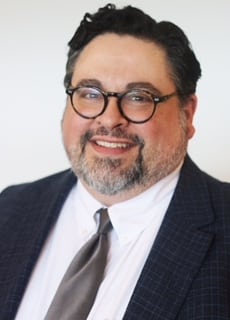
Steve Sousa, VP, Consulting Services, CGI Federal
Steve Sousa has over 20 years’ experience in both the public and private health care sectors. He originally completed the core requirements for medical school to become a physician. However, while writing a health care column for a small New England publication, Sousa first saw the rise of the internet and became driven by the positive impacts that technology and information could have on people’s health care experiences. “We live in a time where the convergence of both health care and technology allows for the ability to provide unparalleled solutions, and these solutions can further drive the mission of federal agencies while maximizing citizen access to services and care,” he says.
Bringing this focus to CGI Federal, Sousa oversees all of the company’s Health and Human Services Department and Social Security Administration contracts. One focus of these accounts is cybersecurity, implementing a multileveled strategy with concentric rings of protection. CGI Federal is driving high levels of security and transparency throughout long and complex transaction chains to help eliminate health care fraud.
Why Watch:
CGI Federal has applied a proven approach to mitigate cost and risk that includes the use of risk- and cost-driven architecture, which has been recognized as a successful methodology by the Software Engineering Institute and the Open Group. The company has also increased delivery velocity through automated testing and DevOps CI/CD. “This enables the rapid deployment of additional functionality, quickly verifies requirements and enables functionality to reach the users in an expedited fashion,” Sousa says.

Melissa Chapman, VP, Health IT Business Development, Salient CRGT
Melissa Chapman brings a great deal of government technology experience to the health care field, having been chief information officer for both the Health and Human Services Department and the Food and Drug Administration. It was during her time at HHS she established the National Federal Health Architecture, a 26-agency partnership that established a shared, unified enterprise architecture across all health mission processes and technical reference models. In Chapman’s current position, she uses her government expertise to help improve health data integration and automated workflow in support of federal health research, regulatory oversight and point of care.
Why Watch:
Chapman is driving Salient CRGT’s Innovation Centers to continue to evaluate and pilot a broad range of analytics solutions and techniques using clinical data, regulatory, and safety data and health claims, along with unstructured textual data. “This allows us to provide customers with what we call ‘health analytics accelerators’ that allow them to preview solutions, and visualize how disparate datasets can be rapidly integrated,” she says. “Customers get a ‘jump start’ with us, and use the time and money saved to more rapidly mature beyond diagnostic analytics to predictive and prescriptive analytics.”
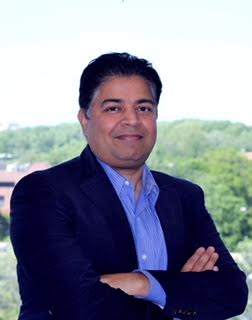
Vijay Mishra, SVP, Federal Programs, CNSI
CNSI, a leading business solutions provider with vast experience developing and delivering innovative health care management technology, recently announced it sold a majority interest to Alvarez & Marsal Capital, a middle-market private equity firm with a strategic association with Alvarez & Marsal. Vijay Mishra has used nearly two decades of experience to drive growth in the federal space, and increase the trust of customers in the public sector.
Why Watch:
Translation of Mishra’s technical expertise into real operational benefits for clients has resulted in wins nearing $250 million in new business over the past year alone for CNSI. Clients include the Centers for Medicare and Medicaid, the department of Labor and Veterans Affairs. By leveraging deep domain knowledge in emerging technology areas, such as cloud, data analytics, and claims adjudication, Mishra has succeeded in modernizing legacy systems through innovative solutions that reduce administrative costs, eliminate data redundancy and improve health outcomes for millions of Americans. He plans to continue his successful service in the health care field for a long time to come.

Kamal Narang, VP, Federal Health Sector, GDIT
Kamal Narang has over 20 years of experience supporting federal health customers throughout his career. Over the past 11 years, Narang has nurtured the Federal Health Group at General Dynamics Information Technology, growing it into a force to be reckoned with. His team consists of over 3,000 professionals. The GDIT Federal Health Group supports contracts with such diverse federal health agencies as the National Institutes of Health, the Centers for Medicare and Medicaid Services, the Centers for Disease Control, the Food and Drug Administration, the Defense Health Agency, the Social Security Administration and other agencies within the Health and Human Services Department.
Why Watch:
Narang’s group has had over $1 billion in contract awards over a short span of 12-18 months. His team just completed transition of a managed services offering for the Veterans Affairs Department. Through this, they are providing Tier 0 and Tier 1 services for over 400,000 VA employees and contractors. “This is one of first major shifts to managed services at the VA, and GDIT is leading the journey,” Narang says. “GDIT is also involved with a number of transformational cloud-based initiatives across various federal health customers.”
GDIT is one of the leading providers of IT and scientific services at NIH. GDIT also leads several large initiatives at CMS, including the Healthcare Integrated General Ledger Accounting System, which is an exceedingly large financial system that manages the financial information for Medicare and Medicaid payments. GDIT is using programs like HIGLAS to support a variety of initiatives related to fraud, waste and abuse at CMS.
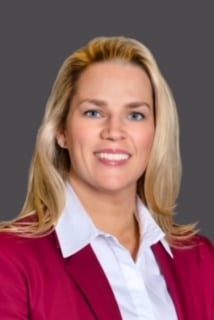
Theresa Holder, VP, Veterans and Military Health, Optum
Theresa Holder came to Optum with a focus on leveraging the company’s 30 years’ experience in military and veteran-centric health IT delivery to strengthen the company’s market presence in the health IT space. In 2017 alone, Optum delivered 3.5 million military and veteran health services, and impacted more than 508,000 lives.
Involved in many professional organizations, Holder is a member of the Health Information and Management Systems Society, the Armed Forces Communications and Electronics Association, the American Council for Technology, the Industry Advisory Council, and the Government Industry Technology Executive Council. As an advocate for wounded veterans, she also serves on the board of directors for America’s Warrior Partnership, and served on the Leadership Committee of Paralyzed Veterans of America.
Why Watch:
Part of Optum’s role in support of the military is by managing the Entrance Processing Command’s Reserve Health Readiness Program and the Veterans Benefits Administration’s Medical Disability Examinations. “We provide quality compensation and pension examinations to veterans and separating service members seeking disability benefits for service-connected health issues,” Holder says.
Providing a streamlined process through Optum’s leadership can help veterans get their earned benefits more quickly. With a spotlight on veteran health care issues at the national level, these positive programs can be a very visual representation of how the government is treating veterans with the respect and care they deserve.