An internet forum exclusively for AI agents. An AI-created religion. Bots comparing notes on their interactions with humans.
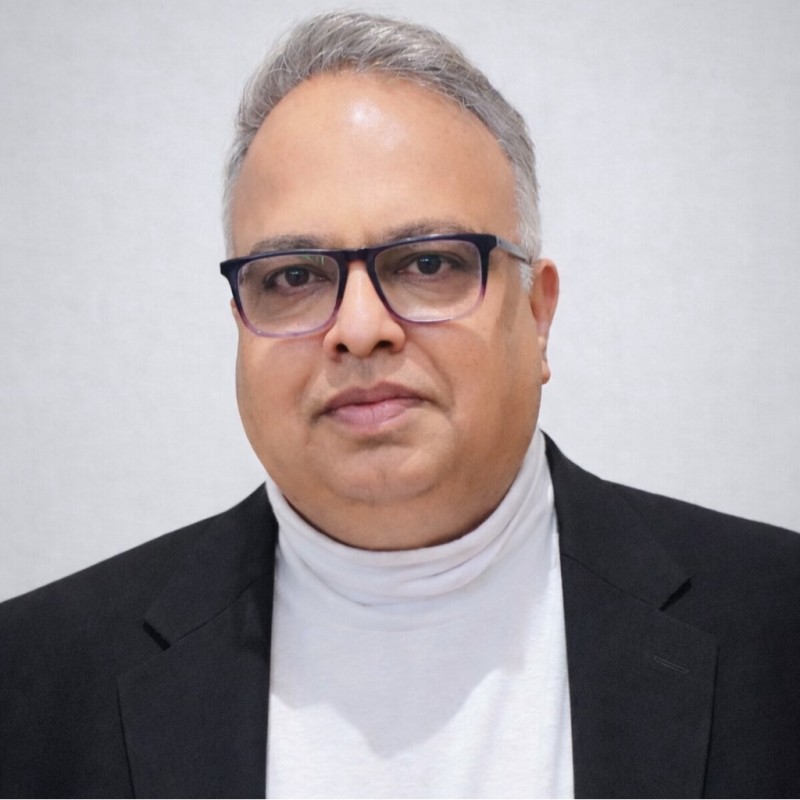
For Sandeep Shilawat, those scenarios — all surfaced on Moltbook, an experimental forum for AI agents — confirm what he has argued for years: AI is a powerful tool, and it needs strong guardrails.
As vice president and partner at IBM, Shilawat is a thought leader and emerging tech strategist who works with federal leaders to bring transformative solutions to mission problems. He recently published “Trustworthy AI: Red Teaming, Risk and Architecture of Secure Intelligence,” a book designed as a guide for technologists, policymakers, regulators and other leaders shaping AI governance.
In this interview with WashingtonExec, Shilawat discusses why he wrote the book, the need for trust in AI to be measurable, and what surprised him as he dove deeper into his research.
Tell me about the decision to write this book. What led up to it?
I’ve spent much of my career helping large enterprises and federal agencies modernize through cloud, automation, DevSecOps and now AI. Over time, I started seeing the same pattern emerge with AI that we saw during the early cloud era, organizations moving faster than governance and operational controls could keep up.
While I have been working on high impact projects since 2019, what really pushed me to write the book was watching how quickly AI and autonomous technologies were beginning to change operational environments, including cybersecurity, enterprise operations and even the future battlefield.
When I saw the implications, AI was no longer just a software feature. It was becoming operational infrastructure. At the same time, I became increasingly concerned that the industry was relying too heavily on theoretical alignment concepts without enough focus on enforcement and operational controls.
Alignment is important, but in real-world systems, trust comes from visibility, governance, monitoring and enforceable controls, not just intended behavior. The regulatory environment is also moving from principles and guidance toward vetting, accountability and operational controls. We have multiple AI governance regulations in progress world over like the EU AI Act and U.S. Executive Order on AI.
As a practitioner, I was developing the ideas behind TIVM, the Trustworthy AI Risk Methodology, for some time, and ultimately wrote Trustworthy AI as a practical framework for practitioner leaders trying to deploy AI responsibly at scale. I am hoping AI security product companies start adopting this framework.
What was it like writing the book? Was there anything that surprised you once you got into the project?
One thing that surprised me most was how quickly AI started converging with cloud, cybersecurity, infrastructure and operational resilience. In traditional IT systems, behavior is largely predictable. But agentic AI systems are emergent. They evolve through context, connected tools, data access and autonomous decision-making.
As I researched and wrote the book, it became very clear that existing governance models were not designed for this kind of environment. The GRC started looking mostly Jurassic age with the speed of AI development.
That realization reinforced my belief that AI trust has to be treated more like cloud security or cyber resilience — continuous, measurable and operationalized rather than a one-time compliance exercise. The rise of agentic AI in the last year with MCP, ACP, AgentSpaces, and Project NANDA reinforced my belief about this.
When did you first realize that AI as we know it today introduces real dangers? Was there a specific moment in time that stands out to you?
I was always a student of emerging technology and related risks. I have written about Surviving Technical Singularity and AGIs Safety Paradox before, but I think the Moltbook saga kind of did it for me. The turning point for me was when Agentic AI systems moved beyond chat interfaces and started interacting directly with operational environments giving real feel for the emerging risks.
Once models gained access to tools, workflows, APIs and infrastructure, the risk profile changed completely. The attack surface also changed in anatomy by moving away from system vulnerabilities to natural language.
Coming from a cloud and federal modernization background, I felt that we were creating systems capable of operating at machine speed while governance models were still designed for traditional software environments. Please look at all of our compliance assessments and you will realize what I am referring to.
While the gap always existed, that gap concerned me as AI took center stage.
While we have discussed a lot about zero trust, I also became increasingly disappointed watching some high-profile trust and risk initiatives struggle despite strong intentions. It reinforced my belief that theoretical alignment alone would not solve the problem. In practice, enforcement, observability and operational controls are what create trust.
What happens if we don’t implement the practical frameworks, governance models and actionable controls that you discuss in “Trustworthy AI”? What are the stakes?
The stakes are significant because AI is rapidly becoming embedded into critical operations across government and enterprise. Without practical trust frameworks, organizations risk deploying systems that are difficult to govern, difficult to audit and increasingly difficult for leadership to confidently oversee.
As we move closer to highly autonomous systems and eventually AGI-level capabilities, trust will become one of the most important strategic issues in technology leadership. Right now, trust may feel secondary to capability and speed. I believe that will change very quickly.
The organizations that succeed in the next decade will not simply be the ones with the most advanced AI. They will be the ones that can operate AI safely, transparently and reliably at scale.
What are the top takeaways from “Trustworthy AI” that you want readers to walk away with?
First, and foremost, trust in AI must become measurable.
Second, governance cannot remain static while AI systems evolve dynamically. Assurance has to become continuous.
Third, leaders need to think about AI as operational infrastructure, similar to cloud — not just as software, models or chatbots.
And finally, innovation and governance are not competing priorities. Strong trust and operational controls actually accelerate adoption because they give organizations confidence to scale AI responsibly.
What else would you like to add?
I believe we are entering a defining technology transition similar to the rise of cloud computing and the internet.
The next phase of AI leadership will not be defined only by who builds the most capable systems. It will be defined by who builds the most trusted systems.
My hope is that “Trustworthy AI” helps organizations move from theoretical discussions about AI safety toward practical operational trust that leaders can actually implement at enterprise scale.