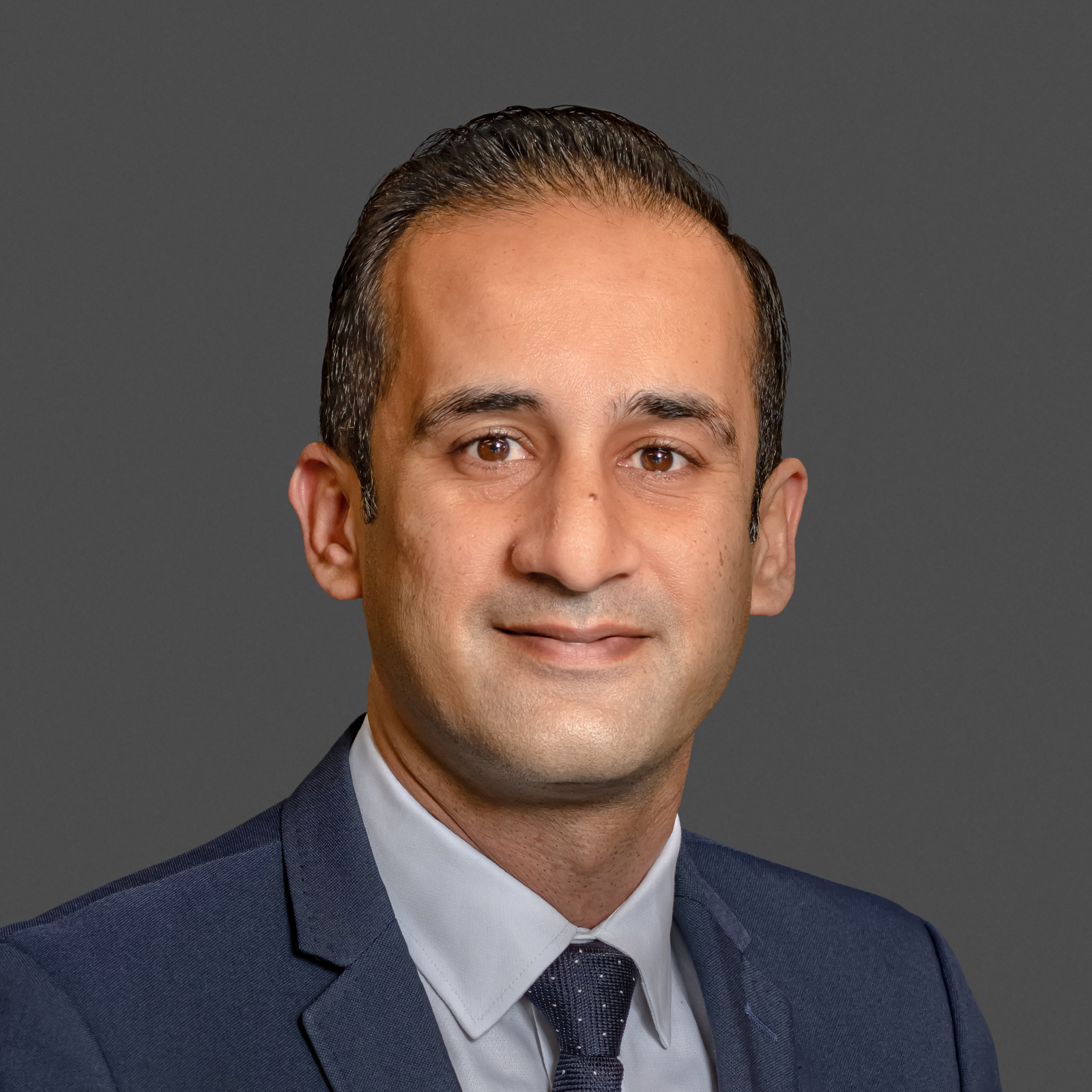
Masood Ahmed’s career has spanned continents, industries and leadership roles, all tied together by a passion for applying technology to solve complex, real-world challenges at scale.
From building telecom infrastructure across Asia and the Middle East to leading multibillion-dollar programs in Australia, and now overseeing an over $200 million federal portfolio at Leidos, Ahmed has steadily moved closer to the intersection of “technology, mission impact and leadership.”
Today, as vice president of government solutions within the company’s health and services sector, he brings both global perspective and technical depth to some of the government’s most pressing challenges, from modernizing legacy systems to unlocking the power of data in public health.
In this Q&A, Ahmed reflects on the career decisions that shaped his leadership style, the personal connection that fuels his work, and why the most meaningful growth often comes from focusing less on chasing opportunity and more on delivering measurable outcomes.
Can you provide a brief overview of your professional background and career progression?
I began my career at Alan Dick (Asia & Middle East) delivering large-scale telecom infrastructure, then advanced through Alcatel-Lucent and Telstra (Australia) into senior engineering and P&L leadership roles, driving multi-billion-dollar programs and rapid business growth. I joined Leidos (Australia) as Chief Engineer, leading major defense programs and improving operational efficiency, before transitioning to the U.S., where I progressed through Chief Architect, CTO and VP roles in health and civil space.
Today, as Vice President – Government Solutions at Leidos (USA), I lead a $200M+ portfolio and 600+ professionals supporting federal and civilian agencies. This progression—from deep technical execution to enterprise-scale leadership and growth strategy—ultimately positioned me to drive mission-focused, data-driven solutions that improve health and human services outcomes at scale.
Why was this the path you chose, and how influential was it to your career?
I chose this path to stay at the intersection of technology, mission impact, and leadership—where I could apply engineering expertise to solve complex, real-world challenges at scale. Each step, from hands-on implementation to executive leadership across Asia and the Middle East, Australia, and the U.S., expanded my ability to connect technical innovation with business and mission outcomes.
That progression has been highly influential, enabling me to lead large, mission-driven portfolios that deliver measurable impact across public health and human services.
Do you have a personal connection to the current mission you support?
Yes — my connection to this mission is both professional and deeply personal. Having worked across multiple regions and systems, I’ve seen firsthand how access, efficiency, and data-driven decision-making can directly impact people’s health and well-being. That perspective drives my commitment to advancing solutions that improve outcomes and strengthen the systems communities rely on.
What are your current top priorities and responsibilities? How do these relate to your company’s overall mission/growth strategy?
My top priorities are delivering mission excellence across a complex health and civil services portfolio, driving smarter, data-informed decisions, and solving some of the toughest challenges facing federal and civilian agencies.
I’m responsible for ensuring strong program execution, advancing innovative solutions, growing the business, and leading a high-performing workforce aligned to customer needs. These priorities directly support our company’s growth strategy by combining technology, analytics, and mission expertise to deliver measurable outcomes, expand our impact, and position us as a trusted partner to our customers.
Where do you and your team see growth opportunities in your current field or portfolio you support, or what do you anticipate to be your customers’ top pain points?
We see growth in scaling mission software, advanced analytics, and scientific research to help agencies turn data into actionable outcomes. Customers’ biggest pain points include legacy systems, fragmented data, cost pressures, and the need for greater accountability.
How are you and your team planning to address/prepare for these opportunities?
We are addressing these opportunities by advancing integrated, end-to-end capabilities across mission software, data science, and scientific research to deliver scalable, mission-driven solutions. Our team is investing in AI/ML, interoperable data platforms, and modern engineering practices to accelerate insights, improve efficiency, and strengthen decision-making.
At the same time, we are enhancing evaluation, performance measurement, and customer collaboration to ensure measurable outcomes and sustained impact.
How important is mentorship and networking in GovCon? Were they influential to your career?
Mentorship and networking are critical in GovCon, where success depends on trust, relationships, and understanding complex mission environments. Mentors have helped shape my leadership approach and decision-making, while strong networks have enabled collaboration, growth opportunities, and mission success. Both have been highly influential in my career progression and continue to play a key role in developing high-performing teams and delivering impact.
What is something most people don’t know about you personally?
Most people don’t know that I’ve lived and worked across multiple countries, and those experiences have deeply shaped how I see leadership and teamwork. Adapting to different cultures and environments taught me resilience, empathy, and the value of diverse perspectives.
Outside of work, I enjoy spending time with family and finding ways to stay grounded and balanced.