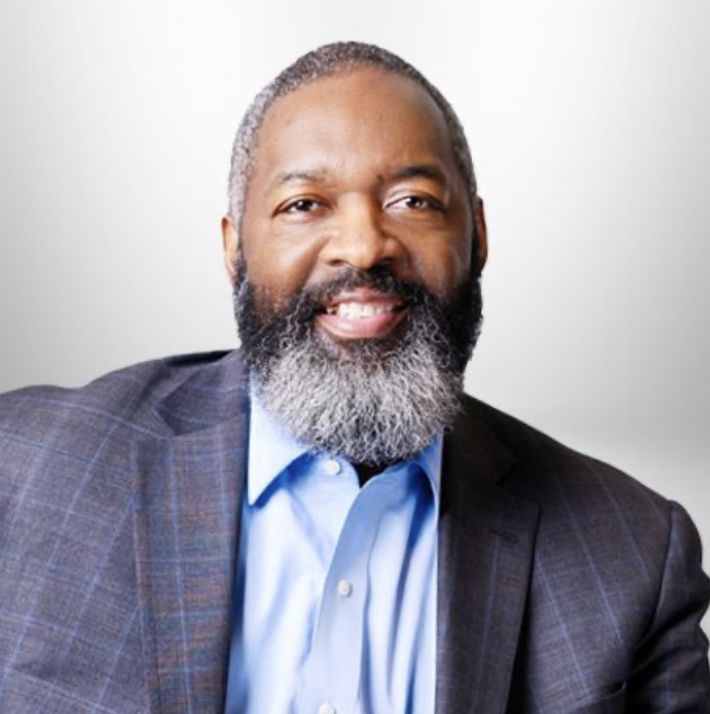
Kevin Bearden spent over two decades at the intersection of mission and large-scale change, first as a commissioned officer in the Army Signal Corps, then across senior roles at Booz Allen Hamilton, General Dynamics IT and SOSI before becoming president and CEO of The Providencia Group. Each stop sharpened the same instinct: that sustainable success in government contracting comes from knowing where you can add real value, not from chasing every opportunity.
Today, he leads ICF’s Transformation, Security, and Social Services Division, a portfolio spanning workforce modernization, enterprise security and social programs that touch people at some of their most vulnerable moments.
In this Q&A, he talks about where the public sector is headed, what his late mentor taught him about reputation, and why the shift from reacting to shaping is the only growth strategy that holds up.
Can you provide a brief overview of your professional background and career progression?
I’ve spent more than two decades leading organizations operating at the intersection of mission, technology, and large-scale change. I began my career as a commissioned officer in the U.S. Army Signal Corps, where leadership under pressure and clarity of purpose were non-negotiable. That experience shaped how I’ve approached every role since.
In the private sector, I’ve had the opportunity to lead and grow complex federal portfolios across defense, civilian, and social services domains, including senior roles at Booz Allen Hamilton, General Dynamics IT, SOS International (SOSI), and as President and CEO of The Providencia Group. Across each chapter, the common thread has been helping organizations adapt—whether to new missions, new technologies, or new operating realities.
Today, I serve as Senior Vice President and Division Leader for ICF’s Transformation, Security, and Social Services (TS3) Division. TS3 brings together expertise in social programs, workforce transformation, and enterprise security. What drew me to ICF was the opportunity to combine scale with purpose – leading national level work while staying deeply connected to outcomes that matter.
Why was this the path you chose, and how influential was it to your career?
I’ve always been motivated by environments requiring thoughtful leadership through change. Government missions don’t stand still, they evolve with administrations, budgets, and public expectations. I chose this path because it demands more than technical responses; it requires judgment, adaptability, and trust.
That experience has shaped my perspective on growth. Sustainable success doesn’t come from chasing every opportunity, but from being intentional – understanding where you can add real value, engaging clients early, and aligning teams around shared outcomes. That philosophy directly informs how I approach growth and leadership today.
Do you have a personal connection to the current mission you support? If so, please explain.
Very much so. My military background and years supporting humanitarian, social services, and national security missions have given me a deep appreciation for the responsibility that comes with public sector work. Government programs touch people’s lives in profound ways—often at moments of vulnerability or transition.
At ICF, the work we do through TS3 helps strengthen families, improve workforce readiness, protect critical systems, and support communities navigating change. Leading that work isn’t abstract for me – it’s personal, and it’s why mission integrity remains central to how I think about leadership and growth.
What are your current top priorities and responsibilities? How do these relate to your company’s overall mission/growth strategy?
My focus today is ensuring that business growth and project delivery reinforce each other. As we look ahead, we’re deliberately aligning around a few core priorities: deepening engagement with priority agencies, expanding organically within existing client relationships, and improving how we identify and shape opportunities earlier in the lifecycle.
Just as important is how we grow. We’re investing in leadership behaviors, operational efficiency, and technology-enabled innovation so that growth is disciplined and scalable – not reactive. That approach reflects ICF’s broader commitment to helping clients navigate complexity while ensuring we’re building a resilient, future-ready business.
Where do you and your team see growth opportunities in your current field or portfolio you support, or what do you anticipate to be your customers’ top pain points?
Across the public sector, clients are being asked to do more with less while navigating real uncertainty. Workforce constraints, cybersecurity risks, program consolidation, and increasing expectations for measurable outcomes are common challenges.
Opportunity lies in integration. Agencies are looking for partners who understand that people, process, and technology must move together, whether modernizing a workforce, improving service delivery, or protecting critical infrastructure. Organizations that can bring those elements together in a practical, mission aligned way will be best positioned to support the next phase of public sector transformation.
How are you and your team planning to address/prepare for these opportunities?
Preparation starts with mindset. We’re encouraging teams to deepen relationships with clients, listen closely, ask better questions, and share insights that help shape solutions before requirements are finalized. That shift from reacting to shaping is foundational to how we think about growth.
At the same time, we’re investing in capabilities that support that approach, from AI enabled workforce and training solutions to operational improvements that allow teams to work more efficiently. The goal is to create an environment where innovation is practical, we maintain proactive client engagement, and growth is a byproduct of trust and performance.
How important is mentorship & networking in GovCon? Were they influential to your career?
Mentorship has been foundational to my career. One of the most influential mentors in my life was Lieutenant General (Ret.) Arthur J. Gregg, who passed away in August 2024 at the age of 96. His guidance left a lasting imprint on how I think about leadership, reputation, and accountability.
General Gregg consistently emphasized the importance of solid performance. He always said: “people can say whatever they want about you, but one thing they cannot deny is solid performance.” His advice was simple and powerful: build your reputation around delivering results, because performance endures long after opinions fade.
That lesson has resonated with me throughout my career, both in uniform and in the private sector. In GovCon, an industry built on trust, credibility, and long-term relationships, mentorship and networks matter greatly, but they are ultimately sustained by trust, and trust is earned through consistent execution. Today, I try to pass that same mindset on to others: focus on delivering real outcomes, supporting your teams, and letting performance speak for itself.
What is something most people don’t know about you personally?
I have an identical twin brother – we’re seven minutes apart – and growing up “side by side” gave me an early appreciation for perspective and individuality, even when two people start from the same place.
In 2015, I had the opportunity to visit refugee camps in northern Ethiopia (Tigray Region) – along the Eritrean border and Nairobi, Kenya. Seeing those conditions firsthand reinforced my commitment to Human and Social Services work, and leading ICF’s TS3 Division has been especially fulfilling because of that connection.