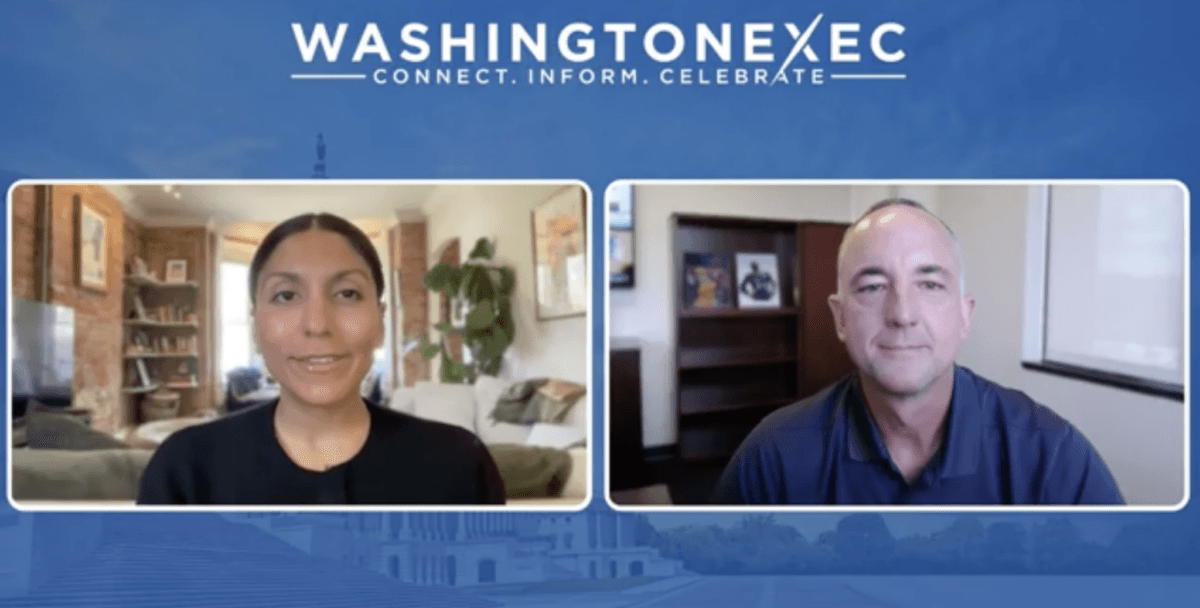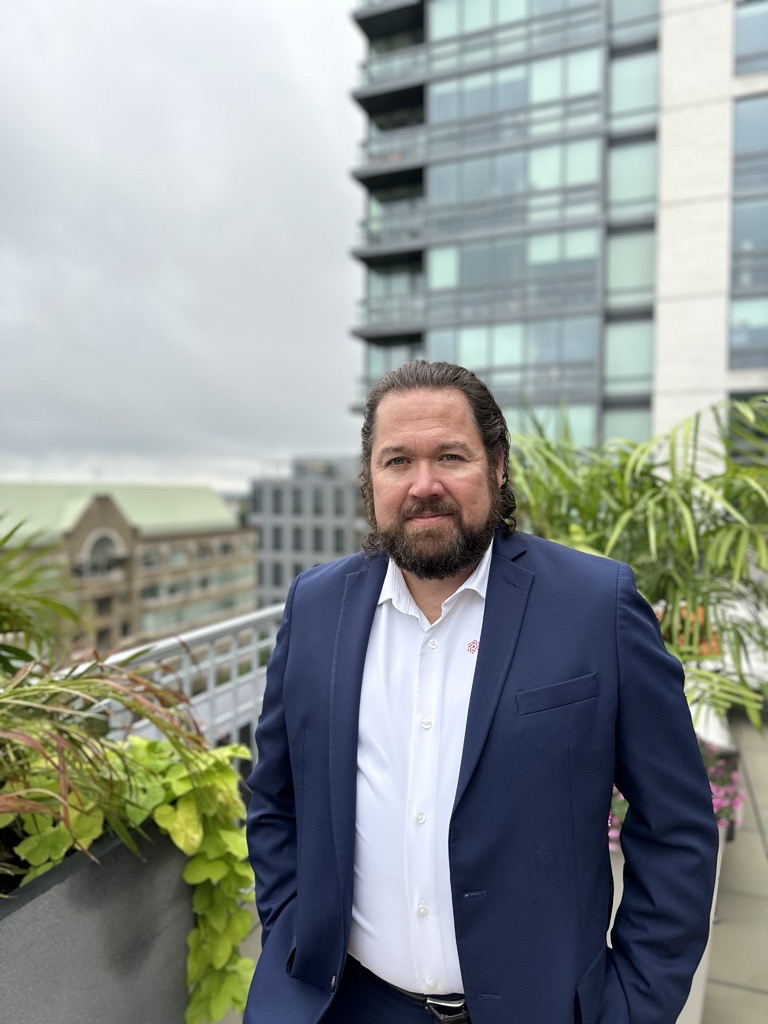
For Dr. Curtis Arnold, success is less about delivering projects and more about developing the next generation of leaders. Whether he’s grilling burgers for a crowd of students or mentoring interns at work, Arnold believes in applying both technical and people skills in ways that directly impact others for better.
Arnold, vice president and chief scientist at Core4ce, is a finalist for WashingtonExec’s Chief Officer Awards in the Private & Public Company Cybersecurity Executive of the Year category. The event takes place live June 2.
In this spotlight, Arnold discusses how his background as a non-commissioned officer shaped his perspective on leadership and success, the importance of making cyber risk more understandable, and where his efforts are focused in the coming year.
What key achievements did you have in 2025/2026?
The achievement I am most proud of during 2025–2026 is the investment I made in developing people, particularly through mentoring and leading internship programs in partnership with academic institutions such as the University of Hawaii. As a former non-commissioned officer, I place a high value on professional development, and I strongly believe that the most effective leaders are ultimately defined by the people they develop, not just the projects they deliver. Helping early-career professionals translate academic knowledge into mission-relevant thinking, confidence and judgment has been especially meaningful to me.
Beyond mentorship, my work over the past year focused on advancing mission-aligned innovation across the Department of War and with our mission partners. In various roles, I was able to contribute directly to federal initiatives spanning cybersecurity, artificial intelligence and quantum security, ensuring that emerging technologies were both strategically aligned and operationally grounded. A key aspect of that work was bridging research and operational communities so that innovation was not only technically sound, but also ready when mission partners needed it.
As a result, several efforts were planned or developed ahead of demand, rather than in response to crisis or mandate. That outcome reflects the value of working closely with innovative partners across the public, private and academic sectors, and of focusing on anticipation rather than reaction. Collectively, these efforts helped strengthen mission readiness while also building the next generation of talent needed to sustain that progress.
What are your primary focus areas going forward, and why are those so important to the mission?
Going forward, my primary focus is on making cyber risk more understandable, measurable and usable by decision-makers. That means continuing to shift cybersecurity away from purely technical reporting and toward decision support that leaders can act on with confidence.
Specifically, I’m focused on three areas. First, improving how we translate cyber conditions into mission impact, so leaders clearly understand what is at stake and why it matters. Second, increasing transparency around confidence and data quality, because decisions are only as good as the information behind them. And third, scaling these approaches responsibly, so they work consistently across organizations without relying on classified data or individual heroics.
These focus areas are critical to the mission because modern operations move faster than traditional certification, reporting or compliance cycles. Leaders must make decisions under uncertainty every day. Cybersecurity adds the most value when it helps them understand risk clearly, compare options, and move at speed rather than slowing decisions down or obscuring them with complexity.
What is your best career advice for those who want to follow in your footsteps?
My best career advice is to learn how to translate technical expertise into outcomes that matter to leaders. Deep technical skills are important, but they are not enough on their own. The people who have the greatest impact are those who can connect technology to mission, business or operational decisions. This comes down to soft skills that everyone in this field should invest in just as much as technical skills.
I would also encourage people to become comfortable with uncertainty and accountability. Cybersecurity is not about eliminating risk, it’s about helping leaders understand it well enough to act. That requires judgment, communication and trust, not just tools or data. This also comes down to dealing with change on a consistent basis. There are parts of this field that encounter change and uncertainty a lot more than others. Not everyone can handle, or thrive, in those types of environments, which is OK. It’s important to know that about yourself and ensure that you align to positions that prepare you for success and/or professional development.
Finally, invest in learning how the organization makes decisions, how risk is accepted, how priorities are set, and how trade-offs are made. When you understand that context, your technical work becomes far more relevant and influential. The goal isn’t to be the smartest person in the room; it’s to be the person who helps the organization move forward with clarity and confidence. This relates to the soft skills discussion. Technical journals and articles are important, but just as important are business and organizational articles from places like Harvard Business School. Focus on impact, learn to communicate uncertainty, and always tie your work back to decisions, not just data.
What is something about you that most people do not know?
My main hobby centers around smoking and grilling. I have five grills/smokers at my house, and their use may have been a factor when I chose my new home. It is a great hobby for entertaining, which is why I host most school parties and even birthday parties for my friends’ kids. It is great to be able to gather people for a nice relaxing time.