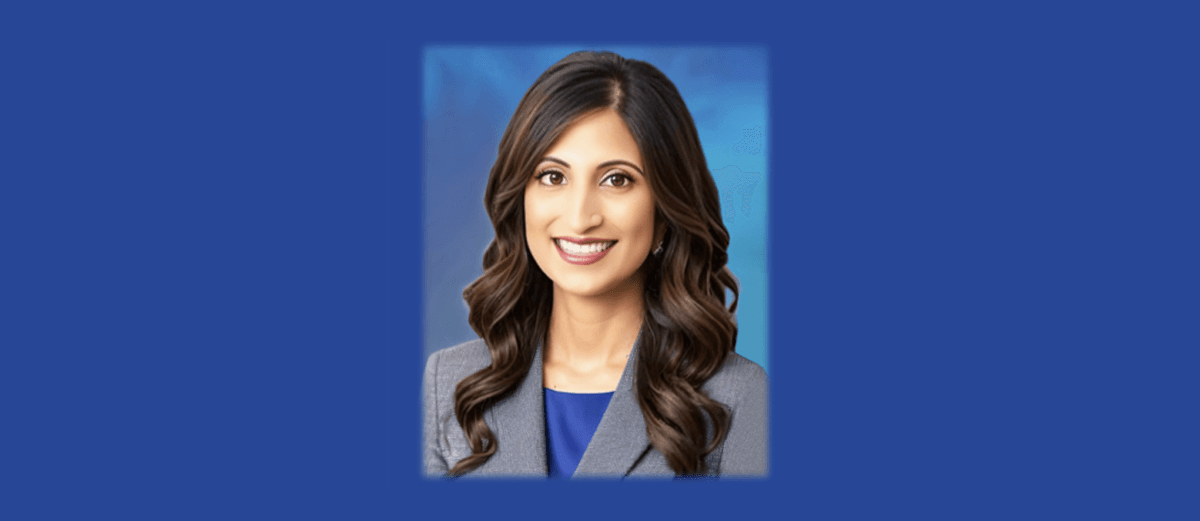
Cedric George has spent decades in environments where a bad decision — or a slow one — can cost lives. As a retired major general, he knows what it looks like when maintenance crews are working blind in confined spaces, cut off from the information they need, relying on manual processes that weren’t built for the conditions they’re in.
Now, as executive vice president for strategy and growth at MetroStar, he’s doing something about it. George has been expanding IRIS — the Integrated Respirator Information System— across tanker fleets including the KC-135 and KC-46, giving crews real-time connectivity and support in some of the most hazardous maintenance environments in the Air Force.
George is a finalist for WashingtonExec’s Chief Officer Awards in the Private & Public Company DOD Executive of the Year category. The event takes place live June 2.
In this spotlight, he discusses what it took to scale IRIS beyond a single base, what that work might mean for commercial aviation and why the leaders who make the biggest impact are the ones focused on the problem in front of them, not the technology trend of the moment.
What key achievements did you have in 2025/2026?
In 2025 and into 2026, one of my main focuses has been expanding the use of the Integrated Respirator Information System (IRIS) beyond a single base to support multiple tanker fleets, including the KC-135 and KC-46. The goal has been to rethink how maintenance gets done in some of the most difficult environments, especially confined spaces where visibility is limited and safety risks are higher.
IRIS helps crews stay connected and supported in real time, without relying on the usual manual processes that can slow things down or increase risk. What’s been most rewarding is seeing how small changes in how people access information and communicate can make a meaningful difference, whether that’s reducing time spent in hazardous conditions or helping teams make quicker, more informed decisions.
For me, this work has been about more than just rolling out a new tool. It’s been about finding practical ways to make complex work safer, more efficient and more sustainable over time.
What are your primary focus areas going forward, and why are those so important to the mission?
Going forward, my focus is on expanding the use of connected, real-time maintenance capabilities that have already proven effective within parts of the United States Air Force into more complex, multi-service environments, with an eye toward eventual application in commercial aviation.
A key priority is ensuring these solutions can operate effectively across different teams, platforms, and mission sets without introducing additional friction. While initial deployments demonstrate value in controlled settings, the greater challenge is sustaining that impact as operational complexity and demands increase.
This includes advancing real-time visibility into maintenance activities and improving how information is accessed and used at the point of need. Providing better context in the moment reduces reliance on manual processes and workarounds, enabling more consistent and informed decision-making.
These efforts are important because the mission requires speed, adaptability, and precision under dynamic conditions. Expanding these capabilities across defense and commercial environments also creates opportunities to accelerate learning, share best practices, and continuously improve readiness, safety, and overall operational performance.
What is your best career advice for those who want to follow in your footsteps?
Focus on solving real problems, not chasing trends. Technology evolves quickly, but mission needs are constant. The most impactful leaders are those who can connect innovation to operational outcomes while understanding both the technical possibilities and the realities of execution.
Equally important is building trust. That comes from delivering results, listening to stakeholders, and operating effectively in uncertainty and ambiguity. The ability to translate between technical teams and mission owners is a force multiplier, because that’s where ideas turn into outcomes.