2019: The Year of the Innovative Leader
Start Slideshow
What’s in, what’s out?
In a year that began tumultuously with the longest-ever government shutdown, contractors face new challenges like never before. But even a hurdle as significant as a shutdown can’t slow down these select leaders who continue to innovate, transform and meet mission-critical requirements — all in the name of making the federal government more efficient, effective and secure.
For the fourth year in a row, WashingtonExec has assembled its list of executives changing the status quo in uncertain times. Who are the trendsetters finding opportunities and maintaining their relevance in a crowded marketplace?
Check out our slideshow to learn why these 25 leaders are those to watch in 2019.

Greg Baroni, chairman and CEO, Attain
In 2009, Greg Baroni co-founded Attain, a leading management, technology and strategy consulting firm. His earlier experience includes various leadership roles with Unisys Corp., including corporate senior vice president of the company and president of its Federal Systems and Global Public Sector unit, as well as similar leadership roles at KPMG. He is a board member and executive committee member of the Northern Virginia Technology Council and Professional Services Council,and board chair of The Women’s Center, among many other industry and philanthropic leadership roles.
Why Watch:
“It’s really more about Team Attain than myself,” Baroni said.
Attain leaders emphasize talent retention and employee engagement — two issues Baroni said have become even more meaningful in an environment of government shutdowns, budget concerns and the continued march of mergers and acquisitions.
Look for Attain to leverage the M&A market to its advantage in 2019 as well as continue its focus on “the human capital dimension” of the business as newly hired Chief People Officer Sara Bridwell leads efforts focused on talent acquisition, management and engagement, he said.
Last year, Attain won Contractor of the Year in the $75 million-$300 million category at the Greater Washington Government Contracting Awards. This year, Baroni expects the biggest challenge in government contracting to be leading change.
“Innovations that fuel our clients’ missions will continue to be another major goal for us,” he said. “We guide clients on their digital transformation journeys, powered by innovative approaches and tools that drive extreme automation. So, staying ahead of the technology curve is vital, but innovation extends beyond technology. We are also looking to create a disruptive paradigm shift that results in higher-value outcomes for our clients and the firm, leading to transformation of the consultancy industry. Watch for more on this topic over the coming year!”

Mac Curtis, president and CEO, Perspecta
It’s no surprise that Perspecta’s most significant accomplishment in 2018 was its actual launch and going public June 1. Neither was an easy feat: they were the culmination of months of diligence and hard work, with a focus on building a differentiated, innovative business that supports and facilitates the missions of government customers, said Mac Curtis, Perspecta president and CEO.
“And I have to add that ringing the bell on the New York Stock Exchange was pretty amazing, too!” he added.
Launching a new company created many challenges combined with fantastic opportunities, he said. For the first half of 2018, there were many long days, difficult decisions to make and “quite a few sleepless nights in preparing to bring Perspecta to life,” as Curtis puts it.
“As an organization, we were working 24/7 for months to make it happen, and I think there were a lot of leaders at the company who slept a few extra hours on Saturday, June 2 after the launch!” he said.
In the end, Curtis said they pulled off a flawless launch with an incredible sense of accomplishment.
“I’m honored to lead such a dedicated team of professionals,” he said. “I’m also proud of how well we managed the business through our first few quarters as a public company.”
One of the most exciting things about launching the new company was bringing together the best technology, know-how and innovation from across the legacy organizations that make up Perspecta, Curtis said.
“Our combined and integrated offering portfolio is incredible, and we are able to deliver robust solutions to our customers that are tough to match,” he added. “We look forward to further enhancing our capabilities in areas such as cyber, analytics and digital transformation to help our customers tackle their most difficult, evolving challenges.”
Why Watch:
In 2019, Perspecta will continue to build its cultural foundation. Company values are respect, accountability, integrity, success and empowerment, and these values drive every decision Perspecta makes, Curtis said.
“This is going to be such an exciting year for us — I’m already seeing an incredible amount of collaboration across the business and a real sense of teamwork building,” he said. “I’m also seeing how the Perspecta culture translates into winning and delivering exceptional value to our customers.”
Curtis said the Perspecta is well on its way to being an exceptional, innovative company that will cultivate talent and exceed customer expectations. Over the next year, the successful development of proprietary technologies from Perspecta Labs will be leveraged across the company’s portfolio, incorporating essential cyber tools on every new business pursuit and infiltrating existing work with additional cyber defense.
“By aligning Perspecta’s culture and offerings with government priorities, we will be well positioned as a leader in government IT and mission services,” Curtis said.

Tina Dolph, president and CEO, Siemens Government Technologies, Inc.
Appointed president and CEO in October 2018, Tina Dolph leads Siemens Government Technologies, Inc., Siemens AG’s independent but affiliated U.S. entity structured to solve government agency challenges in energy, infrastructure, automation and lifecycle support.
“My vision for SGT is to enable Siemens to become the U.S. government’s partner of choice to solve critical energy, infrastructure, automation and lifecycle support challenges,” Dolph said.
Siemens’ commitment to the U.S. will be a key driver for continued growth in its government business, specifically through R&D investment and over $10 billion in software acquisitions.
“One of the value propositions we offer moving forward is to help our government customers with their digitalization strategies, given much of the aging equipment and infrastructure in the U.S. was designed in an analog era, and require a ‘bridge’ to today’s advent of big data and the internet of things,” Dolph said.
Why Watch:
To focus on growth in the federal market, Dolph is leveraging Siemens’ Vision 2020+ framework, a strategy unveiled in August that focuses on “fundamentally new, entrepreneurial approaches” to innovate and meet customers’ needs.
To achieve her vision for SGT, Dolph will draw upon more than two decades of experience in government contracting. Prior to SGT, she was chief strategy officer of CRDF Global. Among other leadership positions, she held executive roles at Lockheed Martin, PAE and ASRC Federal.
“I’m very grateful to join a team that has been doing some incredibly important work for our nation,” Dolph said. “Infrastructure improvement and energy resiliency are key mission needs for our customers. From energy savings work and smart infrastructure to software solutions for product lifecycle management and integrated electric storage, propulsion and power generation technologies — Siemens is uniquely positioned to partner with our customers to develop and provide world-class solutions to those needs.”

Sid Fuchs, president and CEO, MacAulay-Brown, Inc.
In 2018, Sid Fuchs and his leadership team enabled MacAulay-Brown, Inc., known as MacB, to realize a highly successful exit when MacB was acquired by Veritas Capital and merged with Alion Science and Technology. CEO of MacB since 2011 and under very challenging market conditions, Fuchs led the debt-free transformation of MacB from a once predominantly U.S. Air Force SETA contractor to a double-digit growth NextGen engineering solutions, technology, and services company primarily serving defense, intelligence and special forces customers.
This is the second turnaround and exit within the past eight years, with Fuchs’ first being OAO Technology Solutions, a portfolio company of private equity firm John F. Lehman and Partners, which was acquired by Platinum Equity in 2010. Prior to OAOT, Fuchs was the CEO of TASC and led the company to over $1 billion in revenue in 2006.
Why Watch:
As a growth-focused CEO and team builder with two successful exits under his belt, expect him to not shy away from making it a trifecta. When not building successful companies, Fuchs continues to do public speaking on leadership and networking theories and techniques highlighted in his 2012 book, “Get Off the Bench.”

Tiffanny Gates, president and CEO, Novetta
Tiffanny Gates is president and CEO of advanced analytics company Novetta, owned by private equity firm Carlyle and serving nearly all government agencies related to defense and national security. Her career experience includes stints at Raytheon, Blackbird Technologies Inc., and ManTech International Corp. From 1995 to 2000, she served in the Navy as a cryptologic officer.
Why Watch:
In November, Novetta acquired Berico Technologies in a move to further strengthen its capabilities in cloud engineering and architecture solutions. Gates said the Berico move created “a powerhouse of talent and innovative technologies to support our customers.”
In 2018, Novetta added three new members to its board of directors: Bill Varner, former president of ManTech Mission, Cyber, and Intelligence Solutions group; Joe Logue, former senior partner and executive vice president with Booz Allen Hamilton’s Defense, Intelligence and International group; and most recently, Larry Prior, former president and CEO of CSRA, Inc.
The company is also expanding its partnership with Amazon Web Services. Novetta is one of only four companies to earn both Amazon Web Services Government and Machine Learning Competencies. In the past 12 months, Novetta has released its flagship Novetta Entity Analytics product on the AWS marketplace platform and had a strong presence at tech conference AWS re:Invent 2018.
With ongoing recognition as a top place to work, Novetta focuses both on the candidate pipeline as well as ensuring access to technical training and certifications for current staff.
“I’ve always been passionate about creating an environment which motivates talented people to be innovative,” Gates said. “This has been critical to driving enhancements to our capabilities in machine learning, big data and cloud technologies.”
Gates closed 2018 with 10 percent revenue growth and 14 percent EBITDA growth, and looks forward to continued expansion in 2019 as she leads Novetta advances in applying machine learning and AI to reduce data processing times and increase higher-value insights. Gates also joined the Alliance for Digital Innovation to help shape government IT modernization efforts through advocacy and thought leadership.

Dennis Kelly, president and CEO, Buchanan & Edwards, Inc.
Under Dennis Kelly’s leadership, Buchanan & Edwards has grown both organically and through acquisitions and is expected to continue its forward march in 2019.
“In addition to strong organic growth, the acquisition of R2C has expanded our customer footprint, contract vehicle access and created a more diverse customer base,” Kelly said.
A Navy veteran and professional with more than 25 years of government contracting experience, Kelly is also an adjunct professor at George Mason University, where he teaches in the Executive MBA Program.
Why Watch:
While work in 2018 focused on helping organizations transform through areas such as big data analytics, cloud solutions and cyber intelligence, Buchanan & Edwards is entering 2019 with several new infrastructure supports designed to foster growth. Those include a new accounting platform as well as business development systems.
“Over the last couple of years, we have been working to transition Buchanan & Edwards to operating in the full and open competitive market by delivering forward-focused technology solutions for programs of national importance,” Kelly said. “We are now ready to embark on the next stage of our impressive growth story.”
On the industry front, 2019 could be the biggest year for M&A and consolidation in over a decade, Kelly said, as companies seek to “reposition their portfolios into the fast currents of the federal budget.”
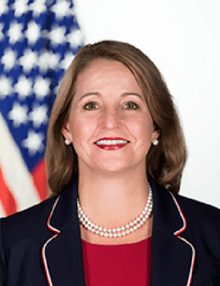
Suzette Kent, U.S. chief information officer, Office of Management and Budget
The fifth federal CIO since the role was created in 2002, Suzette Kent came to her position in early 2018. Prior to being appointed, she held leadership positions at a number of financial and technological services organizations, including EY, JP Morgan, Carreker Corp. and Accenture.
Why Watch:
As the federal government’s top IT leader, Kent keeps busy. She is tasked with leading policy for federal IT modernization, and she manages federal cybersecurity risk, emphasizes the current administration’s efforts at technology modernization throughout the federal government, and focuses on acquiring, training and managing the talent needed to achieve those goals.
The Federal Cyber Reskilling Academy, announced in November, is one such effort at addressing skills gaps in the IT workforce.
“Cybersecurity is a key priority for this administration,” Kent said in a press release at the time. “This is why we need to continue to transform and modernize our efforts to improve our cyber posture. I’m thrilled to see the Federal Cyber Reskilling Academy pilot class take off as a path to train federal employees to join our cyber defenders.”
In addition to efforts such as U.S. Digital Service and the Presidential Innovation Fellows program, Kent has also expressed a desire to create a kind of talent-sharing program in which private sector employees could rotate in and out of short periods of public service.
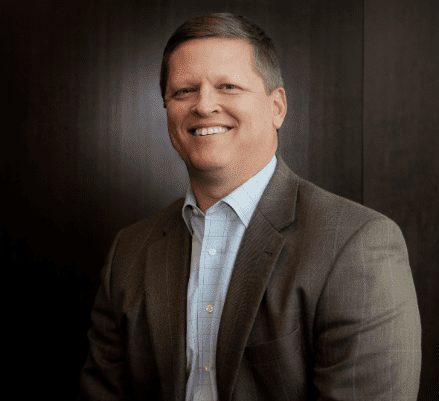
Darren Kraabel, chief technology and innovation officer, Jacobs
It’s been almost a year since Jacobs’ two companies came together and the synergy executives are seeing in operating the business, growing its portfolio and driving innovation “has been truly inspirational,” said Darren Kraabel, chief technology and innovation officer at Jacobs.
This is particularly true in Jacobs’ water infrastructure, environmental and nuclear markets. Jacobs has also earned some transformational new contract wins during 2018 including a $778 million contract to operate and enhance the global IT environment for its Special Forces and the opportunity to lead the iconic California Waterfix project.
“Through these projects, we’re making a tremendous difference in protecting national interests and by improving the lives of our citizens,” Kraabel said.
In a business where success is driven by the talent solving problems for clients, attracting and integrating the right people at the scale needed can be a challenge. The acquisition of CH2M and the award of numerous large contracts required the hiring and integrating of tens of thousands of new people into Jacobs last year.
“That can be a distraction that negatively impacts project performance,” Kraabel said. “However, our staff has done a tremendous job finding the right people and assimilating them quickly into Jacobs without impacting our projects. As a result, we’re well-positioned for success in 2019 and beyond.”
In 2018, the internet of things and cybersecurity technologies really started to pervade every end market Jacobs serves across the globe.
For example, predictive maintenance analytics enabled by low-power sensors, edge computing and 5G connectivity gathered momentum in Jacobs’ Intelligent Asset Management solution portfolio. The company is applying those solutions for large industrial facilities, water infrastructure, nuclear complexes and others, delivering significant ROI for Jacobs clients.
The investments Jacobs has made in cyber over the past few years are enabling it to design digitally-integrated systems with a cyber-first approach.
“In 2019, we’ll see more innovation around those technologies, but I also expect to see advancements in automated or generative design mature to the point where they can realistically be applied to concept design,” Kraabel said. “In the future, AI will likely help us enhance our own knowledge management as well as create new forms of value for our clients.”
Jacobs created the CT&IO role this year to drive innovation into every aspect of its business — to make innovation a pervasive part of its culture alongside safety, integrity, sustainability and inclusion. In the coming year, the company will be investing in innovation differently; enabling even greater global collaboration and consistency to achieve better outcomes for its clients.
“Those investments will be both internal and external, optimizing our business operations and using new approaches and technologies to solve our clients’ most difficult problems,” Kraabel said.
Why Watch:
From a technology perspective, Jacobs is focusing on five areas: cybersecurity, applied geospatial science, automated design, internet of things (5G and edge computing) and predictive analytics/machine learning.
“These aren’t necessarily the cutting-edge technologies that capture the attention of futurists, but in our business, we are finally seeing the maturity of those technologies reach a point where their application at scale can now deliver a return on CAPEX investment,” Kraabel said.
Jacobs is transforming into a digital engineering company, Kraabel said, looking to discover the intelligence in its own data, its clients’ data, and the rapidly expanding global data sphere to deliver better, sustainable solutions for a connected world. The company will still be designing, engineering, building, operating and maintaining capital assets in the industries it serves.
“But we will be doing so in fundamentally different ways, harnessing the power of innovative thinking, emerging technologies, and data analytics to enhance decision-making on what to build, where to build it, and how to build it,” Kraabel said.”Our focus on innovation is clearly at the forefront of this transformation.”
However, there are other critical elements such as Jacobs’ PlanBeyond strategy for sustainability where the company is driving solutions that achieve triple bottom line (economic, environmental and societal) positive outcomes. Along the way, Jacobs employees get the opportunity to make an impact in the communities where they live and work via the projects the company delivers.
“They are making the world safer, more sustainable, more secure, more economically viable, and simply better,” Kraabel said. “That’s incredibly inspiring. I can’t think of a better place to work.”
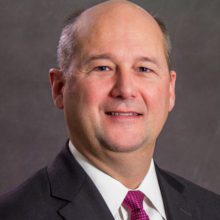
Wayne Lucernoni, group president, information systems & technology, ASRC Federal
After nearly a year in his role, Wayne Lucernoni has seen ASRC Federal expand its capabilities and secure new opportunities.
Last June, one of ASRC Federal’s subsidiaries was awarded a $1.2 billion contract with NASA to provide high-performance computing services.
“In the last 18 months, our team completed the integration of several acquisitions, enhanced the leadership team and won both a premier signals intel program with a classified customer, in addition to the contract with NASA,” Lucernoni said. “Looking at 2019, major goals include the successful transition and execution of a number of large, recent wins while expanding our program portfolio in the intelligence community, Department of Defense, Department of State and several key civilian agencies.”
Lucernoni previously held various senior roles at Harris IT Services.
Why Watch:
ASRC Federal’s investments in high-performance computing, cybersecurity, artificial intelligence/machine learning platforms and its infrastructure positions it well to address technology-related topics important to its customers as they seek to migrate legacy systems, leverage processing and analytics advances, and increase capacities in a budget-constrained environment, Lucernoni said.
“Additionally, the investments we are making in training and technology for our largely technical workforce, along with our continued focus on strengthening our culture, position us to attract and retain people at all levels,” he added.
Andrew “Andy” Maner, CEO, E3/Sentinel
As CEO of the newly merged E3 Federal Solutions and The Sentinel Co., Andy Maner brings 25 years of government, business and national security experience to the table.
During his chairmanship of Sentinel from October 2016 to September 2018, Maner led the national security-focused services and solutions company in both organic and acquisition growth strategies. In 2019, E3/Sentinel will continue to evolve after NewSpring Holdings purchased a controlling interest in Sentinel in September.
“Our current, proven service lines will continue to be augmented by new IT/mission solutions, which both companies were busy building in 2017 and 2018,” Maner said. “During our integration in 2019, we will keep our eye on a 5-year plan that all of us can rally around and be proud of — and one that focuses on keeping and improving our culture and professional development while creating even more opportunities for our colleagues who are supporting new and existing clients every day and all around the nation.”
Why Watch:
With the market demanding mid-sized companies “that can develop solutions and people for the fast-moving ‘next waves’ of missions and requirements,” E3/Sentinel will continue to reexamine its teams and partnerships that foster the ability to succeed and grow, Maner said.
“The combination of E3 and Sentinel backed by the efficient and effective capital of NewSpring provide a formidable team to grow in this market,” he added.
John Mengucci, chief operating officer, CACI International Inc.
In 2018, John Mengucci expanded his role as the COO role for CACI, charged with expanding the growth profile of the company. He has been the driving force behind the company’s market-based strategy and its growth into the products and solutions segments of the markets they serve.
Having led the majority of the company’s over 12 acquisitions over the last five years, the focus is paying off with the company returning and continuing to deliver enhanced revenue and net income growth.
Before joining CACI in February 2012, Mengucci was president of Lockheed Martin’s Information Systems and Global Solutions – Civil Product Line and for six years prior to that assignment, he was president of LM IS&GS – Defense Product Line, where in both positions he led strategy, growth and execution for the businesses.
Why Watch:
A recognized leader, CACI under Mengucci’s direction has developed products and solutions that allow defense and intelligence customers to transform how they approach the convergence of signals intelligence, electronic warfare and cyber with a product called ARES. Mengucci was instrumental in the creation of CACI’s SkyTracker Technology Suite to detect and defeat rogue drones, which was named “Best-in-Class” among Industry Innovators at Washington Technology’s Government Innovation Awards.
“As our customers continue to demand disruptive software definable solutions to address their needs, CACI will continue to invest and grow its differentiated solutions to address these missions. . . .a business focus that rewards both our customers and our shareholders,” Mengucci said.
Christy Monaco, chief ventures officer, Office of Ventures and Innovation, National Geospatial-Intelligence Agency
Since October 2017, Christy Monaco has served as NGA’s chief ventures officer, a role in which she coordinates NGAs innovation initiatives with various stakeholders and partners. Her focus includes innovation and the incubation and implementation of new ventures to sustain NGA competitive advantage. Plainly: She helps brings innovation from the outside world into NGA and also helps promote innovation within the agency.
In addition to her unofficial change agent role, Monaco also spearheads NGAs acquisition innovation efforts, strategy, and manages relationships with the commercial sector.
NGA is far from Monaco’s first federal agency; in fact, her public service dates back to 1990 when she joined the Office of Naval Intelligence in Task Force 168. After that, her subsequent roles include foreign intelligence liaison officer for the commander-in-chief of the U.S. Naval Forces Europe intelligence staff, defense intelligence senior level executive senior financial expert for HUMINT management and deputy chief financial executive for HUMINT.
Why Watch:
Monaco has spent nearly 30 years in the intelligence community, and now she’s helping bring new ways into her agency to leverage innovation to transform how things have previously been done. Her agency is training staff to seek out successful private sector practices — such as agile methodologies and lean startup — and then to bring those to the agency so it can implement what has worked in industry.
“Our nation is confronted with adversaries that are quickly closing the capability gap in the GEOINT mission space,” she said. “To keep NGA at the forefront of GEOINT, we are looking for innovative ideas and solutions that will outpace adversarial capabilities and stay at the forefront of current and future threats. As the rapid growth and advancement in geospatial technologies and solutions accelerates and NGA’s customers’ needs and expectations evolve commensurately, OVI must act as the conduit for integrating innovative and advanced capabilities into the agency. It is our responsibility to ensure the agency has the most modern capabilities and leverages practices that address ease and speed of federal acquisition to meet mission priorities.”

Tony Moraco, CEO, SAIC
SAIC’s most significant achievement in 2018 was announcing the acquisition of Engility in September. In accordance with its long-term strategy, Ingenuity 2025, SAIC focuses on growing organically, as well as through strategic mergers and acquisitions.
“We are excited to broaden customer access and obtain new capabilities to accelerate market penetration in areas like the intelligence community and space domain,” CEO Tony Moraco said.
Other major accomplishments involve the continued evolution of SAIC’s internal matrix operating model, which helped the company win major contract awards. SAIC held onto large contracts including its C5ISR systems, networks, and support equipment work for Space and Naval Warfare Systems Center Atlantic, various space-related activities, and training and exercise support on the Joint Staff Multiple Award Contract.
The company also expanded its work with the Agriculture Department to include IT modernization and grew new customers such as the Commonwealth of Virginia and the PEO STRI Enterprise Training Services contract.
“Our greatest challenge this year was the U.S. Marine Corps’ action on the Assault Amphibious Vehicle Survivability Upgrade contract,” Moraco said. “The USMC shifted their strategy from investing in legacy system upgrades to next-generation modernization, ending our work on upgrading AAV legacy vehicles. From a business and an employee redeployment perspective, we had to navigate the contract loss and find work for many of our people on other contracts.”
Another challenge SAIC works to tackle is competing for talent and continuing to attract cleared personnel to help its customers achieve their mission. Lastly, the company was able to balance resources to focus on the integration planning for Engility while still bidding proposals and executing programs for our customers.
“We have reported strong quarterly financial results and I am proud of the company’s dedication to supporting both,” Moraco said.
The areas of technology innovation to date that will also continue into 2019 include:
Augmented and Virtual Reality: SAIC rapidly developed a low-cost trainer for the Pilot Training Next program, helping the Air Force reduce the time pilots spend in simulators before going into live flight training.
Rapid Innovation: Not a technology per se, but SAIC customers are interested in rapid delivery of innovation. SAIC has a presence in the Innovation Factory in Austin, Texas, to give it access to innovative technology that will enable its customers to achieve results on application modernization projects and to prove out new technologies in short time frames.
Cloud Computing: SAIC has helped many customers migrate to the cloud. The company also built its own next-generation data center, which is at its core a software-defined data center. It provides a flexible infrastructure to support SAIC’s needs into the future as well as serve as a proof point of this technology for SAIC customers.
Why Watch:
In 2019, Moraco said he plans to travel more, along with other leaders, to meet and engage with its current and new employees following the close of the proposed acquisition of Engility.
“We are welcoming about 9,000 more people and many new locations, so we are going to directly engage with the teams to energize the workforce and communicate with them about our combined strength and the opportunities SAIC will have in the market,” he said.
Moraco said SAIC looks forward to the integration of Engility’s core capabilities that include work in the intelligence and space domains. It will be serving new customers and continuing to focus on developing outcome-based solutions and services for them.
“The integration of the two companies will also deliver value to our shareholders,” Moraco said.
SAIC is investing more in technology development and innovative solutions and associated business models to differentiate SAIC in its markets. The company is broadening its portfolios in space, intelligence, IT modernization, mission software, and training, while still maintaining its core business in defense readiness and system engineering.
“We will innovate and problem solve with determination and the highest ethical standards, while having access to even greater mission-critical talent,” Moraco said.

Kelly Olson, chief of staff, Technology Transformation Services, GSA, incoming head of strategy of public sector, Adobe
2018 began with a bang for GSA as Kelly Olson led the Technology Transformation Services’ innovation portfolio through a significant period of growth for governmentwide open innovation, helping agencies build capacity on human-centered design and digital transformation, and building on important emerging citizen technologies efforts
In April, Olson took over as TTS chief of staff to help organize and execute key strategic priorities, partnerships and investments. In August, she was appointed the acting director of TTS, tasked with “leading an incredibly dedicated team of public servants,” whose goal is to transform how government agencies build, buy, use and share technology, she said.
TTS has built a valuable, unique capability to drive more effective use of technology across government to establish a foundation for long-term change that helps agencies better serve the public, she said.
2018 was a year both of challenges and opportunities for TTS. The challenges included organization and leadership changes, hiring limitations and annual budget constraints such as continuing resolutions.
“The combination of those factors made it difficult to resource, grow and scale some of our important work,” Olson said. “The demand for digital transformation and IT modernization across government has never been greater, it can be challenging when you have to navigate through a sea of bureaucratic processes and red tape.”
The silver lining, Olson said, was that the team took a strategic pause to assess, problem solve and prioritize action plans to ensure it focused on the greatest need and opportunities for impact.
“We had to be creative in developing an achievable and sustainable plan to continue recruiting top talent and delivering impactful solutions,” Olson said. “We also stayed focused on ensuring that we maintained an open, inclusive and responsive culture in TTS that reflects the diversity of the public we serve.”
The focus on IT modernization and digital transformation put TTS at the heart of driving replicable, enterprise-level change at customer agencies. TTS launched the IT Modernization Centers of Excellence to accelerate the modernization of IT across government The CoEs focus on cloud adoption, data analytics, customer experience, contact centers and infrastructure optimization.
The TTS Emerging Citizen Technology Office was key in convening agencies, industry and academia to collaborate, learn and explore the application of artificial intelligence, machine learning and robotic process automation to modernize government services, Olson said
“Agencies are realizing that these technologies can accelerate the efficiencies by automating inefficient, lower-value processes, empowering agencies to dedicate their limited resources to more high impact activities,” she said.
Why Watch:
After eight years at GSA, Olson will leave government in mid-January for a private sector role. Reflecting on her time at GSA, Olson said she’s “poured my heart and soul into, accomplished a lot along the way, while working with and learning from diverse, talented and resilient colleagues.”
Starting Jan. 28, Olson will be Adobe’s new head of strategy, public sector. Her focus will be learning how Adobe’s largest commercial customers are transforming the customer experience and translating that into helping government deliver their missions more effectively and efficiently while providing a more integrated digital experience for customers.
“The mission to help the government deliver a digital-first, customer-centric approach will continue to be my passion as I join the talented team at Adobe,” she said. “I truly believe in Adobe’s mission statement, ‘changing the world through digital experiences.’”
Olson said 2019 will be the year of implementation. Rather than an afterthought, IT modernization and customer experience design in government are key aspects of the President’s Management Agenda and now a mandated objective by the 21st Century Integrated Digital Experience Act. All this will help federal agencies key in on user needs, improve the functionality, usability and experience on federal websites and mobile devices. It will also eliminate redundant paper-based forms and workflows and require agencies to the use electronic signatures.
“We have seen many pockets of innovation and success across all levels of government, but there’s still a gap in bringing those efforts together and looking at how the progress being made can be better integrated, scalable and repeatable,” Olson said.
Steve Omick, president and CEO, Riverside Research
Riverside Research’s recent move to Washington, D.C., reflects the high-tech, nonprofit’s commitment to defense and intelligence customers.
And President and CEO Steve Omick said the organization is already seeing positive results.
“In addition to being closer to many of our customers, we’ve made tremendous progress in maturing our Open Innovation Concept, an internally funded long-term commitment to independent research and development in artificial intelligence, optics, electromagnetics, plasma physics and cybersecurity,” he said. “This OIC investment contributes innovation to the entire company, allowing us to go deep into mission-focused research.”
Why Watch:
Over the next 12 to 18 months, Omick will lead Riverside in a push to build on its existing brand and reputation in the D.C. area.
“We expect to become much more involved in the community here in D.C.,” he added. “For example, because we serve the defense and intelligence community, it’s important to us to contribute to the community’s future. In 2019, we’re contributing in several ways: by sponsoring 2019 K-12 STEM Symposium, providing university scholarships, partnering with critical industry organizations like USGIF, and building young professionals’ careers with our vibrant internship program.”
On the technology side, look for Riverside to also expand the OIC to have a broader reach.
“As the labs of the OIC continue to mature, we will increasingly be looking at cross-disciplinary solutions to address the end-to-end challenges that many of our customers are looking for answers to,” Omick said.
“Riverside’s focus on research and development and a culture that provides a rich employee experience offers our customers a novel and compelling value proposition,” he continued.
In 2019, this will continue to differentiate Riverside at a time when many of the organization’s competitors will be forced to constrict benefits, limit independent R&D, and struggle to retain high-quality talent because of downward pressure on costs.

Susan Penfield, chief innovation officer, Booz Allen Hamilton
As Booz Allen Hamilton’s chief innovation officer, Susan Penfield’s charge is to advance the firm on its innovation journey. This year, the firm focuses on building out and maturing a solutions business — a portfolio of repeatable solutions that incorporates leading-edge technologies, creates unique positioning and market differentiation and is accessed through different business models and sales channels to help solve clients’ most complex mission challenges.
Booz Allen successfully launched two solutions and is incubating and maturing multiple others. District Defend is a location-aware secure mobility solution, in partnership with Dell, and Recreation.gov is a one-stop platform for visitors to dream, plan and share their outdoor adventures on federal lands and waters and changes how citizens interact with and access government resources.
“I’m also proud of our achievement institutionalizing a culture of innovation at the firm,” Penfield said. It’s been a 6-year journey, she says, starting with the 2013 creation of the firm’s Strategic Innovation Group.
“Today, we have unlocked in our talent an innovative and entrepreneurial spirit determined to make the world a better place and support our clients’ critical mission challenges,” she added.
Booz Allen has designed and opened innovation workspaces that foster the free-flowing exchange of ideas. It has also cultivated technology partnerships and enhanced its brand and reputation as an innovative technology leader and go-to partner for technical services and transformation in the federal market.
A top challenge Penfield faces in her role is moving the firm to become ever-more technical and diversifying its portfolio with non-labor-based businesses.
The firm has made a strong push to “upskill” its talent with the tools and skills of tomorrow. That takes place in myriad ways — from the innovative FlexEd program where employees can enroll in external trainings and certifications that excite and challenge them, to the Data Science 5k Challenge where business analysts and general management consultants are “leveled-up” to become data scientists, to the Deep Learning Institute partnership with NVIDIA where analytics talent and clients are trained on advanced AI and machine learning techniques.
Booz Allen also hosts hackathons that engage its talent, ecosystem partners and clients in experiential technical learning. The annual Data Science Bowl, the largest public hackathon for social good, is a marquee competition for socially conscience technologists worldwide.
In addition to positioning the firm’s own talent for the work of the future, these programs have the added benefit of helping advance its clients up the maturity curve of technology adoption and helping them access leading-edge technological tools and services in new and different ways.
“Artificial intelligence has been a key growth area for us,” Penfield said. “In addition to upskilling our talent to support AI work of the future, we are making big investments in AI solutions and partnering with companies like NVIDIA to bring the latest AI technologies into the federal market.”
Another major technology area is advanced cyber defense and threat hunting. Many people don’t know that Booz Allen is actually the largest provider of cybersecurity solutions and services in North America. Recently, the firm won $1.6 billion in contracts in support of the Department of Homeland Security on the Continuous Diagnostics and Mitigation program. Through CDM, Booz Allen now protects close to 80 percent of dot-gov sites.
A third major technology area Booz Allen leads in is modern software design — particularly helping the federal government create more responsive platforms that meet the demands of today’s digital citizen. Its modernized Recreation.gov solution, for example, has become the model for how the government incorporates human-centered design, agile development, cognitive/cloud technologies, and secure DevOps to transform user experiences.
“We have a saying at Booz Allen: ‘don’t go at it alone,’” Penfield said. “This means that in addition to building and incubating technologies internally, we co-invest, co-develop and collaborate with external partners — from tech giants like NVIDIA, Dell and Microsoft to niche startups with differentiated technology, to accelerators like SEED SPOT and DCODE here in our own backyard in Washington, D.C.”
Why Watch:
Penfield said she’ll focus even more on these unique partnerships within the innovation ecosystem and telling the stories of how its collaboration has created new ways to move the needle in this industry and advance Booz Allen’s clients’ toughest mission challenges.
Moving forward, Booz Allen’s innovation journey is about realizing the additional option value inherent in its emerging businesses and ideas. In addition to scaling its functional differentiation, the firm is developing and monetizing breakthrough solutions in the areas of digital transformation, AI, advanced cyber, and augmented and virtual reality that will accelerate the firm’s growth and performance and drive higher value for its clients.
“That’s my primary focus in the year to come,” Penfield said.

Richard Y. Pineda, president, CALIBRE
The union between CALIBRE and SPEAR was one of CALIBRE’s major achievements for 2018. Separately, the two organizations provided complementary management consulting and information technology solutions.
“Combined, the two are ‘better together’ and support our federal and commercial clients’ missions through digital transformation,” President Richard Pineda said. “SPEAR’s IT modernization, cybersecurity, and data analytics offerings coupled with CALIBRE’s long-standing client base transcends scaled synergy growth, wherein 1+1 equals 3.”
The company successfully delivered on three tenets of its business: “Sustain, Leverage and Grow.” Winning recompetes, architecting solutions based on lessons learned, and pursuing new opportunities that accomplish client mission and drive enterprise value completes the holy trinity of CALIBRE’s modus operandi.
Why Watch:
“For 2018 and 2019, we will remain committed to developing solutions that improve digital transformation,” Pineda said. “Data gathering, data analytics, visualization, and storage enable our clients to access their data faster and glean actionable, yet secure, insights.”
With the President’s Management Agenda directing agencies to increase spending on Best-In-Class contracts, CALIBRE will seek to shape, pursue and deliver on specific BIC vehicles. In parallel, it’s actively seeking to on-ramp, acquire, and/or win target BIC contracts wherein its potential clients will release desired work.
Unlocking the synergy of the CALIBRE/SPEAR acquisition to transcend the middle market tier will be a key focus area in 2019. The Defense Department, health care and intelligence markets are all key areas for growth, supported by CALIBRE’s investment of resources in technology.

Tim Reardon, CEO, Constellis
In August 2018, Tim Reardon took over as CEO of Constellis, a leading global provider of risk management, humanitarian, social intelligence, training, and operational support services to government and commercial clients throughout the world.
Operating in over 45 countries, Constellis’ 22,000 employees protect critical priorities safely and efficiently around the world. Constellis delivers a broad range of synergistic services, including critical infrastructure, background investigations, social intelligence, training, logistics, life support, UAV systems, global tracking technology, fire protection, medical services, information security and crisis response mitigation.
In Reardon’s first few months, he restructured the company to improve operational efficiency, optimize customer mission focus, and accelerate growth.
Why Watch:
This year, Constellis expects to expand its footprint in key federal markets to deliver critical services to large agencies and other industry customers.
“In 2019, Constellis anticipates significant domestic and international growth with the departments of State, Energy, Homeland Security, Defense, Justice, the intelligence community and many Fortune 500 commercial clients,” Reardon said.
Prior to the Constellis CEO role, Reardon held numerous senior executive positions at Lockheed Martin and Leidos, delivering mission-critical solutions to U.S. and international customers worldwide. He has also served as an officer with the CIA, holding analytic, operational, and leadership positions focused on high-priority national security issues.

Anthony Robbins, vice president – North America public sector, NVIDIA
Last year, NVIDIA helped the Energy Department build the fastest supercomputer in the world — Summit at Oak Ridge National Laboratory. The supercomputer runs on over 27,000 NVIDIA GPUs, which power more than 90 percent of the system’s performance. Summit allows the world’s top scientists to harness AI to drive discovery and to work on daunting challenges like addiction patterns and fusion energy.
“I am continuously amazed by what we’ve seen the government accomplish in the areas of AI and accelerated computing, though there is much more to be done,” said Anthony Robbins, vice president of the North America public sector.
NVIDIA has also taken a leading role in educating the federal government on the vast possibilities of AI. Its leadership testified before a U.S. congressional committee in February and participated in a White House AI Summit in May to advocate for the importance of funding AI research, driving agency AI adoption and opening access to data.
“It has been an honor helping policymakers across the federal government understand this revolutionary technology and how it can improve government,” Robbins said.
NVIDIA also has driven education through the largest AI conference in the D.C. area— NVIDIA’s GPU Technology Conference, or GTC D.C. More than 2,600 registered for the event, which informed federal leaders of AI possibilities and provided data scientists and government technologists access to AI resources.
CPUs have been an important part of the federal government’s processing engines for decades. As a result of Moore’s Law coming to an end, the federal government needs alternatives for tomorrow’s data and information. NVIDIA’s GPUs offer an option better suited to process the government’s rapidly growing and valuable pools of data.
“There’s been tremendous progress in AI and its deployment across enterprises of all kinds,” Robbins said. “As it relates to adoption of AI in the federal government, this is a large-scale effort and transition.” For example, Robbins said that applying AI to government projects will save taxpayer dollars, transform health care, improve citizen services and help keep the nation at the forefront of innovation.
To address some of the challenges AI presents, NVIDIA focuses on education through initiatives like NVIDIA’s Deep Learning Institute, which has already trained more than 120,000 data scientists with practical techniques to harness AI.
AI was a key theme at NVIDIA in 2018 — one that will only expand. Robbins said this theme will also play out across the whole federal government and expects it to accelerate in the years to come.
“To progress on its AI journey, the federal government will need to continue to address at least four things, he said. “Government needs more well-trained data engineers and data scientists, better access to data, improved infrastructure both on-prem and in the cloud, and use cases and proof points reflecting early wins. NVIDIA is helping the government in each of these areas. One of the most important themes for this coming year is helping the government move faster.”
Why Watch:
The government’s AI journey has begun. The adoption of AI into the government enterprise of the future is likely going to be the largest technology transformation ever undertaken. This effort will continue for more than a decade and will require help from the industry, including large federal systems integrators like Lockheed Martin and Booz Allen Hamilton and cloud providers like AWS and Microsoft Azure, as well as commercial companies, startups and universities like Carnegie Mellon.
“In 2019, we plan on working across this ecosystem to help the government with its overall change and transformation effort, enabling innovation at greater speed,” Robbins said.
AI will touch all aspects of government, ultimately reducing costs and improving citizen services. Today, we see AI from the data center to the edge and in use cases for health care, cybersecurity, platform sustainment, and autonomous systems and robotics. In 2019, NVIDIA plans to continue bringing innovation around GPUs, CUDA, software development kits and frameworks to government, combined with training via the DLI — all at scale through its ecosystem in service of one of the largest markets in the world.

Retired Adm. Michael Rogers, former chief, National Security Agency, U.S. Cyber Command
One of the highest-ranking intelligence officials in the U.S. government, retired Adm. Rogers stepped down last spring from dual duty as head of U.S. Cyber Command and the National Security Agency after a 37-year career.
Under his 4-year tenure as chief, he helped elevate Cyber Command to the status of combatant command — one of only 10 such senior-most operational units in the Defense Department and the first in more 25 years to achieve that designation. At NSA, he helped restructure and realign the agency to meet rapidly evolving 21st-century challenges.
“In the past few years, NSA has seen significant challenges and given the deep changes in the world both technologically and in the capabilities of its target sets in the post-9/11 era, NSA executed its largest fundamental organizational changes in nearly 20 years,” Rogers said.
“It is never easy to ask a team to fundamentally change the way they work and are organized particularly when most of the team has only known one approach or structure in their professional lives but they have done and are continuing to do just that and I remain incredibly grateful for their willingness to do so,” he added.
Why Watch:
For decades, Rogers has been at the forefront of many of the government’s most critical missions and has seen firsthand the benefits and challenges of technology. Rogers points to a few key trends: the explosion of data — including acquisition, processing and protection and the ability to generate meaningful and relevant data from it; the importance of accessing networks and understanding them in a fast and efficient manner; and the need to continually optimize and refresh the skills and abilities of the tech-based workforce.
After more than 30 years in government, including in the highest echelons of the intelligence community, what’s next for Rogers? Well, for the first time in decades, he won’t have to be in the office, in uniform, before the sun rises, “nor will I have the joy of working with the men and women who serve this nation as part of the DoD and the U.S. intelligence structure,” he said.
“But on the other hand, I won’t be at work every day at 05:00 and I won’t be shaving every day!” Rogers added.
Professionally, Rogers says he’ll spend 2019 focusing on supporting teams in the private sector whose missions he believes in and that provide value to society.
“There are a lot of opportunities and plenty of challenges but there are amazing teams out there and I have always most enjoyed being a part of strong teams,” he said. “I think I have something to offer and I look forward to the opportunity to do so.”
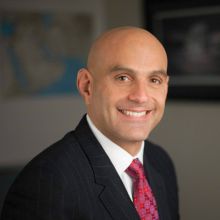
Julian Setian, president and CEO, SOS International LLC
Last year was one for the books for SOSi. The company grew by 50 percent and acquired STG Group Holdings, Inc., a leading provider of mission-critical technology, cyber and data solutions to the U.S. government.
STG was SOSi’s third and largest acquisition to date. It effectively doubled its workforce and immediately placed the company in the middle of the government technology market. Now, in addition to providing mission-critical intelligence and logistics solutions to the national security community, SOSi delivers network operations and software solutions to customers ranging from the State Department to the Army.
“If you take the long-view on business growth in the government services market, it’s critical to maintain a diverse business portfolio,” said Julian Setian, SOSi president and CEO. “In order to adapt quickly to changes in the market, you have to have a broad set of proven capabilities and the greatest possible market access, and our acquisition of STG helped on both fronts. It gave us excellent market positioning that would have taken years to develop organically.”
SOSi is the largest family-owned and operated government services business in the defense and aerospace industry. Founded in 1989 by Setian’s mother, Sosi Setian (the company’s namesake), the company has managed to achieve 20+ percent year-over-year compounded annual growth over the past 30 years. This achievement was accomplished without outside institutional investment and no small business set-aside contracts (until its acquisition of STG).
Julian Setian, who has run the company for the last 17 years, attributes the company’s success to having hands-on leaders on the team who share his passion for the business, take nothing for granted, and strive to develop an intimate understanding of their customers’ goals and missions.
“Successfully growing a government services business is extremely challenging,” Setian said. “The U.S. government commoditizes just about everything it can, while rarely allowing true commercial trading to thrive. The trick is to be the first to market with solutions that address your customers’ most pressing and challenging problems, understanding that the government acquisition system will eventually expose your means, methods, people and pricing to your competitors.”
The STG transaction and integration presented extraordinary challenges. STG had been trending negatively since its public stock offering two years earlier, and it had accumulated more debt than it could absorb. The company’s ownership structure also presented formidable obstacles.
Setian and his team went into the deal with their eyes open and, in the end, their strategy and timing paid off. SOSi has won several contracts leveraging STG’s capabilities since purchase in the spring (a $55 million communications engineering contract with the Army being the most recent) and the company is projecting growth for the legacy STG portfolio for the first time in several years.
In 2018, Setian continued to surround himself with several of the industry’s leading executives. John Avalos and Mike Haney joined the company from Booz Allen Hamilton to assume the roles of chief operating officer and chief information officer; Michele Cook joined the company from KeyW to lead business development; and Kevin Bearden left GDIT to eventually lead SOSi’s software solutions business unit.
SOSi also put several legacy STG executives into key leadership roles, a decision that proved critical to the integration. The company hired STG’s controller David Pearson, made Paul Rempfer, STG’s head of business development, its head of technology innovation, and retained Joe Nicholas as head of its network and cyber business unit. Finally, SOSi expanded its leadership team by adding a layer of leadership to oversee the company’s shared services functions, hiring leading executives from across industry and government to help scale the organization.
“We’ve learned a lot on the fly,” Setian said “I attribute our growth and successful integration of STG to the people around me.”
SOSi’s future looks good. In one short year, it has paid off most of the debt it assumed from the acquisition. It met its organic growth targets and simultaneously scaled its infrastructure to address future challenges. Chances are high SOSi will complete at least one other acquisition in 2019, according to Setian. He expects to lock down several large re-competes, capture several key new contracts, and establish the company’s first technology innovation center to further develop unique data mining, artificial intelligence, and cyber defense technologies it currently supplies to the intelligence community.
In 2019, SOSi plans to do more of what it has done over the past 30 years, according to Setian.
“That is, pick the growth areas of the market where we want to build scale and expertise, grow both organically and inorganically, and continue to invest in talent, infrastructure and, now, technology to build the next-generation middle-market leader,” he says. “Above all, we plan to expand our corporate social responsibility program, and continue to strengthen our internal ethics program, so that integrity and community service continue to define our business. After all, our names and reputations are on the line.”

Carey Smith, chief operating officer, Parsons Corp.
As the newly appointed COO of Parsons, Carey Smith oversees an advanced technology company growing across federal solutions and critical infrastructure market segments.
“Our team’s biggest accomplishment in the last 12 to 18 months would be a tie for two: one, delivering double-digit, top-line organic growth and achieving all financial commitments, and two, the acquisition and integration of Polaris Alpha, a leading innovator,” Smith said
In a move that expanded the company’s capabilities in artificial intelligence, multisource analytics, and cyber technologies, Parsons acquired Polaris Alpha in May. This transaction follows a decade of other strategic Parsons acquisitions in the defense and intelligence markets and is consistent with Parsons strategy of acquiring agile, differentiated technology companies.
That move further solidified Parsons’ position, which Smith said is one “deep in technology in our customer’s evolving mission requirements, including cyber and electronic warfare, space operations, multidomain C2, C5ISR, cyber, AI/ML and data analytics.”
Why Watch:
Smith, a seasoned aerospace and defense industry executive, was appointed COO in November as the company combined its federal solutions and critical infrastructure business units to better leverage the strengths of both and drive synergies. Prior to Parsons, Smith held increasingly progressive roles including president of defense and space at Honeywell and various positions at Lockheed Martin.
Looking to 2019, she believes the public, private and academic sectors should work to collaborate in a number of areas, sharing information that would help with critical infrastructure protection — especially for operational technology and IT convergence — as well as intellectual property ownership and improved security clearance processing.
“We have seen an improved discussion occurring between all sectors,” she said. “Now, we need to implement it and see results.”
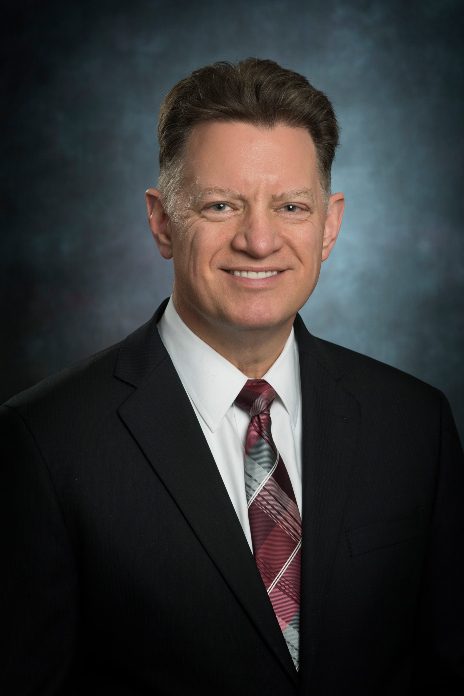
Rick Wagner, president, Mission, Cyber & Intelligence Solutions, ManTech International Corp.
In Rick Wagner’s first year in his current role at ManTech, his group secured multiple multihundred-million-dollar IT and cybersecurity contracts supporting national and homeland security. Those include a nearly $1 billion enterprise IT services award for a major Defense Department customer, as well as a $669 million win for continuous diagnostics and mitigation for the Department of Homeland Security.
“ManTech’s success results from our total dedication to our customers’ missions and our commitment to hiring, training and advancing the careers of great people who share that dedication,” Wagner said. “Our goal is to maintain and build on this successful business model in the years ahead.”
Prior to joining ManTech in 2015, Wagner worked at TASC, Inc., where he held increasingly senior roles, including that of chief strategy officer. Earlier in his career, he was an engineer and program manager for DOD.
Why Watch:
As ManTech comes off its 50th anniversary, look for the company to continue to play a vital role in an active marketplace.
“Customer missions demand secure technologies and we are eager to deploy advanced technologies and solutions that both modernize and protect vital infrastructure creating mission advantage for our customers,” Wagner said.
He said the company will continue to prioritize a highly skilled workforce and prized workplace culture.
“We encourage a collaborative environment where our people can exchange ideas to provide thought leadership, and we offer company-paid courses in cyber and cloud that can lead to government-approved certifications and college degrees, and help advance our employees’ careers,” he said. “Among the greatest tributes to our efforts: the hundreds of ManTech alumni who have returned here after working elsewhere because they love our culture.”

David Wajsgras, vice president, Raytheon Co., president Intelligence, Information and Services
It has been a great year for Raytheon Intelligence, Information and Services. The company delivered outstanding financial results, demonstrating record-setting performance, and it expects 2019 to be a solid year.
This month, the U.S. Air Force will continue to use Raytheon’s ground launch and checkout system, GPS OCX, to guide its next-generation GPS satellite into final orbit. It’s notable the GPS OCX system also achieved the highest level of cybersecurity protections of any Defense Department space system ever delivered.
In addition, Raytheon secured several strategically important contracts in 2018, including:
- A national-scale cybersecurity award from a key ally in the Middle East;
- Two major contracts that could total more than $600 million with the National Geospatial-Intelligence Agency for advanced data automation, analytics and artificial intelligence capabilities;
- A $500 million Cobra Dane radar sustainment contract;
- Two training awards with the U.S. Army – The National Training Center ($160 million) and the Enterprise Training Service Contract (shared IDIQ up to $2.4 billion); and
- It began work on a $600 million strategic software program, where the company is updating and sustaining software on strategic assets for the U.S. Army.
“From a technology standpoint, I’m proud to share that our new Low Power Radar, known as Skyler, was named one of the top technologies by Popular Science magazine, for its many applications including tracking Unmanned Aircraft Systems in the National Airspace System,” said David Wajsgras, vice president, Raytheon Co., president Intelligence, Information and Services.
Looking back over the last couple of years, the biggest challenge Wajsgras said is “addressing the increased velocity at which we need to operate — the speed at which we need to deliver our product and solutions to our customer.”
“We’ve been transforming ourselves; working more like a Silicon Valley company, adopting commercial technologies and practices, such as DevOps, agile and cloud computing, in order to deliver software, systems, services and products considerably faster than in the past,” Wajsgras said. “We are reducing the time it takes to deliver capabilities from years to months and weeks. I’m pleased with how our team has adapted and become more nimble.”
The cornerstone technologies center around automation, analytics and cyber. The company also uses cutting-edge capabilities, such as artificial intelligence and machine learning, immersive technologies, such as virtual reality and augmented reality, and several commercial cybersecurity tools through multiple partnerships established in 2018. It invested in a commercial small satellite company, Hawkeye 360, for enhanced data analytics for our government customers.
Why Watch:
“We had a great year, so we are going to build on that momentum while finding new ways to ‘Break Through,’ which is our mantra,” Wajsgras said. “Our strategy has not fundamentally changed. I would say that my focus area is to continue to infuse a ‘commercial culture’ into the business, and provide clarity of objectives and strong accountability.”
The company sees quite a few opportunities to support its customers’ missions and goals: cybersecurity, space systems, multi-domain command and control, airspace modernization, and high-consequence training, Wajsgras said.
“We are well positioned to bring the most advanced capabilities and technologies to our customers in the DOD, intelligence community, federal civilian markets and international markets,” he said.

Renee Wynn, chief information officer, NASA
Before coming to the space agency in 2015, Renee Wynn worked at the Environmental Protection Agency for more than 25 years. She has a degree in economics from DePauw University, Indiana.
Why Watch:
As NASA continues its exploration of Mars and efforts to learn more about our universe and discover new truths, Wynn is strategizing the IT side of everything that needs to be done to make those efforts successful.
Passionate about encouraging more women to enter IT fields, she often speaks about the gender gap and the need to address it.
“While women are still an underrepresented minority in STEM, women in data and technology are no longer outliers,” she wrote in a 2016 NASA IT Talk issue. “Data science is a critical field in which women and girls of all ages, backgrounds, and interests can participate today.”
NASA has since created pathways for women and girls STEM academic programs. Last July, it hosted the Girls In STEM event, with the goal to inspire female students to become interested STEM fields by participating in research facility tours, hands-on activities, a career showcase, a female panel of scientist and engineers, and an Engineering Design Challenge.
NASA Goddard also in November hosted the third annual STEM Girls Night In with an astronaut Q&A, talks from NASA women across disciplines and a collection of hands-on activities. Expect more of STEM activities to follow in 2019 — and further involvement from the agency’s CIO.