

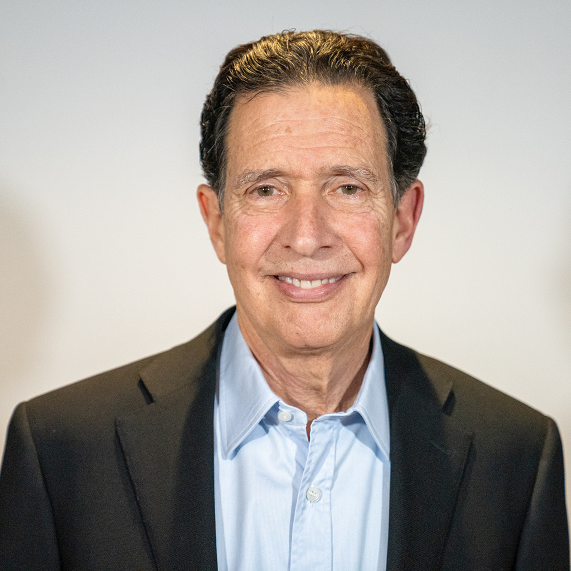
When Tom Vecchiolla stepped into the president and chief executive role at QinetiQ US on Jan. 20, 2025, he inherited a business in transition.
The parent company, QinetiQ, had signaled in its trading update that the U.S. business needed recalibration, something leadership had been working toward even before Vecchiolla’s arrival. With a fresh perspective and mandate, he moved quickly to assess operations and chart a path forward.
“My objective early on was to do a comprehensive assessment of our business capabilities, efficiencies and effectiveness, and then implement actions to strengthen our operational foundation and delivery to our customers,” Vecchiolla said.
It’s a response rooted in instinct. Before acting, he studies the system. He looks for stress points. He figures out what’s actually happening, not what the org chart says should be happening.
It’s a way of thinking shaped long before boardrooms and earnings calls.
Vecchiolla spent 22 years on active duty in the U.S. Navy as a naval aviator and acquisition professional. A 1977 graduate of the U.S. Naval Academy, he built his career where theory meets consequence. He flew, but he was equally drawn to the work that decides whether aircraft launch, programs survive and missions are successful.
That pull carried him into senior staff and acquisition roles at the Pentagon, including service as deputy to the Secretary of the Navy’s senior acquisition executive, overseeing research, development and acquisition across the Navy’s undersea and mine warfare portfolio.
He later stepped onto Capitol Hill as a Brookings Institution legislative fellow and military legislative assistant, seeing firsthand how defense priorities are debated, funded and constrained. Between operational tours, Vecchiolla also served on the Chief of Naval Operations staff as the Navy’s aviation integration and helicopter requirements officer for surface warfare, with operational leadership assignments spanning the U.S., Asia and the Middle East.
The technical foundation came first. Business followed, learning on the move.
After leaving active duty in 1999, Vecchiolla moved into industry at Raytheon, spending almost two decades there and eventually leading the company’s international business. He rose into senior corporate leadership with a front-row view of customer demands and delivery realities.
From Raytheon, he moved into senior roles across defense, security and advanced technology, serving as president and CEO of ST Engineering North America. Later came a different test altogether: leading a special purpose acquisition company and tackling finance not as theory, but as consequence.
That arc gave him range: technical depth, operational credibility, financial fluency.
But early on, none of that was the plan.
Before Business, There was Flight
Growing up in the late 1950s and early 1960s, Vecchiolla didn’t imagine himself as a business leader. He was enamored with space, Estes rocket kits, popular science, Mercury and Gemini flights on TV as rockets lifted off and jet aircraft tore across the screen, and the sound and spectacle of flight making the future feel immediate and attainable.
“Steve Canyon TV shows were on, so I grew up in that, aspirationally, wanting to be in the aviation business,” he said, pointing to a late-’50s TV series about a U.S. Air Force pilot, part of a broader era when flight, space and military aviation were woven into everyday popular culture.
When Vecchiolla entered the U.S. Naval Academy, flying was always the goal. Even then, it wasn’t a given. He assumed he’d end up on a more technical track because he wasn’t sure he’d meet the physical standards, especially when it came to eyesight.
In the end, he did.
That connection to flight never faded. Vecchiolla still flies regularly, keeping a high-performance single-engine aircraft in Leesburg, Virginia. He holds multiple ratings: commercial, private, instrument, helicopter and fixed wing.
His rule of thumb is simple: “Weekends, short trips here and there. Boston, New York, South Carolina, Pennsylvania, Pittsburgh. Wherever five hours of gas can get me.”
Leading by Reading the Conditions
Leadership, for Vecchiolla, follows the same logic as flying: You don’t rely on a single checklist; you read the conditions, anticipate and you adapt.
Asked how others would describe his leadership style, Vecchiolla doesn’t point to a fixed philosophy. He calls it situational. He empowers people to do the right things, supports them toward shared objectives and stays close enough to step in when needed. He mentors constantly, inside the company and beyond it.
That focus on people shapes day-to-day decisions, not just rhetoric.
“Our people are our most important aspect,” Vecchiolla said. “Our company has designed our own capabilities, but our people are the essence and core of those capabilities.”
QinetiQ US is a pure play government services and technology company. It’s a compact organization of roughly 900 people, doing work more often found inside much larger enterprises. This midtier size provides the agility to innovate and deliver faster than larger contractors, while leadership knows the teams and teams know each other.
“I am committed to helping this company be the best it can be,” Vecchiolla said. He knows it may sound hackneyed, but the commitment is real. It’s rooted in the people who have given so much to the company and in what he sees as its underlying strength.
“It’s got such good bones to it,” he said. “I want to see it be wildly successful.”
The people, he says, have already done their part.
“The people have been performing phenomenally,” Vecchiolla said. “I can’t say enough about how proud I am of the workforce that has enabled the current successes that the company is experiencing.”