

When Hurricane Harvey tore into Texas in late August 2017, neighborhoods filled with chest-deep water in hours. Streets vanished under the current, and hundreds of thousands of homes across Houston and Harris County were damaged. In the aftermath, the government systems designed to assess that destruction couldn’t keep pace.
Communities participating in the National Flood Insurance Program are responsible for conducting substantial damage determinations, which establish whether restoring a structure would cost 50% or more of its pre-disaster market value. Traditionally, these determinations rely heavily on field assessments, but after Harvey, the volume of impacted properties made that approach difficult to execute within the time available.
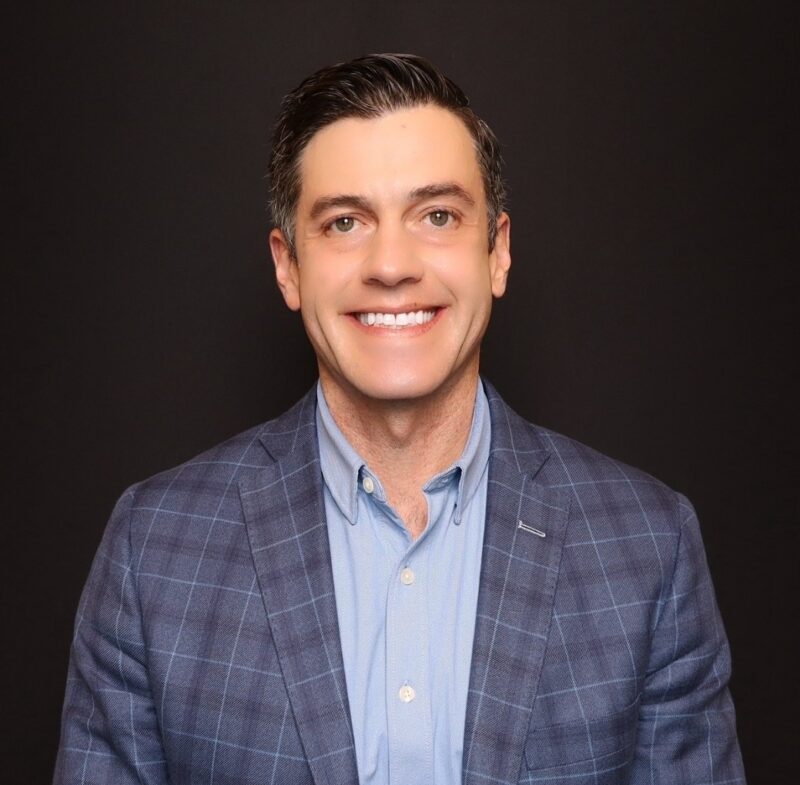
In the middle of the crisis, CJ Donnelly saw what technology could do at human scale. He led a team of data scientists experienced in applying technology to complex, real-world problems.
The Federal Emergency Management Agency brought in his team to build models that could flag homes likely to be substantially damaged and help inspectors focus limited time where it mattered most. The models were trained on Louisiana flood data and other Gulf Coast events, allowing FEMA to move faster and direct resources where they were needed.
It was one of the agency’s earliest attempts to use advanced modeling in disaster recovery — and it worked. The models helped sort damaged homes by risk, prioritize inspections and compress a lengthy process.
“It was so pioneering for FEMA that the program won the FEMA Administrator’s Award for Innovation,” Donnelly said.
From Service and STEM to Federal Leadership
The instincts that guided him during Harvey were shaped long before the storm. Donnelly gravitated toward patterns, puzzles and anything that required problem-solving. He began programming at the Cate School in ninth grade on a TI-83 calculator and carried that interest to Colby College, where he majored in math and added economics for an applied foundation he knew he’d need in the workforce.
When he graduated in 2007, data science wasn’t a formal field. People doing the work had backgrounds in statistics and programming — exactly the combination Donnelly had developed. He credits Colby faculty, especially Professor Liam O’Brien, with giving him the grounding he needed as the discipline evolved.
His commitment to public service came from home. His grandfather, a retired Air Force major, took him to Air Force Academy football games in Colorado Springs. His dad served in the Peace Corps, and his sisters followed — one into the Peace Corps and one into AmeriCorps.
“Giving back in public service has always been a part of my family, and I knew that’s something that I wanted to do in my career,” Donnelly said.
That orientation made federal consulting a natural fit. One of Donnelly’s early assignments took him to the Joint Improvised Explosive Device Defeat Organization, which analyzed how IEDs were built and deployed, then developed tactics, technology and intelligence to reduce casualties.
“I love supporting the mission of agencies, and there’s no greater or more important mission than trying to help save soldiers’ lives and reduce casualties to IEDs,” he said.
At JIEDDO, Donnelly deepened his coding skills, built the foundations of his data science fluency and saw how technical work could shape federal missions. That experience nudged him from practitioner toward builder.
“I was always entrepreneurial,” he said. “That’s always been something that I’ve had a passion for.”
Donnelly approached each career step deliberately, developing leadership skills long before he managed anyone.
“I always wanted to be a leader,” he said. “I wanted to lead teams, grow teams and build teams. Every decision I made as a young consultant was about what I was doing each day, month and year to reach my goals.”
The Next Transformation: AI and a Workforce Ready to Use It
Today, Donnelly puts that approach into practice as managing director at Slalom, a technology services company where he leads the company’s federal market and helps agencies apply modern software engineering, cloud, data and AI to their missions.
“The core mission of Slalom is to dream bigger, move faster and build better tomorrows for all,” he said.
That philosophy reflects years of investment. Slalom built its AI capabilities early, long before today’s wave of adoption. That early bet now shows up in the company’s partnerships and recognition — AWS’s 2024 GenAI Partner of the Year, Google Cloud’s 2025 AI Partner of the Year for Public Sector, the top AI partner for Salesforce and Snowflake’s 2025 AI Partner of the Year.
“In today’s federal landscape, the Trump administration is seeking true commercial best practices, with new and innovative tools and technologies,” Donnelly said. “That’s what Slalom does best, and I feel so fortunate to be at an organization that prioritizes its technology capabilities.”
That foundation in modern software engineering, cloud and data is also what positions Slalom for the next major shift: generative AI. Donnelly sees it as the most consequential evolution in government technology in years. But the technology only matters if people know how to use it.
“The tools and technology alone are just half the battle,” he said. “You need employees that know how to use these tools and take maximum benefit.”
At Slalom, that translates into hands-on enablement. The company trains teams at every skill level, starting with the basics — what tools like ChatGPT, Gemini and Claude can do — then moving into advanced skills such as accelerated engineering and building custom agents for specific workflows.
“It’s not about replacing jobs. It’s about equipping people with the right technology and knowledge to do a better job,” Donnelly said.
A Childhood Dream, A Government Calling
As a kid, Donnelly was sure his future would unfold from the cockpit of a fighter jet. He watched “Top Gun” on repeat, imagining himself in the flight suit. Life pulled him somewhere far less flashy — and far more consequential.
He became a math major, a data scientist and eventually a builder who assembled the teams tackling government’s hardest problems.
The mission never changed, only the tools did. What Donnelly learned in the chaos after Harvey — that government must move fast, think big and engineer for scale when it matters most — now anchors everything he builds and leads.
And when you follow that lesson to its logical end, the conclusion is simple:
“Supporting the federal government is the most powerful way to drive large-scale, lasting impact,” Donnelly said.