

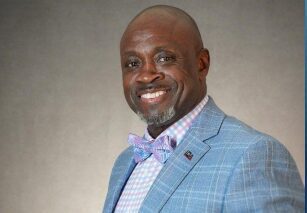
It all began with a bag.
One morning in 2019, an employee barred from returning to work until medically cleared somehow entered the Institute for Defense Analyses’ secure facility. Surveillance footage later showed them leaving a bag in a classified area before slipping out unnoticed. When a colleague reported the sighting, panic rippled through the building.
“We had never had this before,” said Ike Rivers, chief security officer and senior information security officer at IDA. “We had to make a decision. Do we take the risk that there’s nothing in that bag, or do we evacuate everyone and call in the Pentagon Force Protection Agency?”
Opting for “better safe than sorry,” the leadership team chose the latter. Bomb dogs swept the building. Employees waited anxiously outside as hours ticked by. Eventually, the bag was found. It contained only books. But the incident was an awakening. It changed how Rivers and his team thought about risk and readiness.
“We tightened our environment, invested more in resources, and changed our entry and exit procedures,” he said. “We learned how effective communication can be when everyone gets in a room to talk about a real situation. We built a safer, smarter culture from that day forward.”
Today, Rivers leads a 120-person security team in Alexandria, Virginia, overseeing operations across IDA’s three federally funded research and development centers. He manages special access programs, personnel and physical security, and classified information systems. A retired Air Force senior noncommissioned officer who served 20 years, Rivers brings 18 years of industrial security experience supporting Defense Department and intelligence community programs.
Combating Threats by Building Culture
At IDA, Rivers oversees six divisions and makes it a point to learn every job under him — from answering calls to conducting bag checks. His willingness to work alongside his staff has built deep reservoirs of trust and accountability in which employees are empowered to do their best work, he said. And he refuses to ask anyone to do something he would not be willing to do himself.
Authenticity, he said, is his guiding principle. He encourages not shrinking from saying what you have to say — but be sure to take care of your team and place their needs first.
“When my employees go home, I want them to say, ‘I accomplished something today, and I really like working,’” he said. “That matters to me.”
Rivers and his wife share a blended family of six children, ranging in age from 15 to nearly 40. That “family first” philosophy, he said, carries into the workplace, where he honors balance and invites employees to have a life beyond the job.
After decades in the field, one concern still keeps Rivers up at night: the insider threat.
“It’s the person who already has access,” he said. “You think it’ll never happen to you — until it does.”
He cites cases like Edward Snowden as cautionary tales and stresses that vigilance must extend beyond the office.
“People forget that even outside the building, you have to be careful what you say and where you dispose of information,” he said. “There are people who go through trash looking for sensitive data. You can never let your guard down.”
That balance — trusting his people while staying alert to the possibility of betrayal — is one of the hardest parts of his role. Yet, he insists, it’s also what keeps his team sharp.
“We preach continuous security education,” he said. “Be vigilant outside your community and inside it.”
Leadership, Education and Giving Back
As IDA’s Insider Threat Program senior official, Rivers faces a paradox at the heart of security: how to mitigate risk without breeding fear or suspicion. His approach centers transparency and engagement.
“To have a great insider-threat or risk-management program, you have to have company and leadership buy-in,” he said. “You’ve got to be willing to spend money, invest in education and keep communication flowing.”
That education is continuous. It includes awareness messages educating staff about security reminders through a variety of mediums. By normalizing awareness rather than treating it as an afterthought, Rivers has built what he calls “an everyday culture of vigilance.”
Rivers also plays a national role in shaping how security policy evolves. As a member of multiple working groups under the National Industrial Security Program and the National Industrial Security Program Policy Advisory Committee, he advocates for stronger collaboration between government and industry.
“We’re all fighting to protect the warfighter and our country,” he said. “To do that, we’ve got to be on the same page.”
Historically, policies were sometimes written without input from the people actually implementing them, he said. But that’s changing.
“Now, government is partnering with industry at the front end,” Rivers said. “They’re inviting us into the conversation before policies are finalized.”
He points to the overhaul of the Defense Counterintelligence and Security Agency’s security rating review process as a major success.
“A few years ago, the reviews were considered unfair,” he said. “Industry spoke up. DCSA listened. They created two working groups — one government, one industry — and worked together on the new approach. Since then, the review scores have improved dramatically.”
That, Rivers said, is the power of collaboration. Not every suggestion gets adopted, but when government listens, deep partnership develops.
Teamwork, Humility and Working Groups
Rivers’ leadership philosophy was forged over two decades as a senior noncommissioned officer in the Air Force. He joined in 1985, during what he calls the “tough love” era of service — one that taught him grit, courage and the value of speaking up.
The military also taught him about teamwork and about the value of humility.
“You can have it all one day and lose it the next,” he said. “Humility should be in everybody’s vocabulary.”
Rivers attributes much of his professional growth to the working groups he’s part of.
“You may think you know everything until you hear someone else’s perspective,” he said. “Hearing and listening are two different things. Real collaboration happens when you truly listen.”
He believes that the willingness to listen has made industry collaboration more innovative and effective. “We’re not just seeing one way of doing things anymore,” he said. “We’re learning from each other.”
That mindset deepened after he completed the Wharton/ASIS Program for Security Executives, where leaders from across sectors — government, private industry and international organizations — came together to learn strategic leadership.
“I realized security isn’t just government versus private sector,” he said. “The philosophies are the same; we’re just protecting different assets.”
One of the highlights was a field exercise at Gettysburg, where participants had to work together to strategize survival under simulated battlefield pressure.
“It was one of the coolest things I’ve ever done,” he said. “It made me more creative and collaborative as a leader.”
Asked what advice he’d give the next generation of security professionals, Rivers doesn’t hesitate.
“Be authentic. Be yourself,” he said. “Don’t bite off more than you can chew. Learn to listen. Get involved in the security community — networking pays tremendous dividends.”
And when you make it to the next level, he says, be sure to give back.