

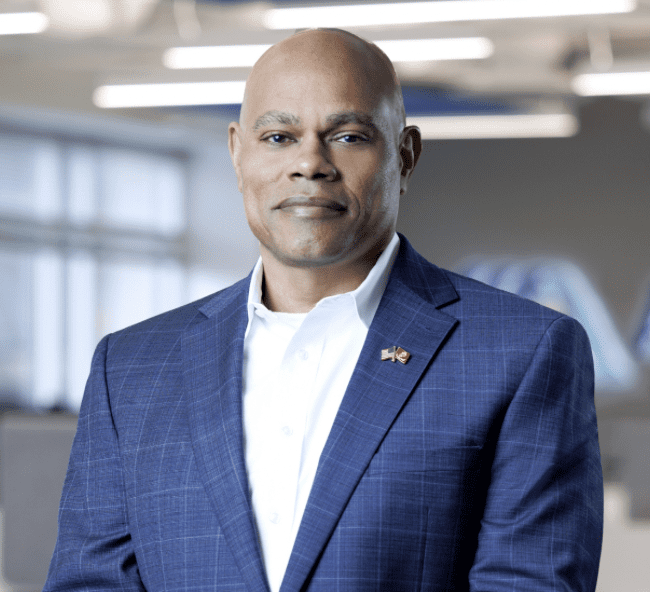
From securing battlefield communications as a U.S. Marine Corps officer to protecting the financial systems that keep the nation running, Douglas “Doug” Lemott Jr. has built a career at the highest stakes of national security.
After 27 years in the Marine Corps and senior cybersecurity roles at VMware and SAP NS2, he now serves as chief information security officer and head of cybersecurity programs at the Analysis and Resilience Center for Systemic Risk. In that role, Lemott leads efforts to identify, assess and mitigate systemic cyber and technology risks across the financial sector.
In this Q&A, he shares how his military and private-sector experience shaped his leadership style, why resilience is central to national stability, and how he’s preparing the industry to counter threats that could reverberate across the global economy.
Can you provide a brief overview of your professional background and career progression? Please include what ultimately landed you in your current role.
I served as a United States Marine Corps officer in the Communications/Cybersecurity field for 27 years, during which time I held a variety of leadership roles that honed my ability to operate in complex, high-stakes environments. My career spanned both operational and strategic assignments, including joint and interagency work, where I developed a deep understanding of national security, risk management, and organizational leadership.
Upon retiring from active duty, I transitioned to the private sector, bringing my military experience to bear in the technology space. I held leadership positions at VMware Inc. where I established and led a cybersecurity and compliance program for the Government, Education, & Healthcare (GEH) sector. Later at SAP National Security Services (SAP NS2), I served as VP of Security Operations/Deputy CISO for Enterprise Security, where I established and executed an advanced cybersecurity program to ensure technology, applications, and supporting infrastructure were protected against persistent adversarial threats.
These roles allowed me to engage with both public and private sector partners to drive secure, innovative solutions in highly regulated environments and work at the intersection of mission-critical technology and national security.
Currently, I am the Chief Information Security Officer and Head of Cybersecurity Programs at the Analysis and Resilience Center for Systemic Risk (ARC) and, focusing on systemic risk across the financial sector. This role is a natural evolution of my career — combining my background in security, risk mitigation, and cross-sector collaboration to help strengthen the resilience of the financial sector.
What ultimately led me here was a continued commitment to public service, this time through the lens of financial stability and infrastructure protection. It’s a space where the lessons of leadership, operational readiness, and strategic foresight remain as vital as ever.
Why was this the path you chose, and how influential was it to your career?
The path I chose was driven by a deep sense of purpose and a desire to serve. Early in my career, the Marine Corps provided not just an opportunity to lead, but to contribute to something much larger than myself. That experience shaped how I view responsibility, decision-making, and mission alignment — values that have stayed with me throughout my career.
As I transitioned from military service to the private sector, I was intentional about staying close to work that had national security implications — first through roles at VMware and SAP NS2, where technology and security intersected, and now in the financial sector, addressing systemic risk. Each step has been a continuation of that core mission: protecting critical infrastructure, supporting national resilience, and enabling stability in environments where the stakes are high.
This path has been profoundly influential to my career. It gave me a unique lens on leadership under pressure, taught me how to navigate complexity with clarity, and instilled a strong foundation in aligning people, processes, and technology toward strategic outcomes. More importantly, it reaffirmed the value of service — whether in uniform or not — and how meaningful it is to work on challenges that matter.
Do you have a personal connection to the current mission you support? If so, please explain.
Yes, I have a strong personal connection to the mission I support today. Throughout my military career, I was entrusted with safeguarding national security, often in complex, high-risk environments. That responsibility instilled in me a lasting commitment to protecting the foundational systems that underpin our society — whether they be defense, technology, or now, the financial sector.
In my current role, addressing systemic risk across the financial industry, I see a direct connection to that commitment. Financial systems are one of the pillars of national stability — its integrity and resilience have far-reaching implications not just for markets, but for everyday citizens, national security, and global trust. Helping to protect and strengthen the resiliency of those systems is a continuation of the work I’ve always felt called to do.
So while I may no longer wear a uniform, the mission still resonates deeply. It’s about service, stewardship, and doing work that contributes to the security and resilience of the nation. That sense of purpose has never changed — only the domain in which I apply it.
What are your current top priorities and responsibilities? How do these relate to your company’s overall mission/growth strategy?
My current top priorities center on identifying, assessing, and mitigating systemic cyber and technology risk across the financial sector — with a focus on resilience, continuity, and the security of critical infrastructure. This includes working across member institutions and industry partners to understand emerging threats, strengthen operational readiness, and develop coordinated responses to sector-wide challenges.
A key part of my responsibility is helping to bridge gaps between strategy, policy, and execution — ensuring that our efforts to safeguard the financial ecosystem are not only technically sound but also aligned with evolving risk landscapes and regulatory expectations. Whether it’s cyber threats, operational disruptions, or interdependencies across markets, the goal is to anticipate and mitigate risks before they become crises.
This directly supports our organization’s broader mission and growth strategy. By focusing on systemic risk, we’re not just managing threats; we’re enabling stability, trust, and long-term growth — which are essential for both our national and economic security.
Where do you and your team see growth opportunities in your current field or portfolio you support, or what do you anticipate to be your customers’ top pain points?
We see significant growth opportunities at the intersection of intelligence focused on cybersecurity/technology risk, technology integration, and cross-sector collaboration. As the financial sector becomes increasingly interconnected and reliant on digital infrastructure, the ability to anticipate and mitigate systemic risk — in real time and at scale — is becoming a core business capability, not just a compliance requirement.
One major growth area is in enhancing sector-wide resilience through data-driven insights and scenario planning. There’s a clear need for more sophisticated tools that allow institutions to model cascading risks — whether from cyber threats, third-party dependencies, or geopolitical disruptions — and to respond in a coordinated way. Our team is focused on building and supporting frameworks that allow for this level of agility and foresight.
From the member’s perspective, some of the top pain points we anticipate include managing third-party and supply chain risk, maintaining resilience in a rapidly changing threat landscape, and navigating the growing complexity of operational resilience standards. There’s also an increasing demand for transparency and coordination across institutions, which can be challenging in a competitive and highly regulated environment.
How are you and your team planning to address/prepare for these opportunities?
We’re approaching these opportunities with a deliberate, multi-pronged strategy that balances near-term impact with long-term resilience. First and foremost, we’re investing in deeper collaboration — both internally and across the broader financial ecosystem. Addressing systemic risk can’t be done in isolation; it requires alignment among financial institutions, regulatory bodies, technology providers, and other critical infrastructure partners. We’re working to build those bridges, share insights, and create common frameworks for understanding and responding to emerging threats.
Second, we’re enhancing our analytical capabilities to move from reactive to predictive risk management. This includes developing tools and methodologies to model complex interdependencies and simulate sector-wide scenarios — so that we can better anticipate vulnerabilities before they materialize. Data integration, threat intelligence, and stress testing are all core to that effort.
Third, we’re focusing on workforce and organizational readiness. That means equipping our teams and our stakeholders with the training, playbooks, and cross-functional coordination needed to respond effectively when disruptions occur. We’re also aligning our efforts to the evolving threat landscape, so that our approach is not only effective but also forward-looking and compliant.
Ultimately, we’re preparing by making resilience a strategic priority — not just a risk function. It’s about embedding resilience thinking into how we plan, invest, and operate. That’s what will allow us — and our members — to adapt, grow, and lead in an increasingly complex environment.
How important is mentorship and networking in GovCon? Were they influential to your career?
Mentorship and networking have been critically important throughout my career — not just as tools for professional growth, but as sources of perspective, accountability, and purpose. During my 27 years in the Marine Corps, mentorship was a foundational part of our leadership culture. I was fortunate to have senior leaders who invested in me — not just by offering guidance, but by challenging me to lead with integrity, stay grounded in purpose, and think beyond my immediate role.
That commitment to mentorship carried over into the private sector and WashingtonExec has been a great resource to connect and network for continued mentorship. Transitioning out of uniform is rarely a straight line, and the advice and support I received from peers, veterans, and senior professionals helped me navigate a very different landscape in technology and financial services. In many ways, it’s those relationships — built on shared values and honest conversations — that helped shape my trajectory and broaden my understanding of leadership beyond a military context.
Networking, too, has been more than just professional exposure — it’s about staying connected to mission-driven people across sectors. Whether collaborating on complex challenges or sharing lessons learned, those connections have deepened my ability to think systemically and act collaboratively. WashingtonExec provides a great venue for connecting with like-minded professionals who operate in complex environments.
Both mentorship and networking have been influential to where I am today — and I consider it a responsibility to pay that forward. I actively mentor others now, especially veterans and those entering risk and resilience roles, because I know firsthand how meaningful those relationships can be.
What is something most people don’t know about you?
After decades of operating in high-tempo, high-stakes environments, I’ve also come to value the importance of balance and reflection. Whether it’s working on classic cars, exercising, reading, or spending time with family, I make space for the things that keep me grounded and clear-headed. That time away from the noise is often when I do my best thinking.
It’s easy to assume that people with a military or corporate background are always “on,” but I’ve learned that sustainability — both personally and professionally — comes from knowing when to lean in and when to step back. That’s something I try to model for my team as well.